
Messier catalogue: 110 imaging targets
Charles Messier, a French comet hunter, published his list in three parts between 1774 and 1781 so that fuzzy patches in the sky would not be mistaken for comets. Later astronomers added seven more from his and Pierre Méchain's notes, bringing the total to 110. It holds many of the brightest galaxies, nebulae and star clusters seen from mid-northern latitudes, and most are within reach of a small telescope or a telephoto lens.
Further reading: SEDS Messier DatabaseMessier object (Wikipedia)
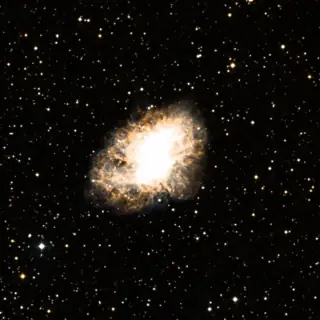
M1 — Crab Nebula
The Crab Nebula, the remnant of a supernova that Chinese and Japanese observers recorded in 1054, about 6,500 light-years away in Taurus.
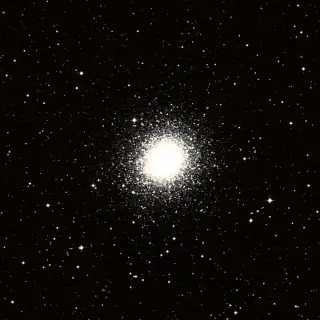
M2
A rich globular cluster of about 150,000 stars in Aquarius, roughly 38,000 light-years away and about 175 light-years across.
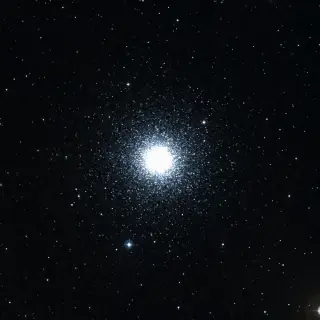
M3
A globular cluster in Canes Venatici, about 34,000 light-years away, holding roughly 500,000 stars.
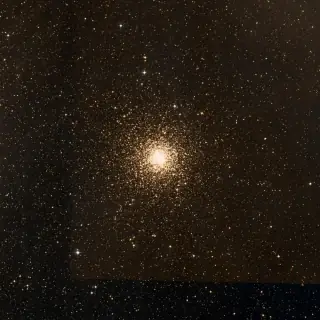
M4
The nearest globular cluster to the Solar System, about 6,000 light-years away in Scorpius, and about as wide on the sky as the Moon.
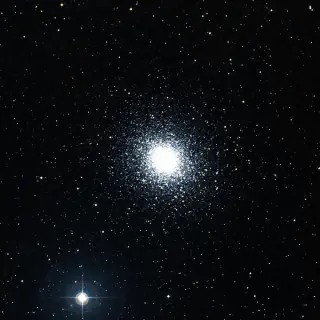
M5
A globular cluster in Serpens, about 24,500 light-years away and roughly 10.6 billion years old. It has 105 known variable stars and is moving away from us at more than 50 km/s.
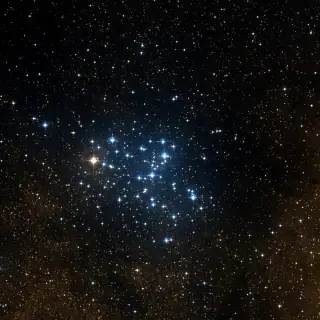
M6 — Butterfly Cluster
The Butterfly Cluster, an open cluster of about 120 stars in Scorpius, roughly 1,590 light-years away and about 94 million years old.
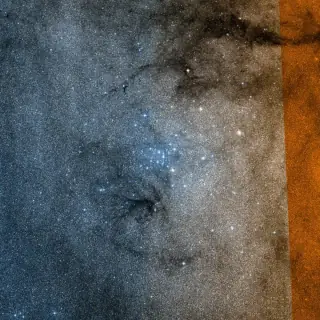
M7 — Ptolemy Cluster
Ptolemy's Cluster, a bright open cluster in Scorpius about 980 light-years away, recorded by Ptolemy in 130 AD.
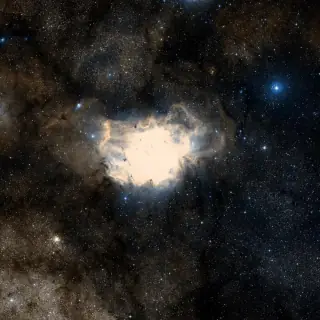
M8 — Lagoon Nebula
The Lagoon Nebula, a large emission nebula in Sagittarius, roughly 4,000 to 6,000 light-years away, one of two star-forming regions visible to the naked eye from mid-northern latitudes.
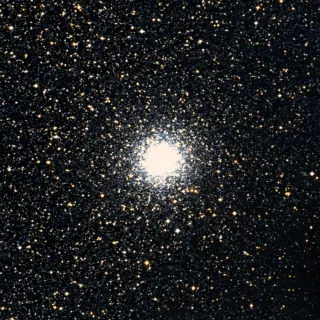
M9
A globular cluster in southern Ophiuchus, about 25,800 light-years away and roughly 12 billion years old. It lies in front of the dark cloud Barnard 64, which dims some of its light.
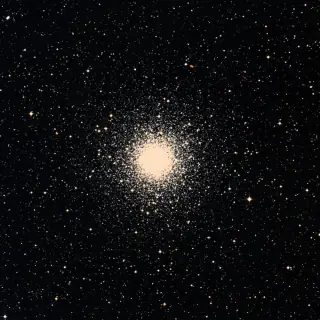
M10
A globular cluster in Ophiuchus, about 14,300 light-years away, with a concentration of blue straggler stars in its core and two known millisecond pulsars.
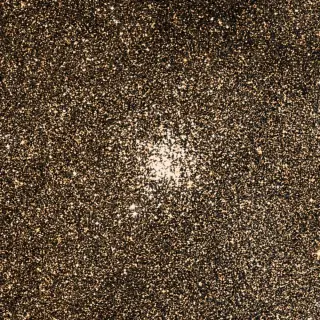
M11 — Wild Duck Cluster
The Wild Duck Cluster, a tight knot of roughly 870 stars brighter than magnitude 16.5 in Scutum, about 6,100 light-years away.
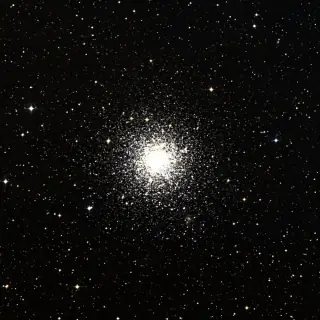
M12
A globular cluster in Ophiuchus, about 16,400 light-years away, rather loosely packed for its class; it was once classed as an open cluster.
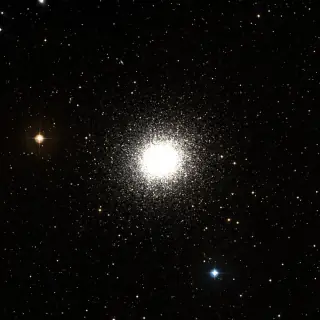
M13 — Hercules Cluster
The brightest globular cluster in the northern sky, holding several hundred thousand stars about 24,000 light-years away.
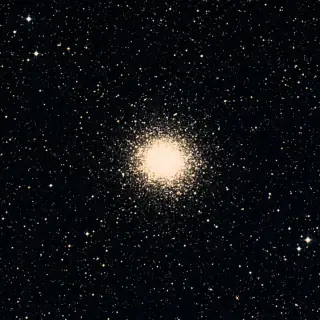
M14
A globular cluster in Ophiuchus, about 30,300 light-years away and roughly 100 light-years across, with a visibly stretched outline.
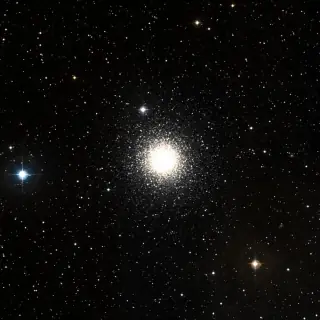
M15
A globular cluster in Pegasus, about 35,700 light-years away and among the most densely packed known.
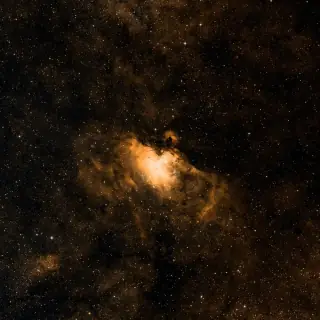
M16 — Eagle Nebula
The Eagle Nebula, an emission nebula around the young cluster NGC 6611 in Serpens, about 5,700 light-years away.
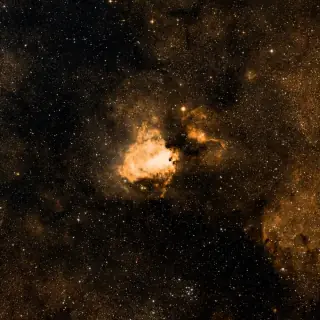
M17 — Omega Nebula
The Omega Nebula (NGC 6618) in Sagittarius, a glowing hydrogen cloud about 5,000–6,000 light-years away and roughly 15 light-years across.
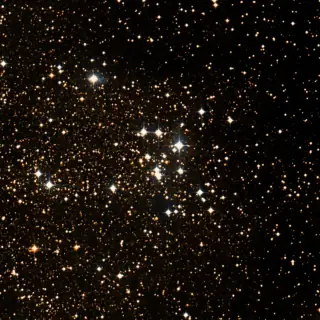
M18
A sparse open cluster in Sagittarius, about 4,200 light-years away and roughly 33 million years old, sometimes called the Black Swan Cluster. It sits about 1° south of the Omega Nebula (M17).
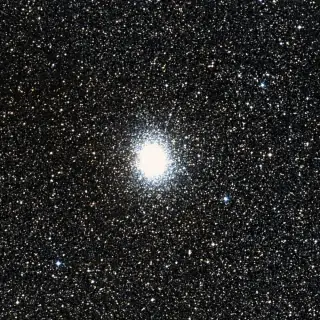
M19
A globular cluster in Ophiuchus, about 28,700 light-years away and only about 6,500 light-years from the Galactic Centre.
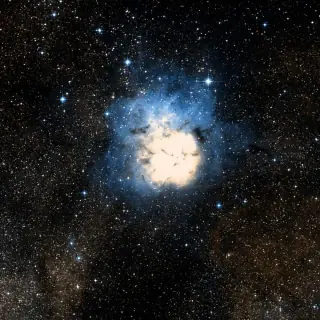
M20 — Trifid Nebula
The Trifid Nebula (NGC 6514) in Sagittarius, about 4,100 light-years away. It combines a red emission nebula, a blue reflection nebula and dark lanes (Barnard 85) that split it into three lobes.
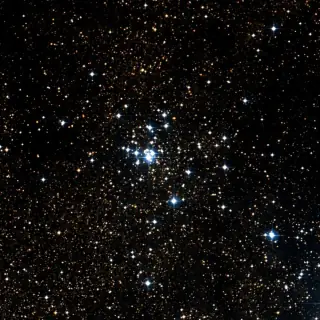
M21
A young open cluster in Sagittarius, about 3,900 light-years away and roughly 6.6 million years old. It lies close to the Trifid Nebula on the sky but is not physically associated with it.
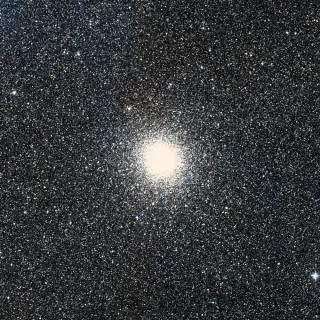
M22 — Sagittarius Cluster
A globular cluster in Sagittarius, about 10,600 light-years away and among the brightest in the sky.
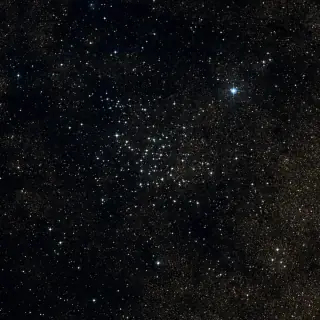
M23
A large open cluster in Sagittarius, about 2,050 light-years away and roughly 330 million years old. Estimates of its membership range from about 170 to 410 stars.
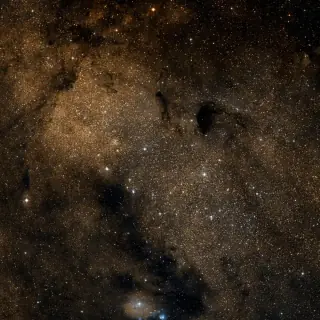
M24 — Sagittarius Star Cloud
The Small Sagittarius Star Cloud, about 10,000 light-years away. It is not a single object but an opening in the dust of the Great Rift that shows deep stretches of the Milky Way.
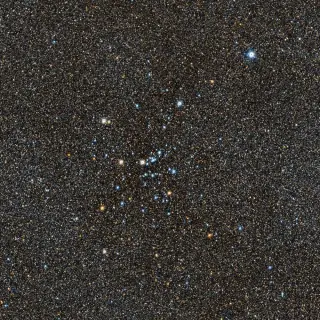
M25
An open cluster in Sagittarius, about 2,000 light-years away and roughly 68 million years old. It contains the Cepheid variable U Sagittarii and has a dark lane near its centre.
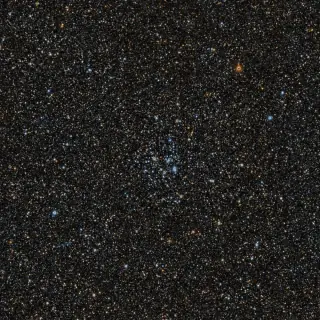
M26
An open cluster in Scutum, about 5,160 light-years away and roughly 85 million years old.
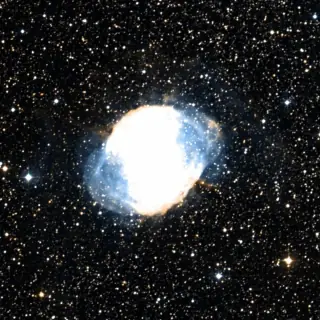
M27 — Dumbbell Nebula
A planetary nebula, the shell shed by a dying Sun-like star, about 1,300 light-years away. It was the first planetary nebula ever found, by Charles Messier in 1764, and is roughly 10,000 years old.
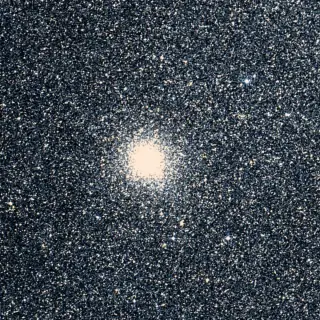
M28
A globular cluster in Sagittarius, about 18,300 light-years away, less than a degree from the star Kaus Borealis. It holds the first pulsar found in a globular cluster, PSR B1821−24.
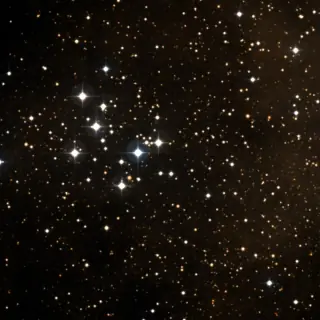
M29 — Cooling Tower
A small, bright open cluster in Cygnus, about 5,240 light-years away and about 1.7° south of Sadr. It is nicknamed the Cooling Tower.
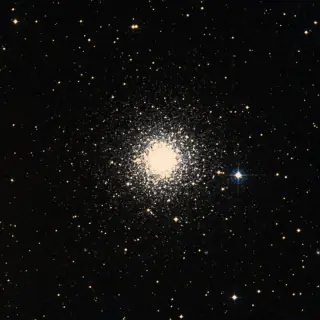
M30
A globular cluster in Capricornus, about 27,100 light-years away. It has gone through core collapse, with a very dense centre, and is nicknamed the Jellyfish Cluster.
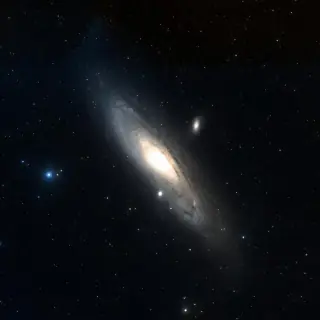
M31 — Andromeda Galaxy
The nearest large spiral galaxy, about 2.5 million light-years away and roughly a trillion stars strong.
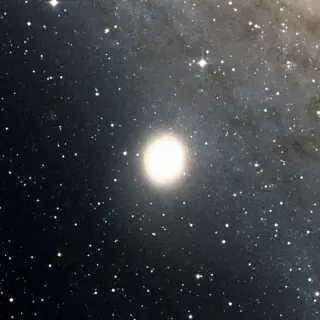
M32 — Le Gentil
Le Gentil, a compact elliptical galaxy in Andromeda about 2.5 million light-years away and a satellite of the Andromeda Galaxy.

M33 — Triangulum Galaxy
The Triangulum Galaxy, a spiral galaxy about 2.9 million light-years away, about 61,000 light-years across and the third-largest member of the Local Group.
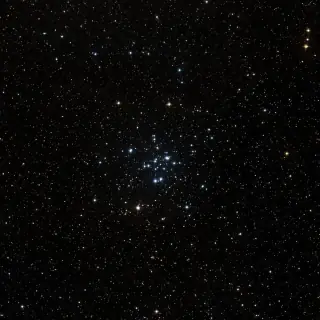
M34
An open cluster in Perseus, also catalogued as NGC 1039, about 1,500 light-years away. It holds roughly 400 stars and is only 200–250 million years old; at least 19 of its members are white dwarfs.
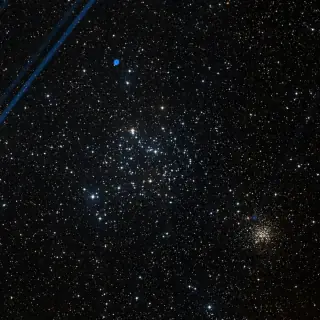
M35 — Shoe-Buckle Cluster
A rich open cluster in Gemini, about 2,970 light-years away and roughly 100 million years old.
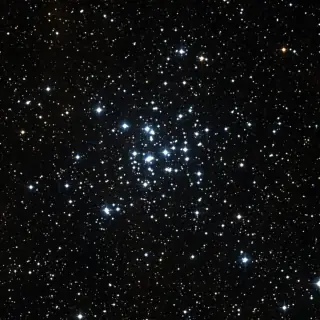
M36 — Pinwheel Cluster
The Pinwheel Cluster, an open cluster in Auriga about 4,300 light-years away by one estimate (a 2020 study gave about 3,800).
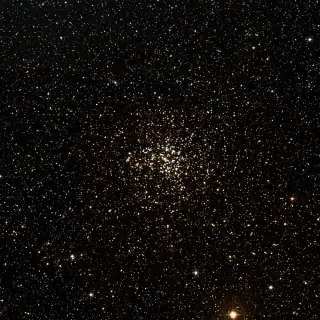
M37 — Salt-and-Pepper Cluster
An open cluster in Auriga about 4,500 light-years away, with over 500 identified stars.
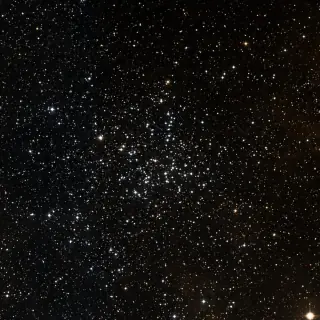
M38 — Starfish Cluster
The Starfish Cluster, an open cluster in Auriga about 3,500 light-years away with around 100 known stars.
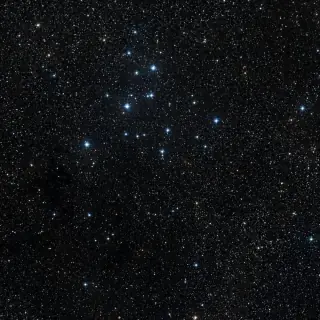
M39
A loose open cluster in Cygnus, about 1,010 light-years away and 280 million years old, spanning roughly the width of the full Moon. About two dozen members show in a small telescope at low power.
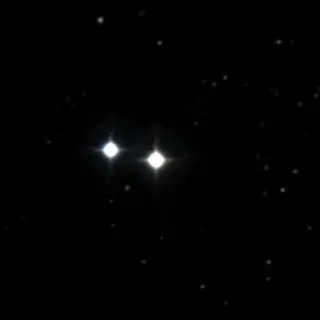
M40 — Winnecke 4
Winnecke 4, not a nebula or cluster but a double star in Ursa Major. The stars are unrelated: one is about 1,000 light-years away and the other about 470.
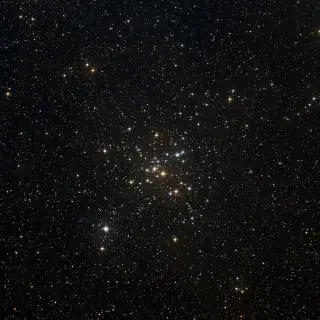
M41 — Little Beehive Cluster
The Little Beehive Cluster, an open cluster in Canis Major about 2,360 light-years away and around 200 million years old. Its brightest member is a K-type red giant near the centre.
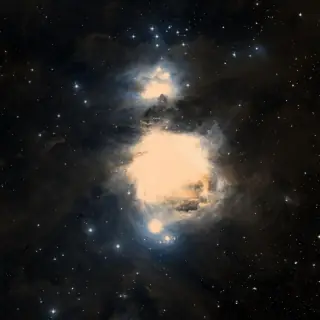
M42 — Orion Nebula
A glowing cloud of gas where new stars are forming, about 1,300 light-years away and the nearest large star-forming region to us.
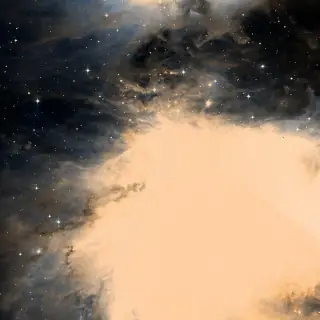
M43 — De Mairan's Nebula
De Mairan's Nebula, a roundish HII region about 1,300 light-years away, physically part of the Orion Nebula but split from M42 by a dark dust lane.
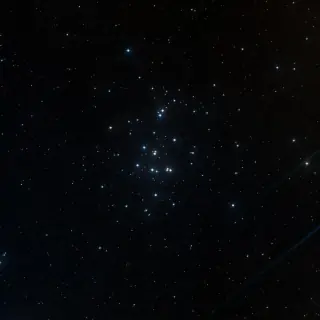
M44 — Beehive Cluster
The Beehive Cluster, also called Praesepe, an open cluster in Cancer about 610 light-years away with at least 1,000 members.
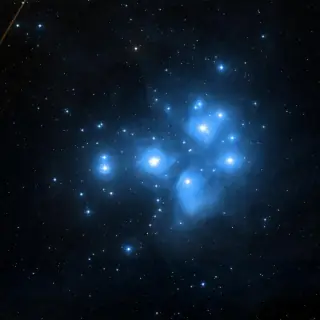
M45 — Pleiades
The Pleiades, also called the Seven Sisters, an open cluster in Taurus about 444 light-years away and the nearest Messier object to Earth.
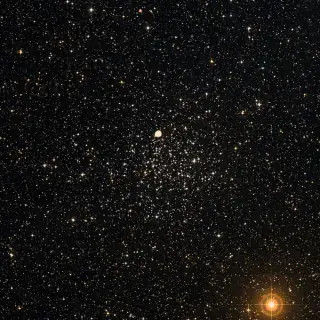
M46
A rich open cluster in Puppis of about 500 stars, roughly 4,900 light-years away and 250 million years old.
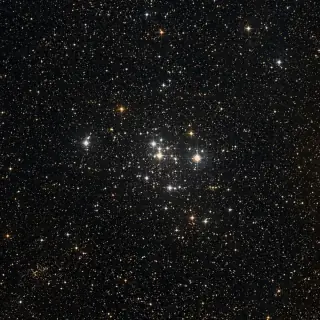
M47
An open cluster in Puppis about 1,600 light-years away and roughly 78 million years old, dominated by hot B-type stars.
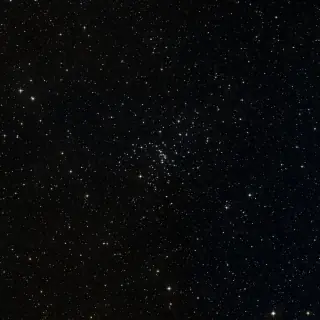
M48 — Herschel's Cluster
An open cluster in Hydra about 2,500 light-years away and several hundred million years old, with at least 438 known members.
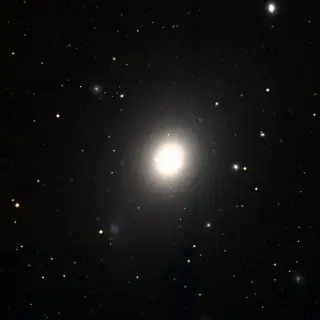
M49
A giant elliptical galaxy in Virgo, about 56 million light-years away, and the most luminous member of the Virgo Cluster.
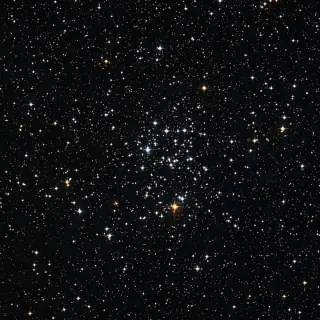
M50 — Heart-Shaped Cluster
An open cluster in Monoceros, about 2,900 light-years away, with roughly 500 confirmed member stars. Its outline is sometimes called heart-shaped.
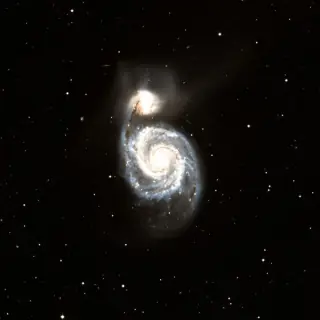
M51 — Whirlpool Galaxy
A grand-design spiral galaxy in Canes Venatici, roughly 23 to 31 million light-years away depending on the method. Lord Rosse's 1845 drawings were the first to show spiral structure in a nebula.
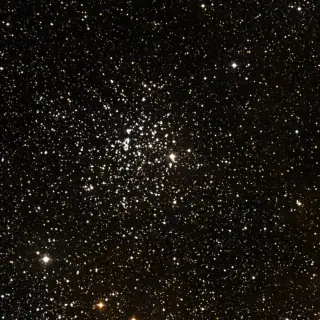
M52 — Scorpion Cluster
A rich open cluster in Cassiopeia, about 4,600 light-years away and roughly 158 million years old. Charles Messier found it in 1774.
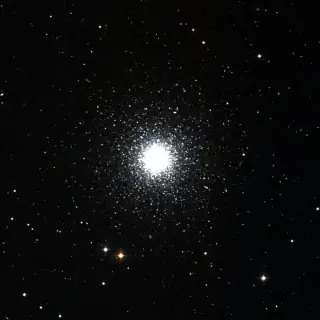
M53
A globular cluster in Coma Berenices, about 58,000 light-years away. It is metal-poor and about 12.7 billion years old.
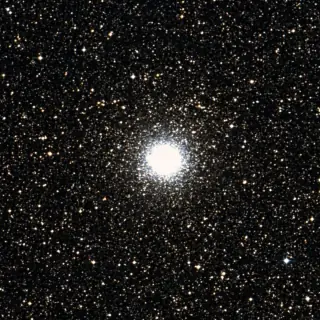
M54
A dense globular cluster in Sagittarius, about 80,000 light-years away.
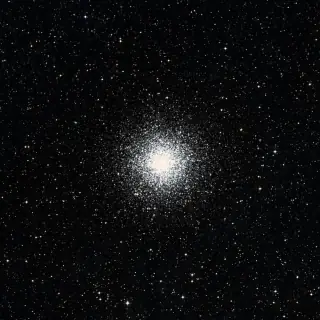
M55
A loose globular cluster in southern Sagittarius, about 17,600 light-years away.
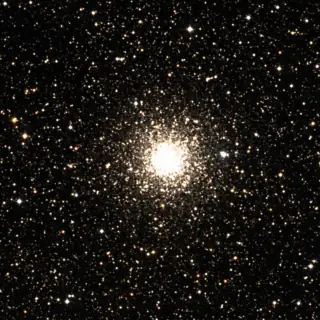
M56
A globular cluster in Lyra, about 32,900 light-years away, roughly midway between Albireo and Sulafat. It follows a retrograde orbit, which suggests it came from a merged dwarf galaxy.
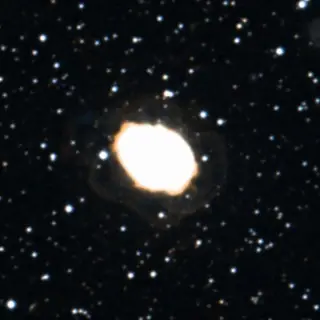
M57 — Ring Nebula
A planetary nebula in Lyra, about 2,570 light-years away: a shell of gas shed by a dying star. The central star is now a white dwarf of about 0.6 solar masses at roughly 125,000 K.
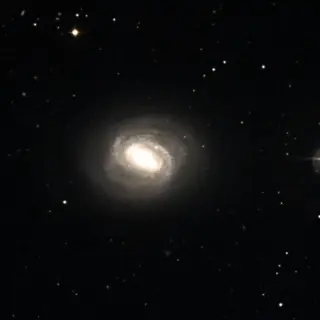
M58
A barred spiral galaxy in Virgo, about 68 million light-years away and one of the brighter members of the Virgo Cluster.
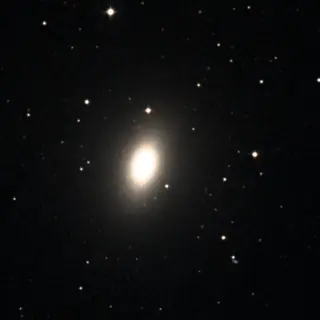
M59
An elliptical galaxy in Virgo, about 50 million light-years away. It has an unusually rich system of about 2,200 globular clusters and a central black hole of roughly 270 million solar masses.
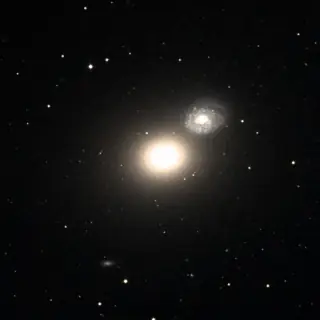
M60
A giant elliptical galaxy in Virgo, about 57 million light-years away and ranked third in brightness among the giant ellipticals in the Virgo Cluster.
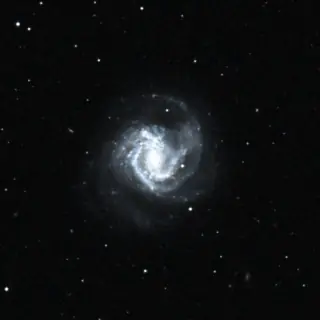
M61
A weakly barred spiral galaxy in the Virgo Cluster, roughly 45 to 52 million light-years away depending on the source.
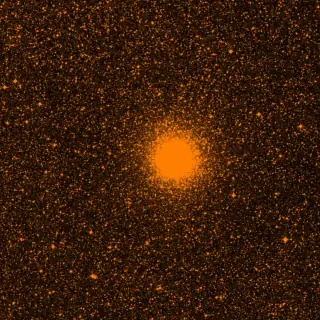
M62 — Flickering Globular
A massive globular cluster in Ophiuchus, about 21,500 light-years away and only about 5,500 light-years from the Galactic centre.
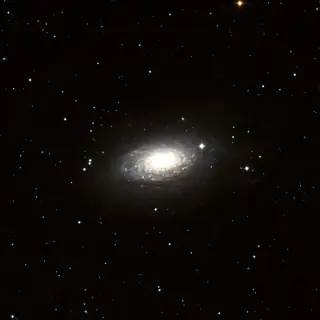
M63 — Sunflower Galaxy
The Sunflower Galaxy, a flocculent spiral in Canes Venatici about 29 million light-years away. Its arms are patchy in visible light rather than continuous.
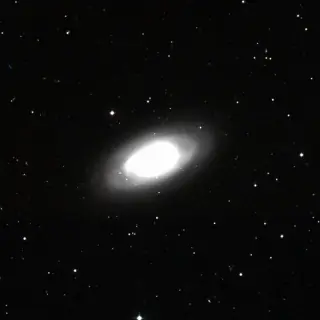
M64 — Black Eye Galaxy
The Black Eye Galaxy, a spiral in Coma Berenices about 17 million light-years away. A dark band of dust in front of the bright nucleus gives it its name.
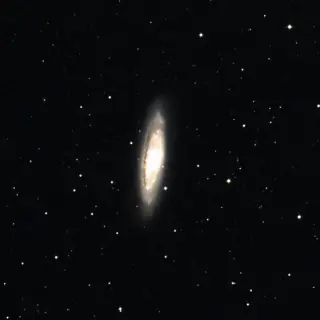
M65 — Leo Triplet (member)
NGC 3623, an intermediate spiral galaxy in Leo about 41 million light-years away, seen at a steep angle.
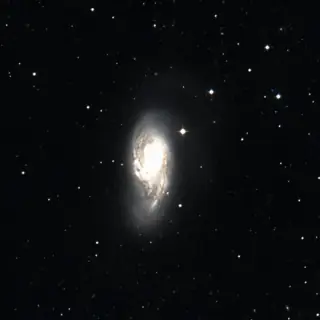
M66 — Leo Triplet (member)
NGC 3627, an intermediate spiral galaxy in Leo about 31 million light-years away, with loosely wound arms and a weak bar. A past encounter with NGC 3628 left one arm distorted and dusty.
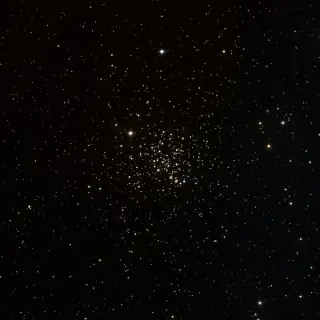
M67 — King Cobra Cluster
NGC 2682, one of the oldest known open clusters, in Cancer about 2,600–2,900 light-years away.
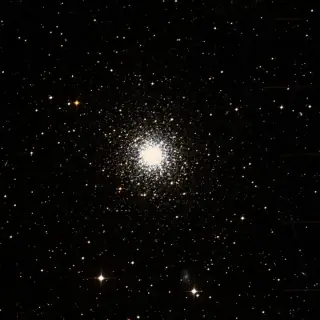
M68
NGC 4590, a globular cluster in Hydra about 33,600 light-years away. It is one of the most metal-poor globular clusters known and has about 50 identified variable stars, mostly RR Lyrae types.
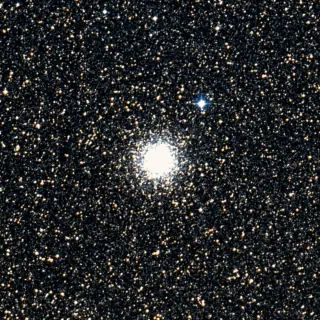
M69
NGC 6637, a globular cluster in Sagittarius about 28,700 light-years away and roughly 5,200 light-years from the Galactic Centre.
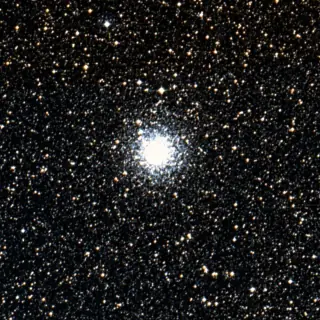
M70
NGC 6681, a globular cluster in southern Sagittarius about 29,400 light-years away. It has undergone core collapse, which leaves its stars heavily concentrated toward the centre.
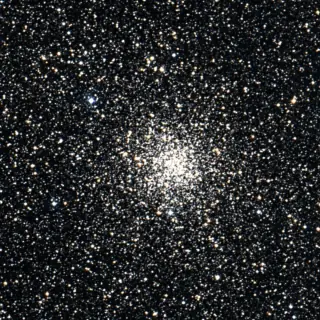
M71
NGC 6838, a globular cluster in Sagitta about 13,000 light-years away, sometimes called the Angelfish Cluster.
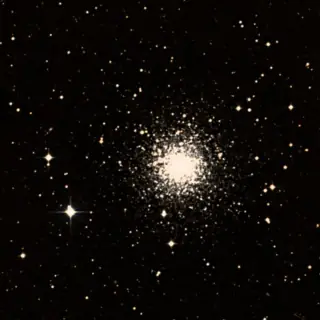
M72
NGC 6981, a globular cluster in Aquarius about 54,500 light-years away. Pierre Méchain found it on 29 August 1780, and 43 variable stars are known in it.
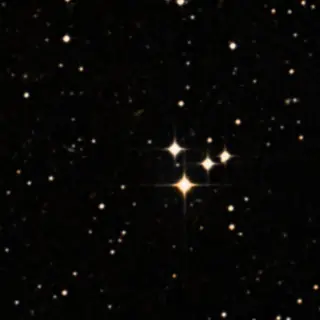
M73 — Y-Asterism
NGC 6994, an asterism of four stars in Aquarius, once taken for a small open cluster. Gaia places the stars between about 1,030 and 2,290 light-years away, so they are only a chance alignment.
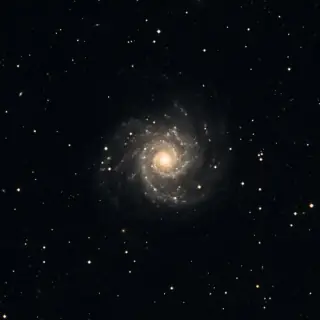
M74 — Phantom Galaxy
NGC 628, a face-on spiral galaxy in Pisces about 32 million light-years away.
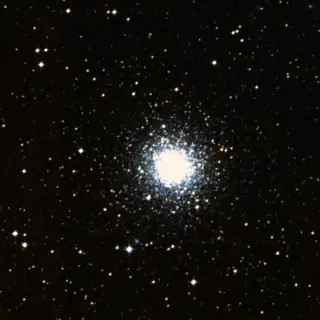
M75
NGC 6864, a globular cluster in Sagittarius about 67,500 light-years away, found by Pierre Méchain in 1780.
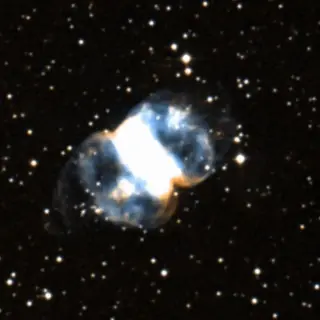
M76 — Little Dumbbell
The Little Dumbbell, a bipolar planetary nebula in Perseus about 2,500 light-years away. Observers once thought it was two nebulae, hence its NGC 650 and NGC 651 numbers.
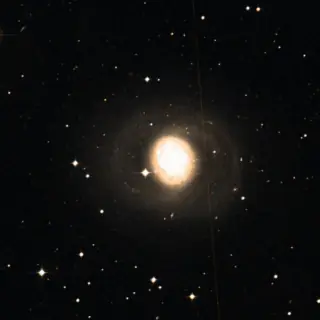
M77 — Cetus A
NGC 1068, a barred spiral galaxy in Cetus about 35 million light-years away, also called the Squid Galaxy.
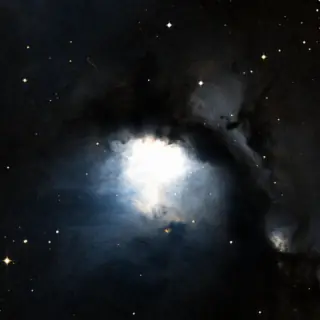
M78 — Casper the Friendly Ghost Nebula
NGC 2068, a reflection nebula in Orion about 1,350 light-years away, lit by two B-type stars.
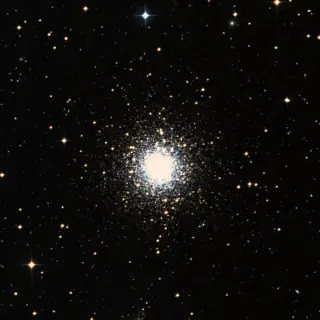
M79
NGC 1904, a globular cluster in Lepus about 42,000 light-years away, found by Pierre Méchain in 1780.
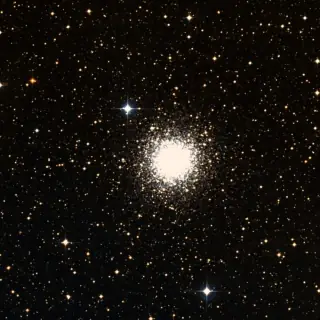
M80
A globular cluster in Scorpius, about 32,600 light-years away. On 21 May 1860 a nova, T Scorpii, appeared in it and for a short time was brighter than the whole cluster.
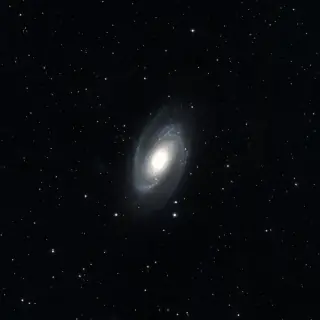
M81 — Bode's Galaxy
A grand-design spiral galaxy in Ursa Major, about 12 million light-years away, with an active nucleus around a black hole of roughly 70 million Suns.
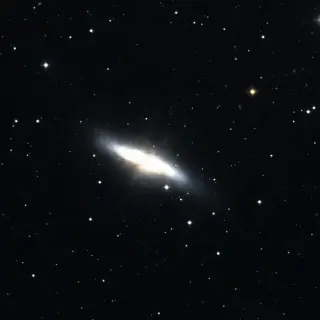
M82 — Cigar Galaxy
A starburst galaxy in Ursa Major, about 12 million light-years away, seen nearly edge-on.
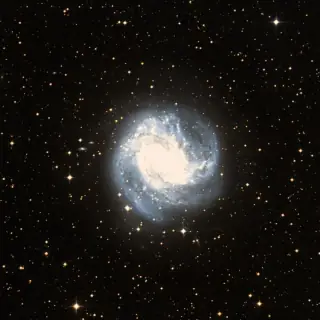
M83 — Southern Pinwheel
A barred spiral galaxy in Hydra, about 14.7 million light-years away. Six supernovae have been seen in it, and it probably interacted with the dwarf galaxy NGC 5253 within the last billion years.
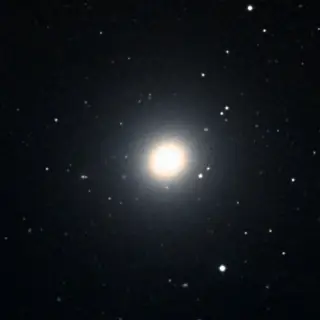
M84 — Markarian's Chain (member)
A giant elliptical galaxy in the core of the Virgo Cluster, about 55 million light-years away.
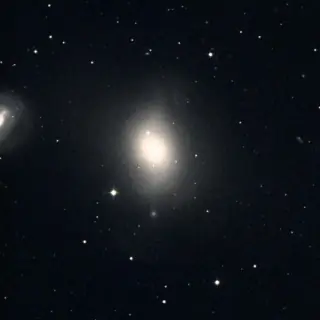
M85
A lenticular galaxy in Coma Berenices, about 60 million light-years away, on the outskirts of the Virgo Cluster.
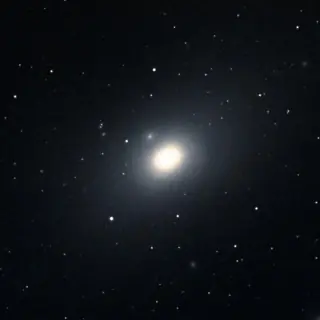
M86 — Markarian's Chain (member)
A bright elliptical or lenticular galaxy in the heart of the Virgo Cluster, about 52 million light-years away.
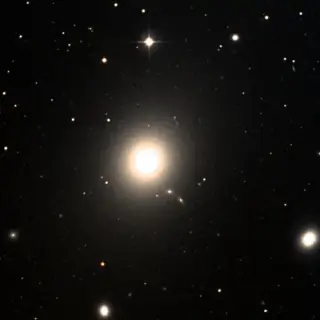
M87 — Virgo A
A supergiant elliptical galaxy in Virgo, about 53.5 million light-years away.
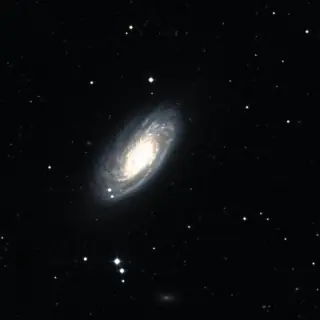
M88
An unbarred spiral galaxy in Coma Berenices, about 59 million light-years away, with a Seyfert 2 nucleus.
M89
An elliptical galaxy in the Virgo Cluster, about 50 million light-years away.
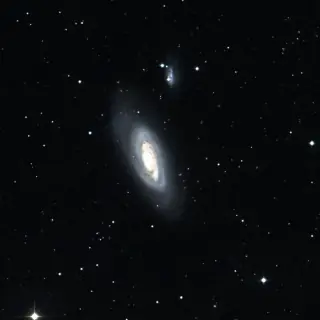
M90
A large spiral galaxy in Virgo, about 59 million light-years away, whose spectrum is blueshifted.
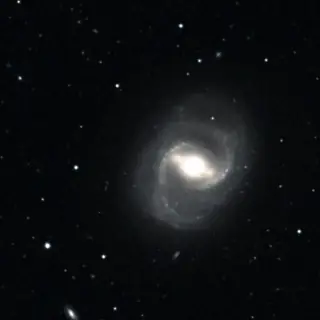
M91
A barred spiral galaxy in Coma Berenices, about 63 million light-years away, in the Virgo Cluster.
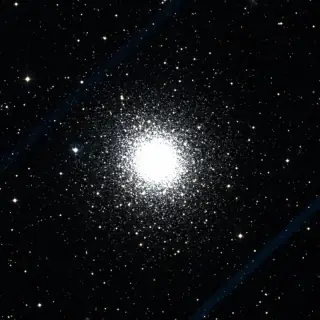
M92
A globular cluster in Hercules, about 26,700 light-years away and roughly 11 billion years old, among the oldest in the Milky Way. It is metal-poor and holds at least two stellar generations.
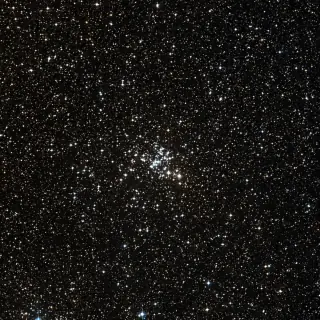
M93 — Critter Cluster
A rich open cluster in Puppis, about 3,380 light-years away and roughly 390 million years old, also called the Critter Cluster.
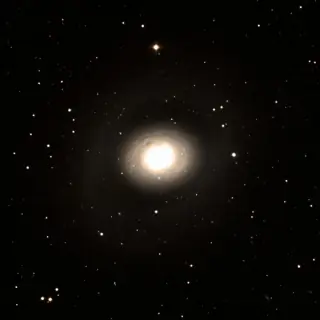
M94 — Cat's Eye Galaxy
A spiral galaxy in Canes Venatici, about 16 million light-years away.
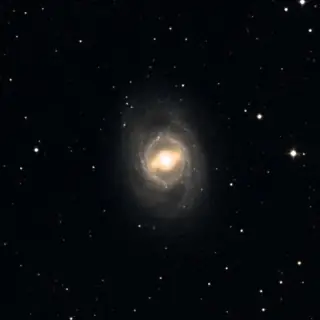
M95
A barred spiral galaxy in Leo, about 33 million light-years away, also catalogued as NGC 3351. A ring of star-forming regions about 70,000 light-years across wraps around its central bar.

M96
An intermediate spiral galaxy in Leo, about 31 million light-years away and the brightest member of the M96 group.
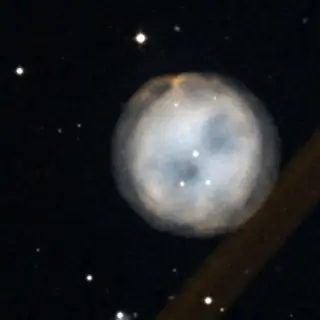
M97 — Owl Nebula
A planetary nebula in Ursa Major, the shell of gas shed by a dying star, about 2,030 light-years away (another estimate is nearer 2,800).
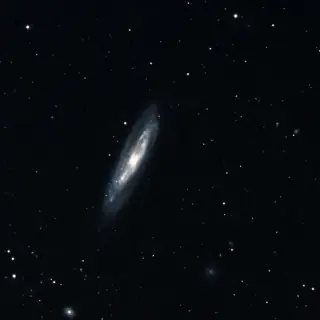
M98
An intermediate spiral galaxy in Coma Berenices, about 44 million light-years away, seen steeply tilted at about 74° to our line of sight.
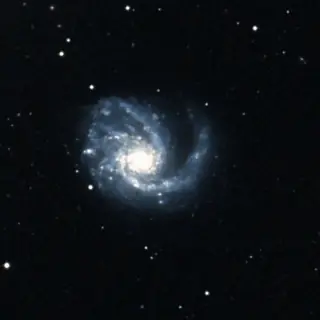
M99 — Coma Pinwheel
A grand-design spiral galaxy in Coma Berenices, roughly 45–49 million light-years away depending on the source, in the Virgo Cluster. One arm is extended and loosely wound, so it looks lopsided.
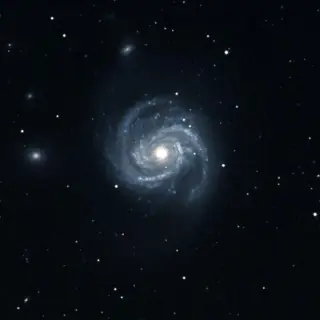
M100 — Blowdryer Galaxy
A grand-design spiral galaxy in Coma Berenices, about 55 million light-years away, and one of the largest and brightest members of the Virgo Cluster.

M101 — Pinwheel Galaxy
A large face-on spiral galaxy about 21 million light-years away, roughly three times the width of the Milky Way.
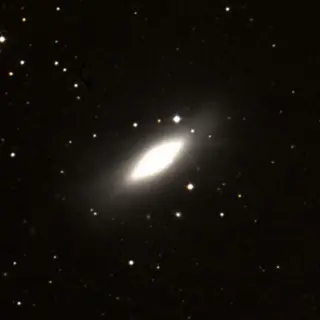
M102 — Spindle Galaxy
A galaxy whose identity is disputed.
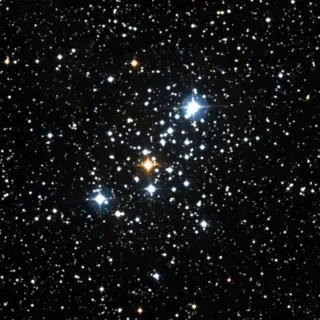
M103
An open cluster in Cassiopeia, about 9,400 light-years away and roughly 15 light-years across, with about 170 estimated members. Its age is put at 12.6 to 25 million years.
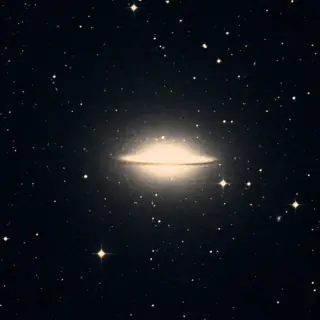
M104 — Sombrero Galaxy
A galaxy in Virgo, about 31 million light-years away, seen almost edge-on with a dark dust lane across a large bulge, like a sombrero hat.
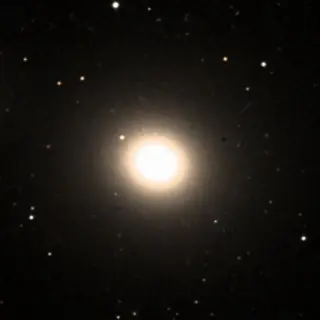
M105
An elliptical galaxy in Leo, about 37 million light-years away, with a central black hole of roughly 140 to 200 million solar masses.

M106 — NGC 4258
A spiral galaxy in Canes Venatici, about 24 million light-years away.
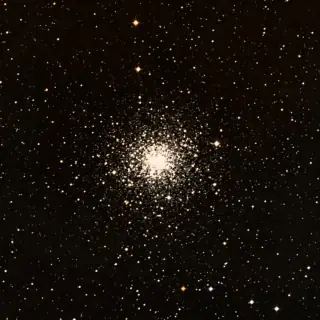
M107
A very loose globular cluster in Ophiuchus, about 20,900 light-years away and 30 light-years in radius by one listing. Méchain found it in 1782, and it was added to the Messier catalogue only in 1947.
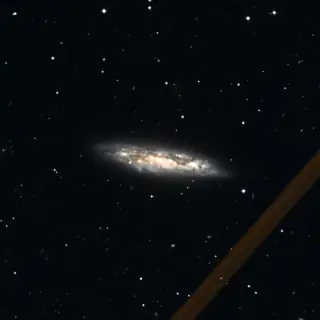
M108 — Surfboard Galaxy
A barred spiral galaxy in Ursa Major seen nearly edge-on, which gives it the nickname Surfboard Galaxy. It lies about 46 million light-years away by one measure, though a 2014 study put it nearer.
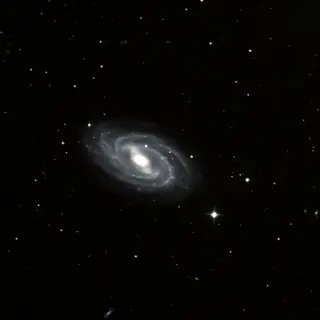
M109
A barred spiral galaxy in Ursa Major, about 67 million light-years away, and the most distant object in the Messier catalogue.
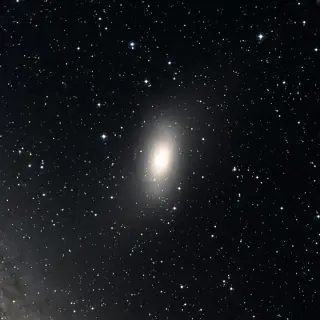
M110
A dwarf elliptical galaxy and satellite of the Andromeda Galaxy, about 2.7 million light-years away. Patches of dust and young blue stars near its centre are unusual for this kind of galaxy.