
M15
Globular Cluster in Pegasus
About
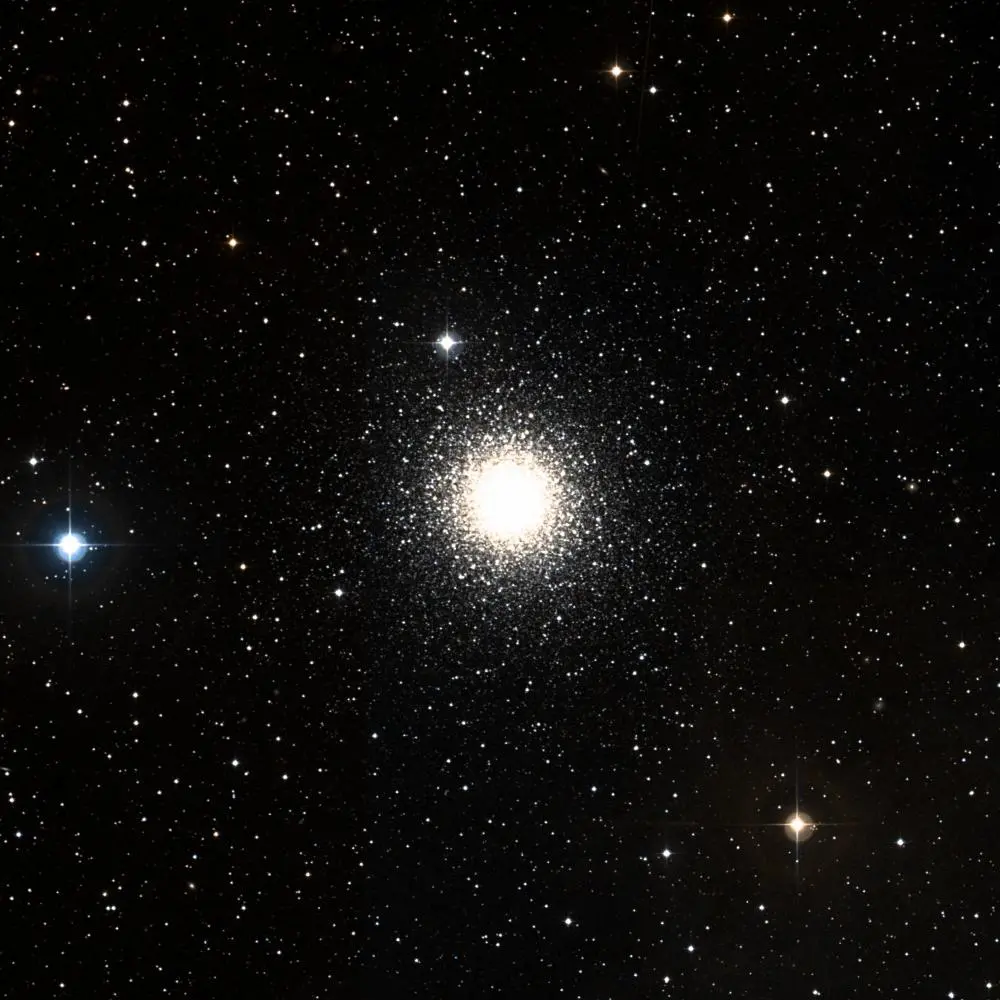
A globular cluster in Pegasus, about 35,700 light-years away and among the most densely packed known. It has gone through core collapse and holds Pease 1, the first planetary nebula found in a globular cluster.
Imaging tips
- At 1,350–2,240 mm on APS-C (2,060–3,440 mm on full frame) the cluster spans a third to half of the frame, about 18′ across.
- The packed stars make long subs risky, so 30-second subs are the usual advice for the cluster itself; no filter is needed.
- Faint dust (integrated flux nebula) wraps the cluster in an L or S shape. One imager needed about 14 hours of 5-minute subs at f/2 under dark skies to show it.
- For the dust, keep only perfectly tracked subs, and expect it to look overprocessed when pushed hard.
- Best in July and August; it reaches 52° altitude from 50°N.
Facts
- Size
- 18′
- Magnitude
- 6.2
- Coordinates
- RA 21h 30.0m, Dec +12° 10′
- Framing, APS-C
- 1350–2240 mm
- Framing, full frame
- 2060–3440 mm
- Best months
- Jul, Aug
- Peak altitude
- 52° from 50°N, 67° from 35°N