
M68
Globular Cluster in Hydra
About
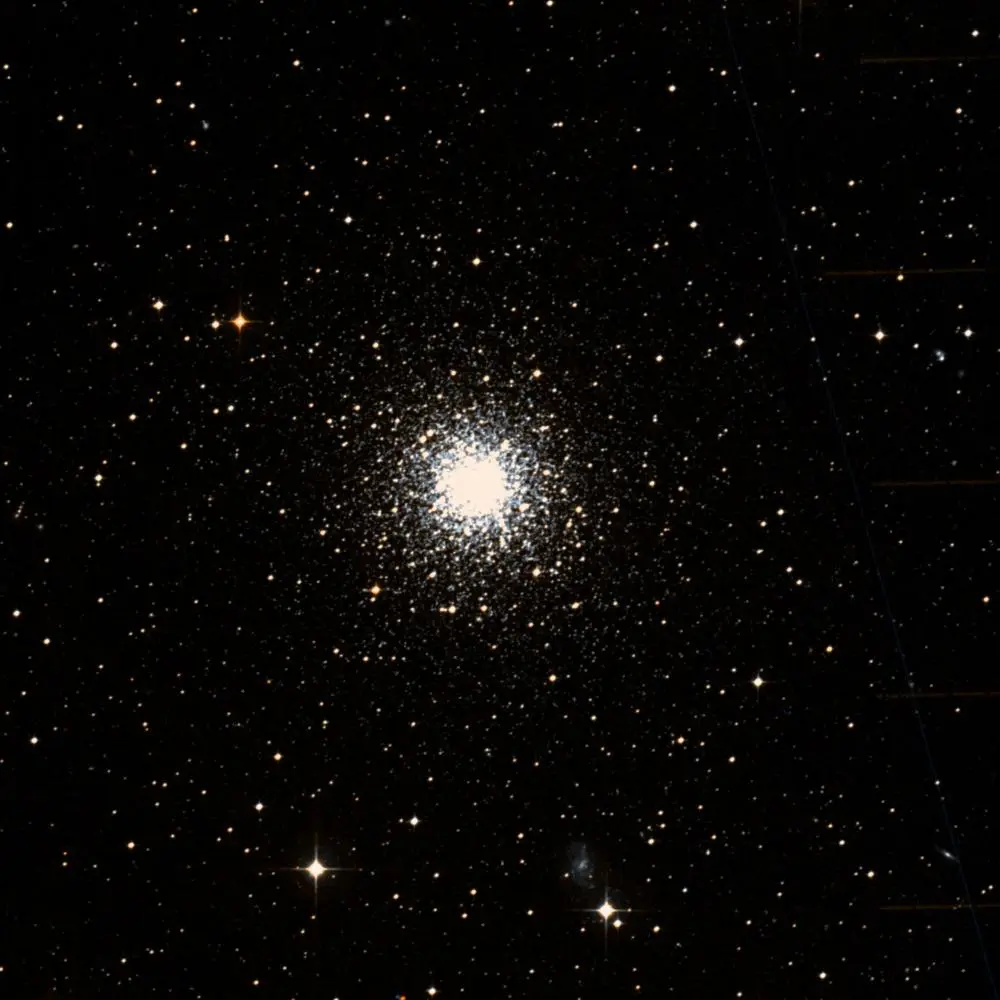
NGC 4590, a globular cluster in Hydra about 33,600 light-years away. It is one of the most metal-poor globular clusters known and has about 50 identified variable stars, mostly RR Lyrae types.
Imaging tips
- About 12′ across, so 2,020–3,370 mm on APS-C or 3,090–5,160 mm on full frame.
- It sits low for northern observers, staying below 14° altitude from 50°N, so expect thick air and poor seeing there.
- A remote 80 cm telescope in Chile built one image from 6 × 20 minutes per RGB channel, 6 hours in all, with a synthetic luminance.
- The core stays resolved in short data: a 0.9 m telescope stacked eight 1-minute R-band frames, even near full moon.
- Best around March and April.
Facts
- Size
- 12′
- Magnitude
- 7.8
- Coordinates
- RA 12h 39.4m, Dec −26° 45′
- Framing, APS-C
- 2020–3370 mm
- Framing, full frame
- 3090–5160 mm
- Best months
- Mar, Apr
- Peak altitude
- 13° from 50°N, 28° from 35°N