
M97 — Owl Nebula
Planetary Nebula in Ursa Major
About
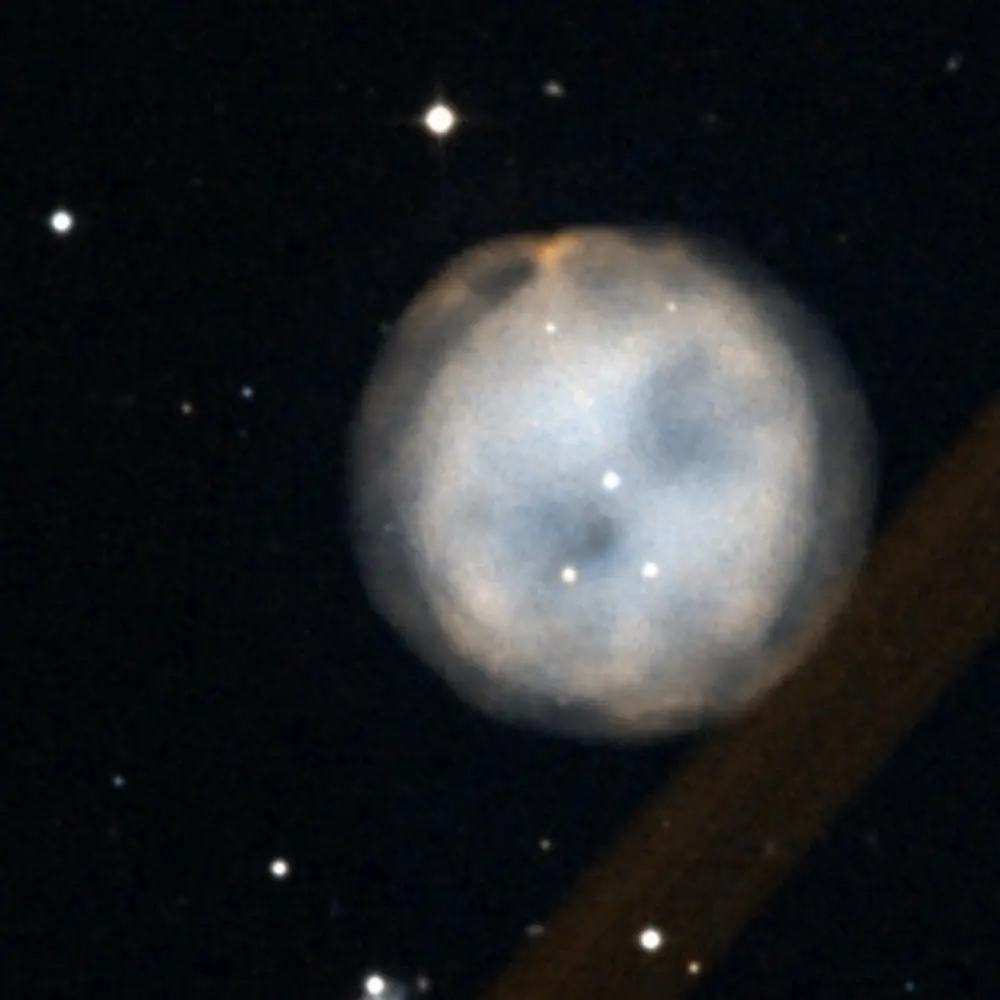
A planetary nebula in Ursa Major, the shell of gas shed by a dying star, about 2,030 light-years away (another estimate is nearer 2,800). The owl's eyes come from a barrel-shaped inner shell tilted about 45° to us. Lord Rosse's 1848 drawing resembled an owl's head, which gave it its name.
Imaging tips
- Only about 3′ across, so it is too small to frame: use a long focal length and a fine pixel scale.
- Narrowband suits it: one 33-hour project used Hα, OIII and NII at 1.5 nm, with short RGB frames added only for the stars.
- The inner shell glows about equally in Hα and OIII, but its fine structure and the faint outer shell and halo show best in OIII.
- A deep halo image used 48 hours of data, with OIII subs of 15–20 minutes, so expect tens of hours to show the halo.
- Best around February and March, and nearly overhead from 50°N.
Facts
- Size
- 3′ × 3′
- Magnitude
- 9.9
- Coordinates
- RA 11h 14.9m, Dec +55° 1′
- Framing, APS-C
- longer than 4000 mm
- Framing, full frame
- longer than 4000 mm
- Best months
- Feb, Mar
- Peak altitude
- 85° from 50°N, 70° from 35°N