
Sharpless catalogue: 51 imaging targets
Stewart Sharpless of the US Naval Observatory listed 313 glowing hydrogen clouds (H II regions) in 1959, working from the photographs of the Palomar Sky Survey. The planner includes 51 of them. Most shine strongly in hydrogen-alpha light, so they suit narrowband filters, and many are large and faint, which calls for a wide field and long total exposures.
Further reading: HEASARC: Sharpless H II regions
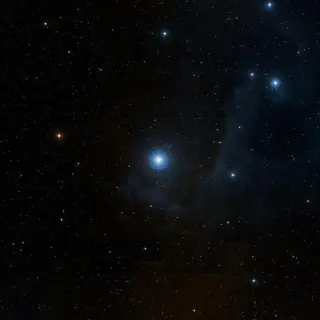
Sh2-1
A blue reflection nebula mixed with red hydrogen glow in Scorpius, curving through roughly 180° around the star Pi Scorpii.
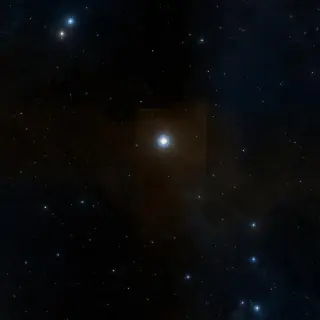
Sh2-7
A large, faint hydrogen emission nebula in Scorpius that surrounds the star Delta Scorpii, about 650 light-years away.
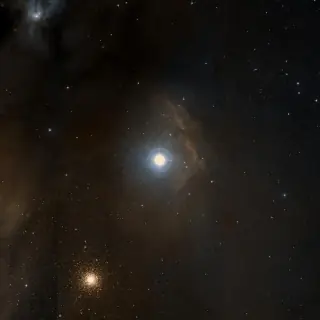
Sh2-9
A red emission nebula blended with blue reflection nebulosity around Sigma Scorpii, a multiple star system in Scorpius about 568 light-years away.
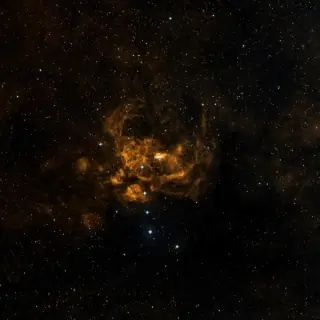
Sh2-11 — War and Peace Nebula
The War and Peace Nebula, also catalogued as NGC 6357 and known as the Lobster Nebula: a glowing hydrogen cloud in Scorpius about 5,500 light-years away.
Sh2-27
A huge, faint cloud of glowing hydrogen around the star Zeta Ophiuchi, one of the closest emission nebulae at about 440 light-years.
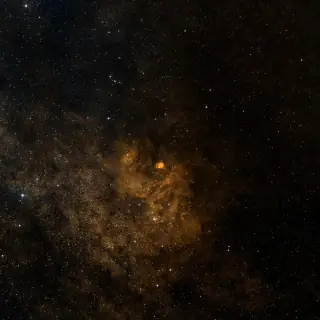
Sh2-54
A large hydrogen emission region in Serpens, lit by young hot stars and protostars, often called the Serpent Nebula.
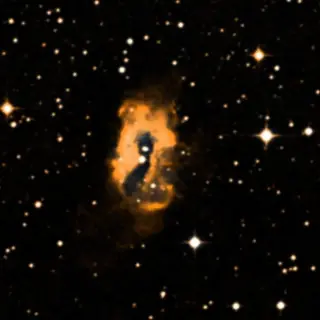
Sh2-71
A planetary nebula in Aquila with a lopsided ring and two lobes, about 3,300 light-years away.
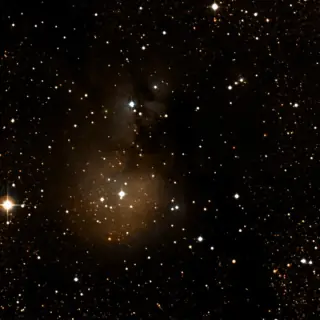
Sh2-82 — Little Trifid
A small star-forming cloud in Sagitta, about 3,500 light-years away, that combines a red glowing region, a blue reflection nebula and a dark dust cloud.
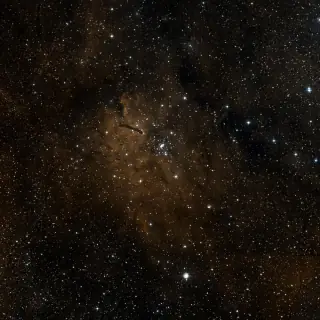
Sh2-86
A large emission nebula in Vulpecula, about 6,000 light-years away, that surrounds the young open cluster NGC 6823. Sources give its width as about 40′.
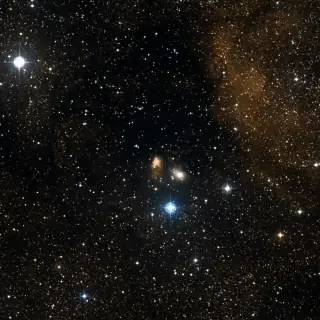
Sh2-88
A star-forming region in Vulpecula, about 6,500 light-years away, made of a large glowing cloud (Sh2-88A) and two small bright knots, B1 and B2. A hot O8 star lights the main cloud.
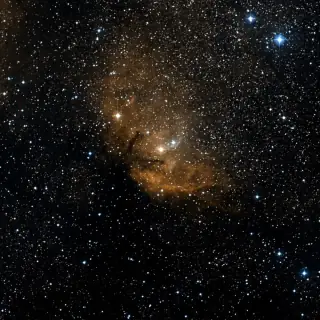
Sh2-101 — Tulip Nebula
The Tulip Nebula, a glowing hydrogen cloud in Cygnus powered by the hot star HD 227018. Sources put it at about 6,000 to 8,000 light-years away and about 70 light-years wide.
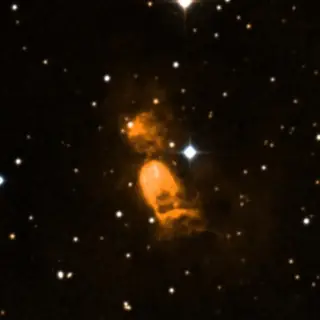
Sh2-106
A small star-forming nebula in Cygnus, about 2,000 light-years away and roughly 2 light-years wide, nicknamed the Celestial Snow Angel.
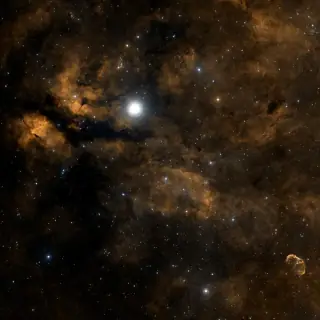
Sh2-108 — Gamma Cygni Nebula
Also catalogued as IC 1318, a very large complex of glowing hydrogen around Sadr (γ Cygni), the star at the centre of Cygnus's cross. Dark nebulae run through it.
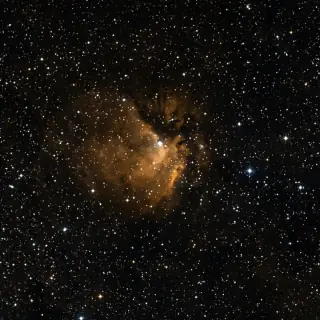
Sh2-112
A small, roughly round cloud of glowing hydrogen in Cygnus, about 5,600 light-years away, lit by the double star BD+45 3216.
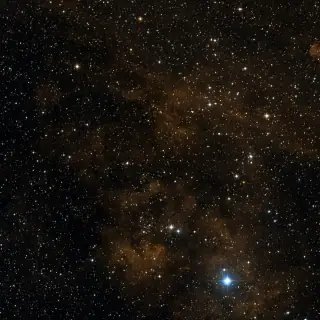
Sh2-115
An emission nebula in Cygnus, about 2–2.5° from Deneb in the northwest direction. Its glowing gas is mainly lit by the young cluster Berkeley 90 on the eastern side.
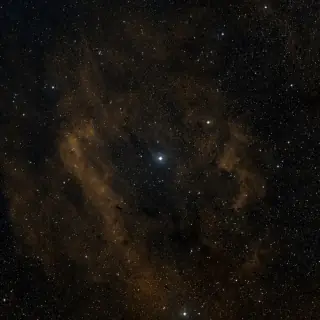
Sh2-119
The Clamshell Nebula, an emission nebula in Cygnus about 2,200 light-years away and roughly 3° across. Two halves of glowing gas sit either side of the blue giant 68 Cygni, which lights them.
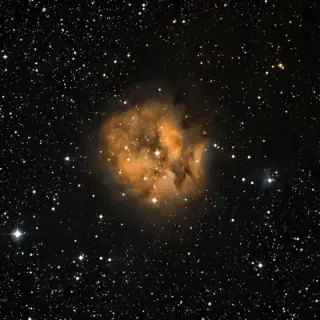
Sh2-125 — Cocoon Nebula
IC 5146, the Cocoon Nebula, a star-forming cloud in Cygnus that is partly glowing hydrogen, partly reflected starlight and partly dark dust.
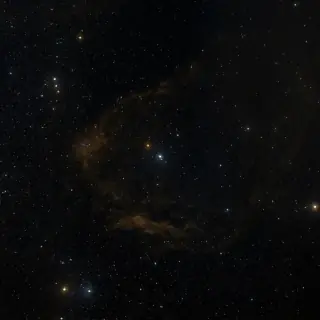
Sh2-129 — Flying Bat Nebula
Sh2-129 is a big cloud of glowing hydrogen in Cepheus, roughly 1,700 light-years from us. Inside it hides Ou 4, the Squid Nebula, a bipolar outflow that the triple star HD 202214 is believed to power.
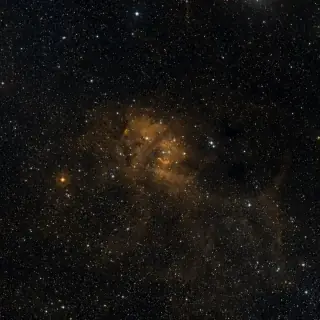
Sh2-132 — Lion Nebula
Two Wolf-Rayet stars, together with a crowd of hot O- and B-class stars, light up this emission nebula in Cepheus, about 10,000 light-years away.
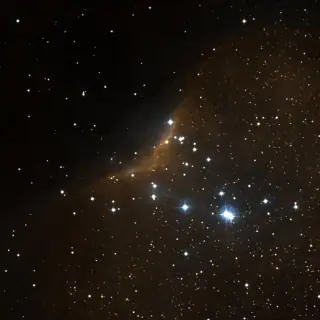
Sh2-140
A small emission nebula in Cepheus, about 2,500 to 3,000 light-years away, beside the dark nebula LDN 1204, at that cloud's southwest side.
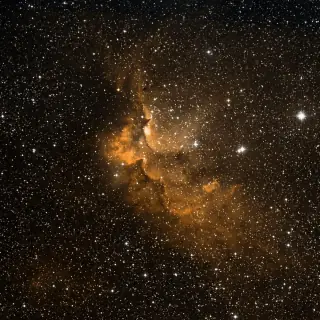
Sh2-142 — Wizard Nebula
The Wizard Nebula, the glowing hydrogen around the young cluster NGC 7380 in Cepheus, about 8,000 light-years away.
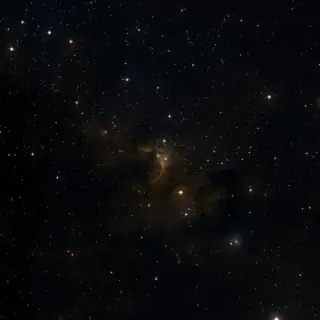
Sh2-155 — Cave Nebula
An emission nebula in Cepheus, about 2,400 light-years away, lit by hot young stars of the Cepheus OB3 association. A bright arc of glowing gas gave Patrick Moore the cave-mouth image behind its name.
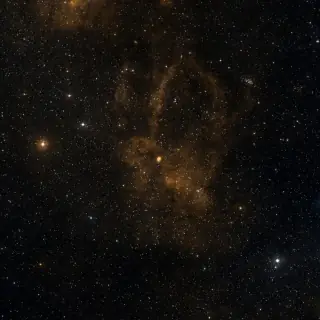
Sh2-157 — Lobster Claw Nebula
The Lobster Claw Nebula, an emission nebula in Cassiopeia near the Bubble Nebula, about 8,000 light-years away by one source.
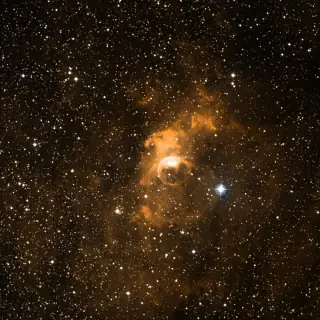
Sh2-162 — Bubble Nebula
An emission nebula in Cassiopeia, about 7,100 light-years away. The wind from the massive young star SAO 20575 blows a shell of gas around itself, and the nearby cloud glows in response.
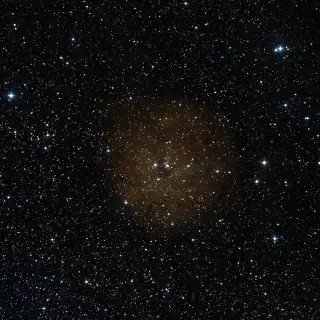
Sh2-170 — Little Rosette
A faint ring of glowing hydrogen in Cassiopeia, on the Perseus Arm at about 7,500 light-years. It is named for the far larger Rosette Nebula.
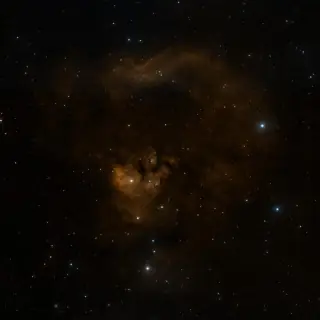
Sh2-171
The emission-nebula part of NGC 7822, a star-forming complex in Cepheus, only a few million years old at most and roughly 2,900 light-years away, that also holds the cluster Berkeley 59.
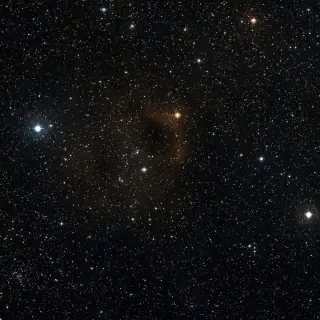
Sh2-173 — Phantom of the Opera
An emission nebula in Cassiopeia, about 8,800 light-years away in the Perseus arm of the Milky Way.
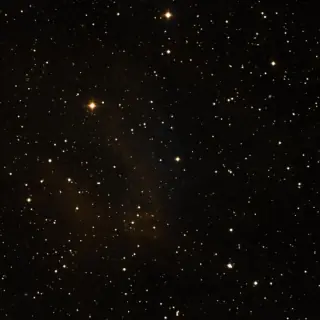
Sh2-174
A very faint shell of glowing gas in Cepheus, nicknamed the Valentine Rose and put at 930 to 980 light-years depending on the source.
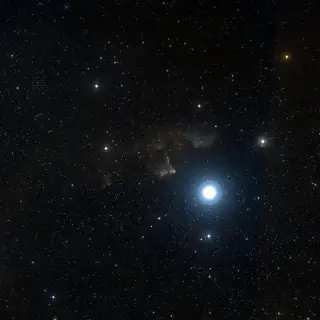
Sh2-185 — Ghost of Cassiopeia
A large cloud of ionised hydrogen centred on Gamma Cassiopeiae, a bright star, and about 2° across by one source.
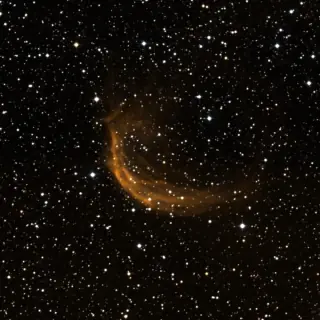
Sh2-188 — Dolphin Nebula
The Dolphin Nebula, also called the Shrimp Nebula: a faint crescent of gas in Cassiopeia, about 715 to 850 light-years away depending on the source.
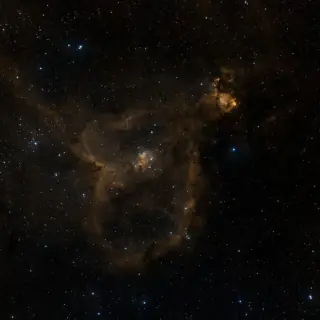
Sh2-190 — Heart Nebula
Emission nebula in Cassiopeia, nicknamed the Heart Nebula, roughly 7,000 to 7,500 light-years away. Melotte 15, an open cluster, sits at its centre.
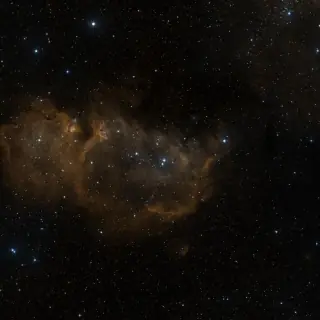
Sh2-199 — Soul Nebula
W5, also named IC 1848 after its embedded cluster, is the Soul Nebula: an emission nebula in Cassiopeia about 6,500 light-years away.
Sh2-205
A large, dim hydrogen cloud on the Perseus and Camelopardalis border, about 3,000 light-years away; one imager describes its bright part as peanut-shaped.
Sh2-216
A very old planetary nebula in Perseus, about 420 light-years away and the closest one known. It is roughly 600,000 years old and about 100′ across, over three times the Moon's width.
Sh2-224
A faint supernova remnant in Auriga, about 14,700 light-years away and roughly 163 light-years across.
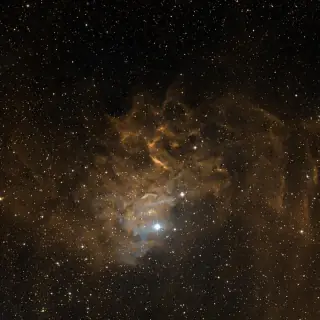
Sh2-229 — Flaming Star Region
The Flaming Star Nebula, also listed as IC 405 and Caldwell 31, in Auriga about 1,500 light-years away.
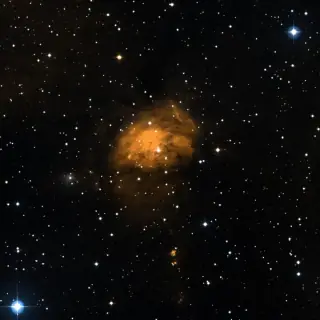
Sh2-235
A kidney-shaped region of glowing hydrogen in Auriga, thought to have formed where two large gas clouds collided.
Sh2-239
A small emission nebula in Taurus, about 450 light-years away, with Herbig-Haro objects.
Sh2-240 — Simeis 147
Simeis 147, the Spaghetti Nebula, a supernova remnant on the Auriga-Taurus border about 3,000 light-years away and some 3° across. Grigory Shajn's team found it in 1952 with a Schmidt camera.
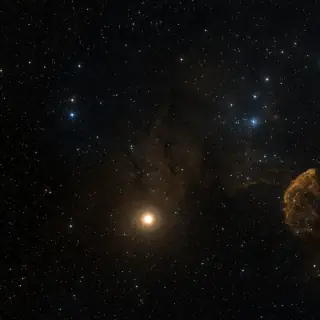
Sh2-249
A faint cloud of glowing hydrogen in Gemini, about 5,200 light-years away.
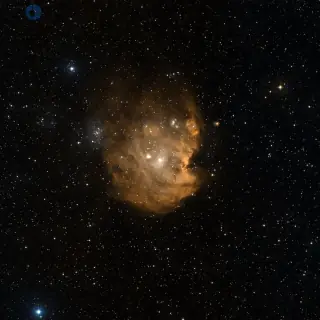
Sh2-252 — Monkey Head Nebula
The Monkey Head Nebula, a glowing hydrogen cloud in Orion about 6,400 light-years away, also catalogued as NGC 2174 and tied to the star cluster NGC 2175.
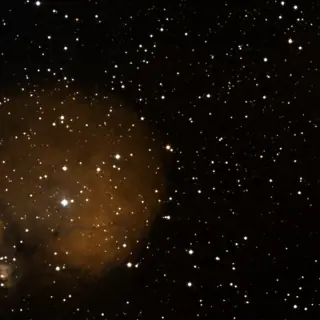
Sh2-254
The most extensive of a group of hydrogen clouds in Orion, about 8,000 light-years away. Sh2-255 and Sh2-257 lie close beside it on the sky and are the brighter two.
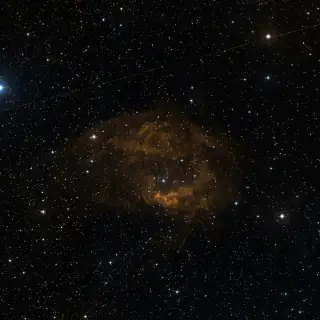
Sh2-261 — Lower's Nebula
Lower's Nebula, a faint hydrogen cloud in northern Orion, near the Gemini border. Harold Lower and his son Charles, amateurs from San Diego, recorded it on a plate in 1939.
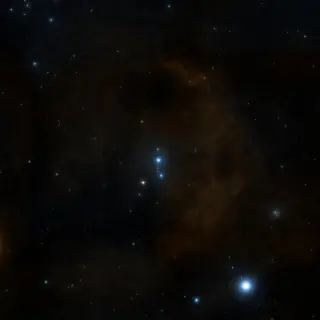
Sh2-264 — Angelfish Nebula
The Angelfish Nebula, or Lambda Orionis Ring, a huge faint ring of glowing hydrogen around Meissa, the star at Orion's head.
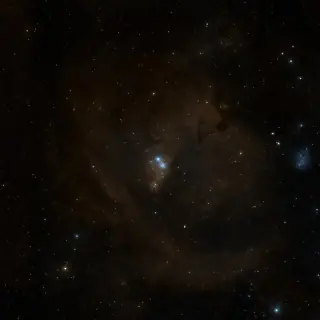
Sh2-273 — Cone Nebula Region
A large emission region in Monoceros, about 2,600 to 2,700 light-years away, that takes in the whole NGC 2264 complex.
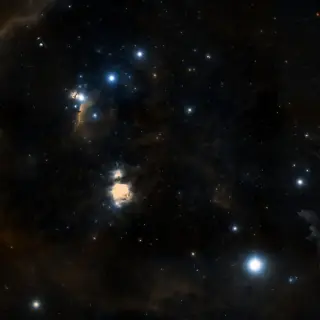
Sh2-276 — Barnard's Loop
A huge, faint arc of glowing hydrogen in Orion, roughly 1,400 light-years away and centred between the Horsehead and Orion Nebula.
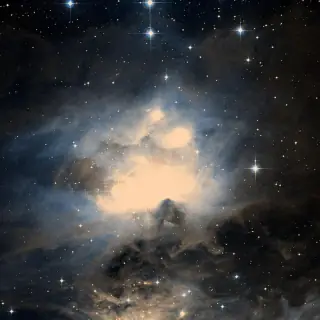
Sh2-279 — Running Man Nebula
A cluster of three NGC nebulae in Orion's Sword, some 1,500 light-years from us, lying about 0.6° above M42 in the sky.
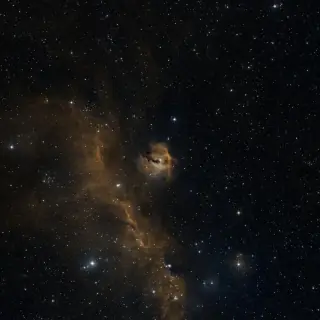
Sh2-292 — Seagull Nebula
The compact top of the Seagull complex, where Monoceros meets Canis Major, about 3,700 light-years away. It glows from HD 53367, a young Be star of about 20 solar masses.
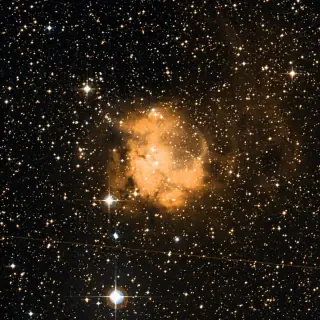
Sh2-301
A faint emission nebula in Canis Major, roughly round and about 9′ × 8′ across with some dark lanes.
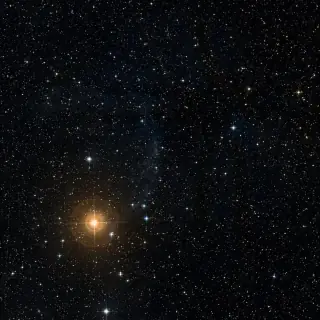
Sh2-308 — Dolphin Head Nebula
A bubble in Canis Major about 5,000 light-years away, nicknamed the Dolphin Head, carved by the fast winds of EZ CMa, a Wolf-Rayet star at its centre.
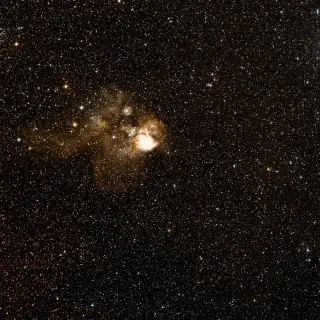
Sh2-311
Also catalogued as NGC 2467, this star-forming region in Puppis goes by the nickname Skull and Crossbones.