
M80
Globular Cluster in Scorpius
About
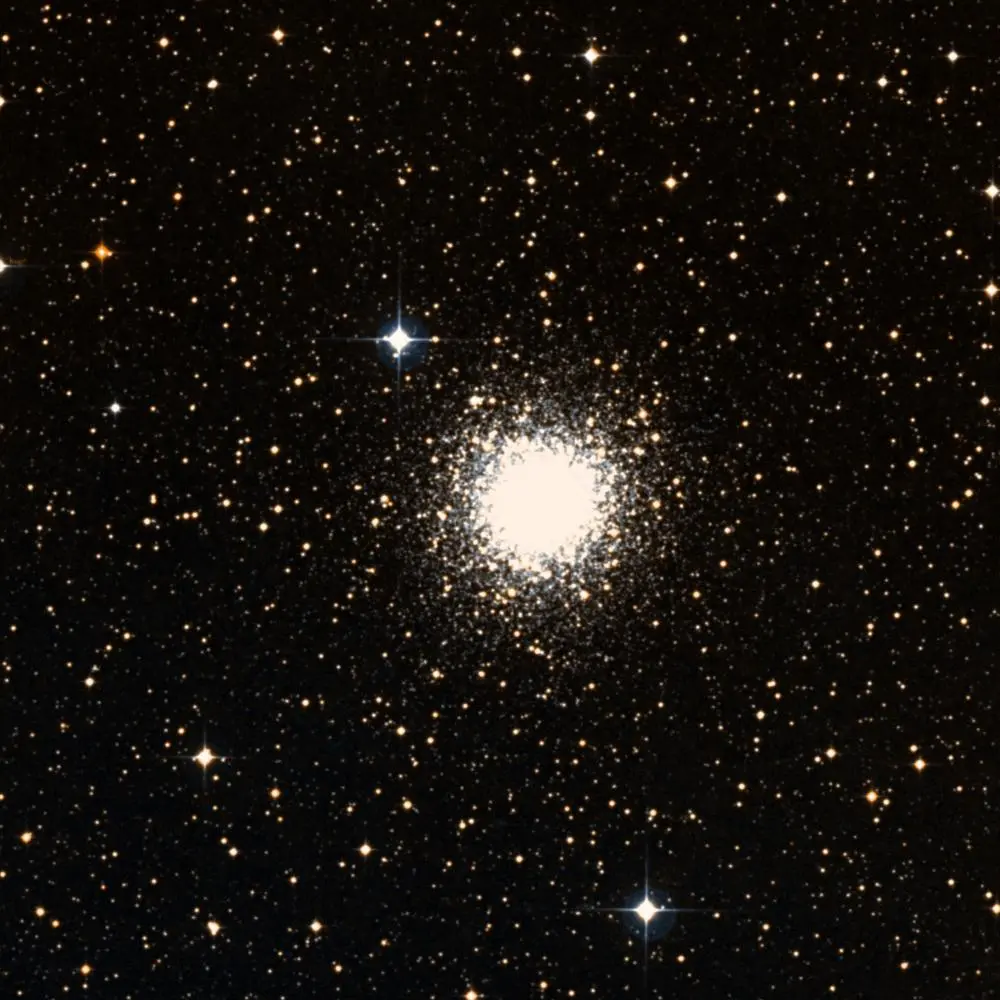
A globular cluster in Scorpius, about 32,600 light-years away. On 21 May 1860 a nova, T Scorpii, appeared in it and for a short time was brighter than the whole cluster. Hubble data place its many blue stragglers, stars that look younger than the cluster, in separate zones of the dense core.
Imaging tips
- Only 9′ across, so it needs about 2,700–4,500 mm on APS-C to span a third to half of the frame.
- One remote-telescope image used a 20-inch f/6.8 reflector and about 6.3 hours of LRGB data in total, 110 minutes of it luminance.
- Its surface brightness is 20.7 mag/arcsec², bright for a deep-sky object, so it does not need the long integrations that faint galaxies do.
- It stays below 17° altitude from 50°N; best around May and June.
Facts
- Size
- 9′
- Magnitude
- 7.3
- Coordinates
- RA 16h 17.1m, Dec −22° 59′
- Framing, APS-C
- 2690–4490 mm
- Framing, full frame
- longer than 4000 mm
- Best months
- May, Jun
- Peak altitude
- 17° from 50°N, 32° from 35°N