
Collinder catalogue: 36 imaging targets
Per Collinder of Lund Observatory in Sweden published a list of 471 star clusters in 1931, nearly all of them open clusters. It includes large, loose groups that older lists had left out, such as the Coathanger in Vulpecula and the stars of Orion's Belt. The planner includes 36 of them; many are wide and sparse, so they frame best with a short focal length or a camera lens.
Further reading: Collinder catalogue (Wikipedia)Collinder 1931, the original catalogue (ADS scan)
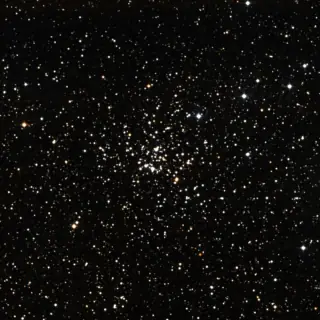
Cr13
An old open cluster in Cassiopeia holding roughly 150 stars, found by William Herschel in 1787. Distance estimates differ: about 4,100 light-years in one study and 7,200 in another.
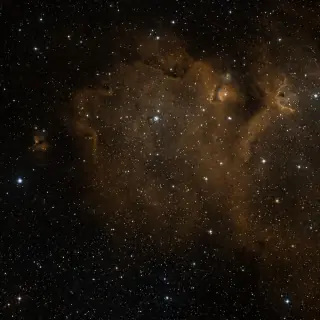
Cr33
This Cassiopeia open cluster lies toward the eastern edge of the Soul Nebula (IC 1848).
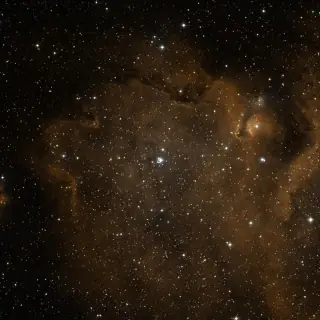
Cr34
A small open cluster in Cassiopeia, embedded in the head of the Soul Nebula (IC 1848) and about 13′ from Collinder 33. The Soul sits in the Perseus arm, roughly 7,500 light-years from Earth.
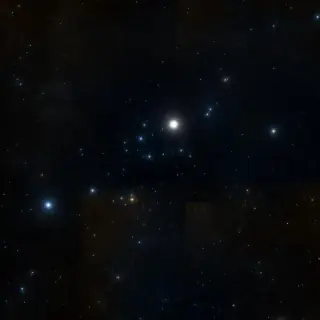
Cr39
A young open cluster in Perseus about 570 light-years away, known as the Alpha Persei Cluster and as Melotte 20.
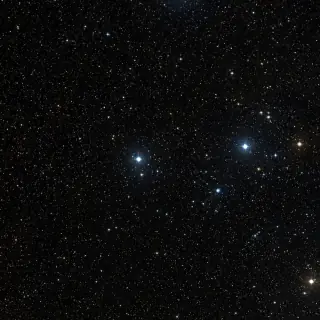
Cr62
A loose, scattered open cluster in Auriga, about 5° south of Capella and roughly 4,800 light-years away. At a real diameter near 49 light-years it is large and sparse.
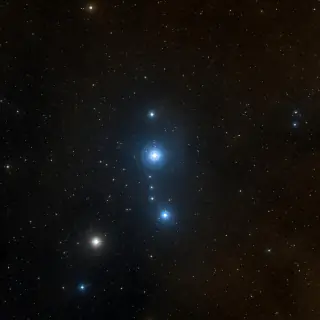
Cr69 — Lambda Ori Cluster
The Lambda Orionis Cluster, a young open cluster around the double star Meissa, roughly 1,000 to 1,300 light-years away by different estimates and about 5 million years old.
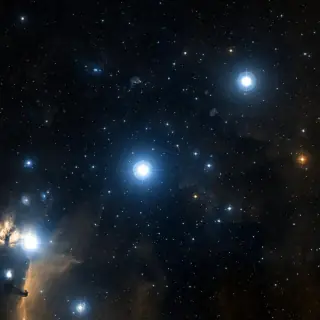
Cr70 — Orion Belt
The loose group of hot young stars around Orion's Belt, centred on Alnilam; one source counts more than 100 members.
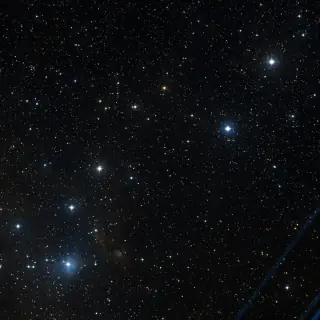
Cr89
A faint open cluster in Gemini, lying north of Tejat Posterior and Tejat Prior (μ and η Geminorum) and forming a nearly equilateral triangle with them.
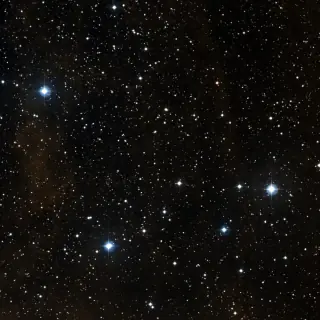
Cr97
A compact open cluster in Monoceros, about 2,050 light-years away.
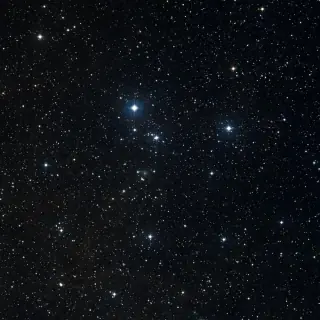
Cr106
A sparse open cluster in Monoceros, roughly 5,000 light-years away. Sources give its width as 22–35′, with only about 20 stars scattered across that area.
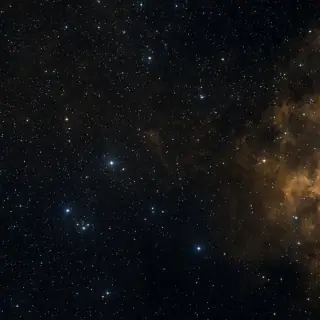
Cr107
A large, loose open cluster in Monoceros, roughly 5,300 light-years away. SIMBAD gives its width as 46.8′ and its visual magnitude as 5.1.
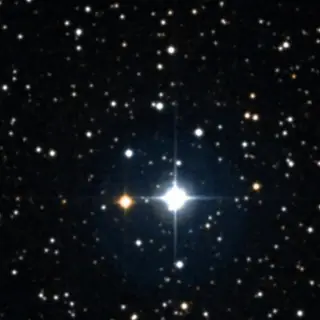
Cr111
A small, faint open cluster in Monoceros, about 1° north-east of Collinder 106. SIMBAD gives it a visual magnitude of 7.0 and no angular size.
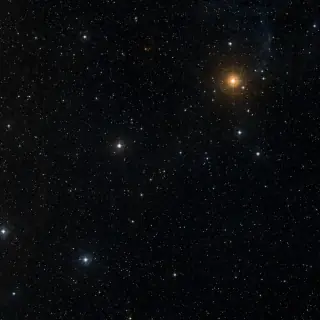
Cr121
A loose group of young stars in Canis Major, about 3,590 light-years away and an estimated 12 million years old.
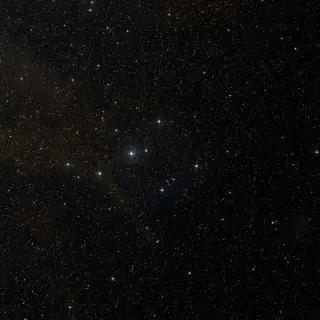
Cr132
An open cluster in southern Canis Major, roughly 2,200 light-years away from its parallax. SIMBAD gives its width as 160′, its visual magnitude as 3.6, and links about 1,400 stars to it.
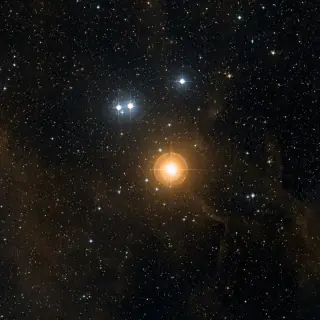
Cr135
The Pi Puppis Cluster lies in Puppis about 975 light-years away and is roughly 36 million years old.
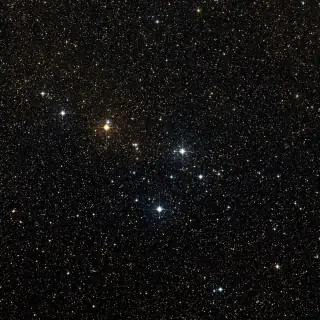
Cr140
A young, extended open cluster in Canis Major about 1,226 light-years away and some 20 million years old.
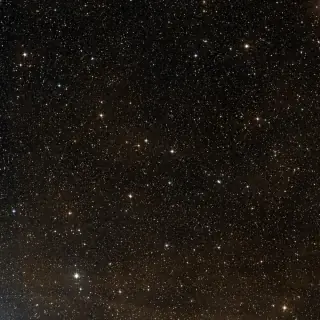
Cr173
An extensive open cluster straddling the Puppis and Vela boundary, about 1,350 light-years away.
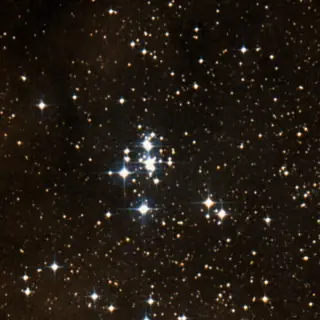
Cr205
An open cluster in Vela, also catalogued as Markarian 18. SIMBAD lists 235 associated member stars and a size of 5.6′, and Wikipedia's Collinder list gives it as magnitude 7.8.
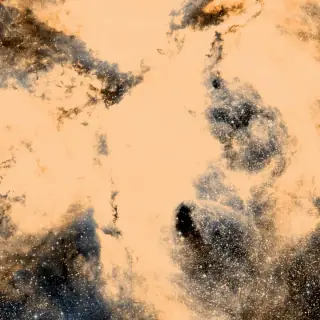
Cr228
An open cluster lying in the Carina Nebula's southern region, about 25′ south of Eta Carinae and listed at roughly 10,000 light-years. Its stars probably formed from the nebula's material.
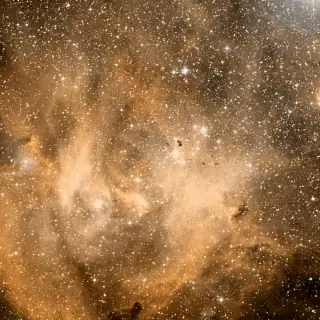
Cr249
Collinder's 1931 catalogue lists number 249 as the same object as IC 2944, a cluster of young stars lighting a hydrogen cloud in Centaurus, about 6,500 light-years away.
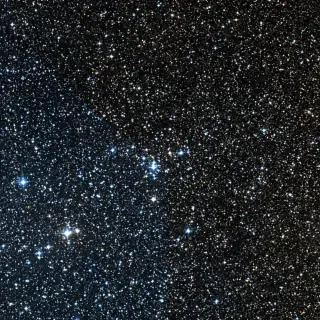
Cr258
An open cluster in Crux, also listed as Harvard 5, roughly 4,300 light-years away judging from its Gaia parallax.
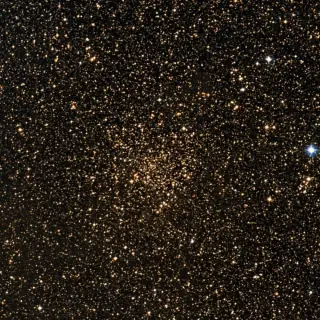
Cr261
An old open cluster in Musca, also listed as Harvard 6, roughly 10,000 light-years away judging from its Gaia parallax. SIMBAD gives its size as 13′ and its integrated V magnitude as about 10.7.
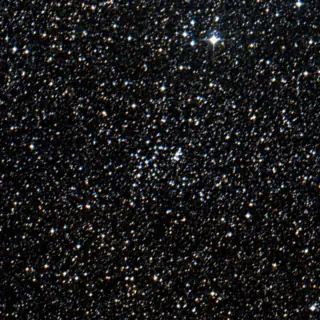
Cr268
An open cluster in Musca, also listed as Harvard 8, roughly 9,000 light-years away judging from its Gaia parallax. SIMBAD gives its size as 9.6′ and its integrated V magnitude as about 9.5.
Cr285 — Ursa Major Moving Group
Collinder 285 is the Ursa Major group: stars that drift together through space, probably born together, and the nearest such family to the Sun, with a core near 80 light-years from us.
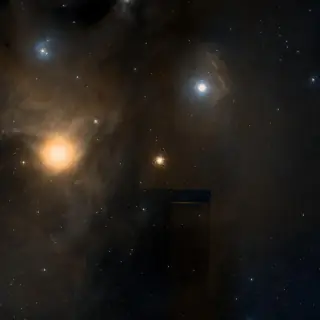
Cr302
Collinder's 1931 catalogue lists number 302 as the "Antares cluster": 20 to 30 stars spread over about 10° × 7° of Scorpius around Antares.
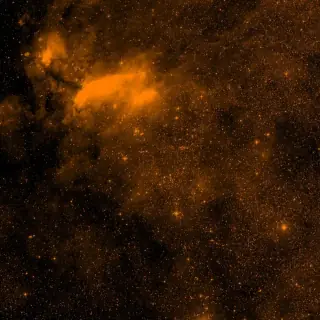
Cr316
A large, bright open cluster in southern Scorpius, listed by SIMBAD at visual magnitude 3.4.
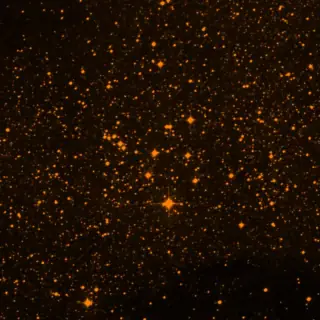
Cr333
A faint open cluster in Scorpius. SIMBAD gives it an angular size of about 7′ and a visual magnitude of 9.8, with a proper motion measured in a 2005 study.
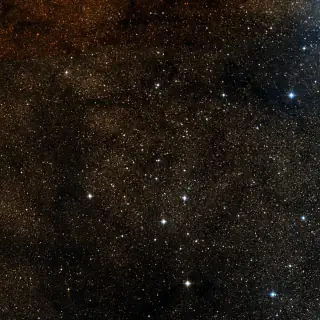
Cr338
An open cluster in Scorpius. From its Gaia parallax of 1.52 mas it lies about 2,100 light-years away, and SIMBAD links 545 member stars to it.
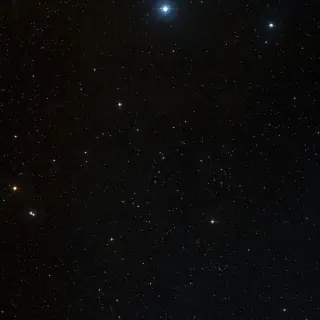
Cr350
A large, loose open cluster in Ophiuchus. From its Gaia parallax of 2.71 mas it lies about 1,200 light-years away, and SIMBAD links more than 2,000 member stars to it.
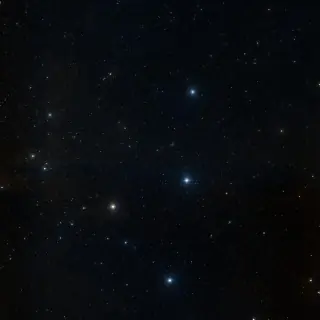
Cr359
A very loose open cluster in Ophiuchus, also listed as Melotte 186, spread over roughly 3 to 4° of sky.
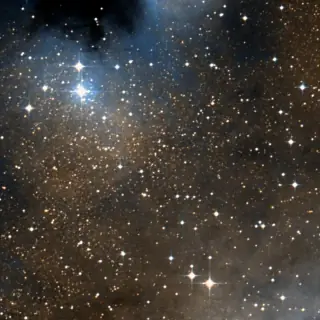
Cr367
An open cluster in western Sagittarius, with IC 4685, an emission nebula, glowing around and behind its stars.
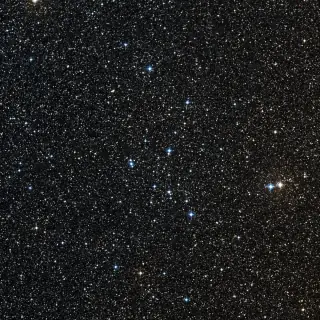
Cr394
An open cluster in Sagittarius that SIMBAD lists as about 23.5′ across. Its Gaia parallax of 1.388 milliarcseconds puts it near 2,350 light-years away.
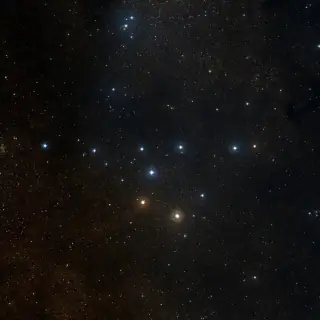
Cr399 — Coathanger
The Coathanger, a row of about ten stars of 5th to 7th magnitude with a hook above them, spanning roughly 60′ in Vulpecula.
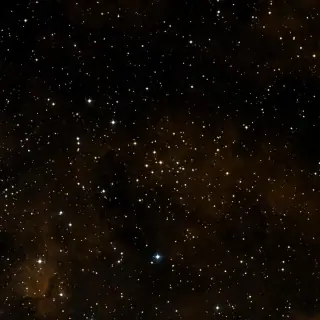
Cr421
An open cluster in Cygnus, listed by SIMBAD as about 17′ across. Its Gaia parallax of 0.813 milliarcseconds puts it near 4,000 light-years away.
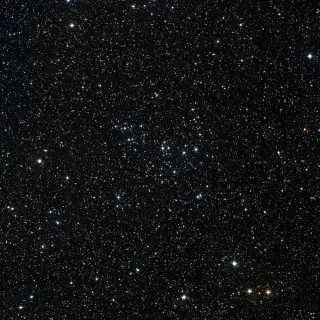
Cr448
A loose cluster of mostly blue-white stars in Lacerta, about 2,800 light-years away; age estimates run from 100 to 250 million years.
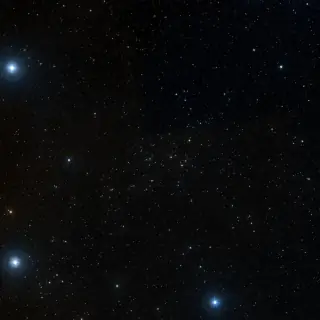
Cr463
A large, sparse open cluster in Cassiopeia, far enough north of the Milky Way's main band that it stands out. Collinder described it in 1931; it has no NGC number.