
M30
Globular Cluster in Capricornus
About
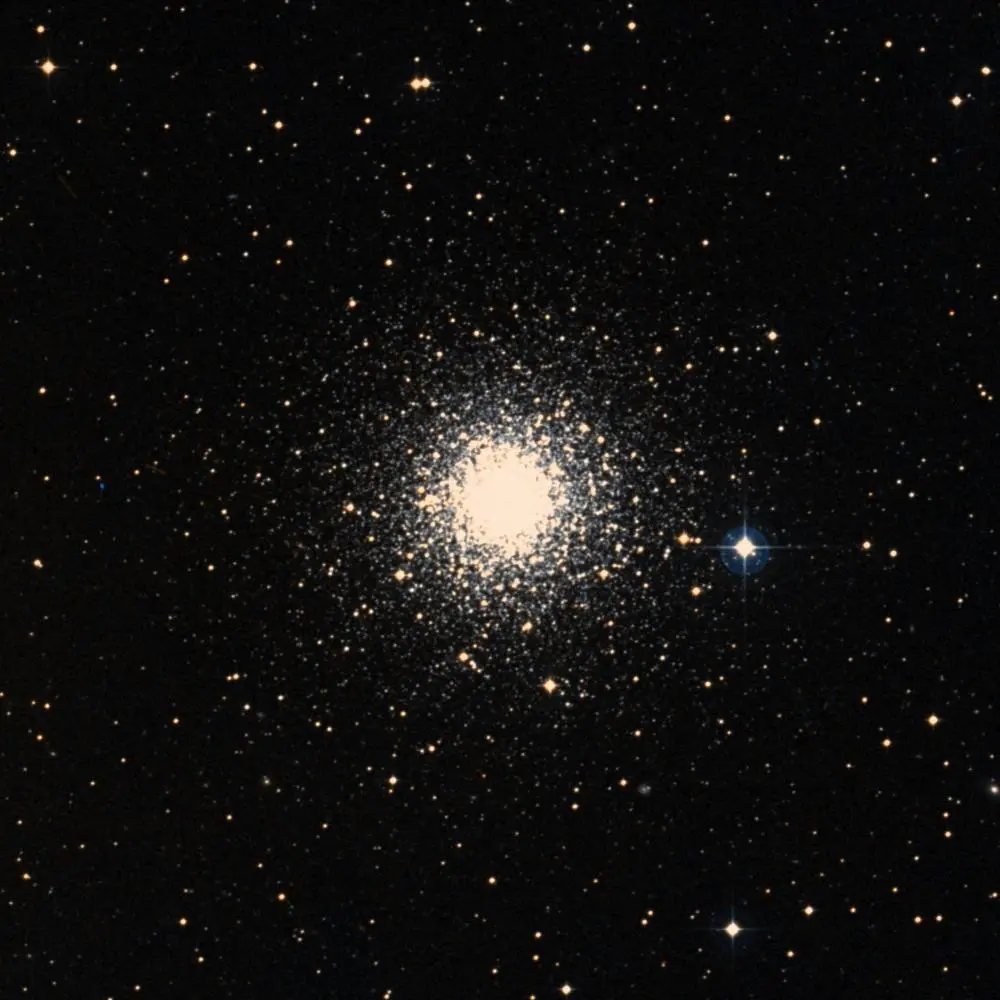
A globular cluster in Capricornus, about 27,100 light-years away. It has gone through core collapse, with a very dense centre, and is nicknamed the Jellyfish Cluster. Its retrograde orbit suggests it came from a satellite galaxy.
Imaging tips
- About 11′ across: roughly 2,200–3,670 mm on APS-C or 3,380–5,630 mm on full frame.
- An imager used 30 s subs, 30 minutes in total, from a Bortle 5 site; short subs kept the bright stars from blowing out, and a one-shot colour camera was enough.
- No nebulosity surrounds it, so the work is in the core: stars there only separate if the stack is sharp, and the author's advice is to adjust highlights and crispness sliders afterwards.
- Low from northern sites: about 17° at most from 50°N, so expect turbulence. Best around July and August.
Facts
- Size
- 11′
- Magnitude
- 7.2
- Coordinates
- RA 21h 40.4m, Dec −23° 11′
- Framing, APS-C
- 2200–3670 mm
- Framing, full frame
- 3380–5630 mm
- Best months
- Jul, Aug
- Peak altitude
- 17° from 50°N, 32° from 35°N