Video observations of meteors in the CEMeNt and SSOVMO networks in July and August 2025
August is, together with December, the period of the highest meteor activity each year. Two of the most active periodic showers are responsible for this: the Perseids in August and the Geminids in December. Unlike December, however, August weather is usually much more favourable for visual observing, so for most enthusiasts the Perseids are far better known and the shower’s name is familiar to the wider public. The activity of the sporadic background begins to grow after its minimum in March and April. In addition to the Perseids, relatively strong showers from the antihelion source are active — the Southern Delta Aquariids and the Alpha Capricornids, both peaking at the end of July. In the second half of August, the relatively weak Kappa Cygnids peak; the shower is known for producing many very bright meteors. Overall, the weather was less favourable in July but very favourable in August: at least one meteor was recorded at some network station on 25 nights in July and on 28 nights in August.
Meteor shower activity
The maximum of the Perseid meteor shower occurred on 12 August 2025 at 21:21 UT. According to the visual activity plot of the IMO VMDB (International Meteor Organization Visual Meteor Database), this year’s Perseids reached a maximum corrected hourly rate of only 54.3 ± 3.1 meteors. The usual hourly rate is between 80–120 meteors, so it can be said that the Perseids were well below average this year. The number of bright meteors (fireballs) was also lower than in recent years; the brighter meteors were seen mainly on the night before the maximum.
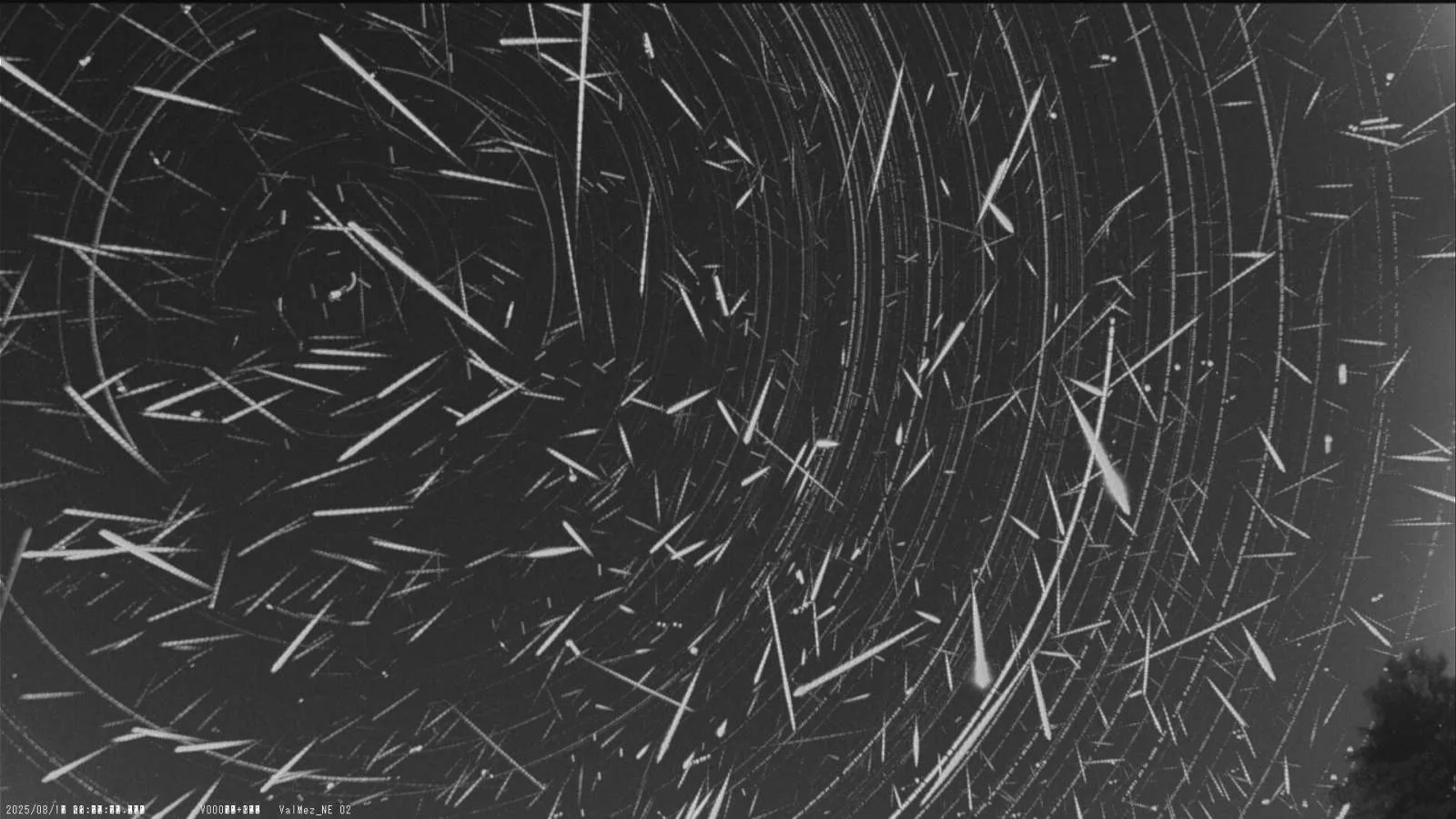
Fig. 1: Composite image of meteors recorded by the Valašské Meziříčí NE station during the nights from 10/11 Aug. to 14/15 Aug. 2025; the camera recorded 1,257 meteors in that period. Author: Valašské Meziříčí Observatory.
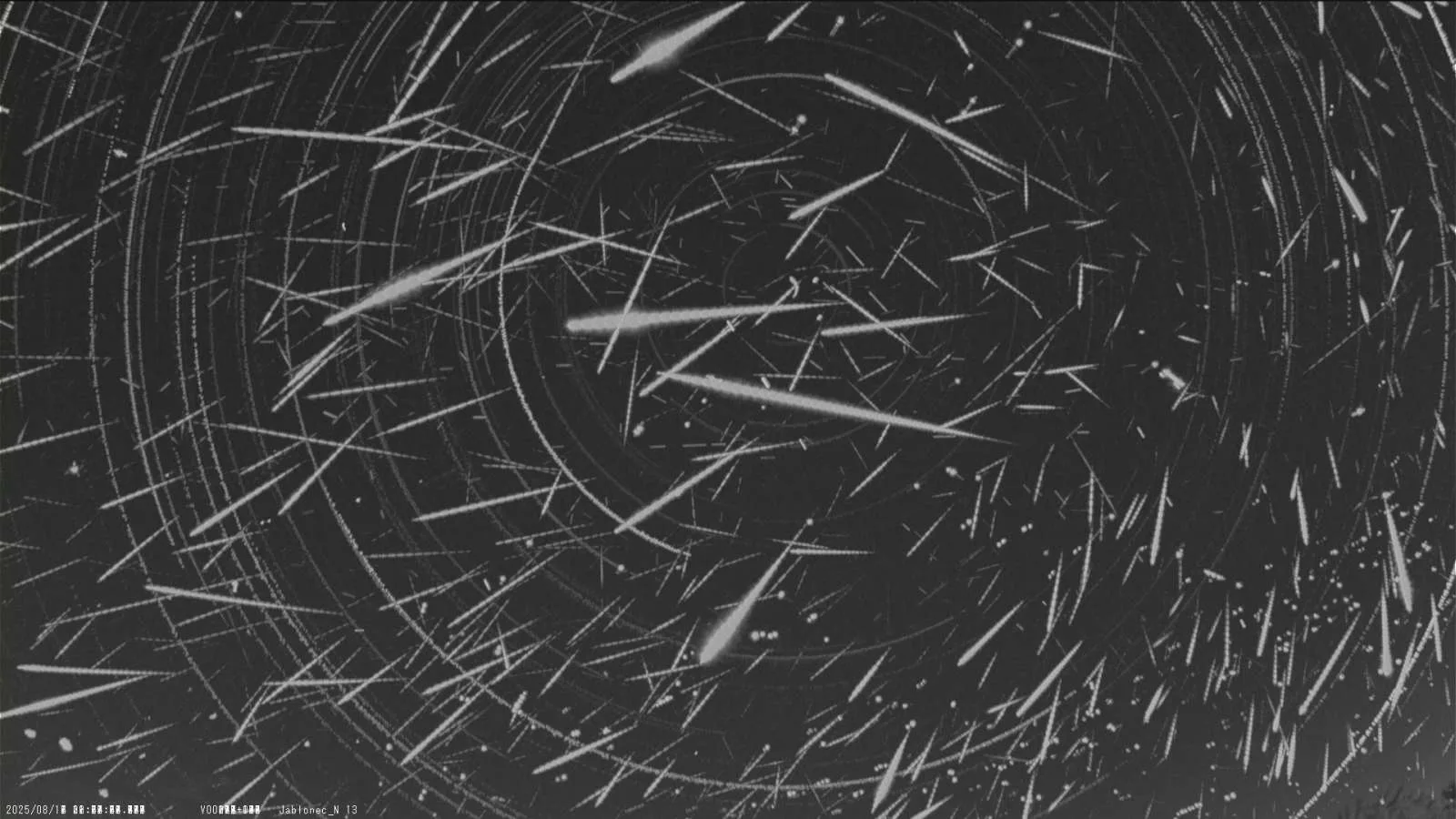
Fig. 2: Composite image of meteors recorded by the Jablonec N station during the nights from 10/11 Aug. to 14/15 Aug. 2025; the camera recorded 1,337 meteors in that period. Author: Jakub Kapuš.
Other showers also contribute to the high meteor activity in July and August. The main active area is the so-called antihelion source, which consists of two showers — the Delta and Iota Aquariids (both with northern and southern branches). The broad radiant of the antihelion source moves through Aquarius in July and August and is found in Pisces at the end of August. The strongest component is the Southern Delta Aquariids, which reach a maximum corrected hourly rate of around 25 meteors; the disadvantage is the low radiant altitude (only about 25° above the southern horizon), which is why observations from the Southern Spectroscopic Observatory of the Valašské Meziříčí Observatory (SSO VMO) are very valuable, as the radiant there passes practically through the zenith. The maximum of the Southern Delta Aquariids occurred on 29 July 2025 at 00:54 UT, and according to the IMO VMDB the maximum corrected hourly rate this year reached 15.4 ± 1.4 meteors.
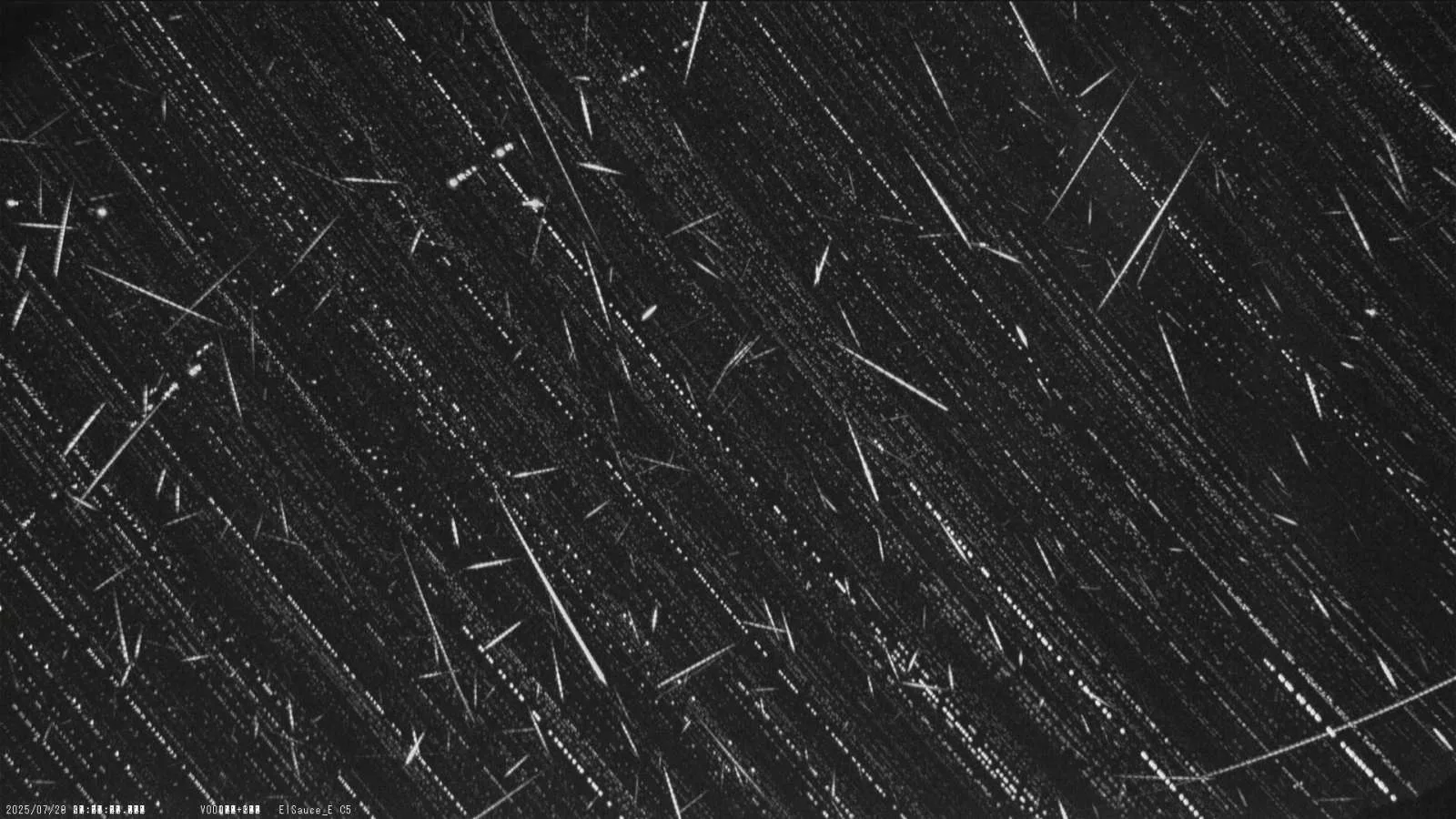
Fig. 3: Composite image of meteors recorded by the El Sauce E station on the night of the Southern Delta Aquariid maximum (28/29 July 2025); the camera recorded 367 meteors. Author: Valašské Meziříčí Observatory.
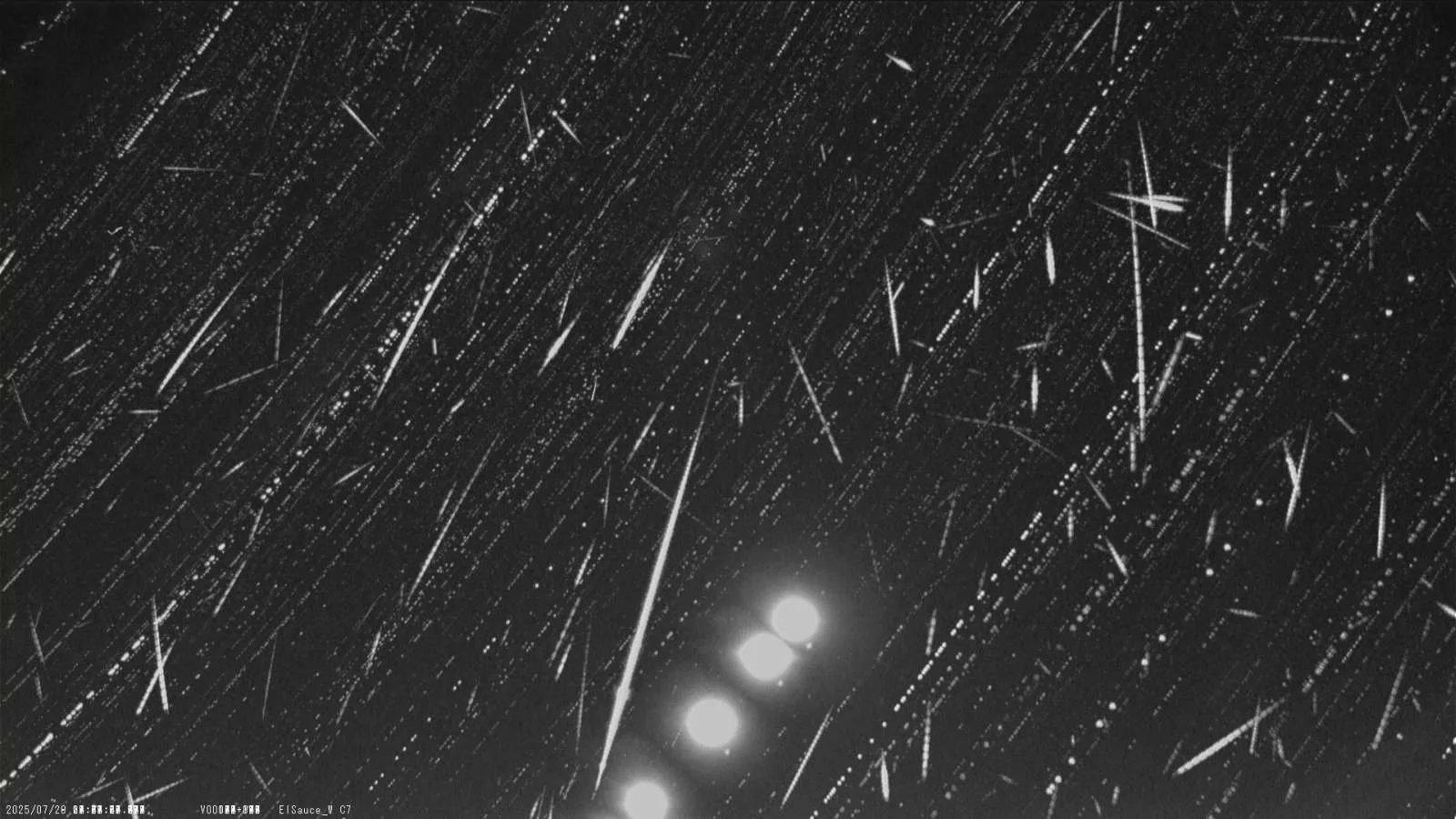
Fig. 4: Composite image of meteors recorded by the El Sauce W station on the night of the Southern Delta Aquariid maximum (28/29 July 2025); the camera recorded 302 meteors. Author: Valašské Meziříčí Observatory.
Another weaker shower in the antihelion region that is known for a high proportion of bright meteors is the Alpha Capricornids. Meteors from this shower are significantly slower than those from the antihelion complex; its maximum also usually occurs at the end of July. The maximum of the Alpha Capricornids occurred on 28 July 2025 at 08:19 UT and, according to the IMO VMDB (International Meteor Organization Visual Meteor Database), the maximum corrected hourly rate this year was 5.7 ± 1.1 meteors. Around mid-August, the flat maximum of the weak Kappa Cygnids occurs, with a radiant in Cygnus; this shower is also known for a high proportion of bright meteors. Due to the low speed of the shower’s meteors, the radiant is very extended and it’s very difficult to assign meteors to the shower visually. The maximum of the Kappa Cygnids occurred on 14 August 2025 at 21:48 UT and, according to the IMO VMDB, the maximum corrected hourly rate this year was 5.4 ± 1.7 meteors. At the end of August the Aurigids begin, a slightly stronger shower with a radiant in Auriga; its maximum corrected hourly rate is around 10 meteors and occurs at the turn of August and September.
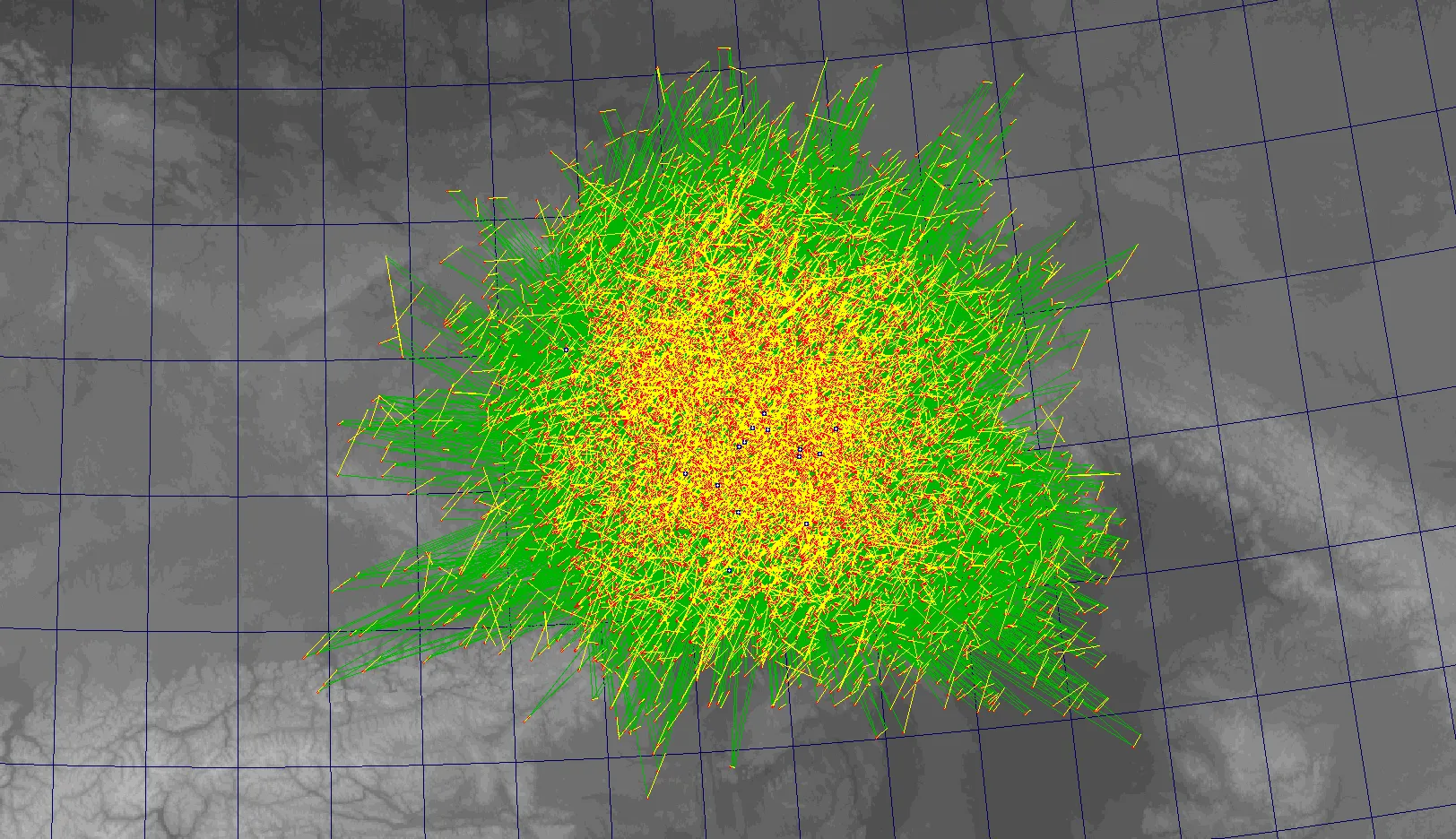
Fig. 5: Overall 2D projection of multi-station atmospheric tracks recorded in the CEMeNt network in July and August 2025. Authors: Jakub Koukal, Alexandra Mikušková.
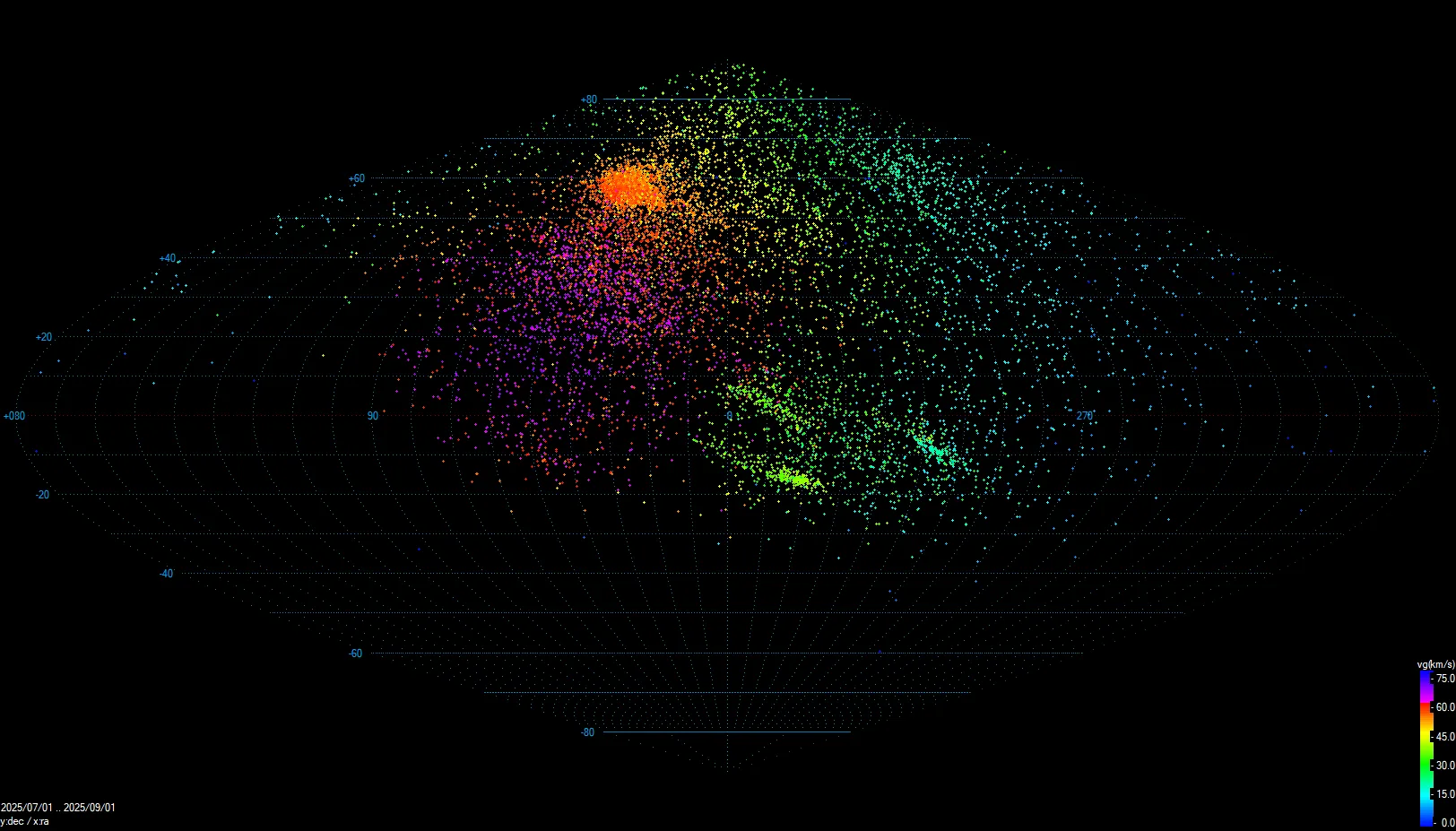
Fig. 6: Radiants of stream and sporadic multi-station meteors recorded in the CEMeNt network in July and August 2025. A sinusoidal projection with the equatorial coordinate system is used. Authors: Jakub Koukal, Alexandra Mikušková.
Overview of video observations in the CEMeNt and SSOVMO networks
In July 2025, cameras of the CEMeNt (Central European Meteor Network) and SSO VMO (Southern Spectroscopic Observatory of the Valašské Meziříčí Observatory) networks recorded 34,468 single-station meteors, which combined into 6,358 multi-station orbits. Cameras of the CEMeNt network recorded 11,836 single-station meteors, combining into 2,494 multi-station orbits (Figs. 5 and 6), while cameras of the SSO VMO network recorded 22,632 single-station meteors, combining into 3,864 multi-station orbits (Figs. 7–10). As of today, observations from stations on the network’s outer perimeter — Rokycany (CZ), Plzeň (CZ), Karlovy Vary (CZ), Blahová (SK) and Zvolenská Slatina (SK) — are not included, as processing is not yet finished.
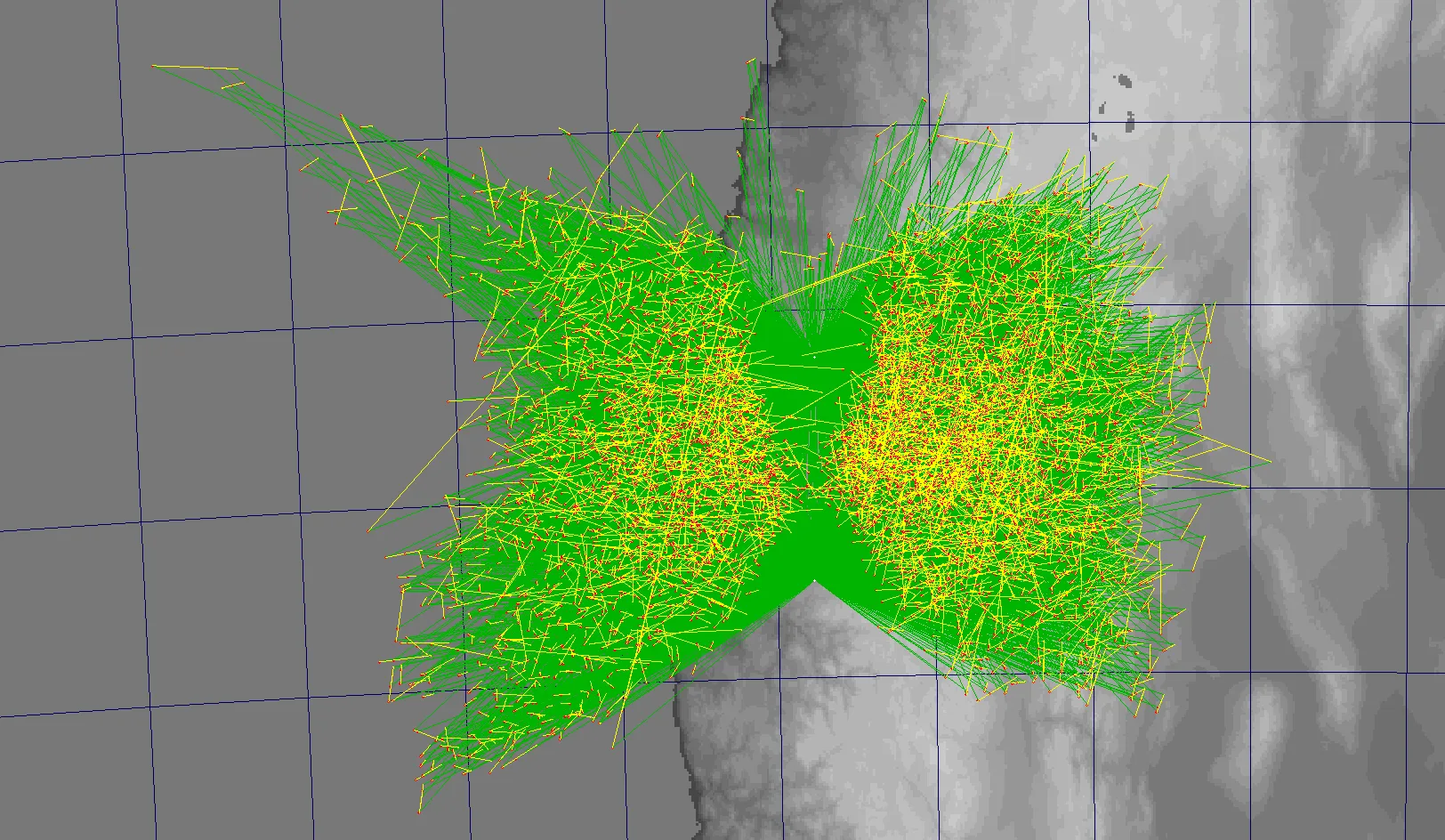
Fig. 7: Overall 2D projection of multi-station atmospheric tracks recorded in the SSO VMO network (UFO Capture stations) in July and August 2025. Authors: Jakub Koukal, Alexandra Mikušková.
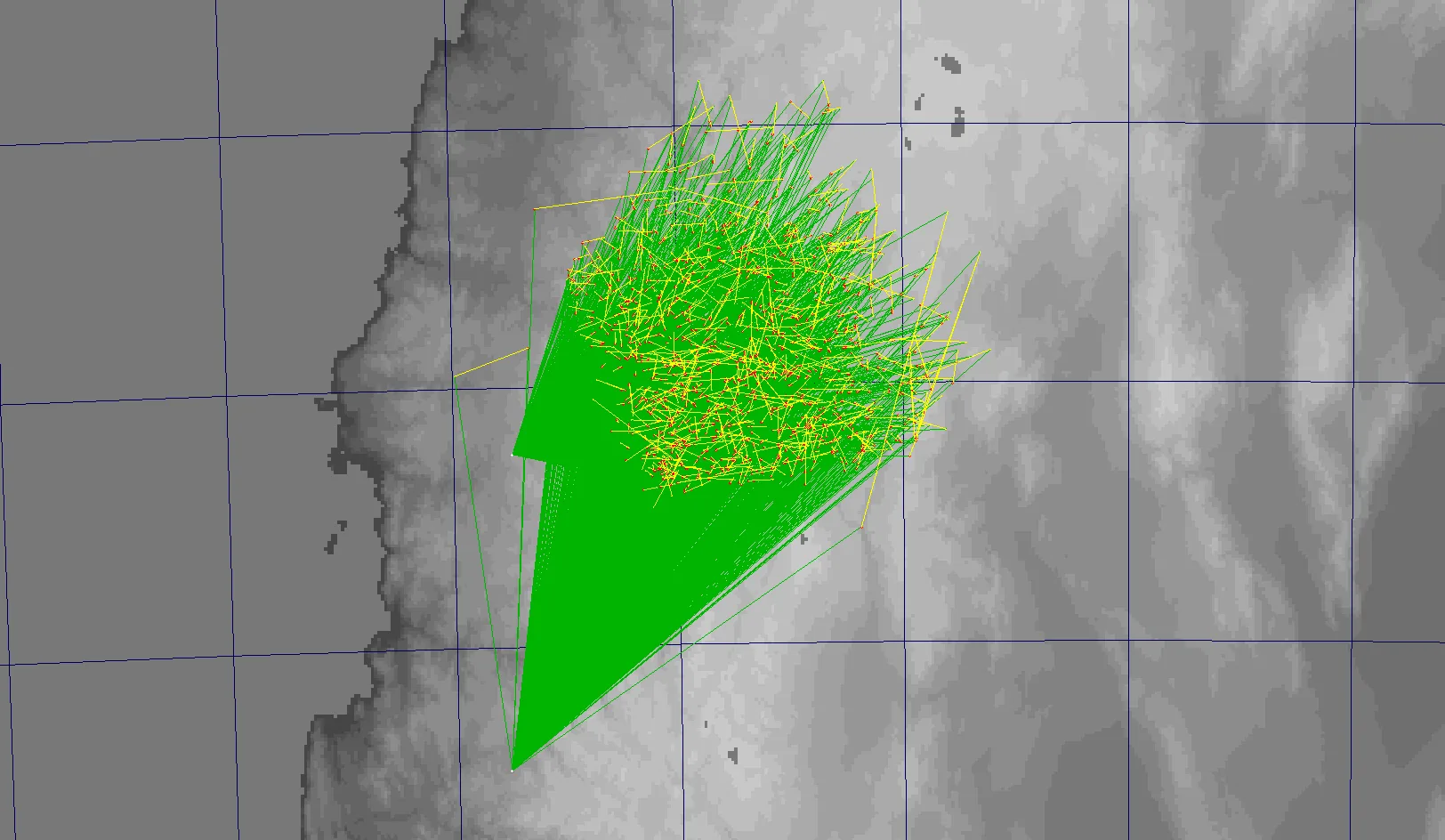
Fig. 8: Overall 2D projection of multi-station atmospheric tracks recorded in the SSO VMO network (RMS stations) in July and August 2025. Author: Milan Kalina.
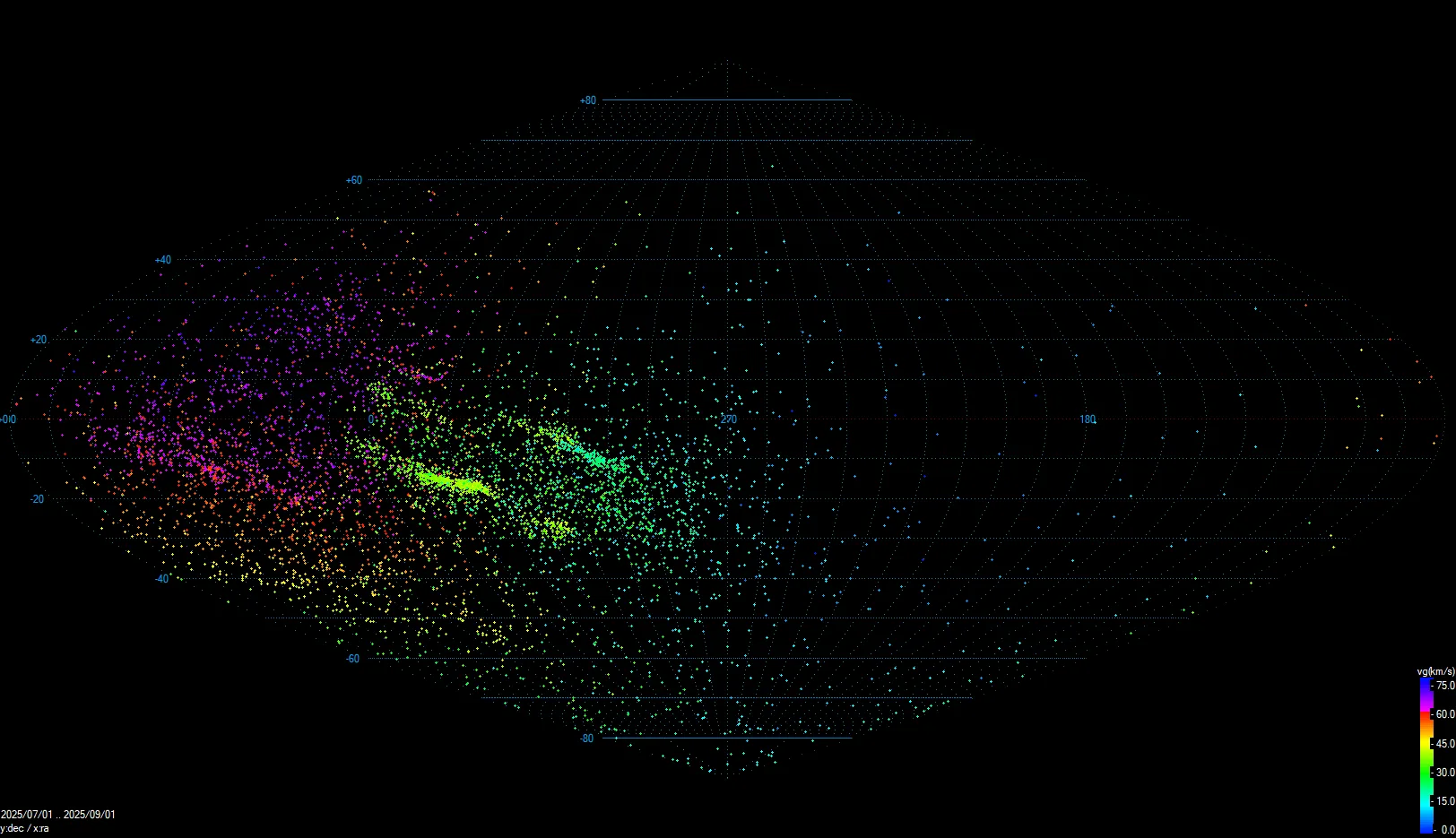
Fig. 9: Radiants of stream and sporadic multi-station meteors recorded in the SSO VMO network (UFO Capture stations) in July and August 2025. A sinusoidal projection with the equatorial coordinate system is used. Authors: Jakub Koukal, Alexandra Mikušková.
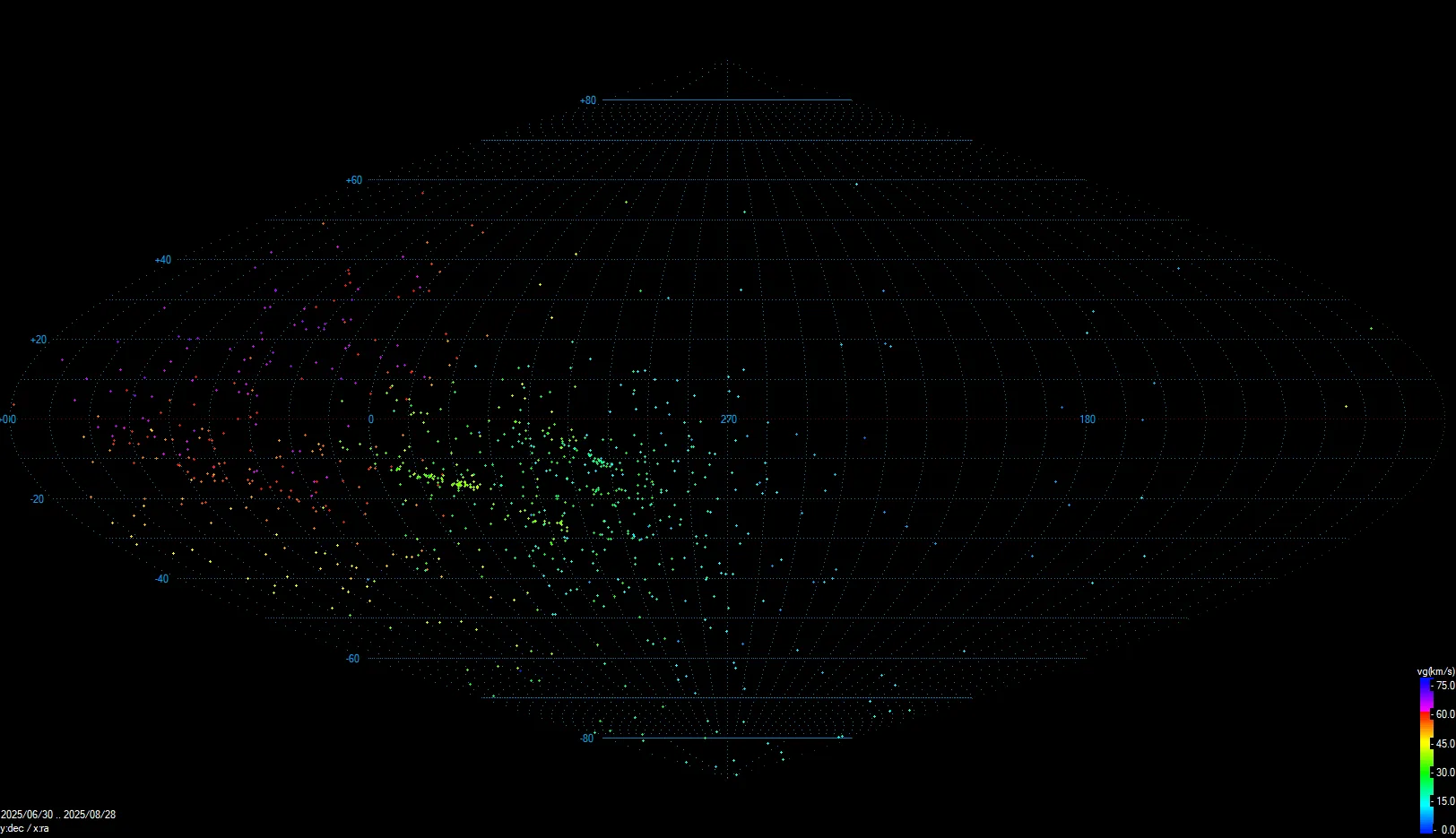
Fig. 10: Radiants of stream and sporadic multi-station meteors recorded in the SSO VMO network (RMS stations) in July and August 2025. A sinusoidal projection with the equatorial coordinate system is used. Author: Milan Kalina.
In August 2025, cameras of the CEMeNt (Central European Meteor Network) and SSO VMO (Southern Spectroscopic Observatory of the Valašské Meziříčí Observatory) networks recorded 61,344 single-station meteors, which combined into 11,773 multi-station orbits. Cameras of the CEMeNt network recorded 44,610 single-station meteors, combining into 9,038 multi-station orbits (Figs. 5 and 6), while cameras of the SSO VMO network recorded 16,734 single-station meteors, combining into 2,735 multi-station orbits (Figs. 7–10). As of today, observations from stations on the network’s outer perimeter — Rokycany (CZ), Plzeň (CZ), Karlovy Vary (CZ), Blahová (SK) and Zvolenská Slatina (SK) — are not included, as processing is not yet finished.
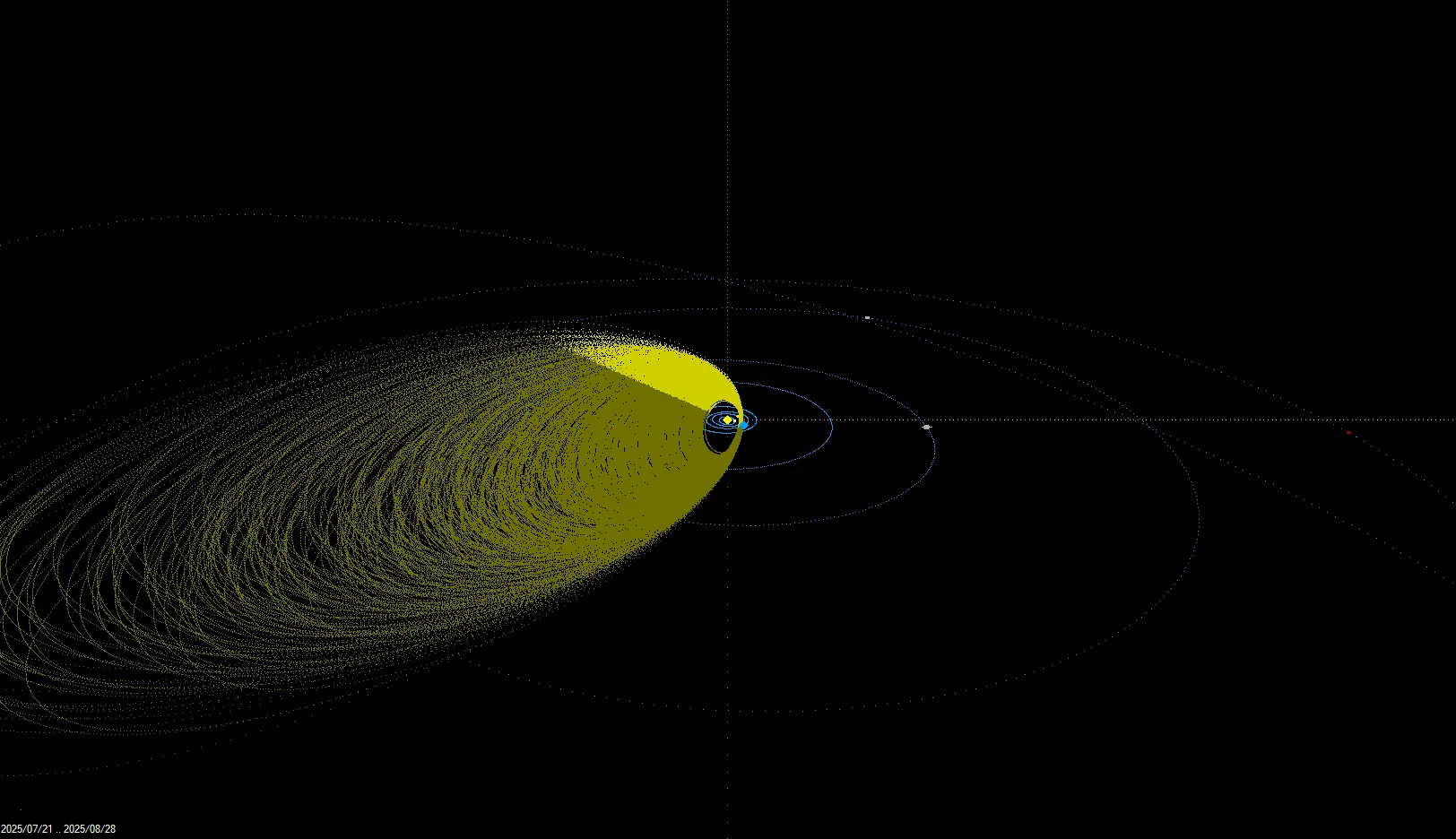
Fig. 11: 3D projection of heliocentric multi-station orbits of meteors belonging to the Perseid shower (PER) in the Solar System. A total of 3,167 multi-station PER orbits were recorded in July and August 2025 within the CEMeNt network. Authors: Jakub Koukal, Alexandra Mikušková.
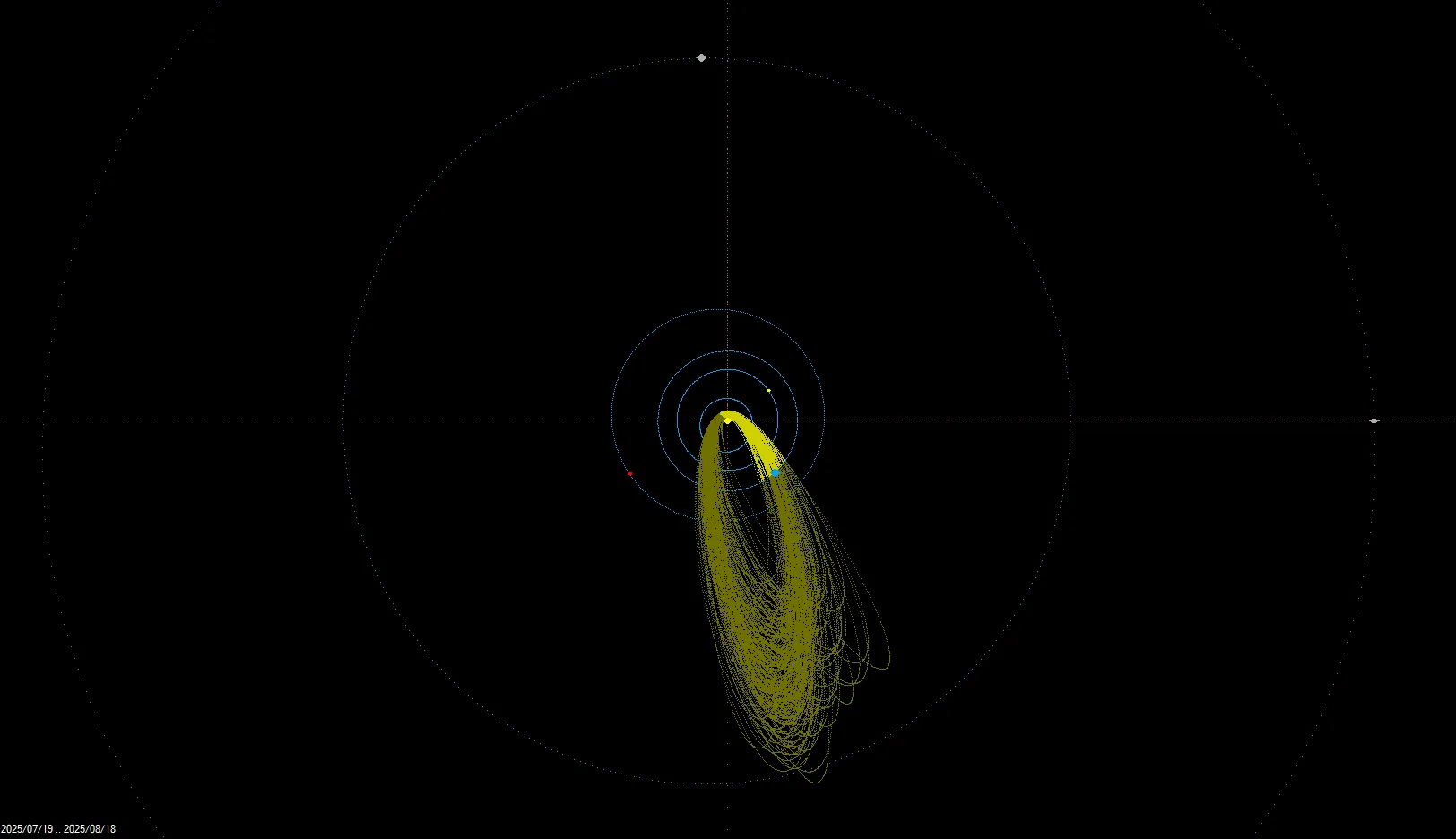
Fig. 12: 3D projection of heliocentric multi-station orbits of meteors belonging to the Southern Delta Aquariids (SDA) in the Solar System. A total of 218 multi-station SDA orbits were recorded in July and August 2025 within the CEMeNt network. Authors: Jakub Koukal, Alexandra Mikušková.
Within the CEMeNt network, most multi-station orbits belong to the sporadic background (7,160 orbits), followed by the Perseids (PER, 3,167 orbits, Fig. 11), the Southern Delta Aquariids (SDA, 218 orbits, Fig. 12), the Alpha Capricornids (CAP, 124 orbits), the Northern Delta Aquariids (NDA, 110 orbits), the August mu Draconids (AMD, 46 orbits; part of the Kappa Cygnid complex), the Kappa Cygnids (KCG, 32 orbits), the August iota Cetids (AIC, 32 orbits), and then other weaker showers, including members of the antihelion source with radiants in Aquarius and Pisces. The number of single-station meteors (as well as multi-station orbits) in August is historically the highest within the CEMeNt network since its inception in 2009. Pairing efficiency in July and August 2025 rose to a record 72.3% in August, related to stable weather at individual stations and optimization of station fields of view. The station/orbit ratio increased to a record 3.57 stations per orbit in August 2025. In total so far this year (as of 31 Aug 2025), 103,478 single-station meteors have been recorded, combining into 21,591 multi-station orbits (Tab. 1).
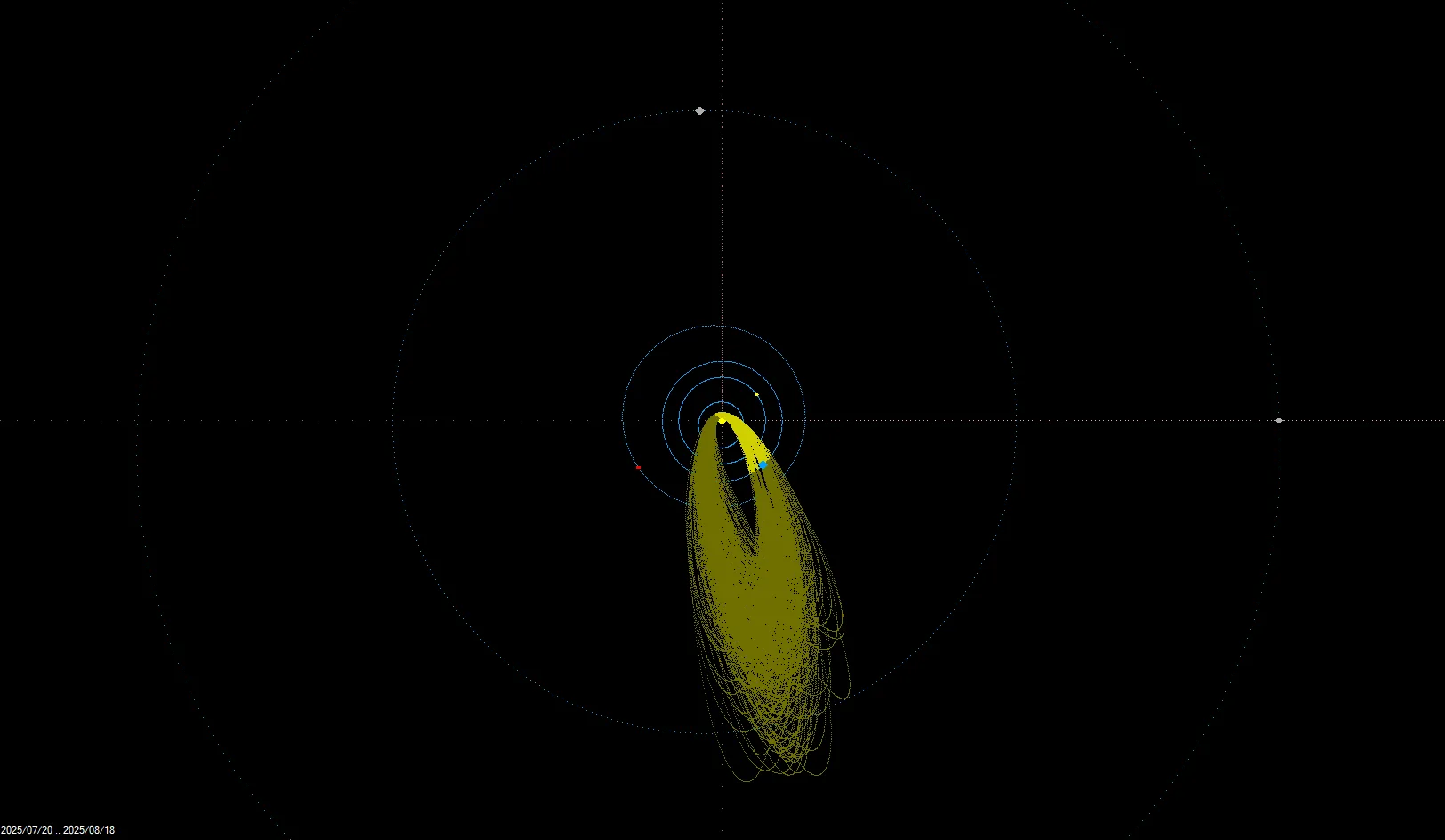
Fig. 13: 3D projection of heliocentric multi-station orbits of meteors belonging to the Southern Delta Aquariids (SDA) in the Solar System. A total of 505 multi-station SDA orbits were recorded in July and August 2025 within the SSO VMO network. Authors: Jakub Koukal, Alexandra Mikušková.
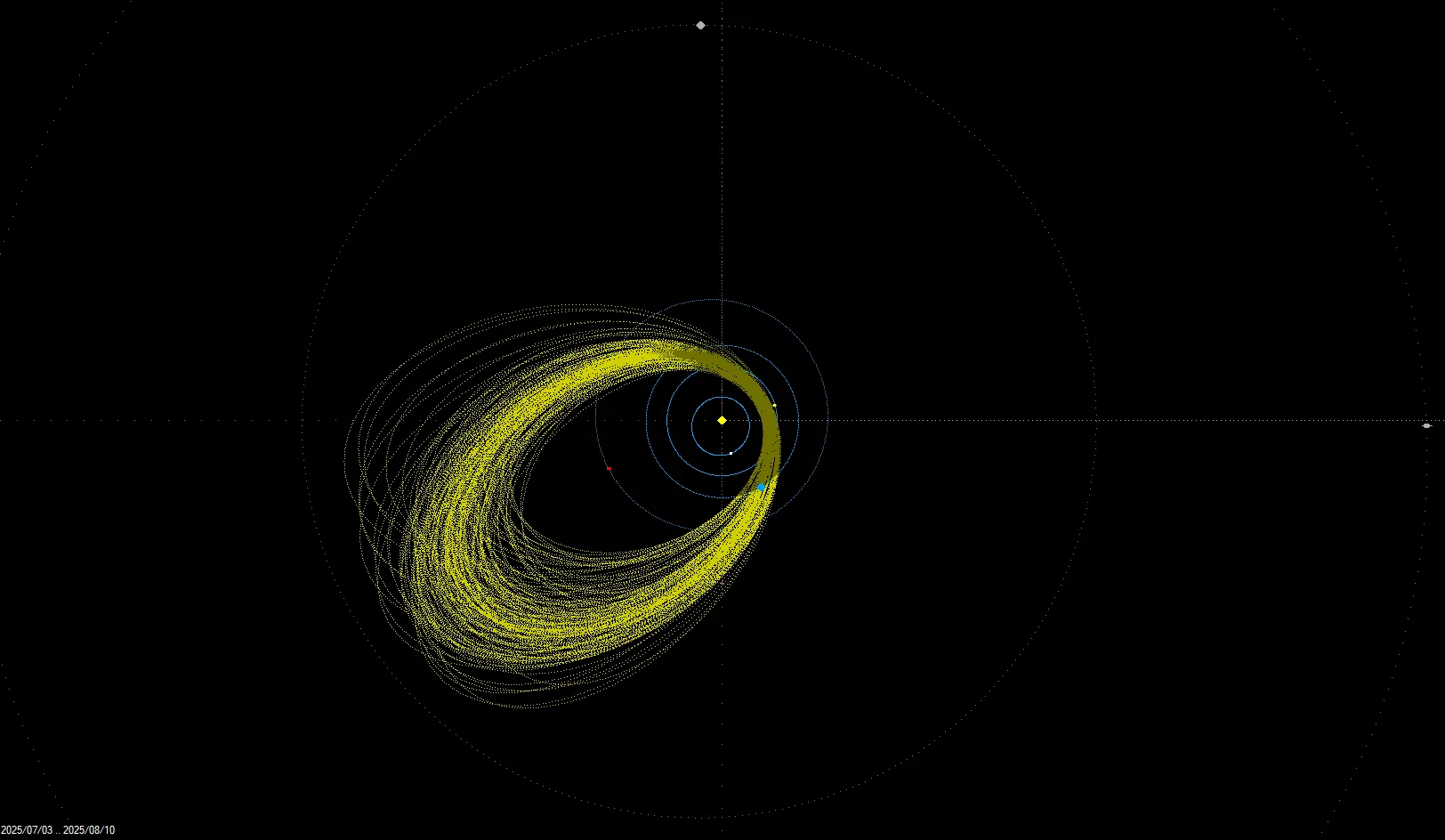
Fig. 14: 3D projection of heliocentric multi-station orbits of meteors belonging to the Alpha Capricornids (CAP) in the Solar System. A total of 235 multi-station CAP orbits were recorded in July and August 2025 within the SSO VMO network. Authors: Jakub Koukal, Alexandra Mikušková.
Within the SSO VMO network, most multi-station orbits belong to the sporadic background (4,937 orbits), followed by the Southern Delta Aquariids (SDA, 505 orbits, Fig. 13), the Alpha Capricornids (CAP, 235 orbits, Fig. 14), the Southern June Aquilids (SZC, 108 orbits), the Northern June Aquilids (NZC, 107 orbits), the Eta Eridanids (ERI, 66 orbits), the Northern Delta Aquariids (NDA, 62 orbits), and then other weaker showers, including members of the antihelion source with radiants in Aquarius and Pisces. Multi-station orbits from the Perseid shower were practically not observed due to the low radiant altitude; only 5 multi-station Perseid orbits were recorded, although the longest atmospheric path reached 313.5 km (Figs. 15 and 16).
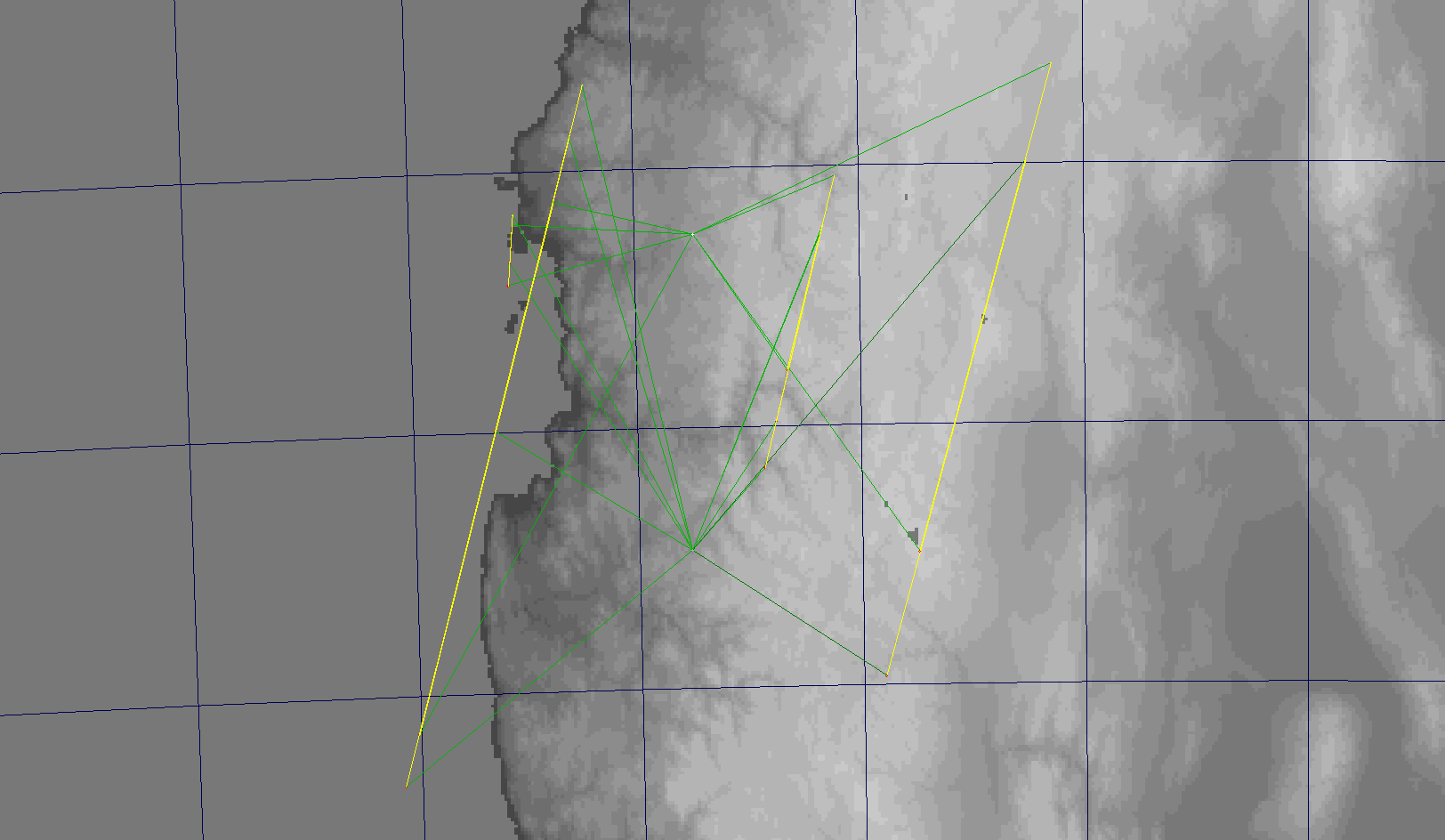
Fig. 15: Overall 2D projection of multi-station atmospheric tracks of meteors belonging to the Perseid shower (PER), recorded in the SSO VMO network in July and August 2025. Authors: Jakub Koukal, Alexandra Mikušková.
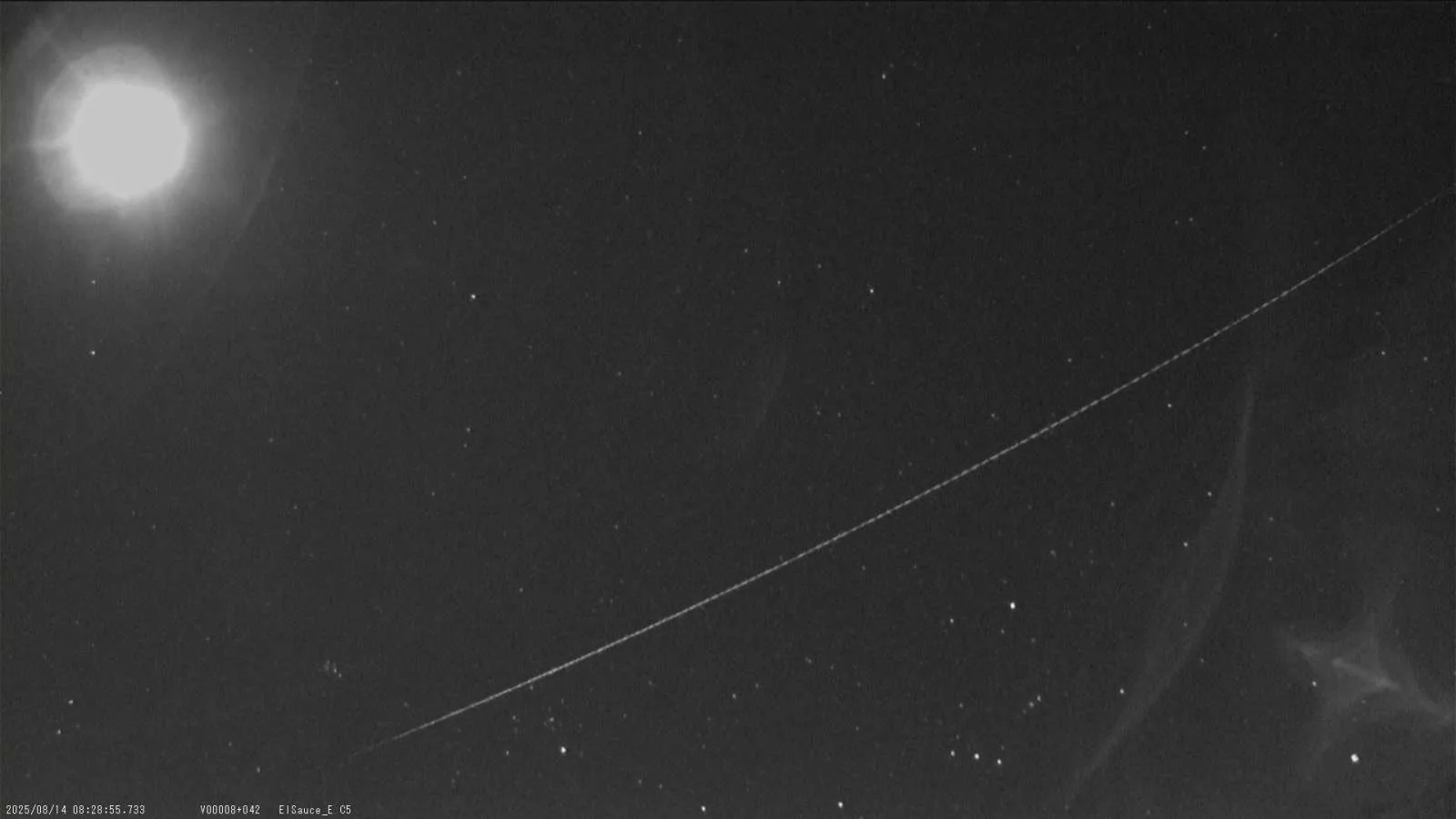
Fig. 16: Composite image of meteor CM20250814_082855 (PER), taken by the El Sauce E camera. Author: Valašské Meziříčí Observatory.
The number of single-station meteors (as well as multi-station orbits) in August is the lowest within the SSO VMO network over its entire existence since June 2025; July was comparable with June. Pairing efficiency rose in July to 41.0% and decreased in August to 38.8%, which is related to rather unfavourable weather at individual stations. The station/orbit ratio fell to 2.40 stations per orbit in July and 2.38 in August 2025. In total so far this year (as of 31 Aug 2025), 62,288 single-station meteors have been recorded, combining into 10,278 multi-station orbits (Tab. 1).
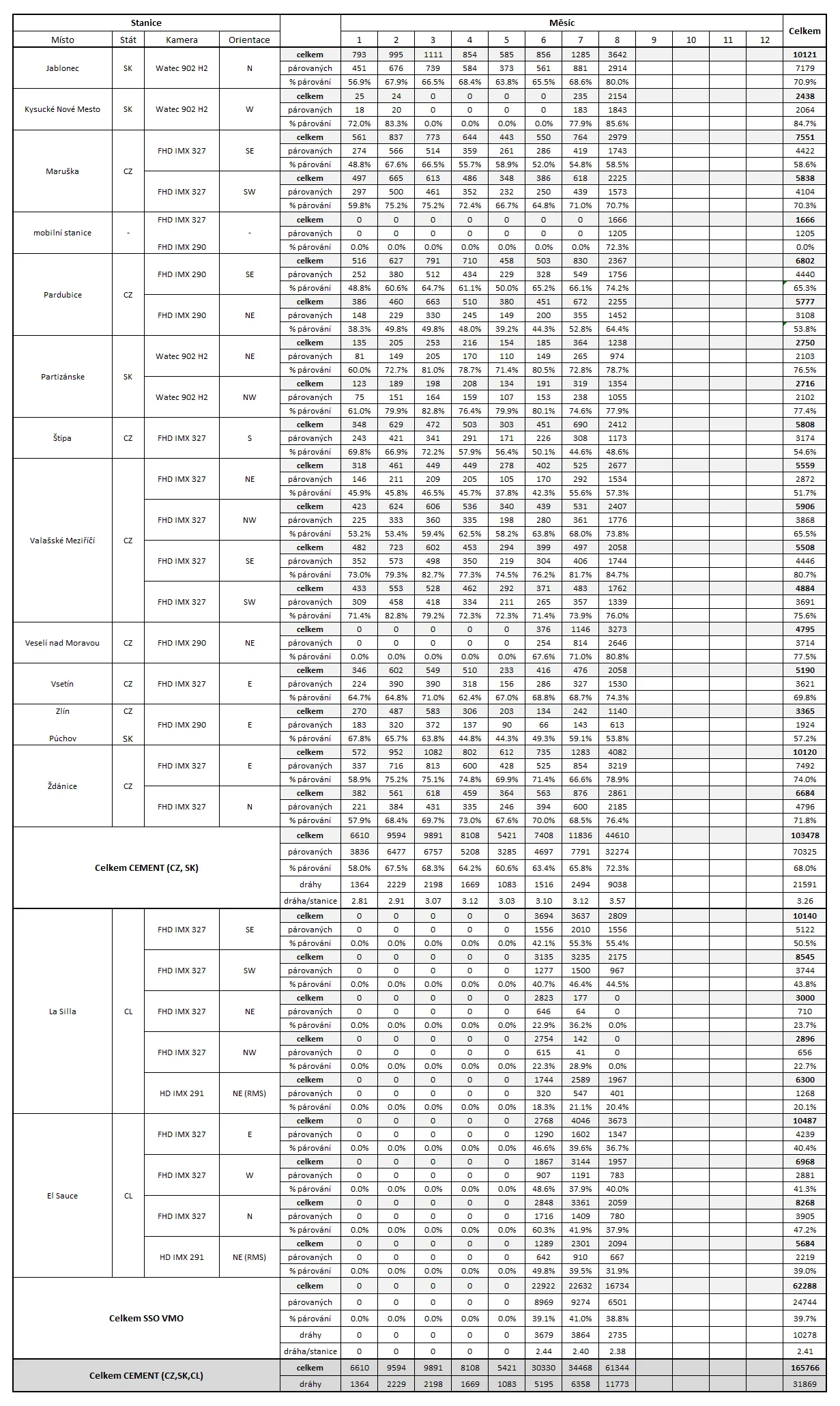
Tab. 1: Overview of the numbers of recorded and paired meteors in 2025 at CEMeNt network stations. Authors: Jakub Koukal, Alexandra Mikušková.
Meteor spectra
At the Valašské Meziříčí Observatory, within the CEMeNt network, three spectrographs are currently installed with monochrome CMOS cameras PointGrey Grasshopper3 GS3-U3-32S4M-C (2048 × 1536 px); the actual resolution of a recorded meteor spectrum (first order) averages 0.48 nm/px. These spectrographs are oriented SE, SW, and NE; in the NW direction, a spectrograph with a monochrome CMOS camera QHY-III 178M (3072 × 2048 px) is installed, with an average spectral resolution (first order) of 0.35 nm/px. In test operation, a spectrograph is installed in the NEN direction, consisting of a monochrome CMOS camera Flir BFS-U3-200S6M-C (5472 × 3648 px), with an average spectral resolution (first order) of 0.19 nm/px. In July and August, 38 spectra from 22 individual fireballs were recorded by the spectrographs at the Valašské Meziříčí Observatory (Tab. 2).
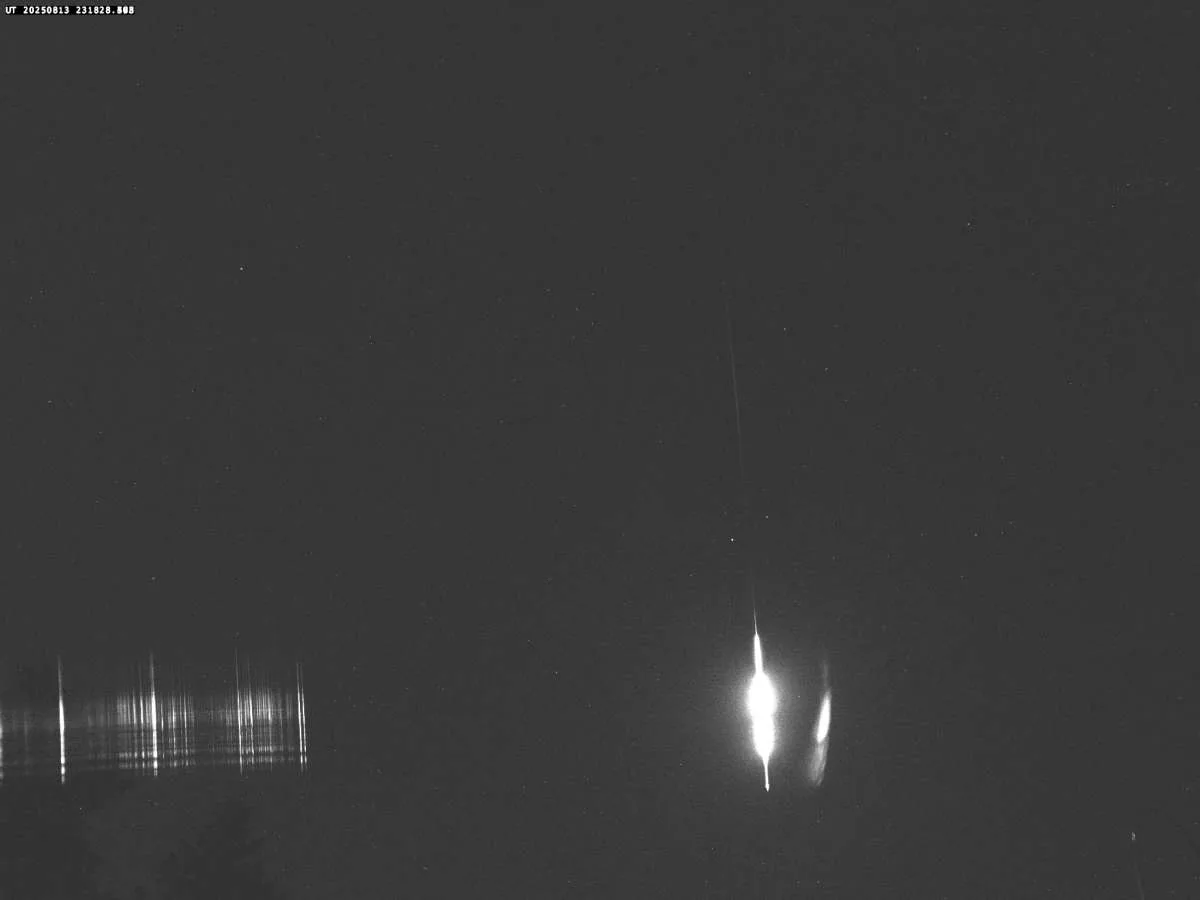
Fig. 17: Composite image of the spectrum of fireball CM20250813_231827 PER from the VM SPSW spectrograph (resolution 0.48 nm/px). Author: Valašské Meziříčí Observatory.
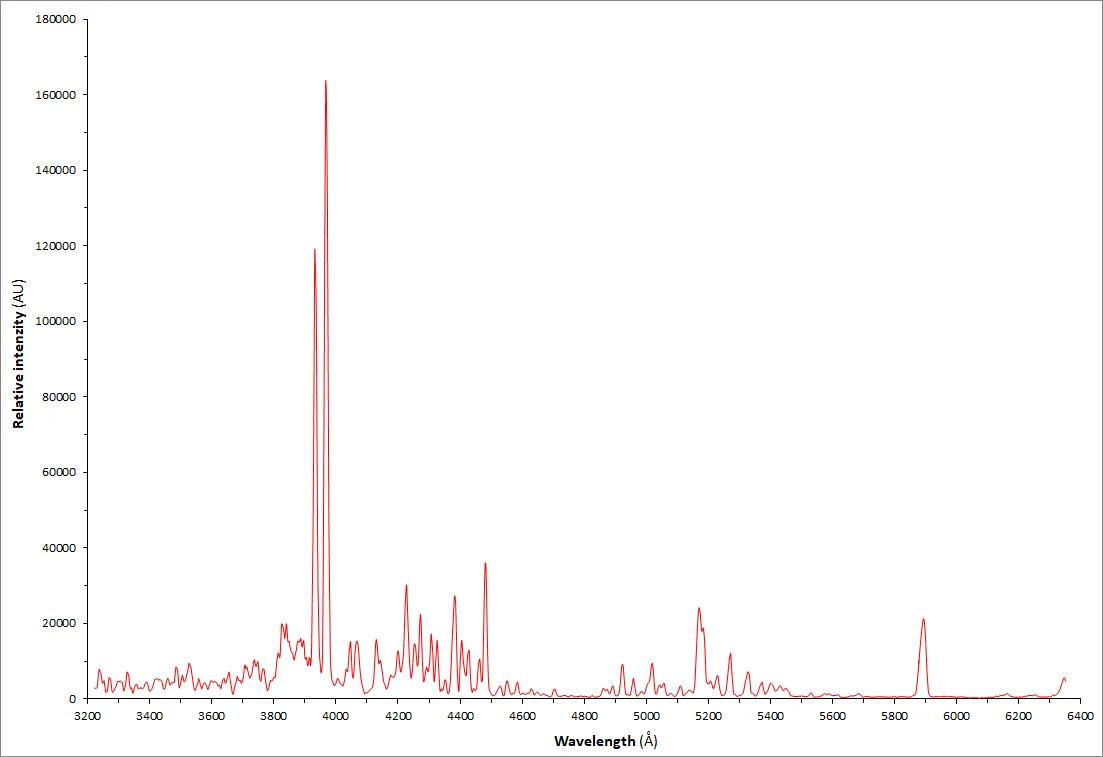
Fig. 18: Summed calibrated spectrum of fireball CM20250813_231827 PER from the VM SPSW spectrograph (resolution 0.48 nm/px). Author: Jakub Koukal.
At La Silla Observatory, within the SSO VMO network, four spectrographs are currently installed with monochrome CMOS cameras QHY5III 678M with a resolution of 3856 × 2180 px (8.4 MPx). The actual resolution of a recorded meteor spectrum (first order) averages 0.35 nm/px; the spectrographs are oriented SE, SW, NE, and NW. In July and August, 31 spectra from 26 individual fireballs were recorded by spectrographs at the Valašské Meziříčí Observatory (Tab. 2).
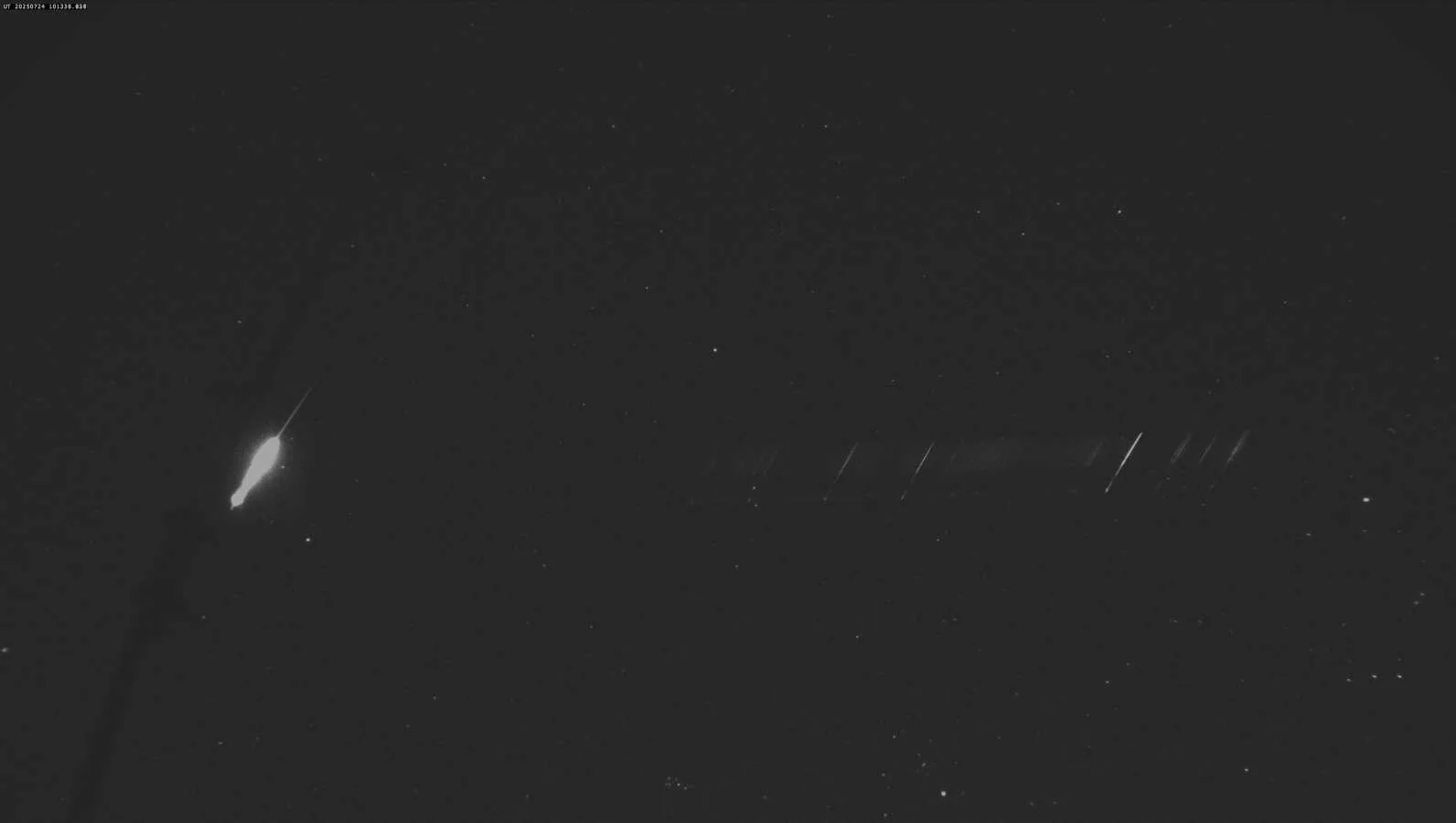
Fig. 19: Composite image of the spectrum of fireball CM20250724_101335 SPO from the La Silla SPNE spectrograph (resolution 0.34 nm/px). Author: Valašské Meziříčí Observatory.
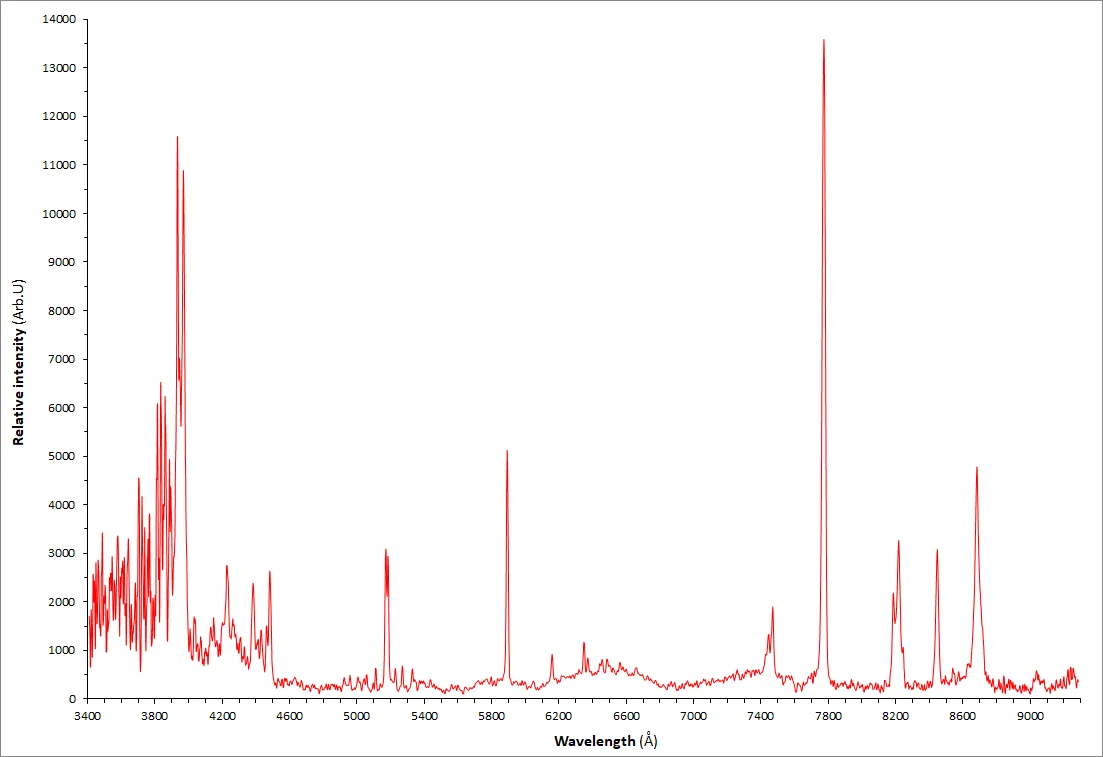
Fig. 20: Summed calibrated spectrum of fireball CM20250724_101335 SPO from the La Silla SPNE spectrograph (resolution 0.34 nm/px). Author: Jakub Koukal.
Detection of meteor spectra in both networks is performed using FireCapture in 3-minute sequences. The resulting sequence is split into individual frames; each frame is then corrected with dark frame and flat field, using frames preceding the spectrum recording in the case of dark frames. Wavelength calibration on the x-axis is performed using a 4th-order polynomial with known emission lines that occur in meteor spectra and with regard to the specific characteristics of each recorded spectrum (e.g., contribution of the persistent train, meteor speed, relative brightness, etc.). Sensitivity calibration of the spectrograph as a whole (y-axis) over the observed wavelength range is carried out using a combination of line and continuum emission sources (e.g., Ne or Hg lamps).
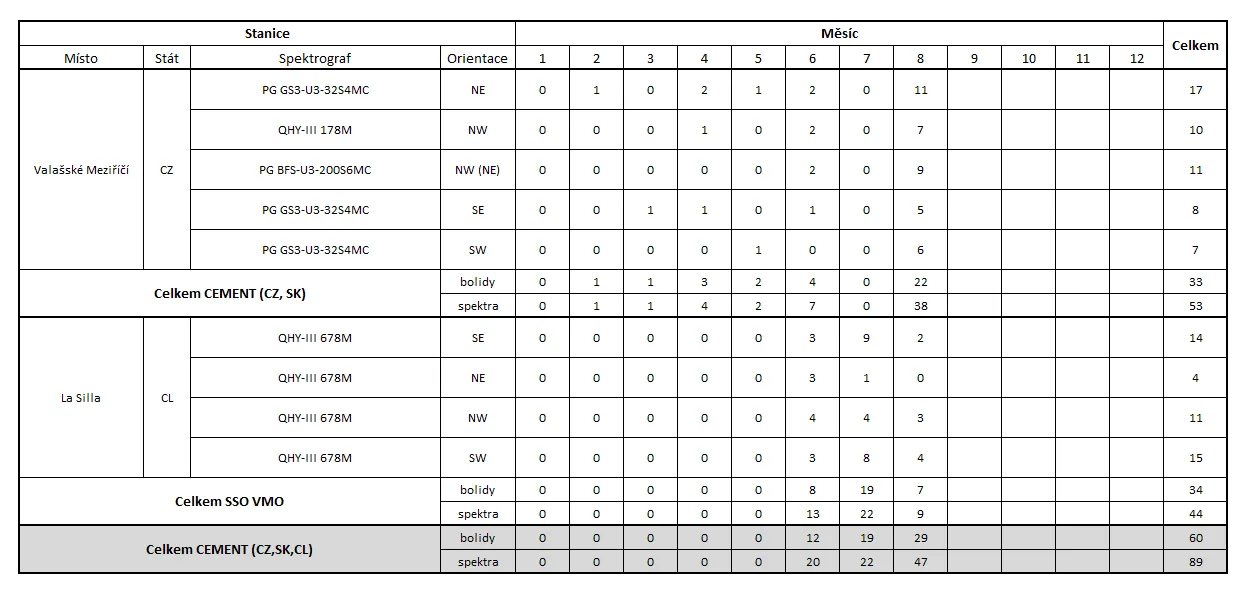
Tab. 2: Overview of the numbers of recorded meteor spectra in 2025 at CEMeNt and SSO VMO network stations. Author: Jakub Koukal.
Acknowledgements
Thanks go to the companies DEZA a.s. and CS CABOT s.r.o., which contributed to the acquisition of equipment for the FHD stations located at the Valašské Meziříčí Observatory and within the CEMeNt network. Thanks to all partner observatories (Ždánice, Vsetín, Rokycany, Plzeň, Karlovy Vary, Partizánske, Kysucké Nové Mesto) and to private station owners (Milan Čermák, Richard Kačerek, Jakub Kapuš, Tibor Csorgei, Vladimír Bahýl) for supporting the network’s activities and growth. Further thanks go to all involved institutions for supporting the network’s activities and growth. The RPOS project (Development of a cross-border observation network) was co-financed by the Small Project Fund of the Interreg V-A Slovakia–Czech Republic 2014–2020 programme, call code 5/FMP/11b, reg. no. CZ/FMP/11b/05/058. The projects KOSOAP (Cooperating Network in the Field of Astronomical Professional-Observational Programmes) and RPKS (Development of a Cross-Border Cooperating Network for Professional Work and Education) were implemented by the Valašské Meziříčí Observatory (CZ) and Kysucké Nové Mesto (SK) in cooperation with the SMPH (Society for Interplanetary Matter). The projects were co-financed by the Microprojects Fund of the Cross-Border Cooperation Operational Programme Slovakia–Czech Republic 2007–2013. The project for the purchase and operation of high-resolution spectroscopic cameras is partially funded by the Programme for Regional Cooperation of the Czech Academy of Sciences, reg. no. R200402101. Installation of the Southern Spectroscopic Observatory of the Valašské Meziříčí Observatory in Chile is part of the KKC (Cultural and Creative Centre) project, co-financed by the European Union and the National Recovery Plan, within call no. 0231/2022 – Development of Regional Cultural and Creative Centres (project reg. no. 0231000014), administered by the Ministry of Culture of the Czech Republic. Installation costs were covered by co-financing provided by the Zlín Region. We thank the PLATOSpec consortium for the opportunity to install spectral cameras and for cooperation during installation and operation. The PLATOSpec project was built and is operated by a consortium comprising the Astronomical Institute of the Czech Academy of Sciences in Ondřejov (ASU, Czech Republic), the Thuringian State Observatory (Germany), the Pontificia Universidad Católica de Chile (PUC, Chile); smaller partners include Masaryk University (Czech Republic), Universidad Adolfo Ibáñez (Chile), and the Institute of Plasma Physics of the Czech Academy of Sciences (Czech Republic). Funding for modernization of the 1.52-m telescope was provided by ASU and personnel costs were partially covered by grant LTT-20015. Funding for the construction of PLATOSpec was provided by the Free State of Thuringia, represented by the “Thuringian Ministry for Education, Science and Culture” within the “Guideline for the Promotion of Research,” and by the German Aerospace Center (DLR). Financial support for observations is provided within the institutional support for the development of Masaryk University as a research organization. Use of the 1.52-m telescope was enabled by an agreement between ESO and the PLATOSpec consortium. Installation of the El Sauce station was enabled at the private El Sauce Observatory in cooperation with OBSTECH SpA.