Data CEMeNt

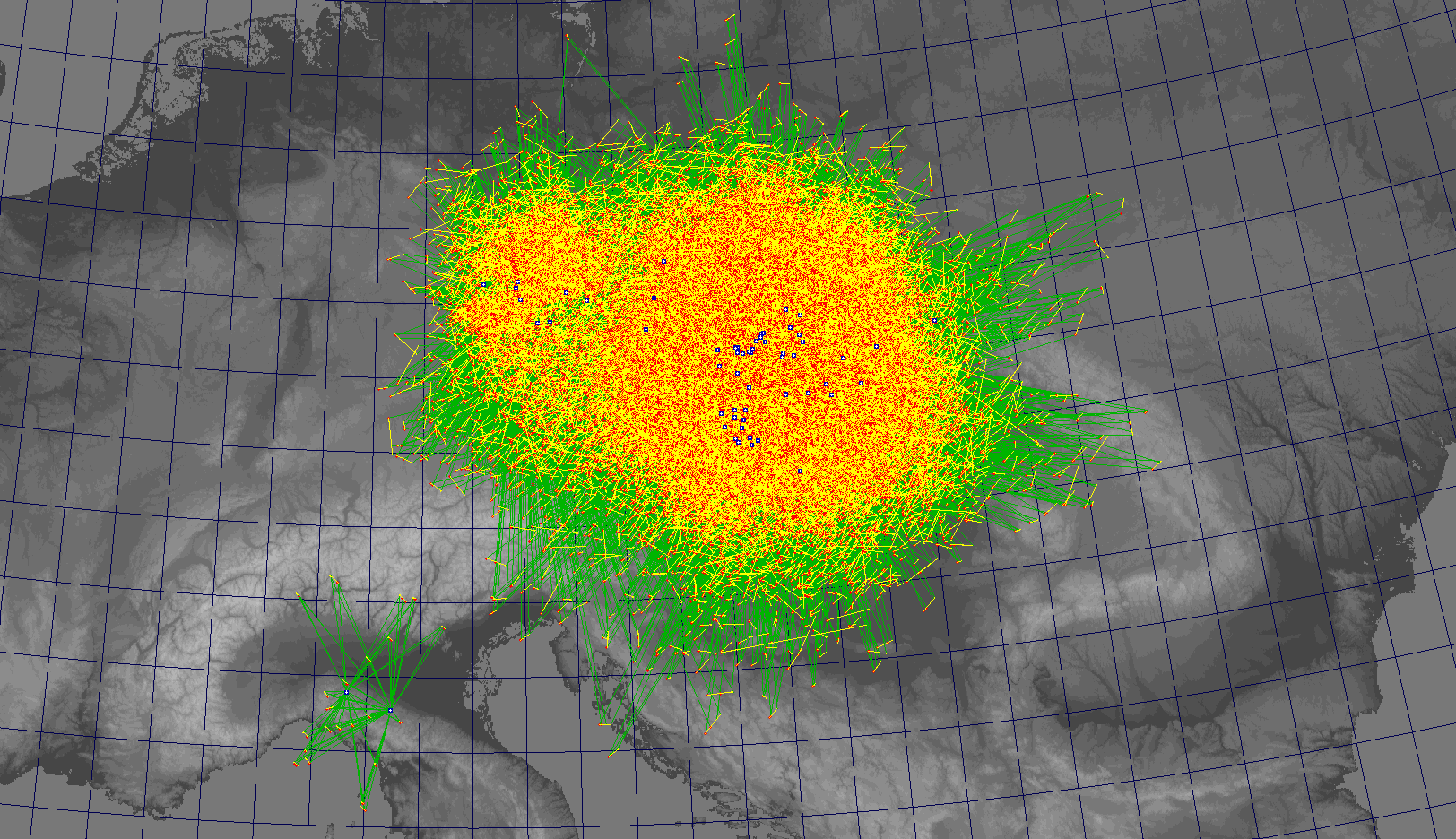
Ground projection of captured meteors
Ground projection of captured meteorsOverall 2D projection of multi-station atmospheric trajectories recorded in the CEMeNt network since 2009.
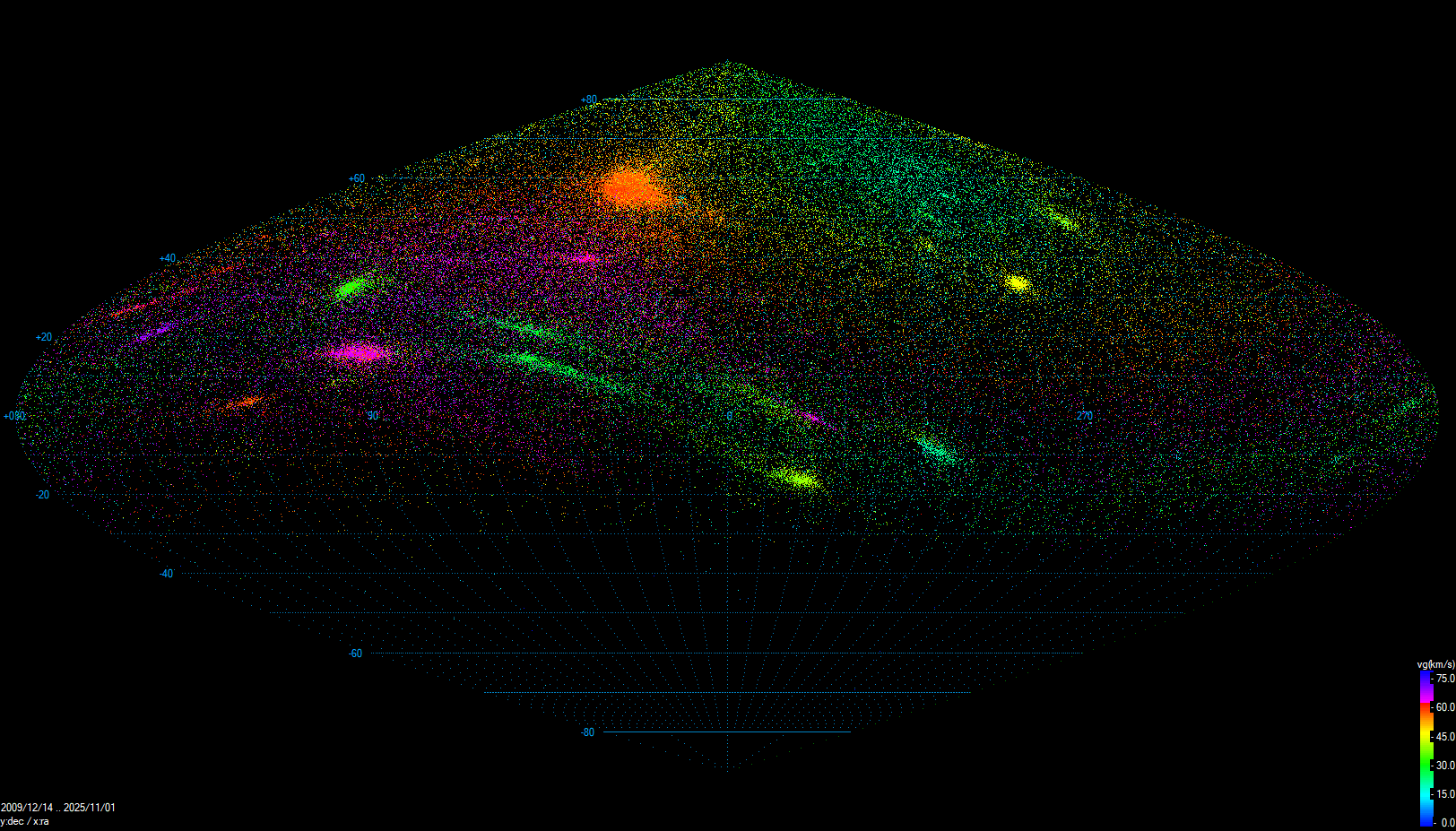
Meteor Radiants Since 2009
Meteor Radiants Since 2009Radiants of shower and sporadic multi-station meteors recorded in the CEMeNt network since 2009. A sinusoidal projection with the equatorial coordinate system is used for the display.

CEMeNt in numbers

646,675single meteors
289,334paired meteors
103,204orbital trajectories
311recorded spectral
15active stations
20active HD cameras
12active SD cameras
5active spectrographs

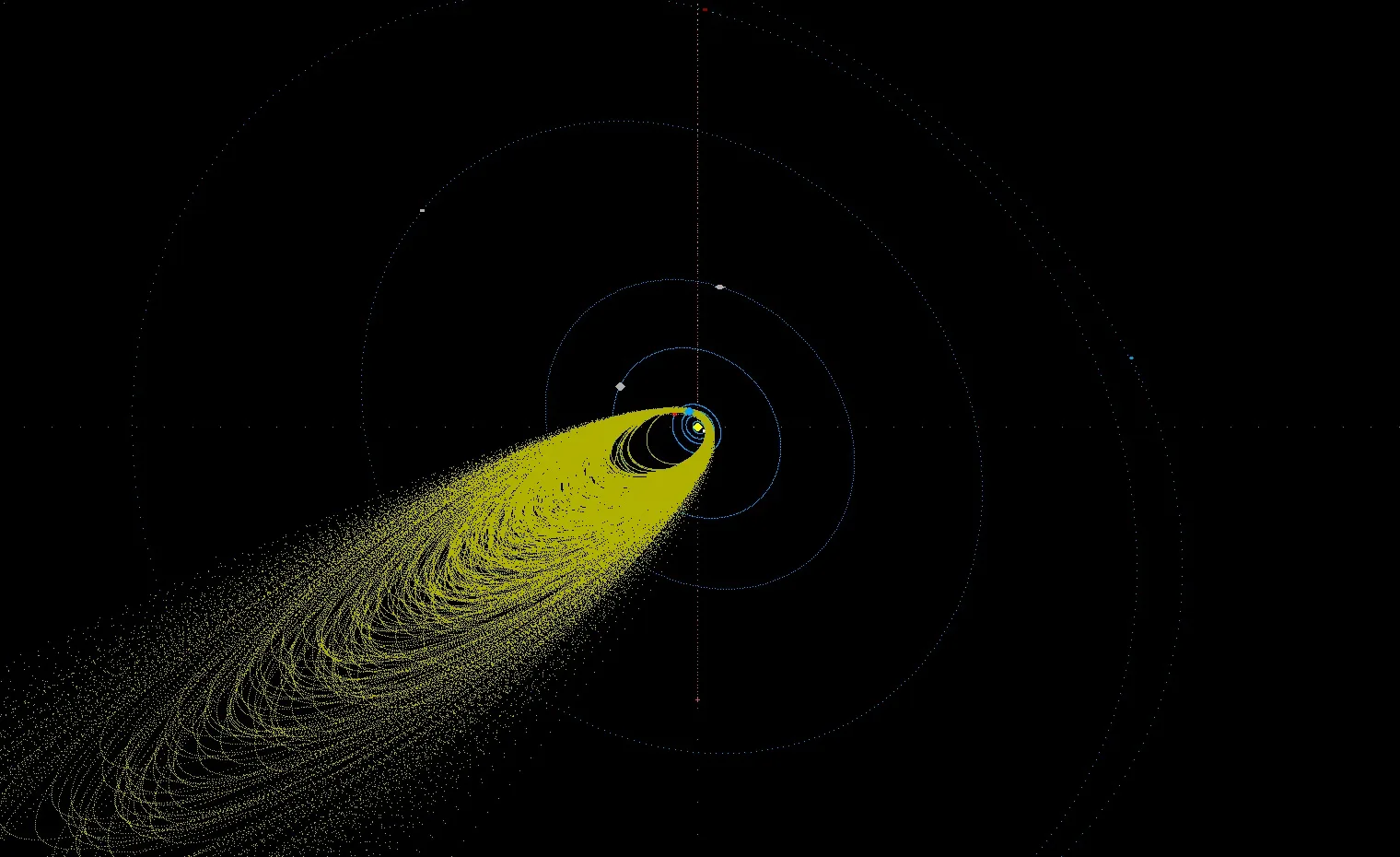
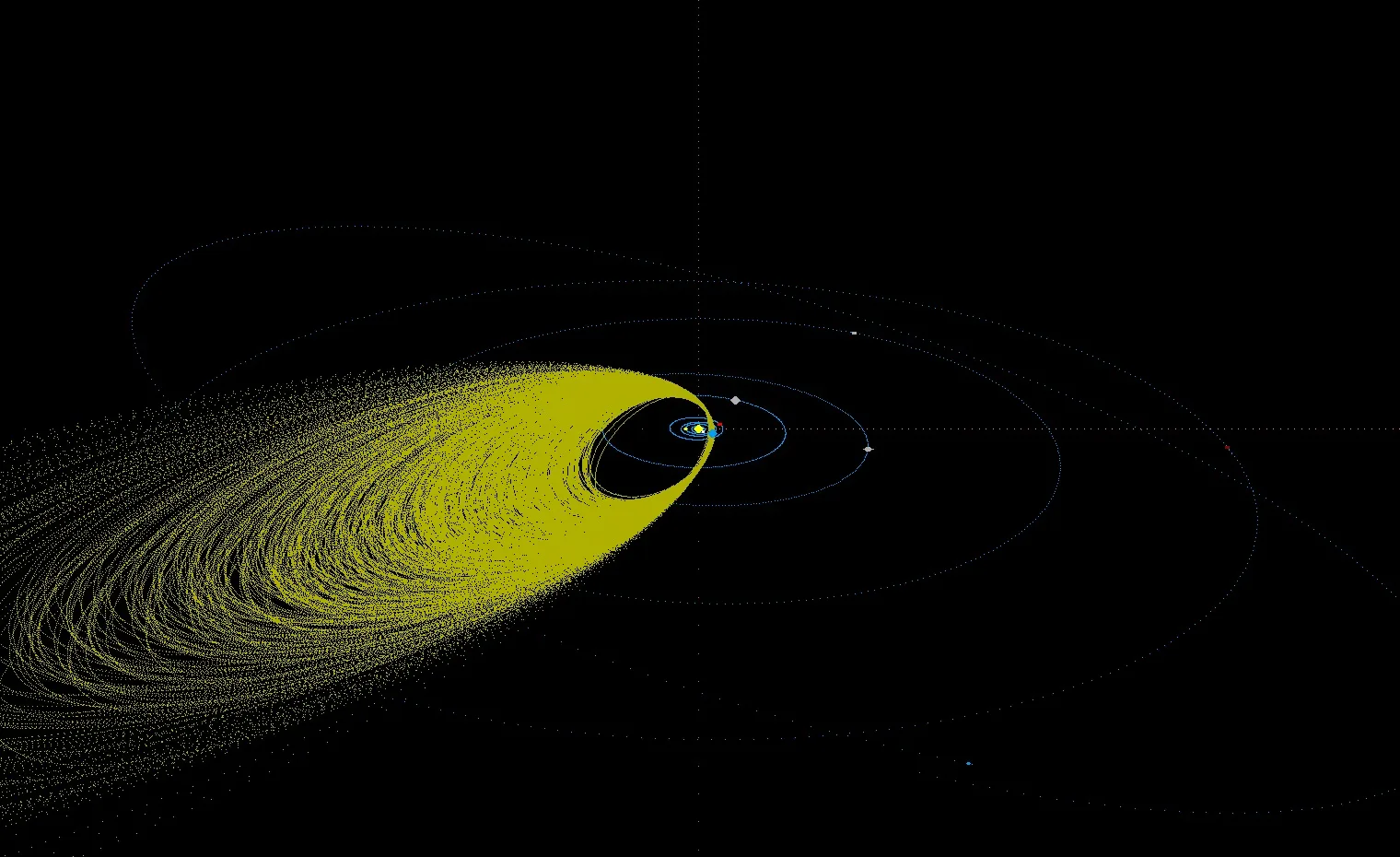
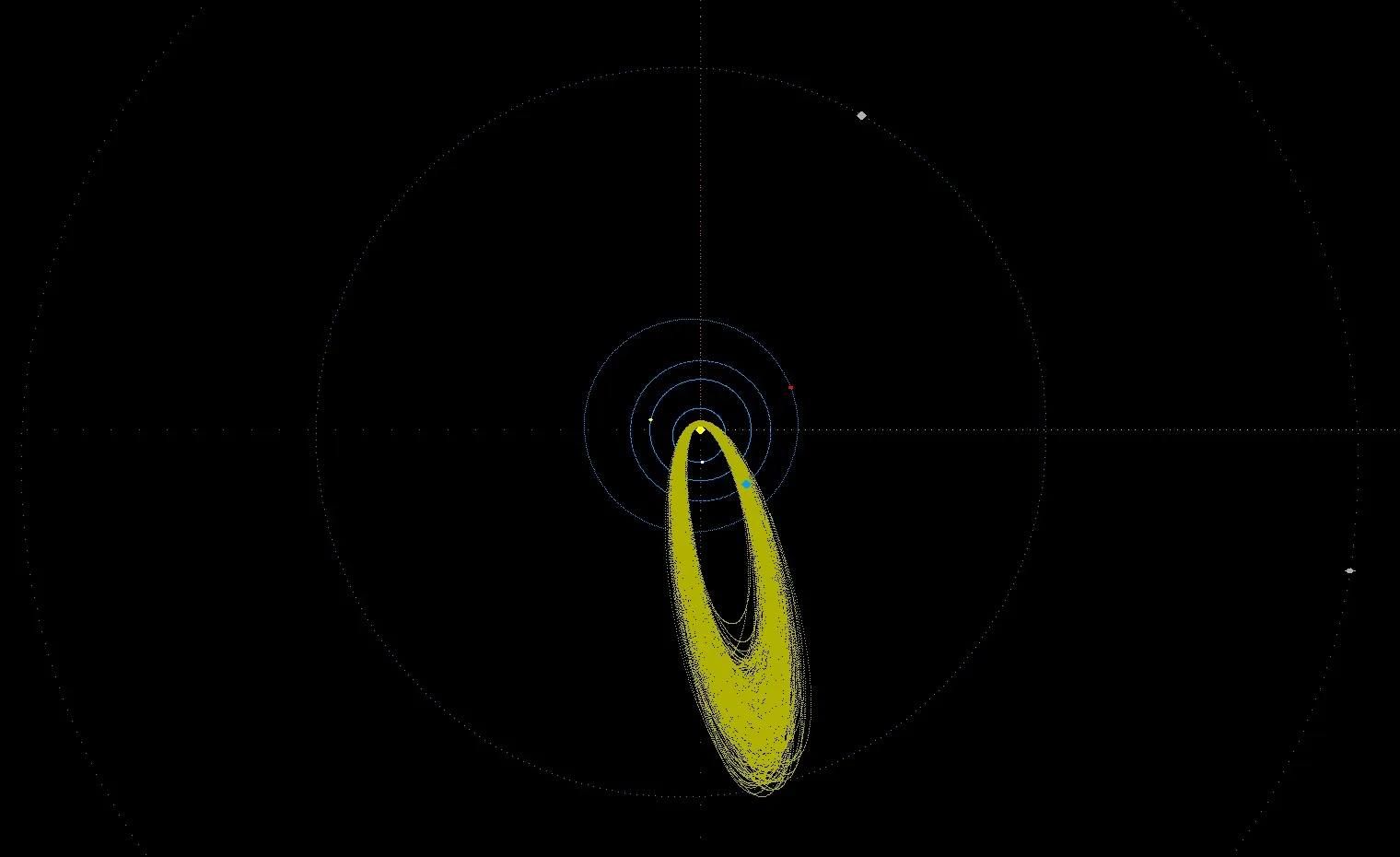
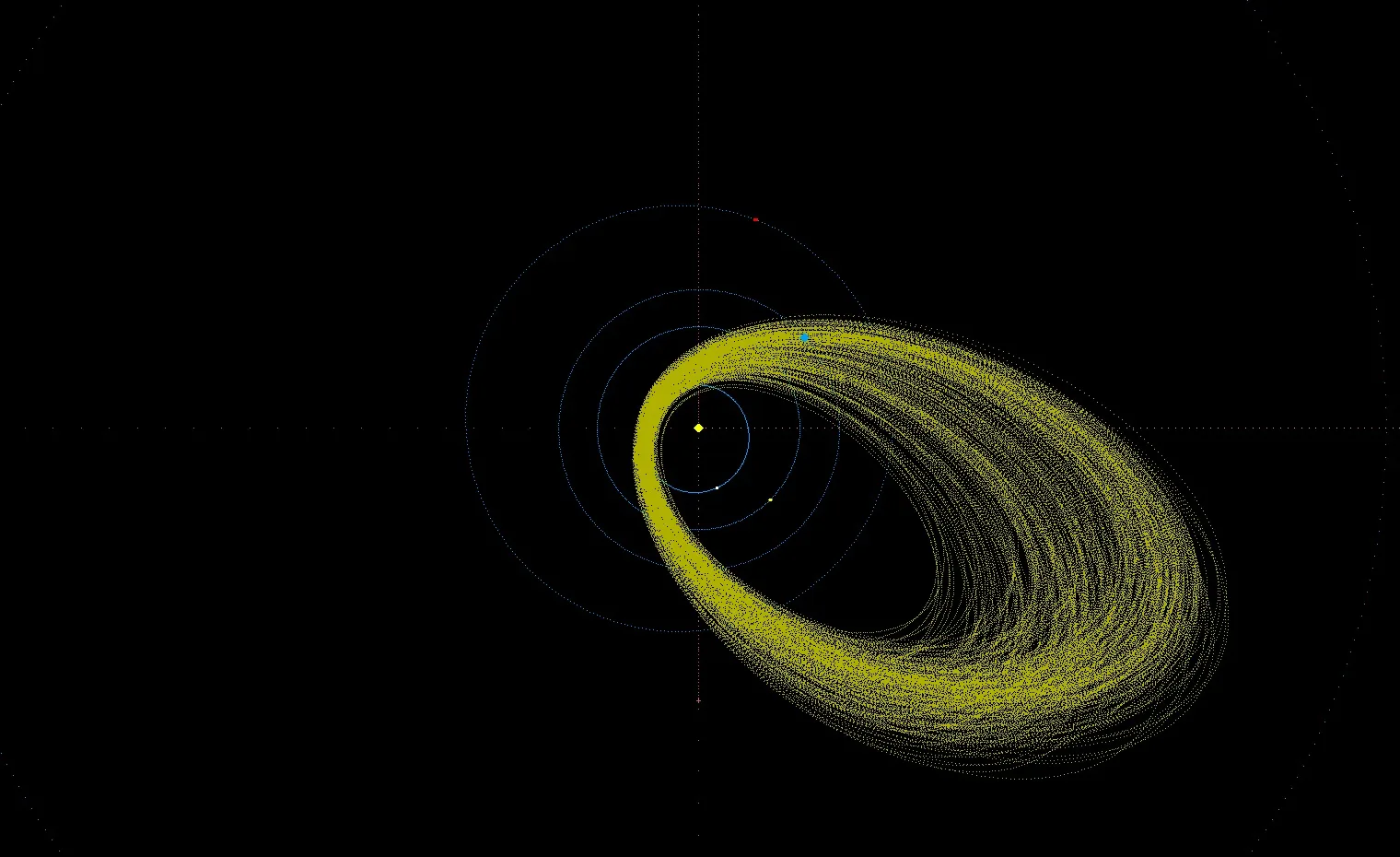
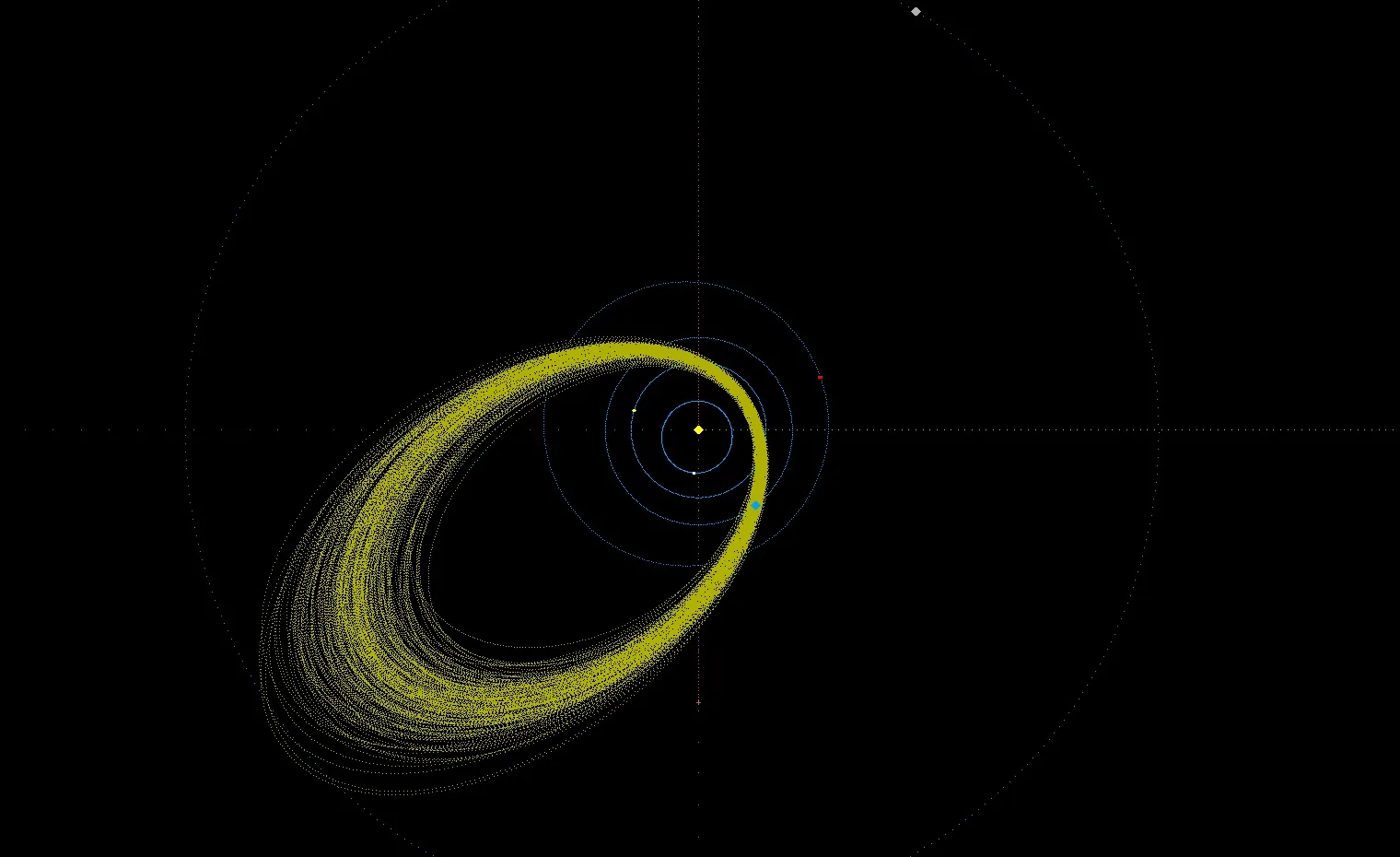
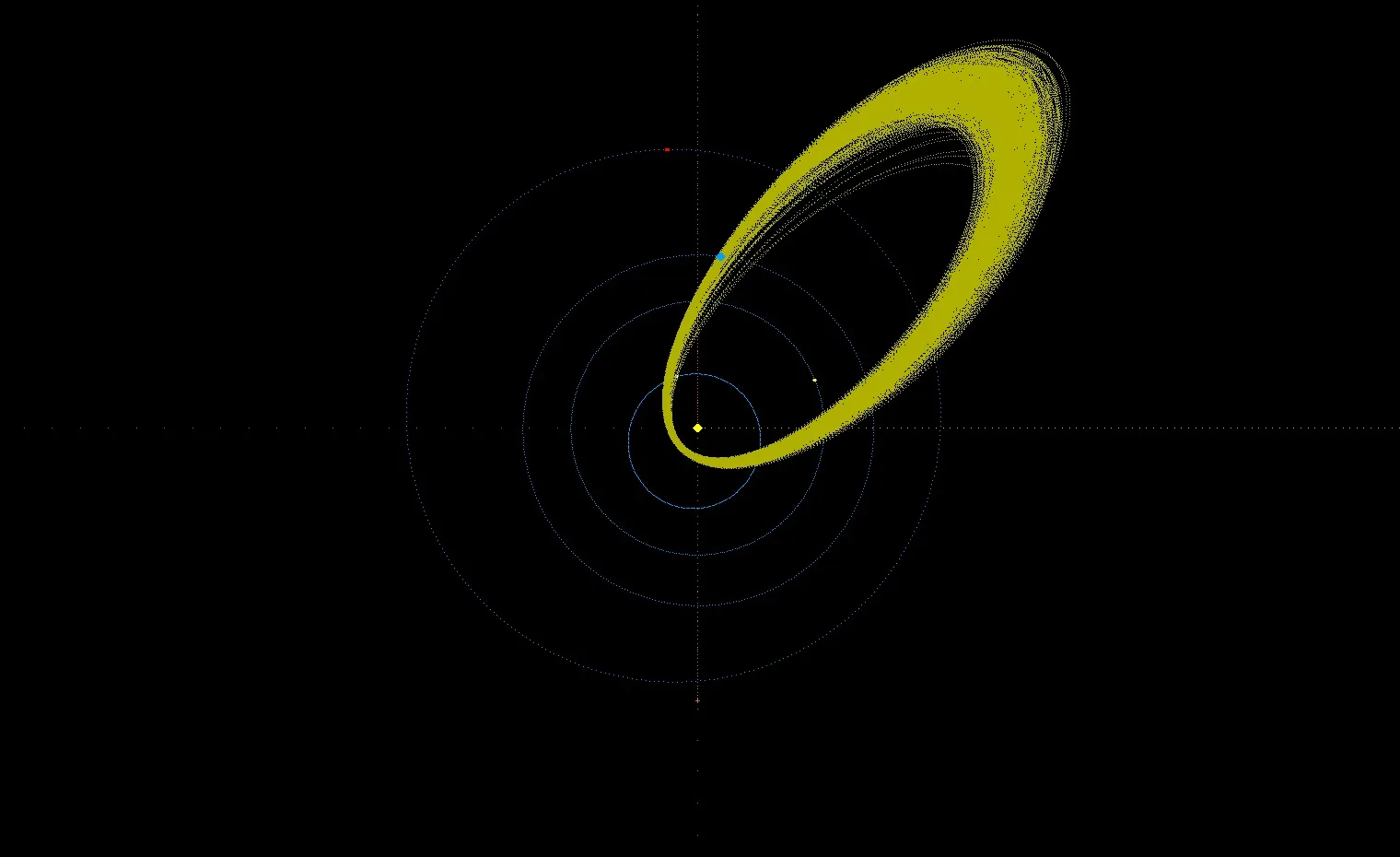
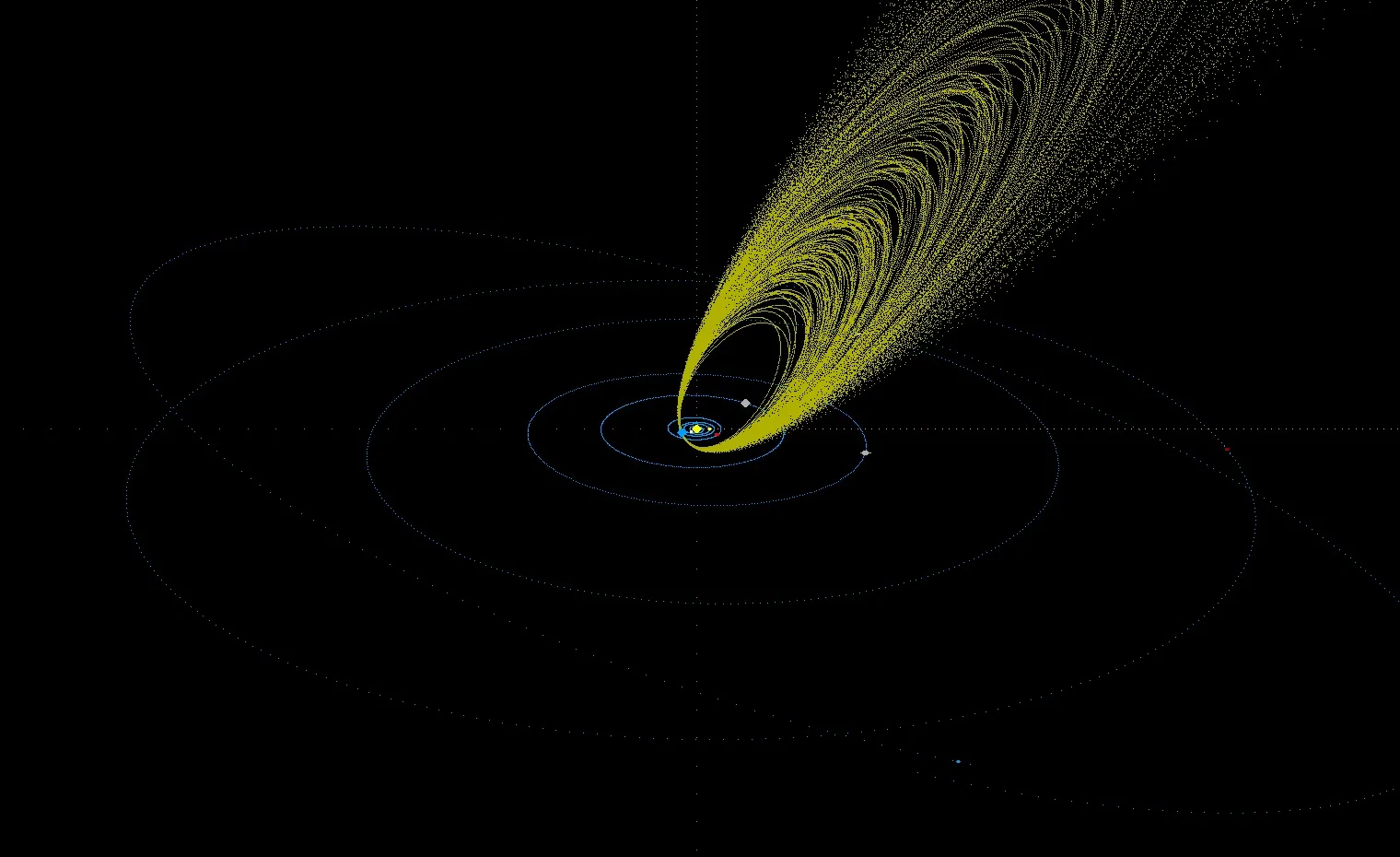
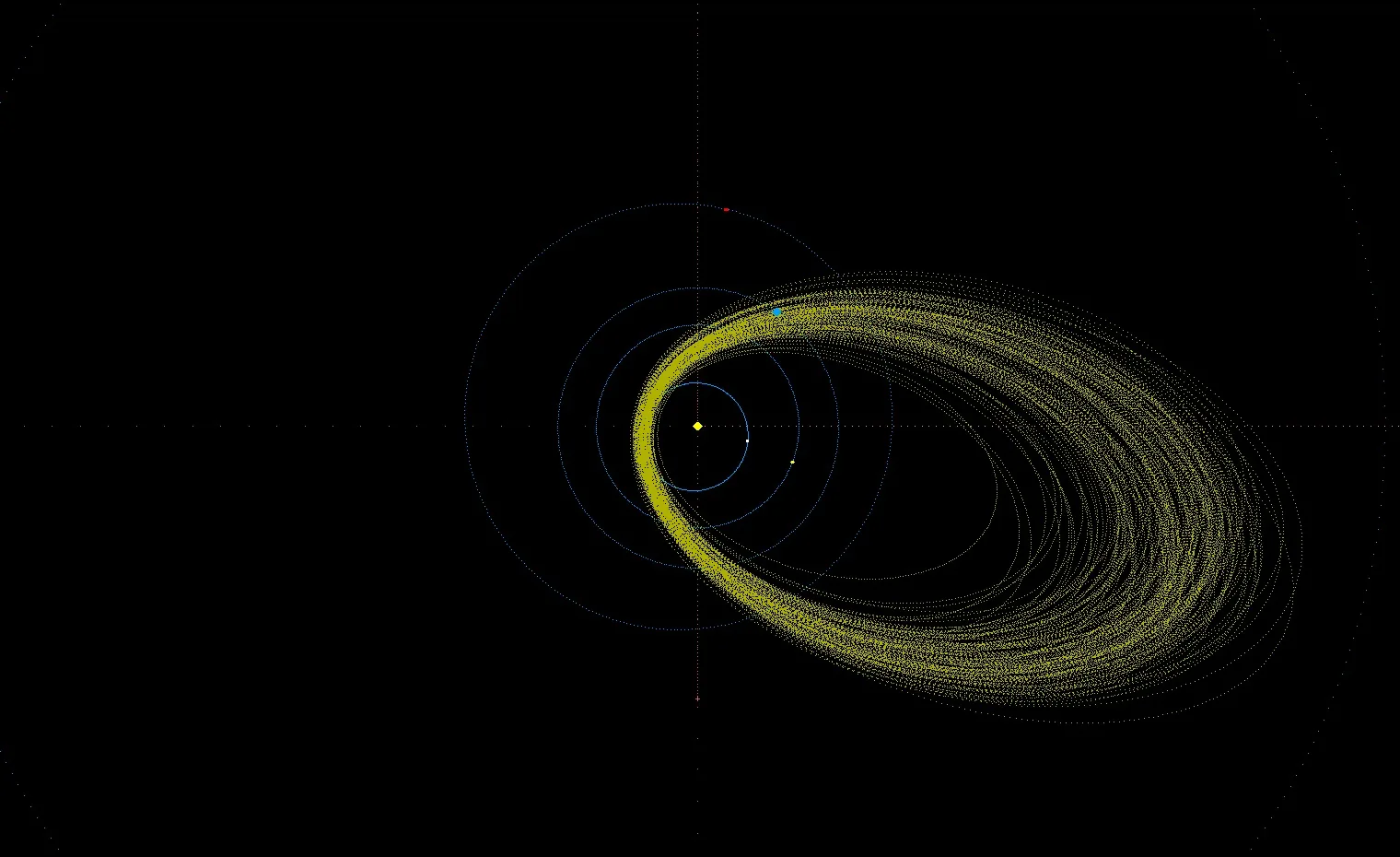
Heliocentric projection

Capricornids
418 meteors

Capricornids

The Alpha Capricornid meteor shower (IAU MDC 0001 CAP) is known for its frequent occurrence of very bright fireballs. The parent body of this meteor shower is comet 169P/NEAT, which orbits on a relatively eccentric path with a low inclination. The activity period of the meteor shower begins in early July and ends in mid-August. The meteor shower usually peaks on July 29 or 30, with a typical hourly rate of 10 meteors.
Geminids
1,916 meteors

Geminids

The Geminid meteor shower (IAU MDC 0004 GEM) is currently the strongest regular meteor shower, with an hourly rate of up to 160 meteors. Its parent body is the inactive comet classified as the asteroid (3200) Phaethon. The activity period of the meteor shower begins at the end of November and ends at the end of December. The shower typically peaks on December 13 or 14, with medium-speed meteors having a geocentric velocity of around 34 km/s.

Lyrids
629 meteors

Lyrids

The April Lyrid meteor shower (IAU MDC 0006 LYR) is one of the well-known meteor showers and, due to gravitational perturbations caused by Saturn, has produced meteor storms in the past, the first recorded in 687 BC. The activity period of the meteor shower begins in the first half of April and ends in early May. The shower typically peaks on April 22 or 23, with a usual hourly rate of 20 meteors. The parent comet of the shower is the periodic comet C/1861 G1 (Thatcher), and the meteors, on an eccentric prograde orbit, are relatively fast with a geocentric velocity of around 47 km/s.

Northern Taurids
473 meteors

Northern Taurids

The Northern Taurid meteor shower (IAU MDC 0017 NTA) is the northern branch of the extensive Taurid complex, whose parent body is the asteroid 2004 TG10. Numerous asteroids on similar orbits are also potential parent bodies. The northern branch of the Taurid complex includes several meteor showers with radiants predominantly in Aries, such as the Northern October Delta Arietids (0025 NOA). The entire activity period of the Northern Taurid complex is very long, beginning in mid-October and ending in early December. The peak activity usually occurs between October 28 and November 17, with a typical hourly rate of 5 meteors. The meteors are moderately slow, with a geocentric velocity of around 28 km/s.

Orionids
1,082 meteors

Orionids

The Orionid meteor shower (IAU MDC 0008 ORI) is one of the well-known meteor showers, as its parent body (also responsible for the Eta Aquariids in May) is the famous comet 1P/Halley. The parent body follows an eccentric retrograde orbit, and the meteors are very fast, with a geocentric velocity of around 66 km/s. The activity period of the meteor shower begins in early October and ends in mid-November. The shower typically peaks on October 22 or 23, with a usual hourly rate of 25 meteors. The Orionids are also known for their secondary peaks and occasional increased activity, with hourly rates reaching up to 80 meteors.

Perseids
12,278 meteors

Perseids

The Perseid meteor shower (IAU MDC 0007 PER) is the second strongest regular meteor shower observed throughout the year. Its parent body is the comet 109P/Swift-Tuttle, which follows an eccentric retrograde orbit. The Perseids have also produced meteor storms in the past, the first recorded in 36 AD. The activity period of the shower begins in the first half of July and ends in late August. The shower typically peaks on August 12 or 13, with a usual hourly rate of 100 meteors. The meteors are fast, with a geocentric velocity of around 59 km/s.

Southern Delta Aquariids
645 meteors

Southern Delta Aquariids

The Southern Delta Aquarid meteor shower (IAU MDC 0005 SDA) is the southern branch of the Delta Aquarid complex (part of the antihelion source), with its parent body identified as comet P/2008 Y12 (SOHO). In the past, comet 96P/Machholz and asteroid 2003 EH1 were also suggested as possible parent bodies. The parent comet follows an eccentric prograde orbit with a relatively low inclination and a perihelion distance of only 0.06 AU. The activity period of the shower begins in the first half of July and ends in mid-August. The shower typically peaks on August 1 or 2, with a usual hourly rate of 25 meteors. The meteors are moderately fast, with a geocentric velocity of around 40 km/s.

Southern Taurids
915 meteors

Southern Taurids

The Southern Taurid meteor shower (IAU MDC 0002 STA) is the southern branch of the extensive Taurid complex, with its parent body identified as comet 2P/Encke. Numerous asteroids on similar orbits are also potential parent bodies. The southern branch of the Taurid complex includes several meteor showers with radiants predominantly in Aries, such as the Xi Arietids (0624 XAR) and the Southern October Delta Arietids (0028 SOA). The entire activity period of the Southern Taurid complex is very long, beginning in late September and ending in late November. The peak activity usually occurs between October 20 and November 7, with a typical hourly rate of 10 meteors. The meteors are moderately slow, with a geocentric velocity of around 28 km/s.
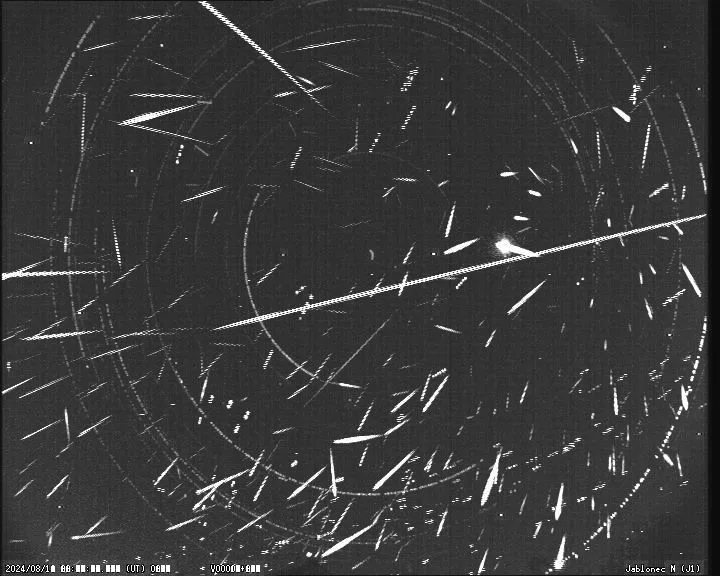
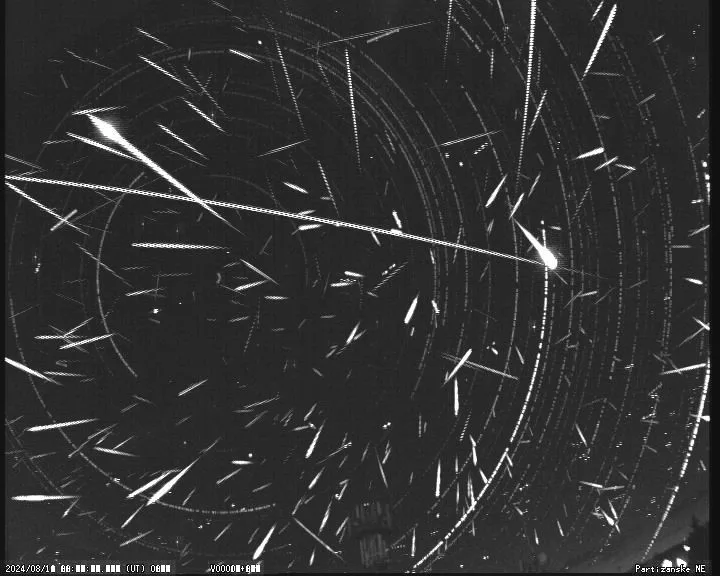
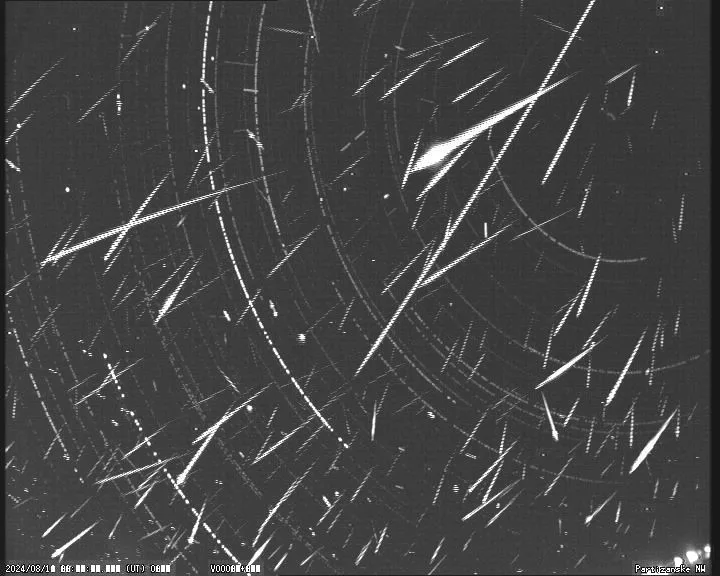
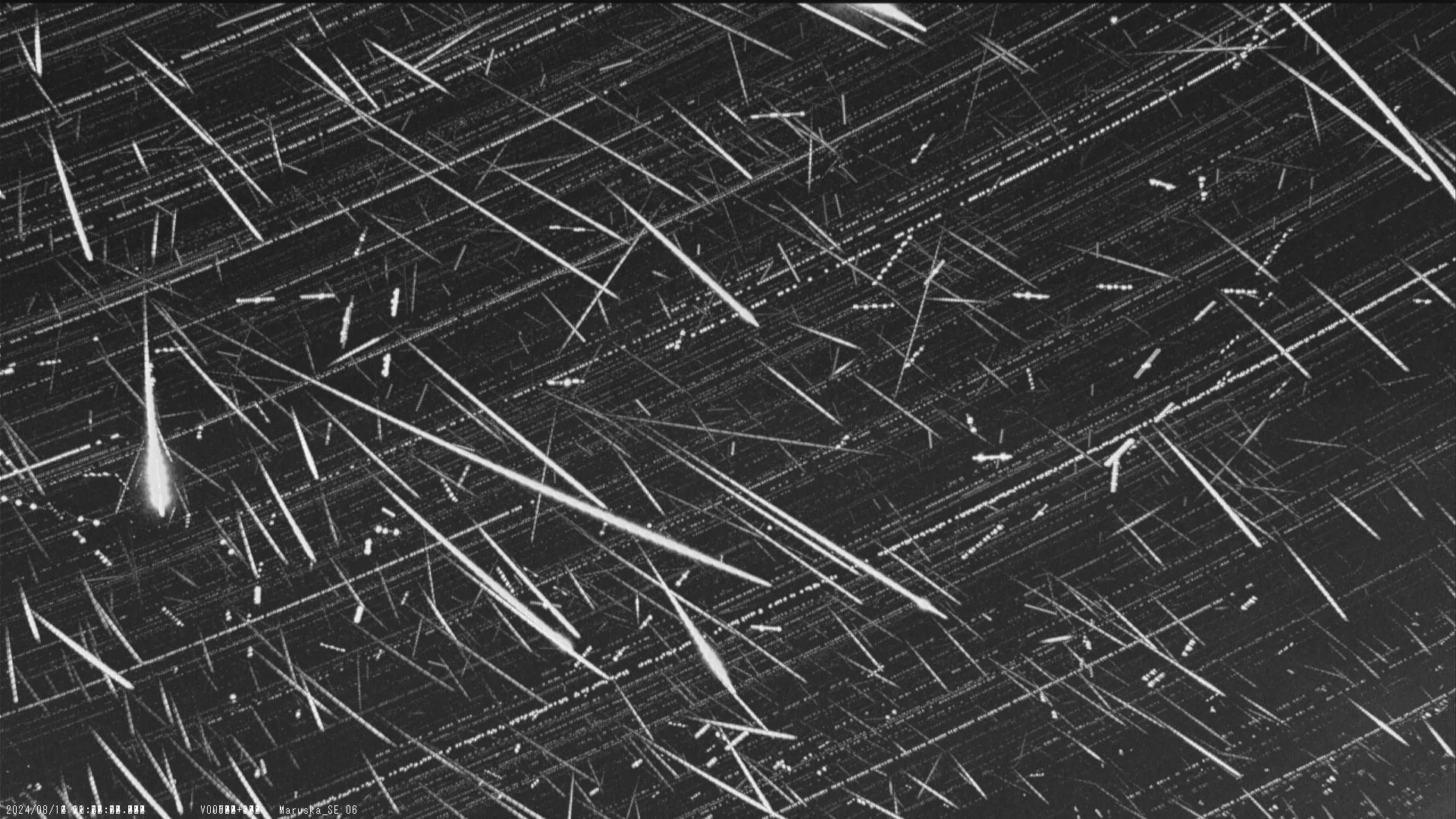
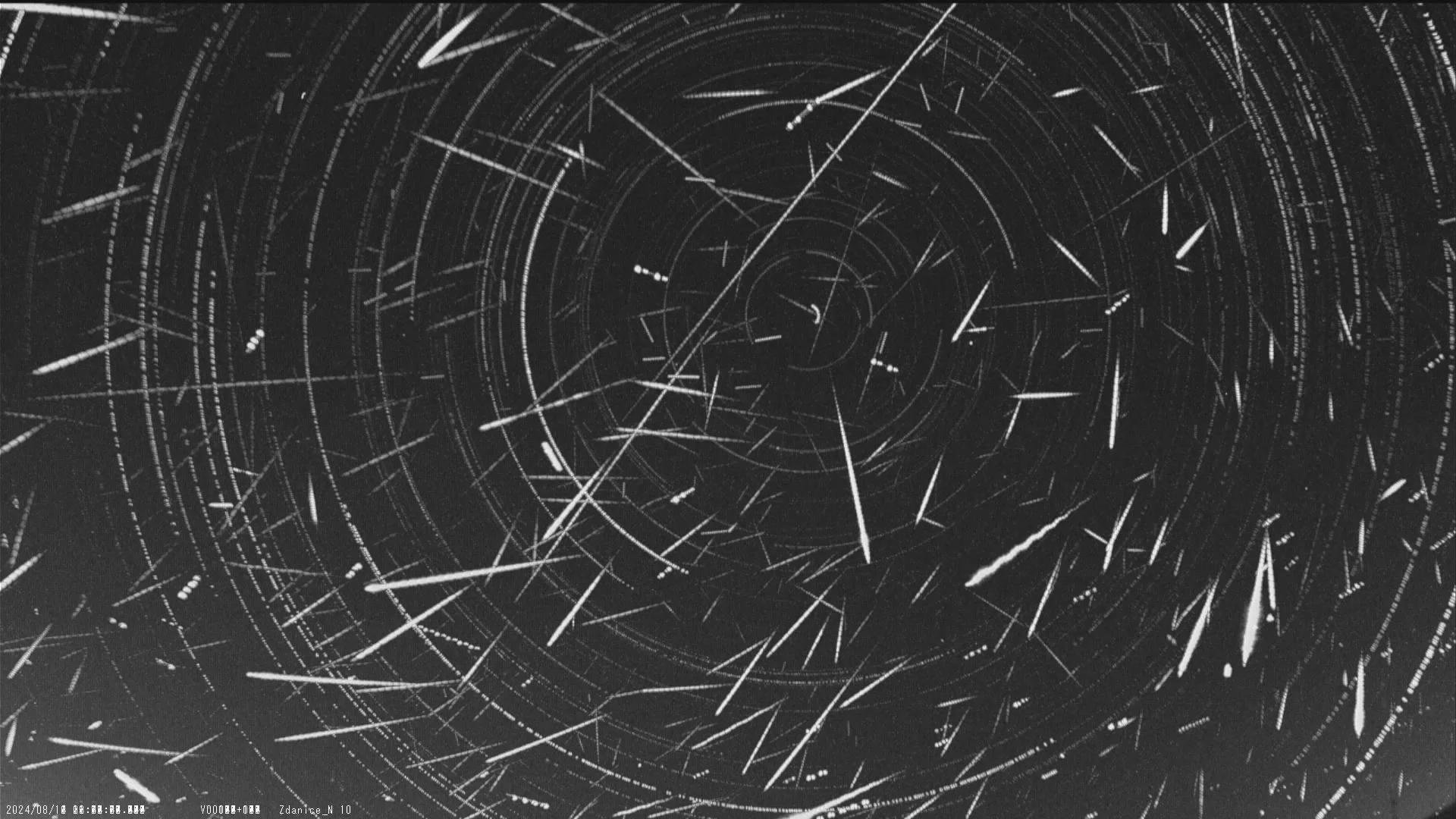
2024 Perseid meteor shower peak composites

Perseid meteor shower composite image from Jablonec station showing 339 meteors

Jablonec (N) · 339 meteors

Perseid meteor shower composite image from Partizánske station showing 389 meteors

Partizánske (NE) · 389 meteors

Perseid meteor shower composite image from Partizánske station showing 391 meteors

Partizánske (NW) · 391 meteors

Perseid meteor shower composite image from Maruska station showing 829 meteors

Maruska (SE) · 829 meteors

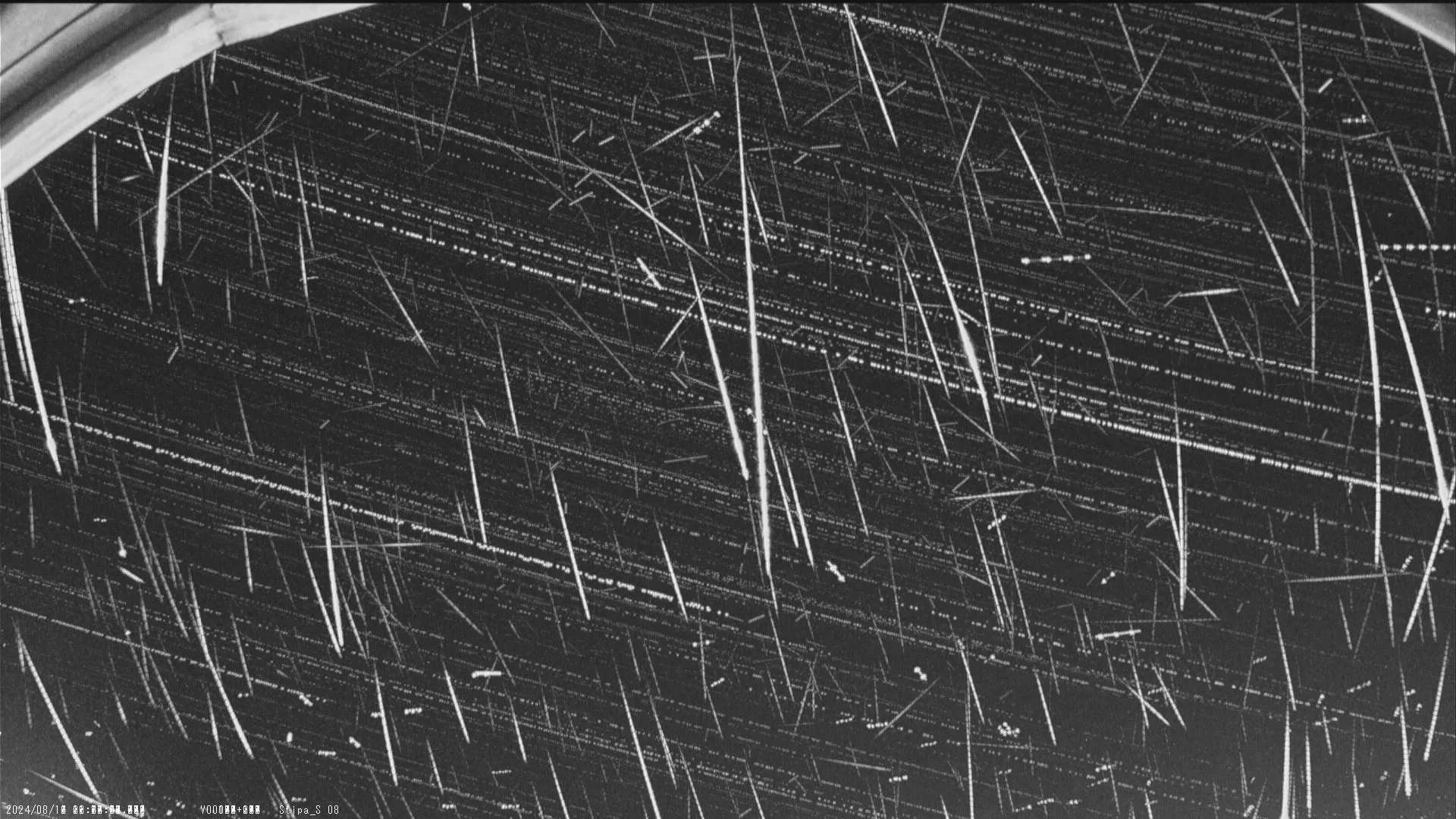
Perseid meteor shower composite image from Stipa station showing 720 meteors

Stipa (S) · 720 meteors

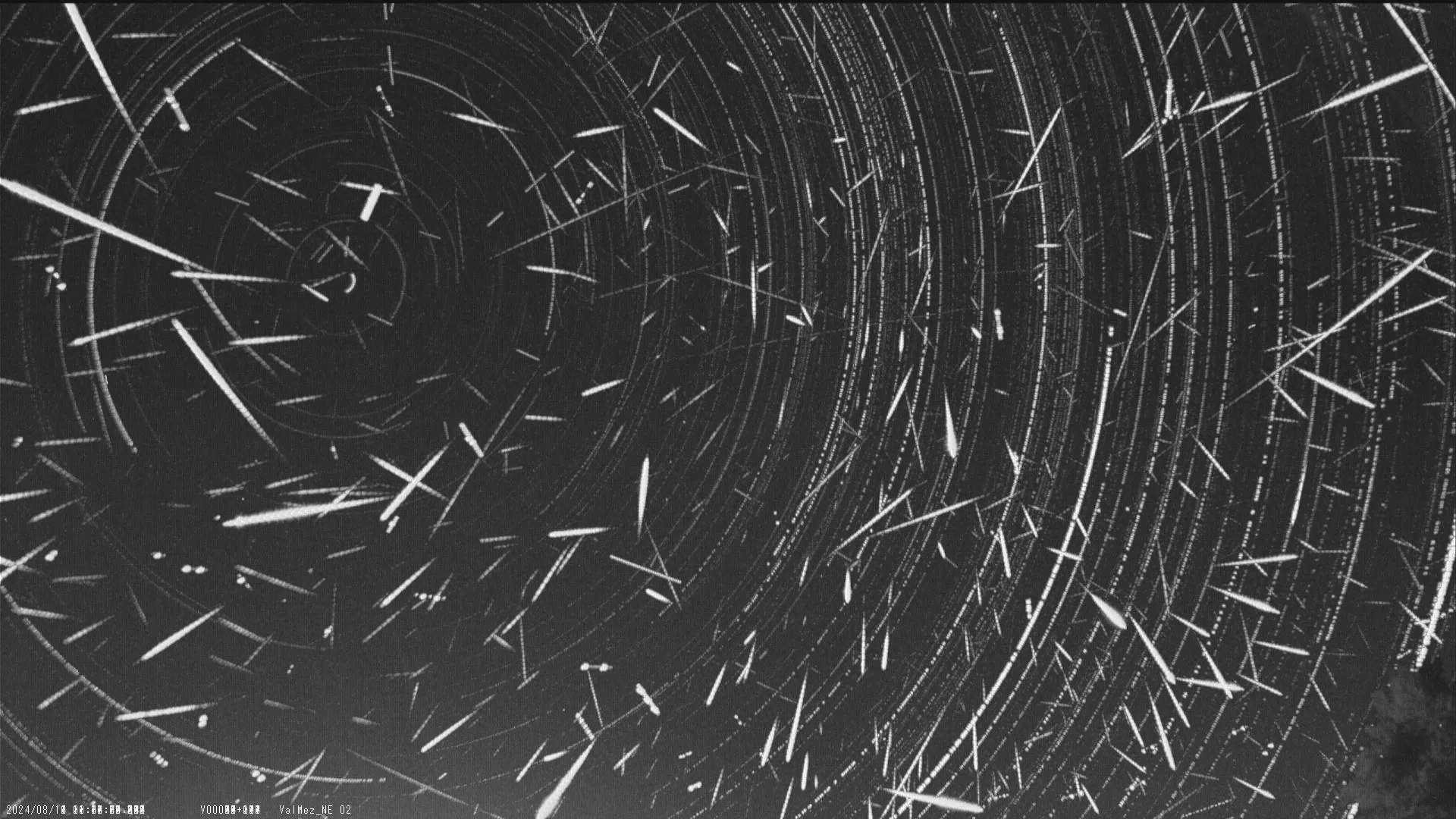
Perseid meteor shower composite image from Valašské Meziříčí station showing 714 meteors

Valašské Meziříčí (NE) · 714 meteors

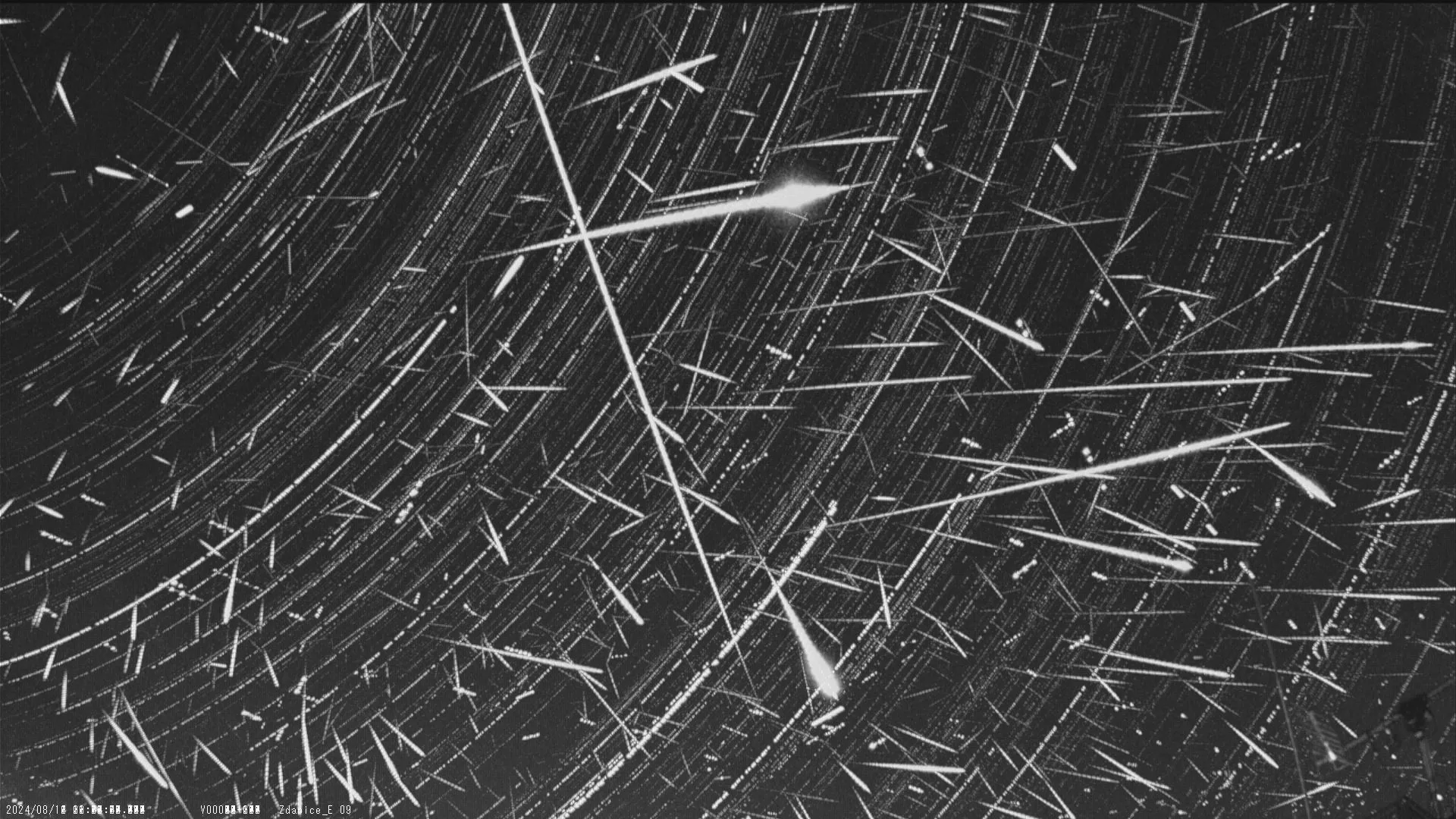
Perseid meteor shower composite image from Zdanice station showing 923 meteors

Zdanice (E) · 923 meteors

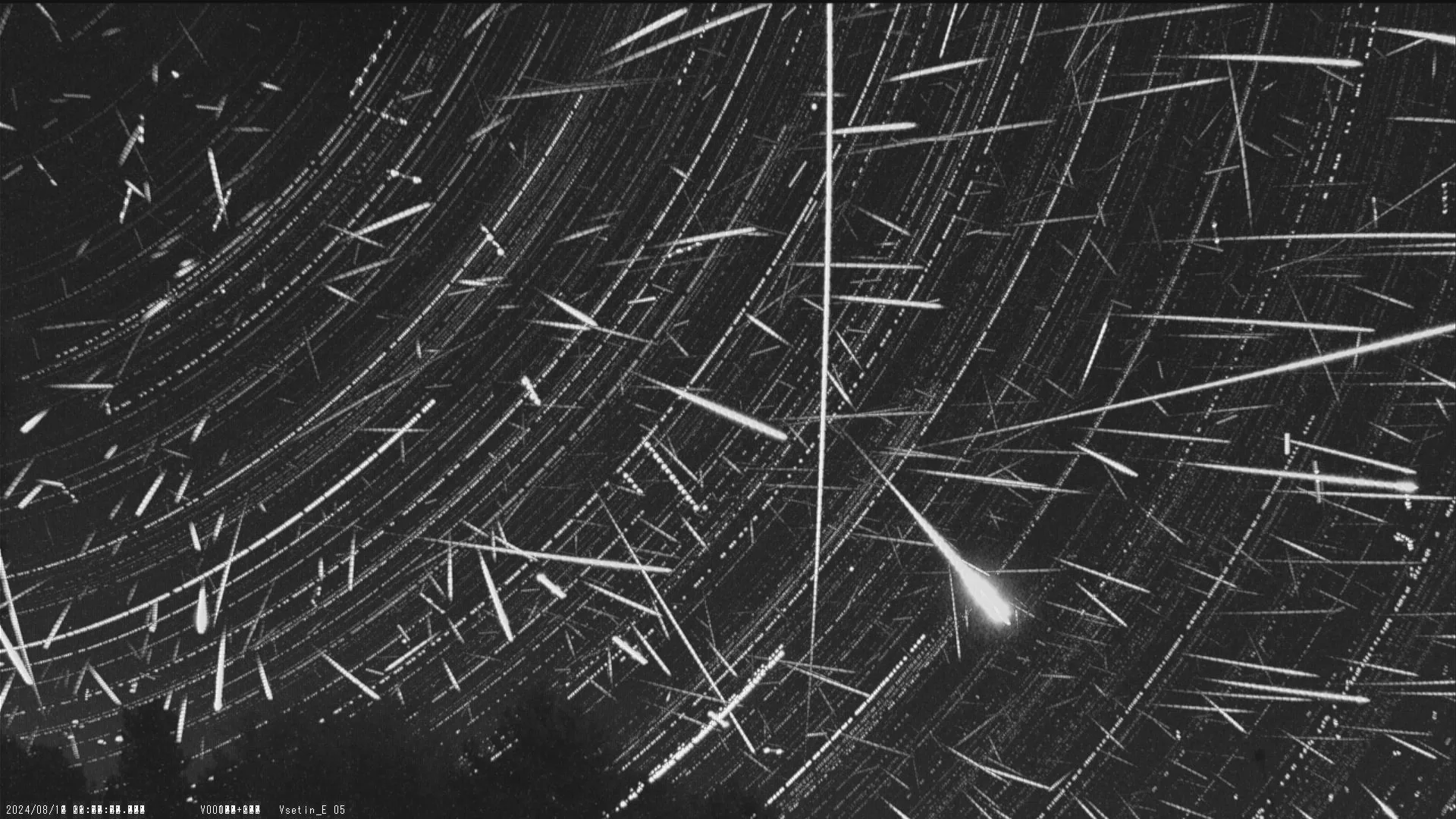
Perseid meteor shower composite image from Vsetin station showing 640 meteors

Vsetin (E) · 640 meteors

Perseid meteor shower composite image from Zdanice station showing 642 meteors

Zdanice (N) · 642 meteors