Latest Fireballs

9 May 2025

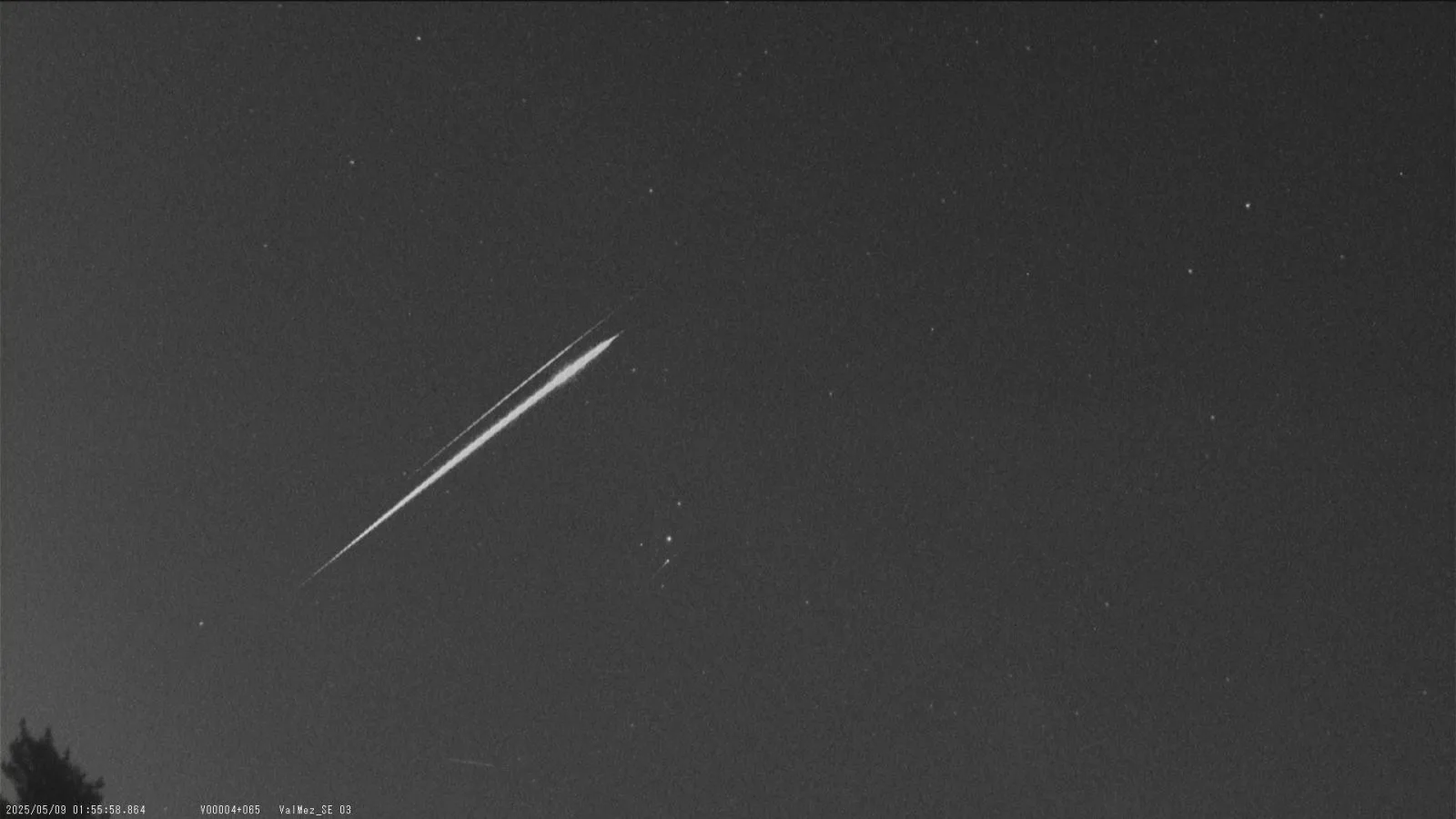
Fragmentation pair of meteors in the early morning of May 9, 2025

In the early morning of May 9, 2025, the CEMeNt network recorded two meteors from the Eta Aquarid stream separated by 2 seconds. Orbit analysis and Monte Carlo (1.6% random; D_D=0.008; D_SH=0.018) confirm a fragmentation pair – likely fragments of a single meteoroid that broke up before entering the atmosphere.
8 min
13 April 2025

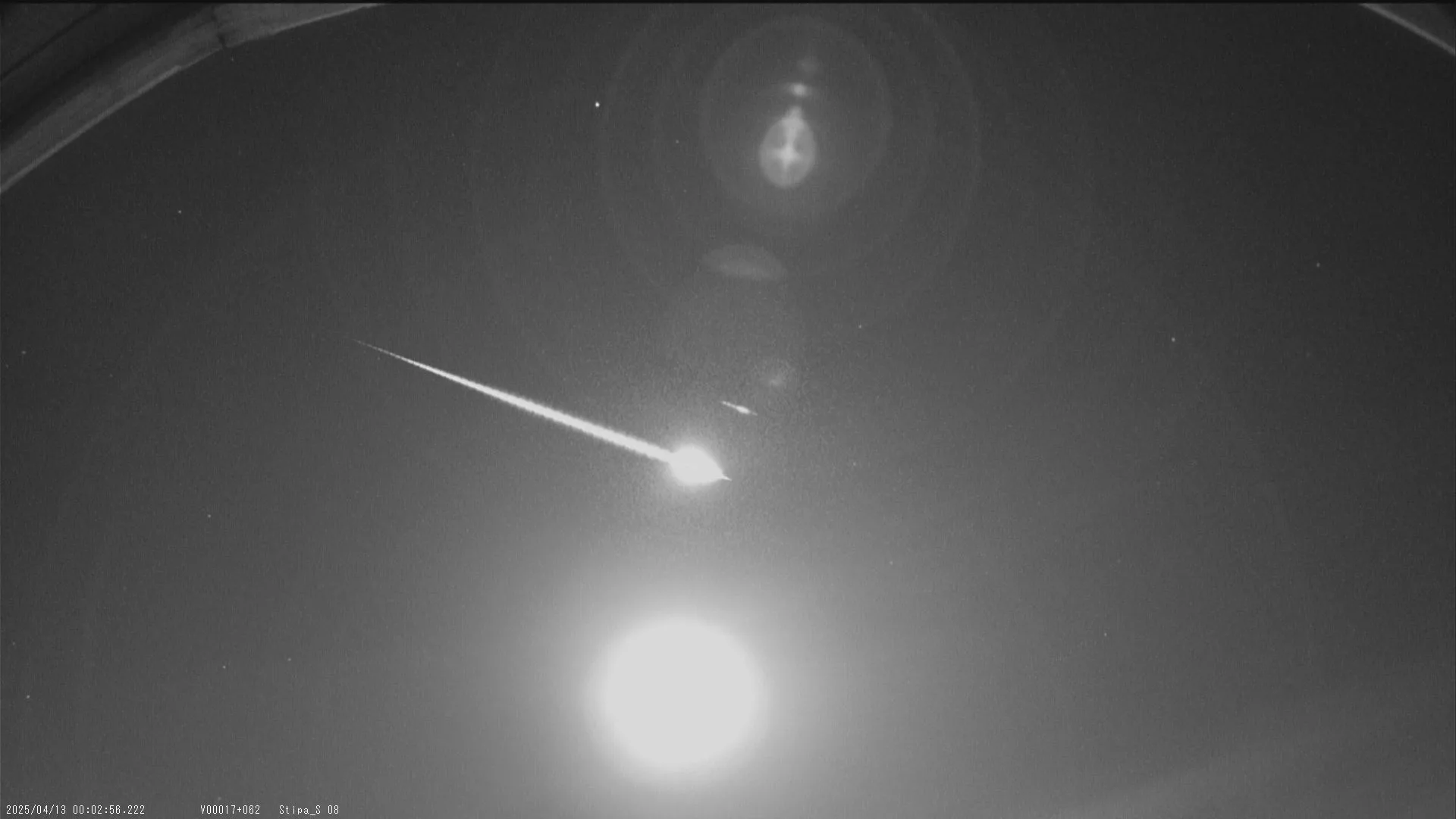
Two Bright Fireballs in Early Morning of April 13, 2025

Despite relatively high meteoric activity, the first quarter of 2025 was poor in bright meteors. However, the night of April 12/13, 2025 broke this pattern dramatically. Two bright fireballs were recorded in the late night hours, separated by less than two hours.

7 min
21 November 2024

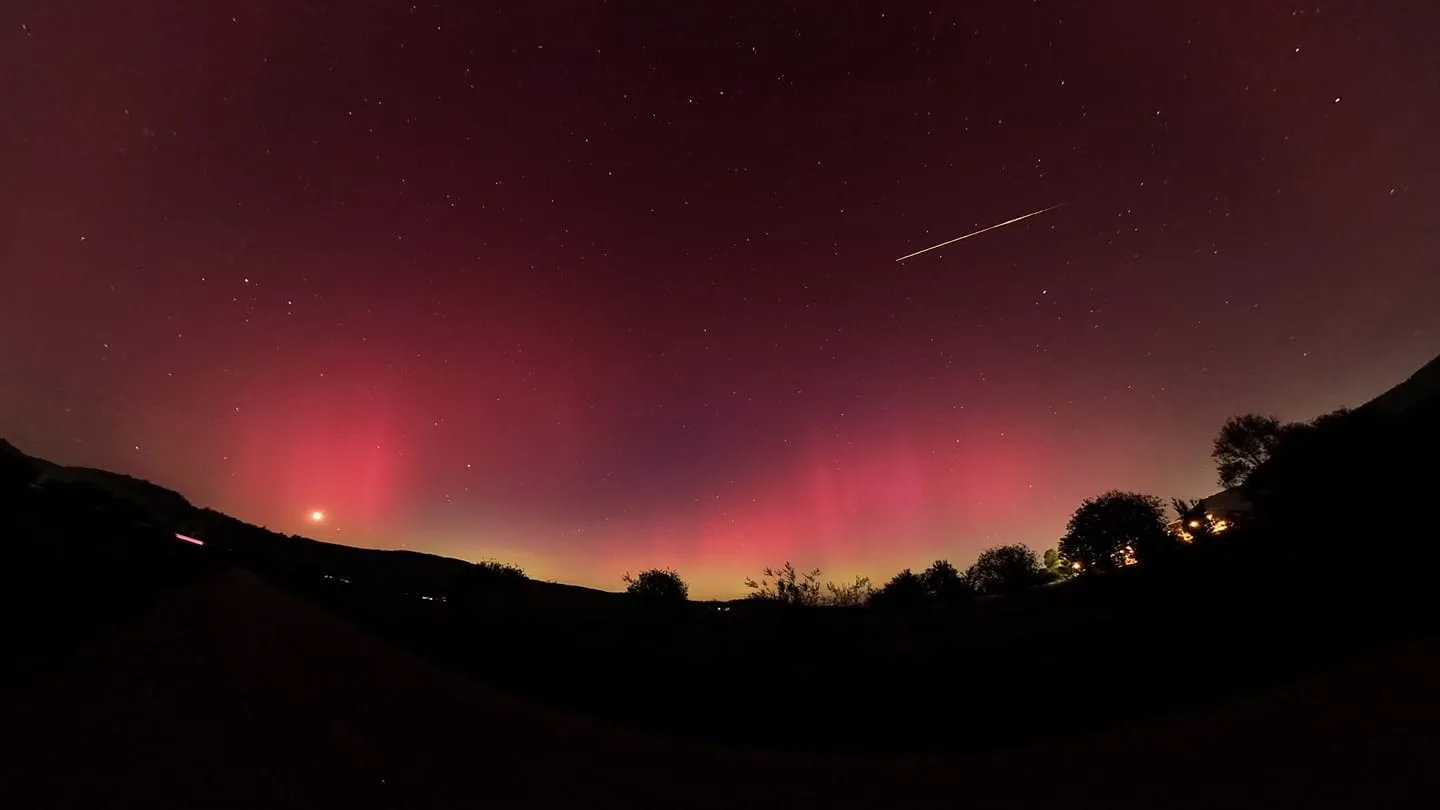
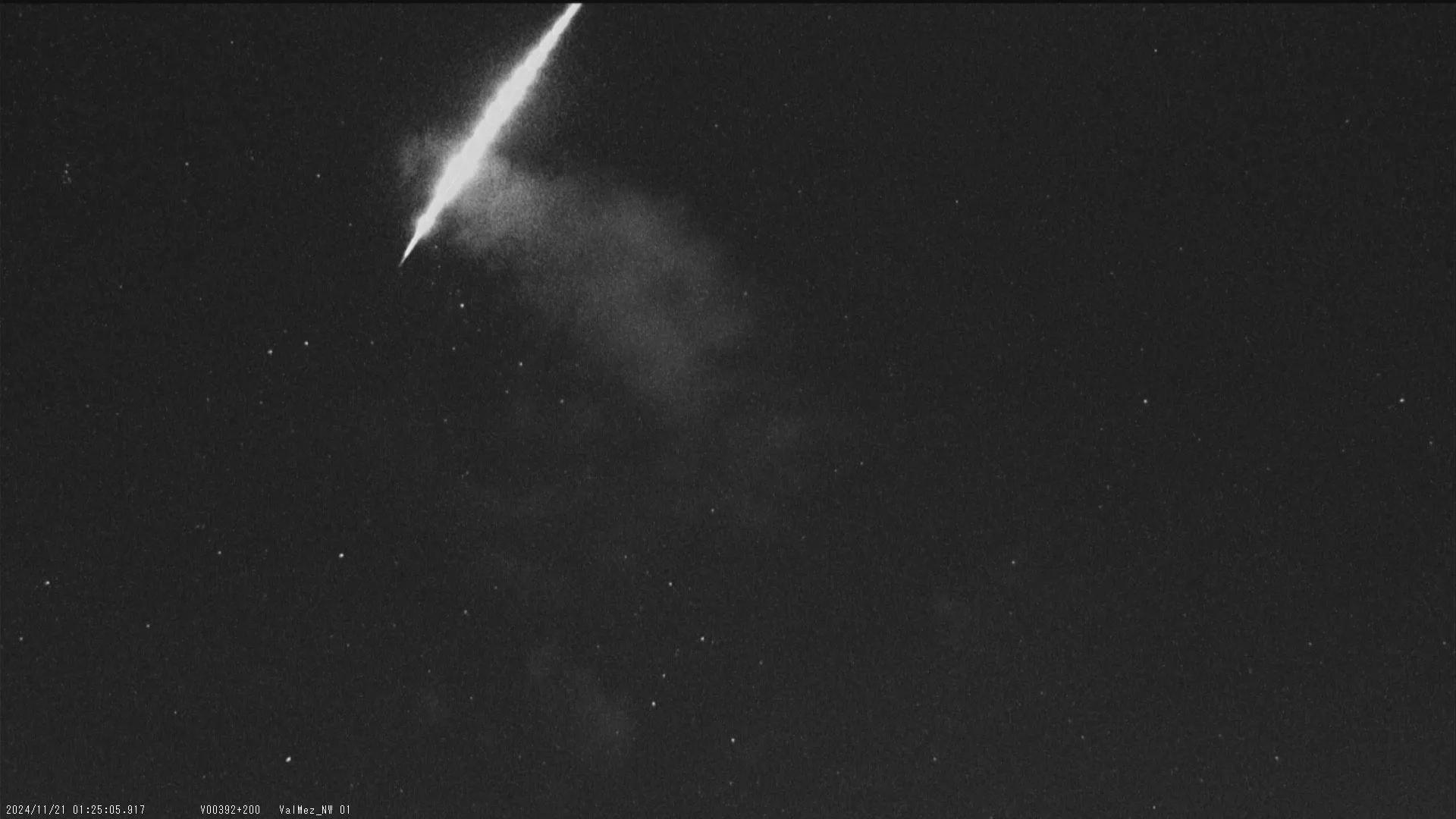
Bright bolide on 21st November 2024 over central Moravia

On November 21, 2024, at 01:25:05 UT, a bright bolide illuminated the skies over central Moravia, captured by five wide-field cameras of the Central European Meteor Network (CEMeNt). Designated as fireball 20241121_012505, its atmospheric path extended from Vidče to the southern edge of Olomouc, covering 80.7 km in 1.2 seconds at an entry angle of 37.1° and a pre-atmospheric speed of 72.19 km/s. Identified as part of the Leonid meteor shower, the meteoroid's high-speed retrograde orbit and cometary origin trace back to 55P/Tempel-Tuttle. With an absolute magnitude of -5.7m, the event offered a spectacular glimpse into celestial dynamics.

2 min
2 June 2024

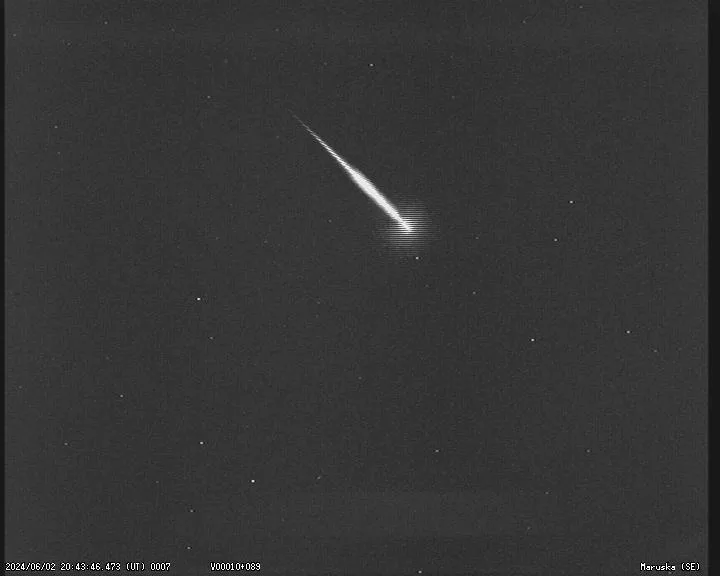
Bright fireball from the weak June Draconids shower

On June 2, 2024, a rare bright fireball from the weak June ro-Draconids meteor shower (IAU MDC 0686) was captured by six CEMeNt network cameras and spectrographs. The fireball, 20240602_204346, traveled 39.4 km in 1.1 seconds at a pre-atmospheric speed of 36.62 km/s, entering the atmosphere at an angle of 49.1°. Its radiant was in the Draco constellation, and its orbit, with high eccentricity (e = 0.955), linked it to 1P/Halley. Spectral analysis revealed its cometary origin, classifying it as a typical long-period meteoroid.

6 min