Video Meteor Observation in the CEMeNt and SSOVMO Networks in Q2 2026
At the end of April the period of low meteor activity comes to an end, at least temporarily. Two relatively strong meteor showers are active during this period: the April Lyrids and the eta Aquariids. The activity of the sporadic background is at its annual minimum, which occurs in March and April. In May only one relatively strong meteor shower is active, the eta Aquariids. The broad maximum of the eta Aquariids occurs at the beginning of May and, as with the Orionids, is typically marked by several secondary maxima. For the rest of May and June only isolated weak meteor showers are active, most of them originating from the antihelion source. The radiants of these weak showers lie mainly in Sagittarius, Scorpius and Ophiuchus, and so rise only low above the horizon during the night. At the end of April the pi Puppids reach their maximum, though their activity is generally low and is better observed from the southern hemisphere. The weak eta Lyrids follow in the first half of May. During June a significant part of the activity shifts to the daytime showers: the Arietids and the zeta Perseids are active, and these are best followed using radio stations for meteor observation.
Meteor shower activity
The maximum of the Lyrid meteor shower occurred in the morning hours of 22 April 2026, and the cameras of the CEMeNt ( Central European Meteor Network ) network recorded a total of 211 multi-station orbits of the Lyrids . According to the visual activity graph of the IMO VMDB ( International Meteor Organization Visual Meteor Database ), the maximum corrected hourly rate of the Lyrids this year reached 16.8 ± 3.0 meteors, with the maximum occurring on 22 April 2026 at 18:56 UT. The activity of the Lyrid meteor shower was therefore average this year, and the overall number of visual observations of the maximum is low.
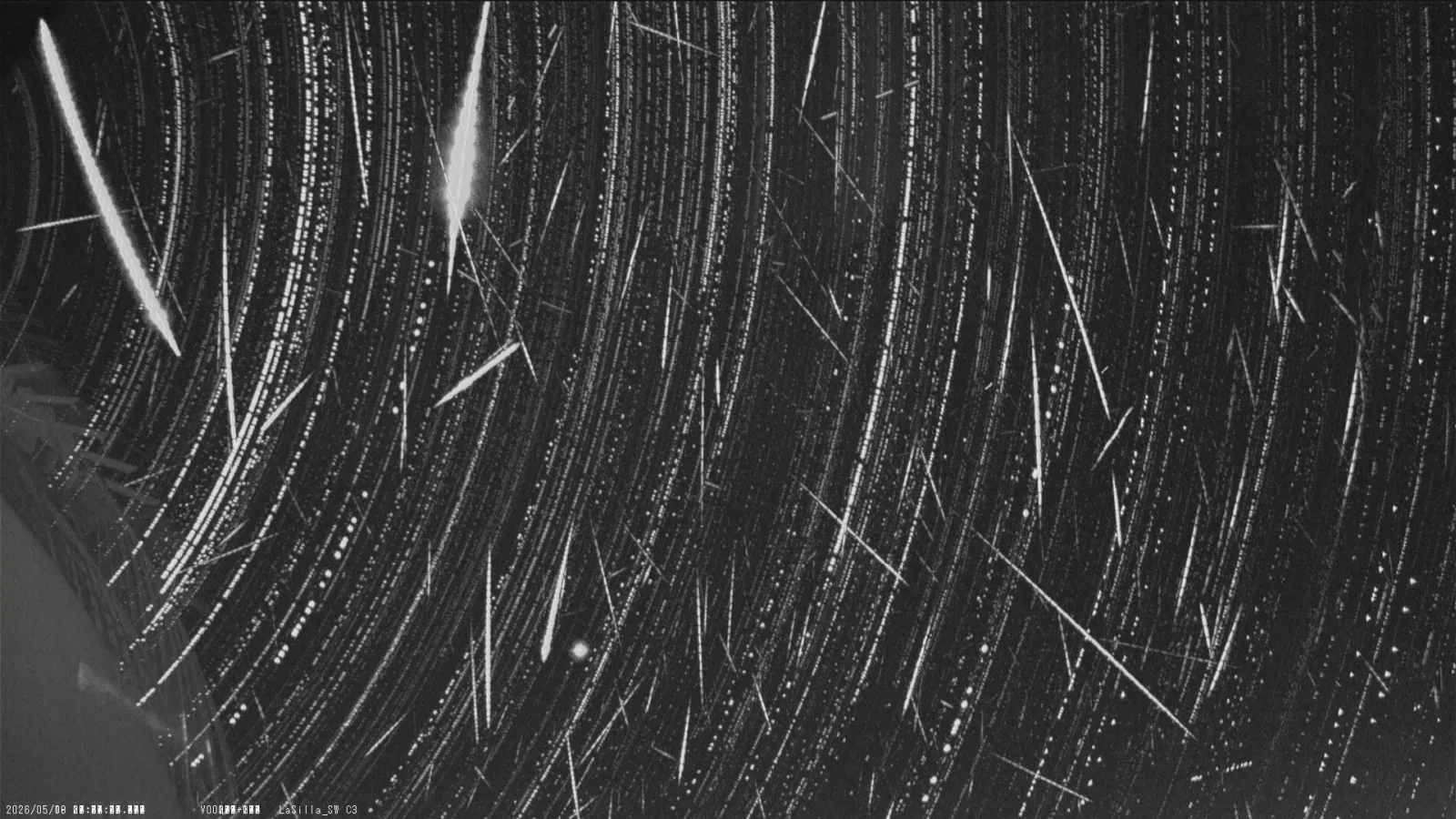
Fig. 1: Composite image of meteors recorded at the La Silla SW station on the night of 8/9 May 2026 during the maximum of the eta Aquariid meteor shower; the camera captured 414 meteors during this period. Credit: Valašské Meziříčí Observatory.
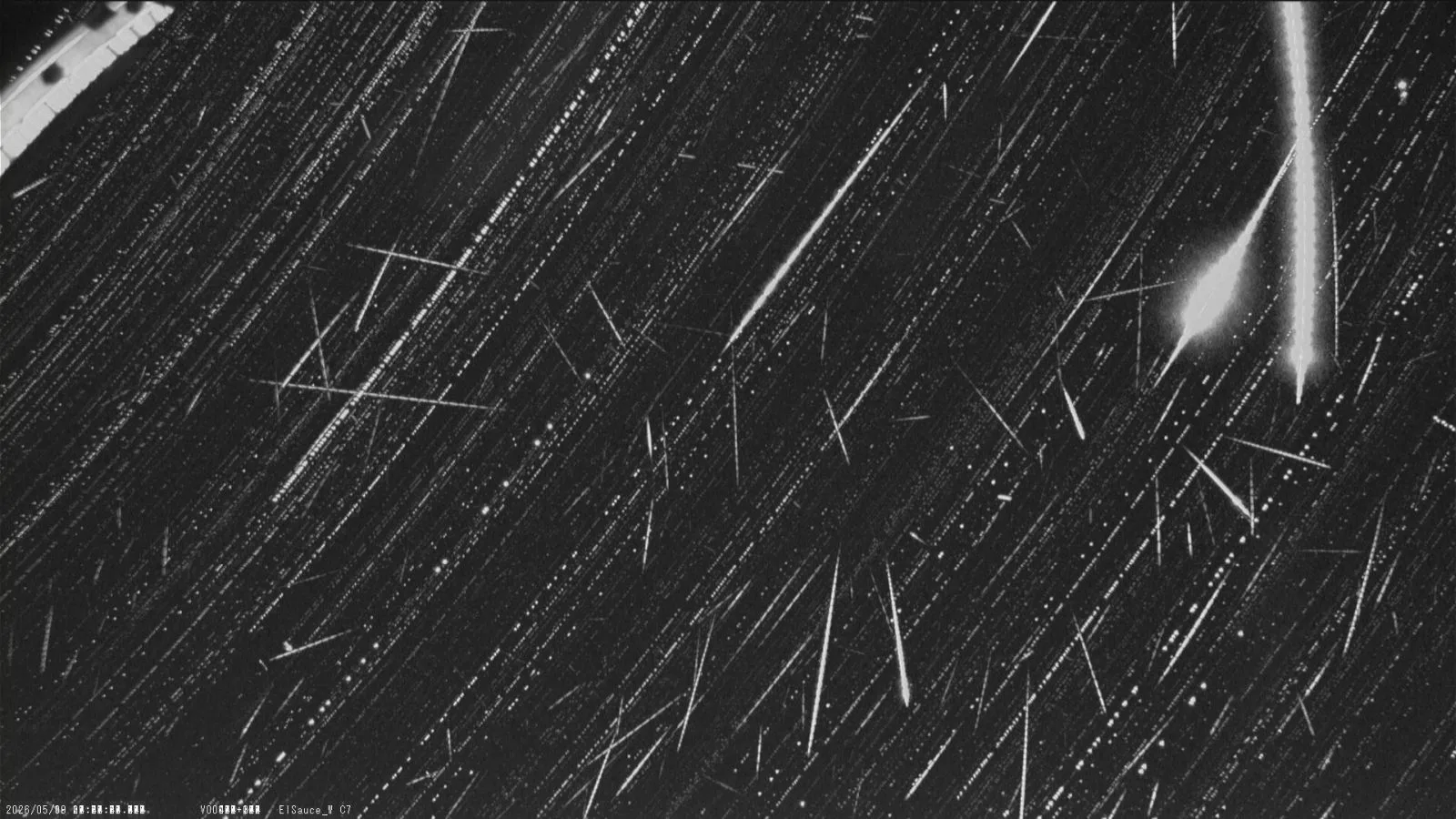
Fig. 2: Composite image of meteors recorded at the El Sauce W station on the night of 8/9 May 2026 during the maximum of the eta Aquariid meteor shower; the camera captured 356 meteors during this period. Credit: Ždánice Observatory.
The maximum of the eta Aquariid meteor shower occurred during the night hours of 7 May 2026, and the cameras of the CEMeNt network recorded a total of 702 multi-station orbits of this shower. According to the visual activity graph of the IMO VMDB , the maximum corrected hourly rate of the eta Aquariids this year reached 25.3 ± 4.6 meteors, with the maximum occurring on 7 May 2026 at 2:16 UT; a very similar ZHR was also observed on 8 May 2026 (24.7 ± 4.3 meteors). The activity of the eta Aquariid meteor shower was therefore below average this year, and the overall number of visual observations of the maximum is very low.
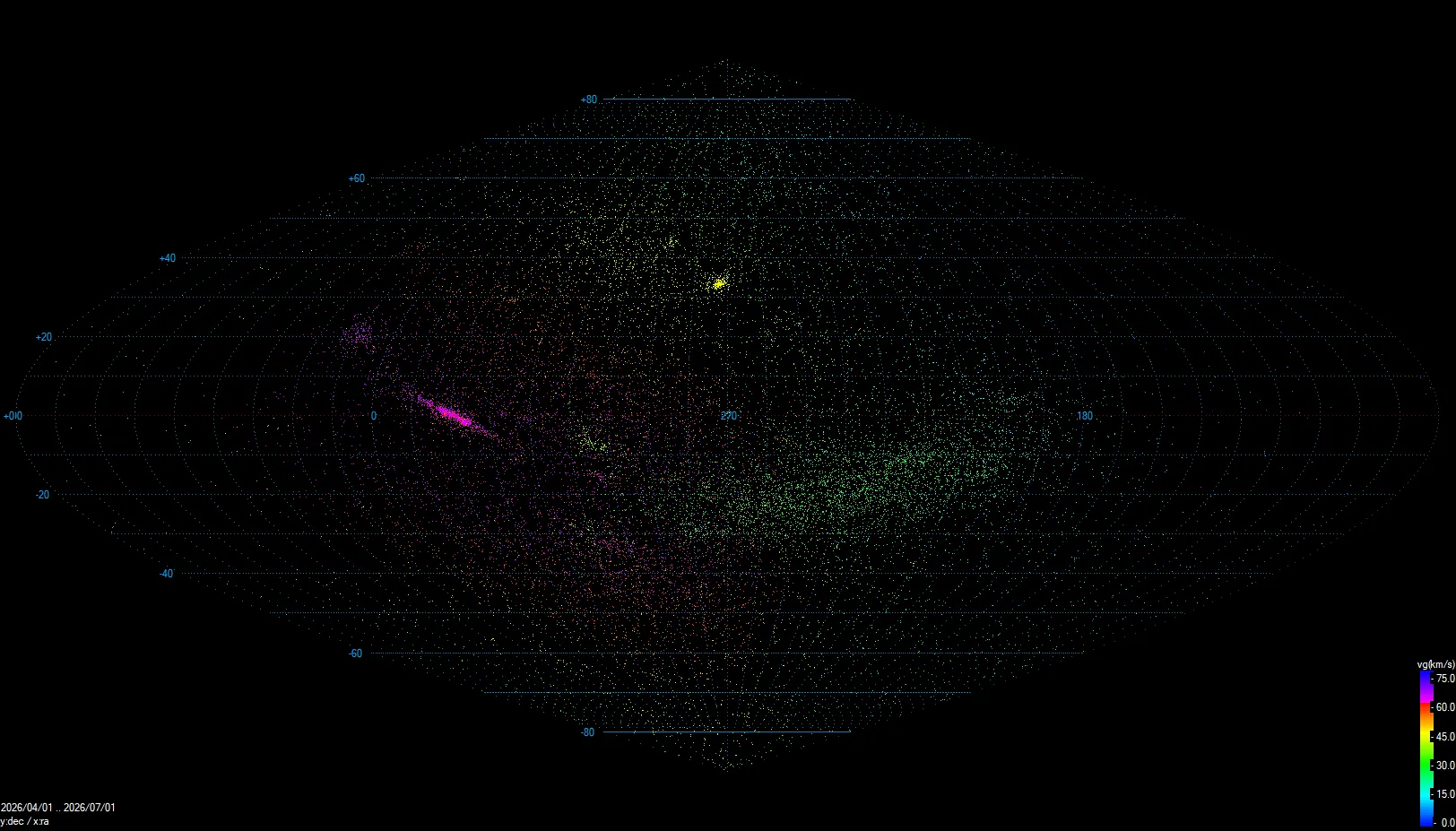
Fig. 3: Radiants of both shower and sporadic multi-station meteors recorded in the CEMeNt and SSOVMO networks in the second quarter of 2026. A sinusoidal projection with the equatorial coordinate system is used for display. Credit: Jakub Koukal, Alexandra Mikušková
Overview of video observation in the CEMeNt and SSOVMO networks
In April 2026, the cameras of the CEMeNt ( Central European Meteor Network ) and SSO VMO ( Southern Spectroscopic Observatory of the Valašské Meziříčí Observatory ) networks recorded 36,307 single-station meteors, from which 6,675 multi-station orbits were computed. The CEMeNt network cameras recorded 11,258 single-station meteors, from which 2,034 multi-station orbits were computed (Fig. 4 and 5), and the SSO VMO network cameras recorded 25,049 single-station meteors, from which 4,641 multi-station orbits were computed (Fig. 6 and 7).
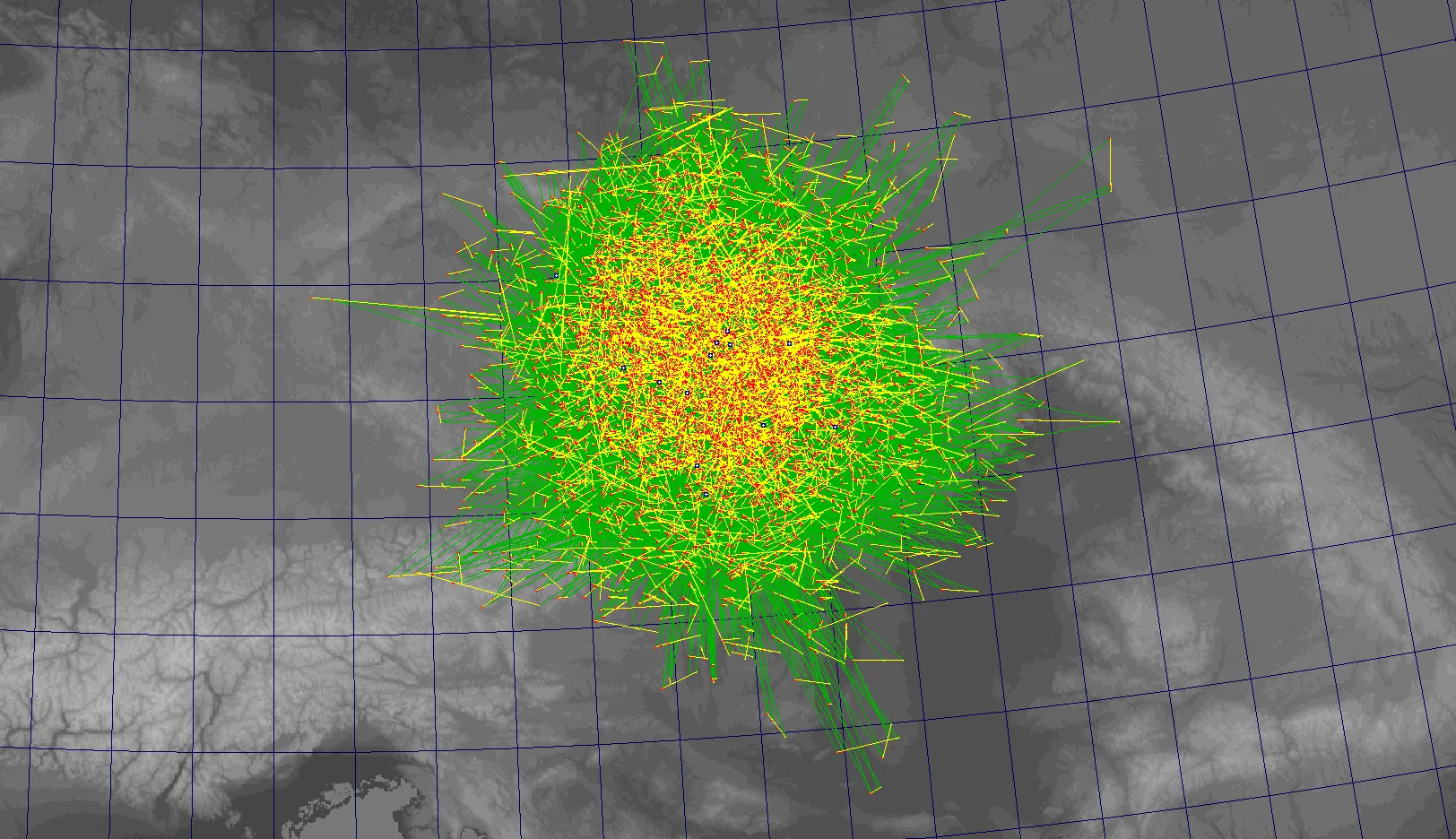
Fig. 4: Overall 2D projection of the multi-station atmospheric trajectories recorded in the CEMeNt network in the second quarter of 2026. Credit: Jakub Koukal, Alexandra Mikušková
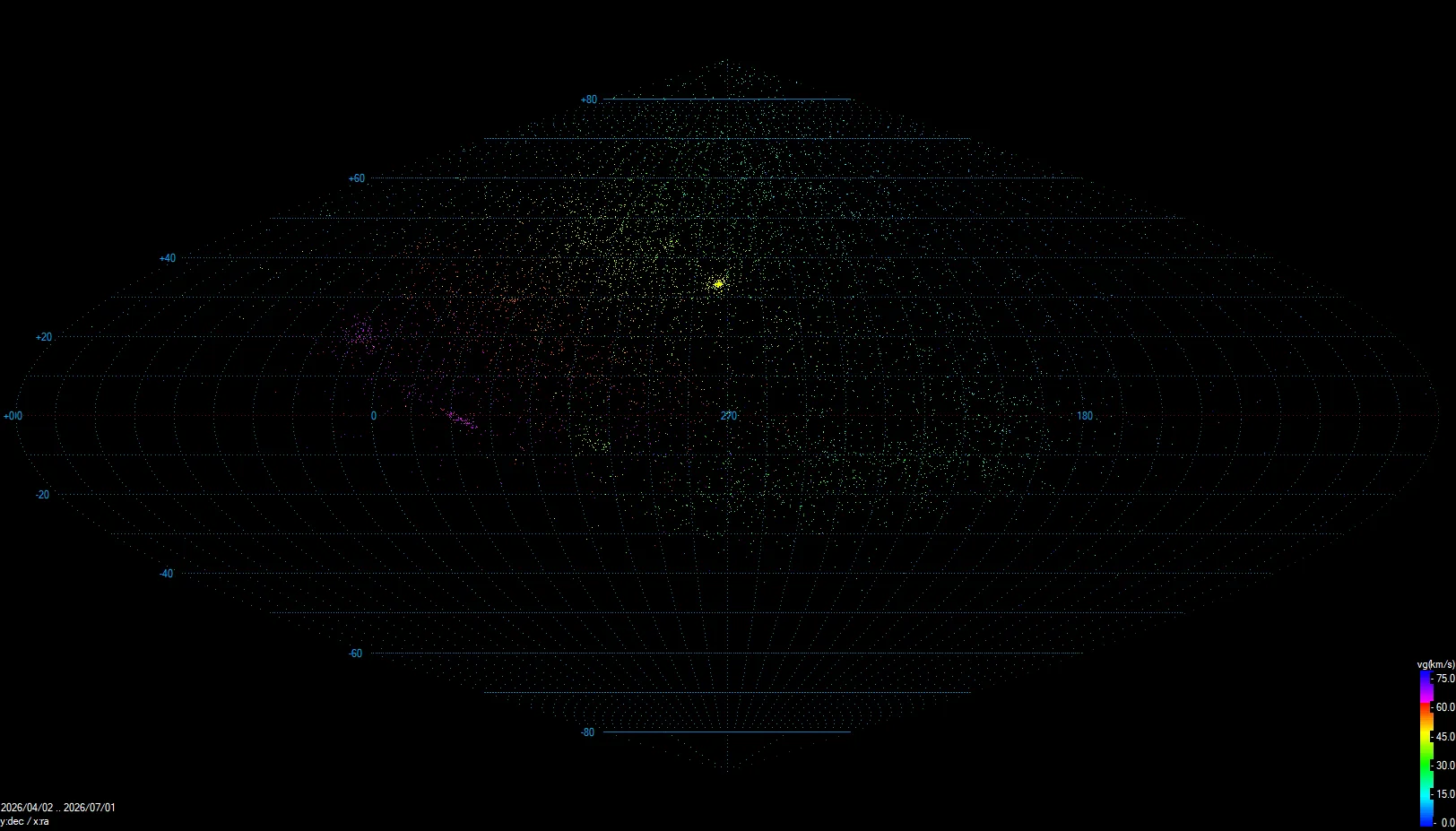
Fig. 5: Radiants of both shower and sporadic multi-station meteors in the CEMeNt network in the second quarter of 2026. A sinusoidal projection with the equatorial coordinate system is used for display. Credit: Jakub Koukal, Alexandra Mikušková
In May 2026, the cameras of the CEMeNt and SSO VMO networks recorded 41,390 single-station meteors, from which 7,208 multi-station orbits were computed. The CEMeNt network cameras recorded 10,731 single-station meteors, from which 1,873 multi-station orbits were computed (Fig. 4 and 5), and the SSO VMO network cameras recorded 30,659 single-station meteors, from which 5,335 multi-station orbits were computed (Fig. 6 and 7).
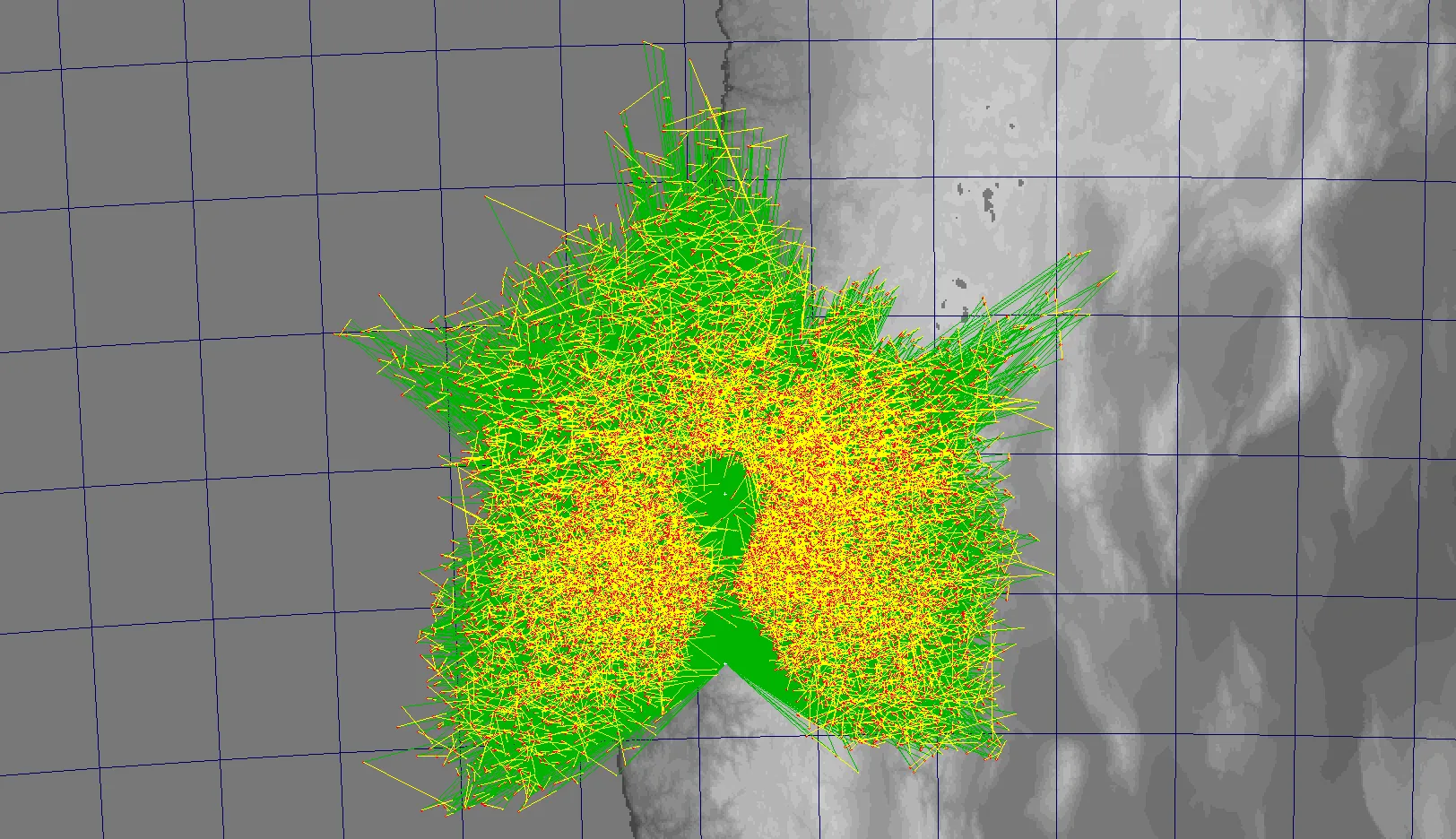
Fig. 6: Overall 2D projection of the multi-station atmospheric trajectories recorded in the SSOVMO network in the second quarter of 2026. Credit: Jakub Koukal, Alexandra Mikušková
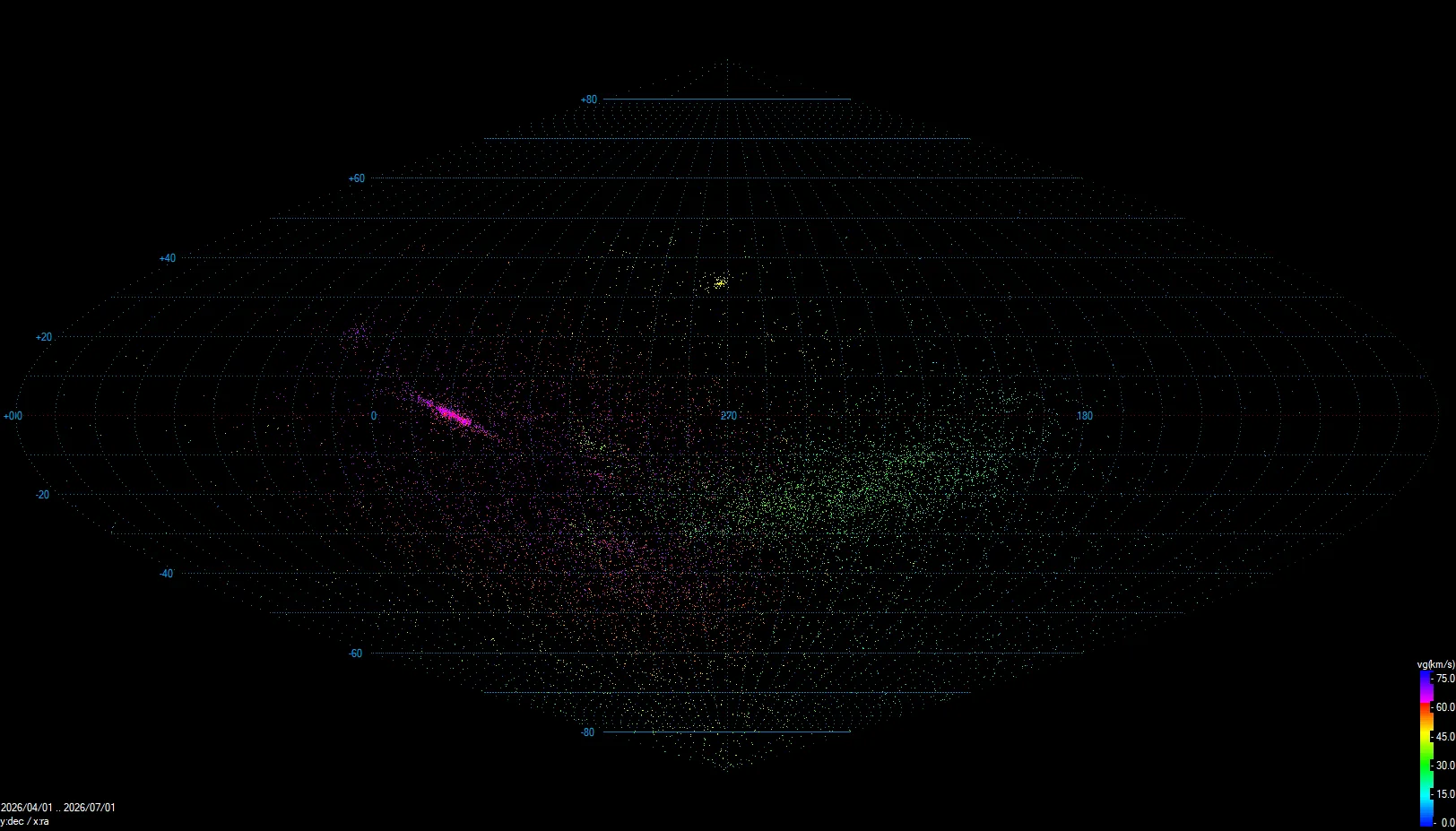
Fig. 7: Radiants of both shower and sporadic multi-station meteors in the SSOVMO network in the second quarter of 2026. A sinusoidal projection with the equatorial coordinate system is used for display. Credit: Jakub Koukal, Alexandra Mikušková
In June 2026, the cameras of the CEMeNt and SSO VMO networks recorded 29,372 single-station meteors, from which 4,617 multi-station orbits were computed. The CEMeNt network cameras recorded 14,469 single-station meteors, from which 2,497 multi-station orbits were computed (Fig. 4 and 5), and the SSO VMO network cameras recorded 14,903 single-station meteors, from which 2,120 multi-station orbits were computed (Fig. 6 and 7).
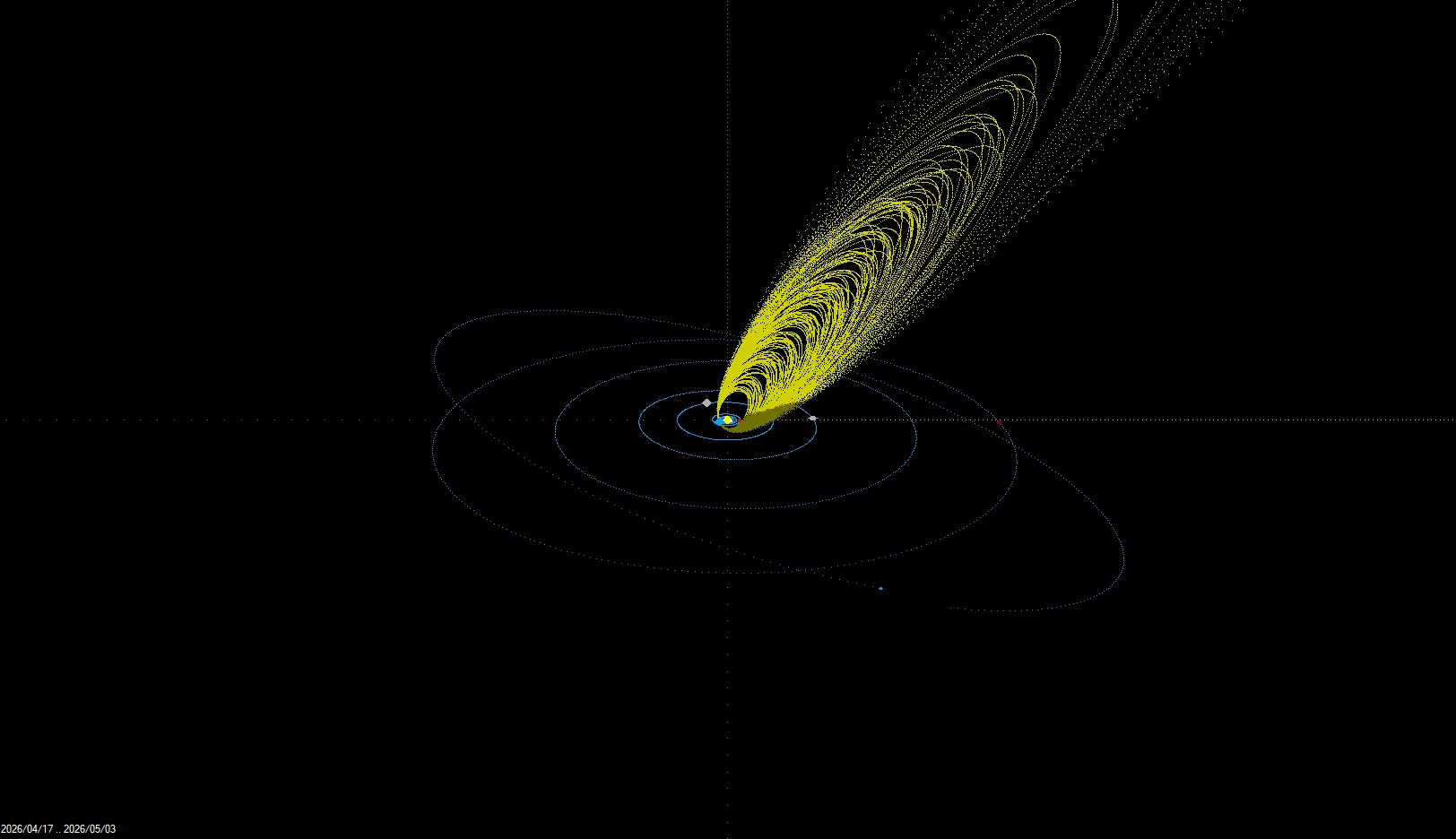
Fig. 8: 3D projection of the heliocentric multi-station orbits of meteors belonging to the Lyrid (LYR) meteor shower within the Solar System. A total of 211 multi-station orbits of the LYR meteor shower were recorded in the second quarter of 2026 within the CEMeNt network. Credit: Jakub Koukal, Alexandra Mikušková
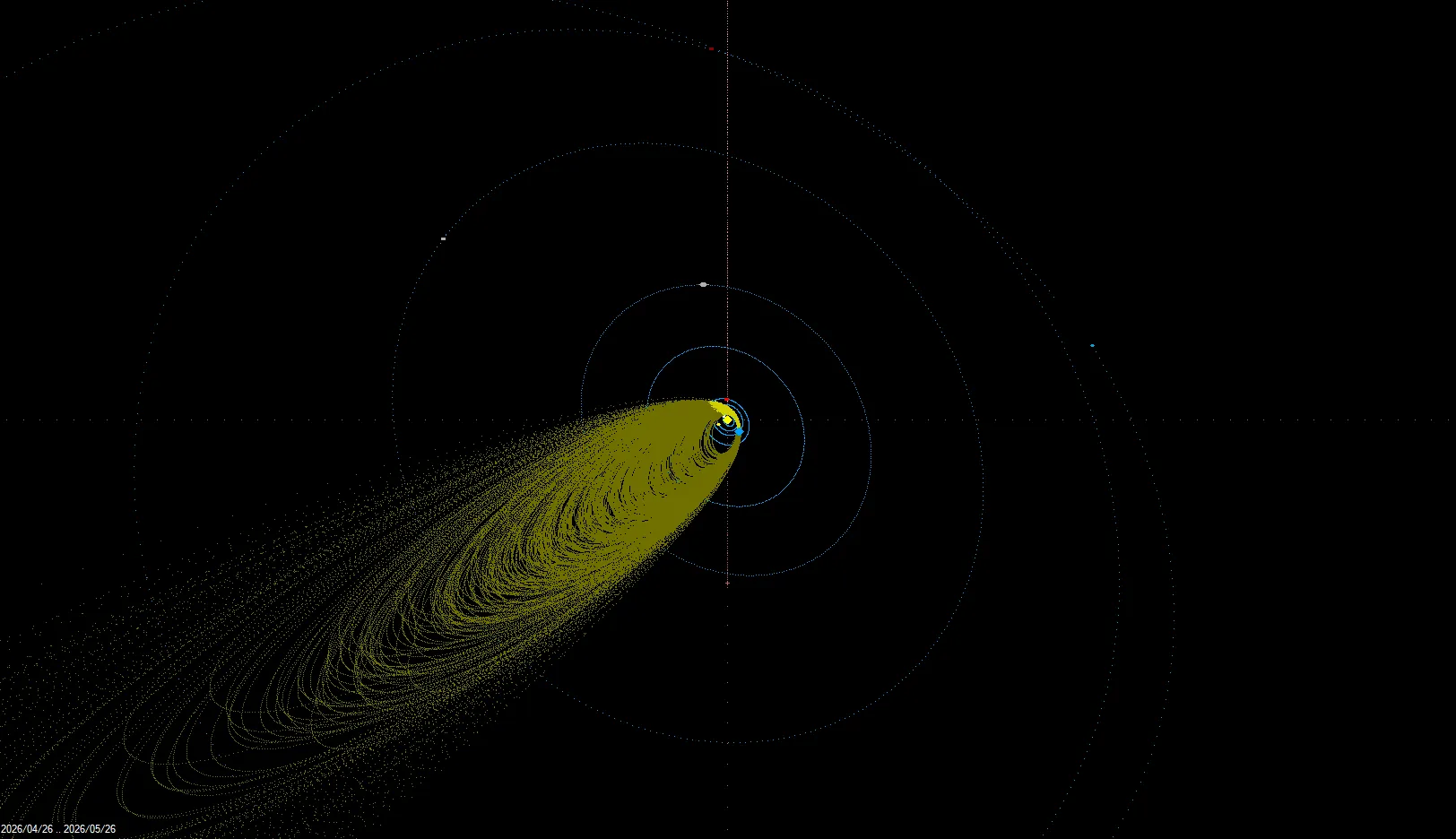
Fig. 9: 3D projection of the heliocentric multi-station orbits of meteors belonging to the eta Aquariid (ETA) meteor shower within the Solar System. A total of 702 multi-station orbits of the ETA meteor shower were recorded in the second quarter of 2026 within the CEMeNt network. Credit: Jakub Koukal, Alexandra Mikušková
Most of the multi-station orbits within the CEMeNt and SSOVMO networks belong to the sporadic background (15,300 orbits), followed by the eta Aquariid meteor shower (ETA, 702 orbits, Fig. 9), the Lyrids (LYR, 211 orbits, Fig. 8), the Northern June Aquilids (NZC, 122 orbits), the Southern May Ophiuchids (SOP, 86 orbits), the Southern mu Sagittariids (SSG, 84 orbits), the lambda Ophiuchids (LOP, 55 orbits), the alpha Virginids (AVB, 52 orbits), the h Virginids (HVI, 50 orbits) and the Northern mu Sagittariids (NSA, 50 orbits), followed by further weaker meteor showers whose number of multi-station orbits was lower than 50. The number of single-station meteors (as well as of multi-station orbits) in every month of the second quarter of 2026 is the highest ever within the CEMeNt network for the whole of its existence since 2009. In total, this year to date (as of 30 June 2026), 193,300 single-station meteors have been recorded, from which 34,374 multi-station orbits were computed (Tab. 1).
The pairing efficiency within the CEMeNt network ranged from 64.7% (May) to 66.9% (June); the installation of new network cameras showed itself in an increased pairing efficiency. The station/orbit ratio stayed around 3.7, and all three months were above average in this respect. In June the station/orbit ratio rose to 3.88 stations per orbit, which is the highest value ever within the CEMeNt network.
The pairing efficiency within the SSOVMO network ranged from 33.6% (June) to 46.0% (April), and the station/orbit ratio oscillates around 2.4. The pairing efficiency and the station/orbit ratio were affected by the worsened weather in June 2026 and also by technical problems at the La Silla station.
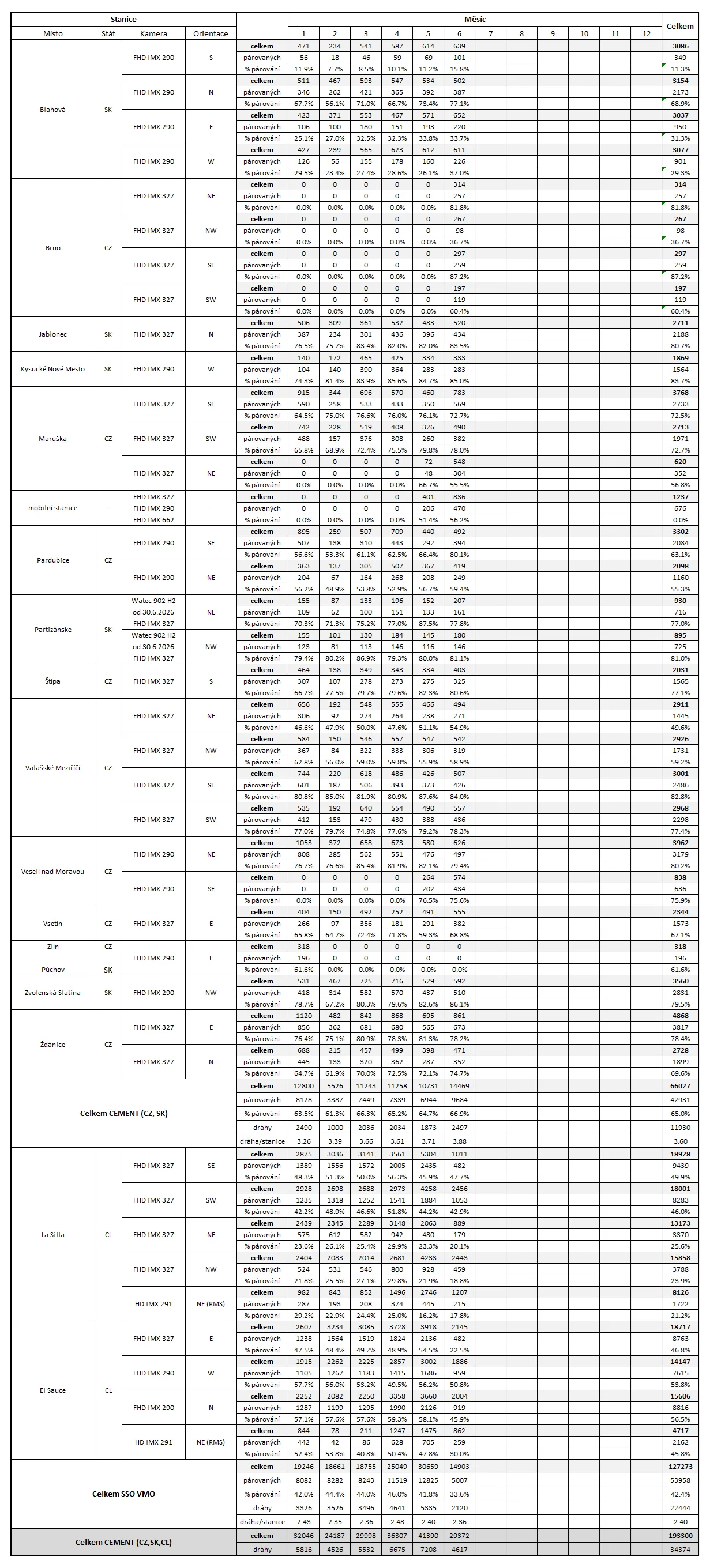
Tab. 1: Overview of the number of recorded and paired meteors in 2026 at the stations of the CEMeNt and SSOVMO networks. Credit: Jakub Koukal, Alexandra Mikušková
Acknowledgements
Our thanks go to the companies DEZA , a. s. and CS CABOT , spol. s r. o., which contributed to the purchase of equipment for the FHD station located at the Valašské Meziříčí Observatory and also within the CEMeNt network. Thanks also go to all partner observatories (Ždánice, Vsetín, Rokycany, Plzeň, Karlovy Vary, Partizánske, Kysucké Nové Mesto) and to the private station owners (Milan Čermák, Richard Kačerek, Jakub Kapuš, Tibor Csorgei, Vladimír Bahýl, Ivo Míček) for supporting the activities and growth of the network. Thanks also go to all involved institutions for supporting the activities and growth of the network. The RPOS (Development of the Cross-Border Observation Network) project was co-financed by the Small Project Fund of the Interreg V-A Slovak Republic – Czech Republic 2014–2020 program, call code 5/FMP/11b, reg. no. CZ/FMP/11b/05/058. The KOSOAP (Cooperating Network in the Field of Astronomical Specialist Observation Programs) and RPKS (Development of the Cross-Border Cooperating Network for Specialist Work and Education) projects were carried out by the Valašské Meziříčí Observatory (CZ) and the Kysucké Nové Mesto Observatory (SK) in cooperation with the SMPH (Society for Interplanetary Matter). The projects were co-financed by the Microprojects Fund of the Operational Program of Cross-Border Cooperation Slovak Republic – Czech Republic 2007–2013. The project for the purchase and operation of high-resolution spectroscopic cameras is partly funded by the Regional Cooperation Program of the Czech Academy of Sciences, reg. no. R200402101. The installation of the Southern Spectroscopic Observatory of the Valašské Meziříčí Observatory in Chile is part of the KKC (Cultural and Creative Center) project, co-financed by the European Union and the National Recovery Plan, under call no. 0231/2022 – Development of Regional Cultural and Creative Centers (project reg. no. 0231000014), administered by the Ministry of Culture of the Czech Republic. The installation costs were covered by co-financing provided by the Zlín Region. We thank the PLATOSpec consortium for supporting us and for providing the opportunity to install the spectral cameras, as well as for cooperation during installation and operation. The PLATOSpec project was built and is operated by a consortium composed of the Astronomical Institute of the Czech Academy of Sciences in Ondřejov (ASU), the Thuringian State Observatory (Thüringer Landessternwarte, Germany), the Pontifical Catholic University of Chile (PUC, Chile); smaller partners include Masaryk University (Czech Republic), Adolfo Ibáñez University (Chile) and the Institute of Plasma Physics of the Czech Academy of Sciences (Czech Republic). Funding for the modernization of the 1.52m telescope was provided by ASU, and personnel costs were partly covered by grant LTT-20015. Funding for the construction of PLATOSpec was provided by the Free State of Thuringia, represented by the "Thuringian Ministry of Education, Science and Culture" under the "Research Support Directive", and by the German Aerospace Center (DLR). Financial support for the observations is provided within the institutional support for the development of the research organization of Masaryk University. The use of the 1.52m telescope was made possible through an agreement between ESO and the PLATOSpec consortium. The installation of the El Sauce station was made possible at the private El Sauce Observatory in cooperation with OBSTECH SpA .