Video Meteor Observation in the CEMeNt and SSOVMO Networks in Q1 2026
With the activity of the Quadrantid meteor shower in early January, the period of high meteor shower activity that begins each year in July comes to an end. The sporadic background activity likewise declines toward its annual minimum, which occurs in March and April. The period from January to April is generally referred to as the „Great Spring Gap“, since only isolated weak meteor showers are active, most of them originating from the antihelion source. Unfavorable winter weather is another obstacle for meteor observation; at lower-lying stations, the typical autumn and winter phenomenon of temperature inversions frequently occurs. This fact typically has a negative impact on the number of paired meteors and therefore on the number of multi-station orbits. The maximum of the Quadrantid meteor shower in 2026, however, fell during relatively favorable weather and stations of the CEMeNt ( Central European MetEor NeTwork ) network were able to observe a large number of meteors from this strong shower. During January and March the weather was very favorable given the time of year, while February, on the contrary, was very unfavorable in terms of the number of nights suitable for meteor observation. At the SSO VMO ( Southern Spectroscopic Observatory of the Valašské Meziříčí Observatory ) stations, the weather was very favorable during these months, but shower activity is very low in the southern hemisphere during this period as well.
Meteor shower activity
The maximum of the Quadrantid meteor shower occurred in the early morning hours of 4 January 2026, and cameras of the CEMeNt network recorded a total of 384 multi-station Quadrantid orbits. According to the visual activity graph of IMO VMDB ( International Meteor Organization Visual Meteor Database ), the maximum corrected hourly rate of Quadrantids this year reached 64.0 ± 11.1 meteors, with the peak occurring on 4 January 2026 at 4:43 UT. Quadrantid activity this year was therefore average; due to unfavorable weather conditions there is a lack of observations around the observed peak of the shower, and the number of meteors observed during the maximum is very low and affected by cloud cover.
In 2015 (10 January at 2:50 UT) an outburst of the kappa Cancrid meteor shower was recorded, observed both by video stations and by radio stations dedicated to meteor observation. Activity of this shower was also found in data from 2016, in the IMO VMN ( IMO Video Network ) and SonotaCo databases. In 2026 only 2 meteor orbits from this shower were recorded in the CEMeNt network. The shower probably has irregular activity, and its observed activity maxima are likely linked to the orbital period of an unknown parent body of cometary origin.
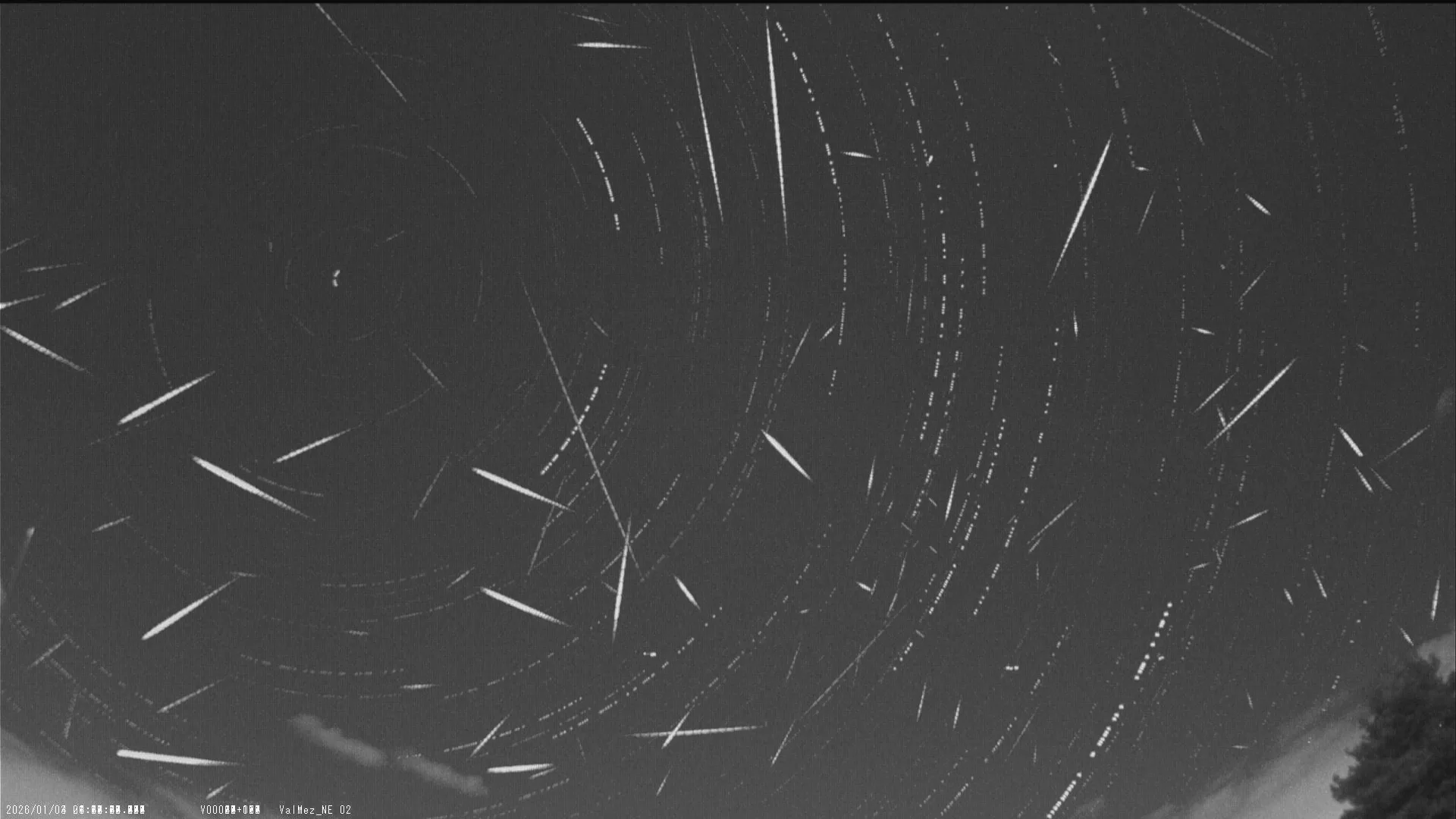
Fig. 1: Composite image of meteors recorded at the Valašské Meziříčí NE station on the night of 3/4 January 2026 during the Quadrantid maximum; the camera captured 173 meteors during this period. Credit: Valašské Meziříčí Observatory.
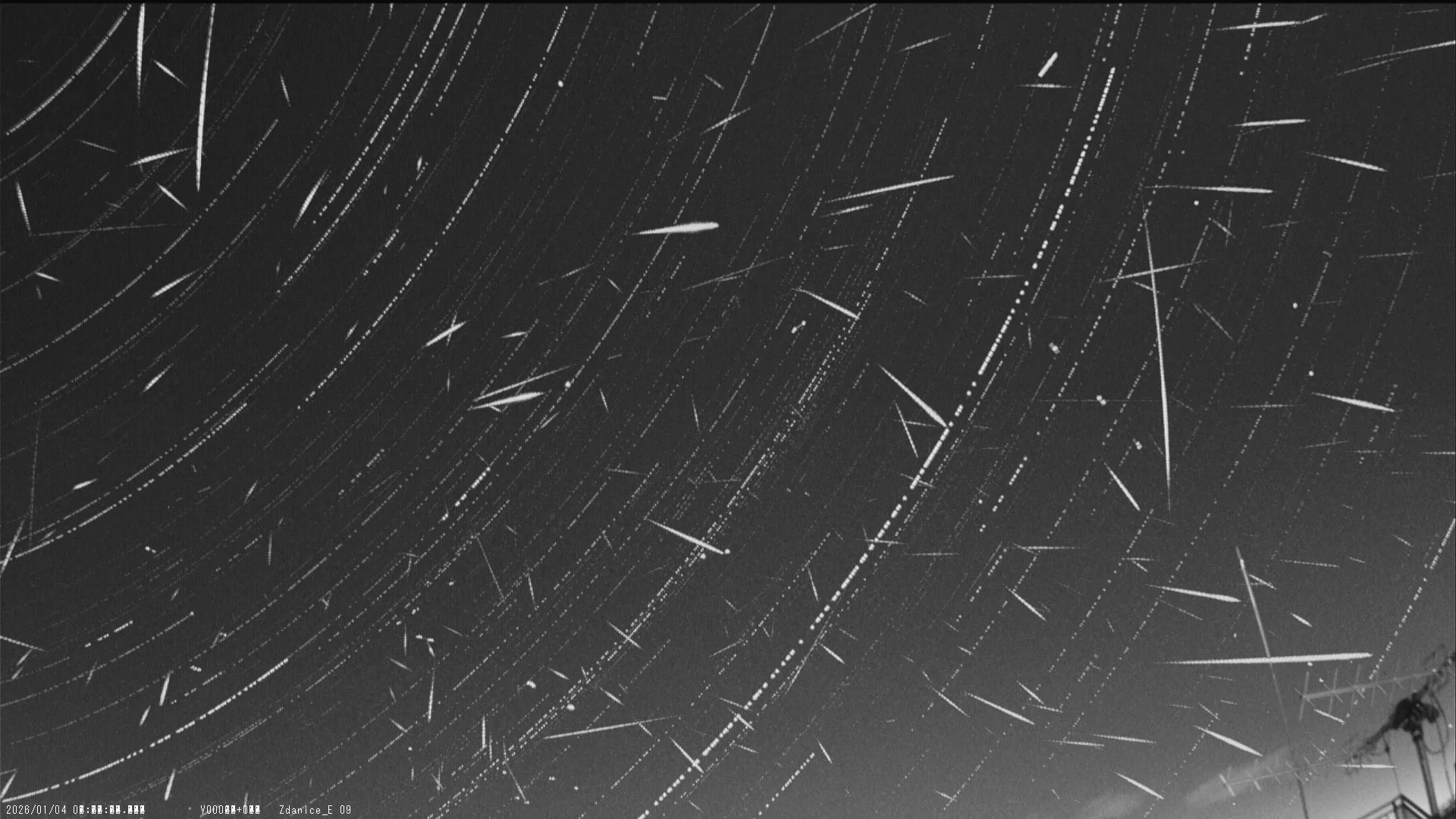
Fig. 2: Composite image of meteors recorded at the Ždánice E station on the night of 3/4 January 2026 during the Quadrantid maximum; the camera captured 173 meteors during this period. Credit: Ždánice Observatory.
In January and February, a pair of weak showers reaches its maximum — one observable from the northern hemisphere and the other from the southern. The maximum of the gamma Ursae Minorid shower occurs around 18 January, with a typical corrected hourly rate of only 3 meteors. The cameras of the CEMeNt network recorded only 9 multi-station orbits of this weak shower. The maximum of the irregular alpha Centaurid meteor shower occurs around 8 February, with a typical corrected hourly rate of 6 meteors in years when activity of this shower is detected. The cameras of the CEMeNt network recorded only 2 multi-station orbits of this weak shower.
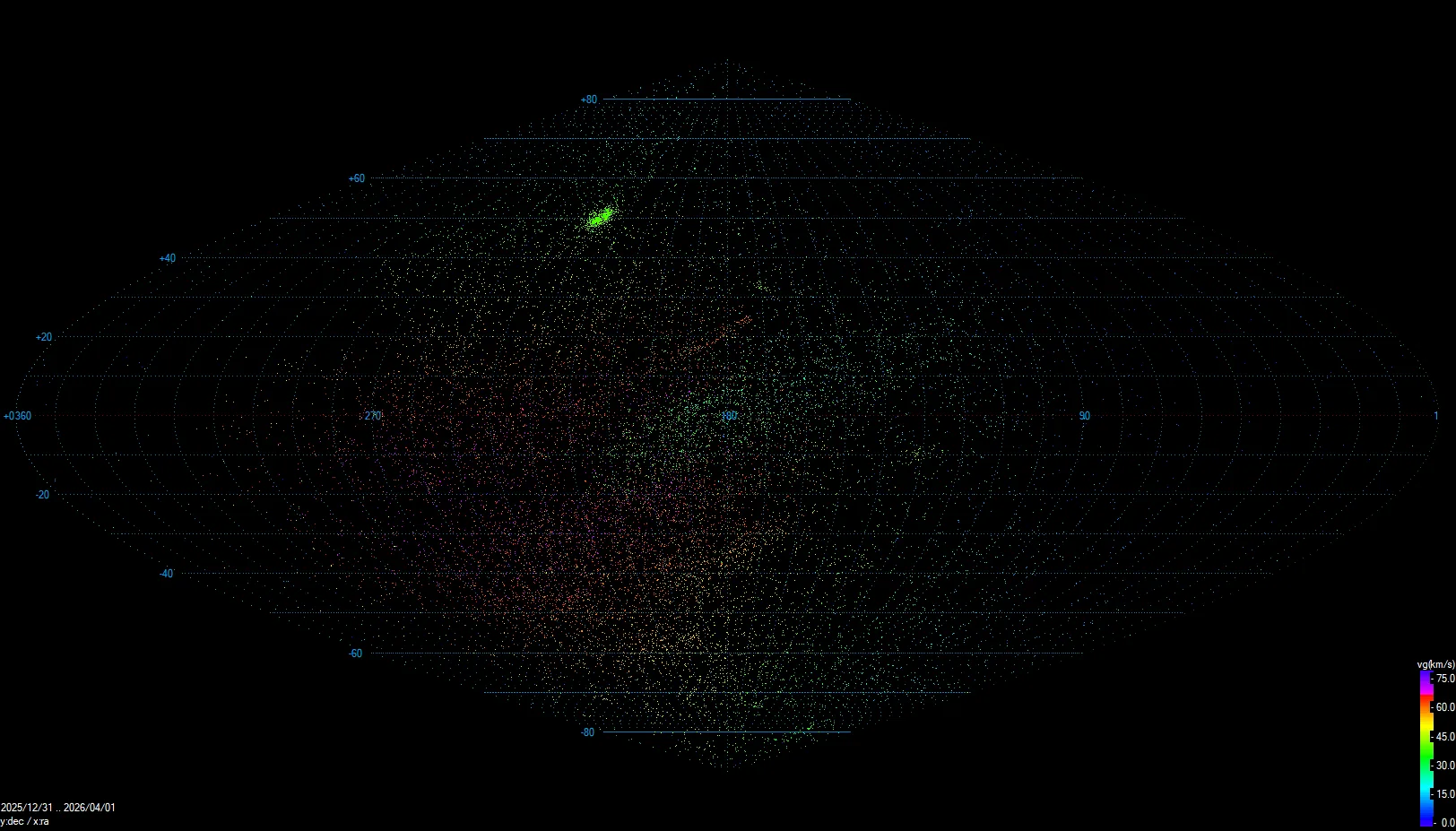
Fig. 3: Radiants of shower and sporadic multi-station meteors recorded in the CEMeNt and SSOVMO networks in Q1 2026. A sinusoidal projection with an equatorial coordinate system is used for visualization. Credit: Jakub Koukal, Alexandra Mikušková.
Overview of video observation in the CEMeNt and SSOVMO networks
In January 2026, the cameras of the CEMeNt ( Central European Meteor Network ) and SSO VMO ( Southern Spectroscopic Observatory of the Valašské Meziříčí Observatory ) networks recorded 32,046 single-station meteors, from which 5,816 multi-station orbits were computed. The CEMeNt network cameras recorded 12,800 single-station meteors, resulting in 2,490 multi-station orbits (Figs. 4 and 5); the SSO VMO cameras recorded 19,246 single-station meteors, resulting in 3,326 multi-station orbits (Figs. 6 and 7). As of today, observations from the outer perimeter stations of the network — Rokycany (CZ), Plzeň (CZ) and Karlovy Vary (CZ) — are not yet included in the processing, as their processing has not yet been completed.
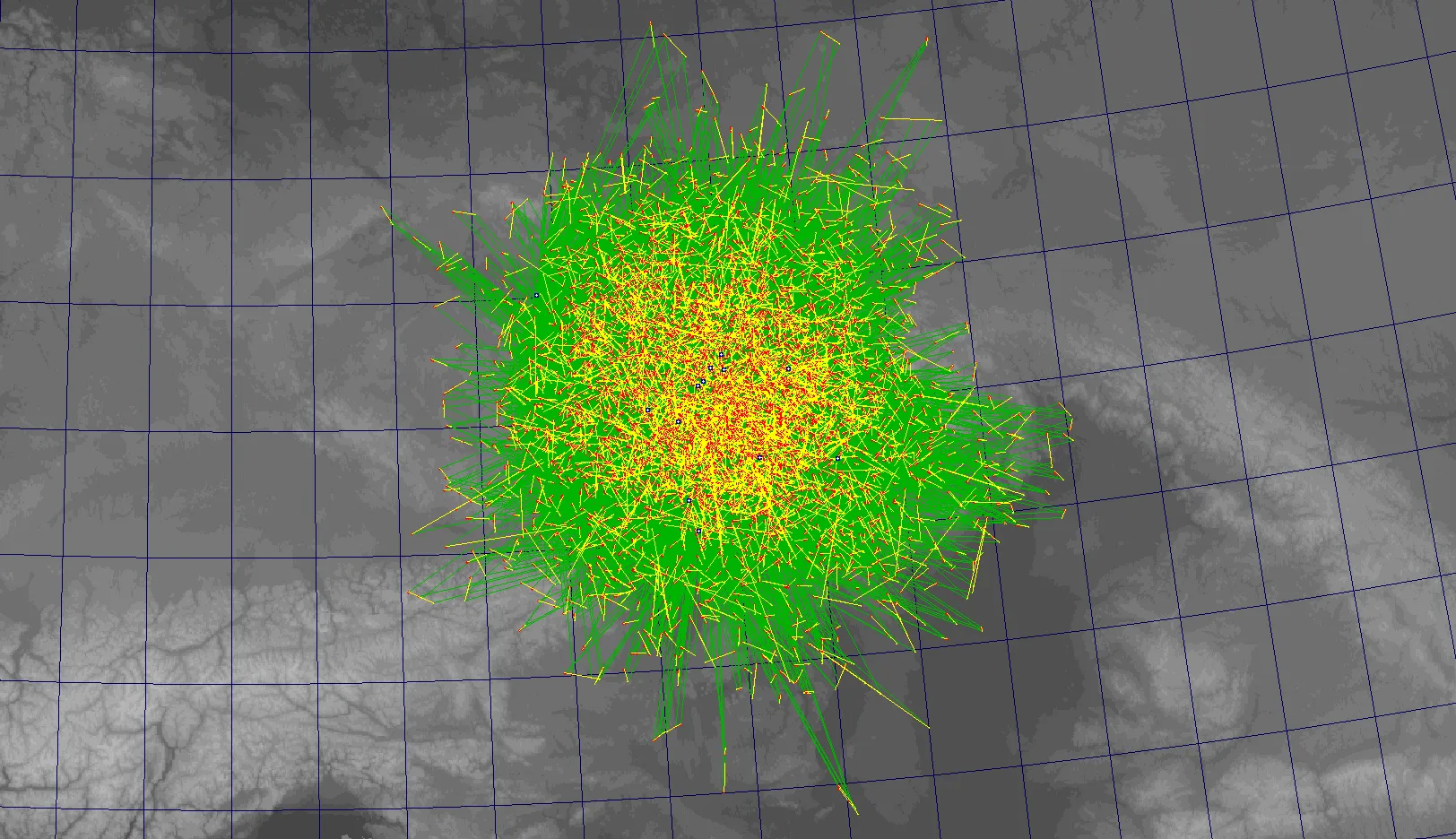
Fig. 4: Overall 2D projection of multi-station atmospheric trajectories recorded in the CEMeNt network in Q1 2026. Credit: Jakub Koukal, Alexandra Mikušková.
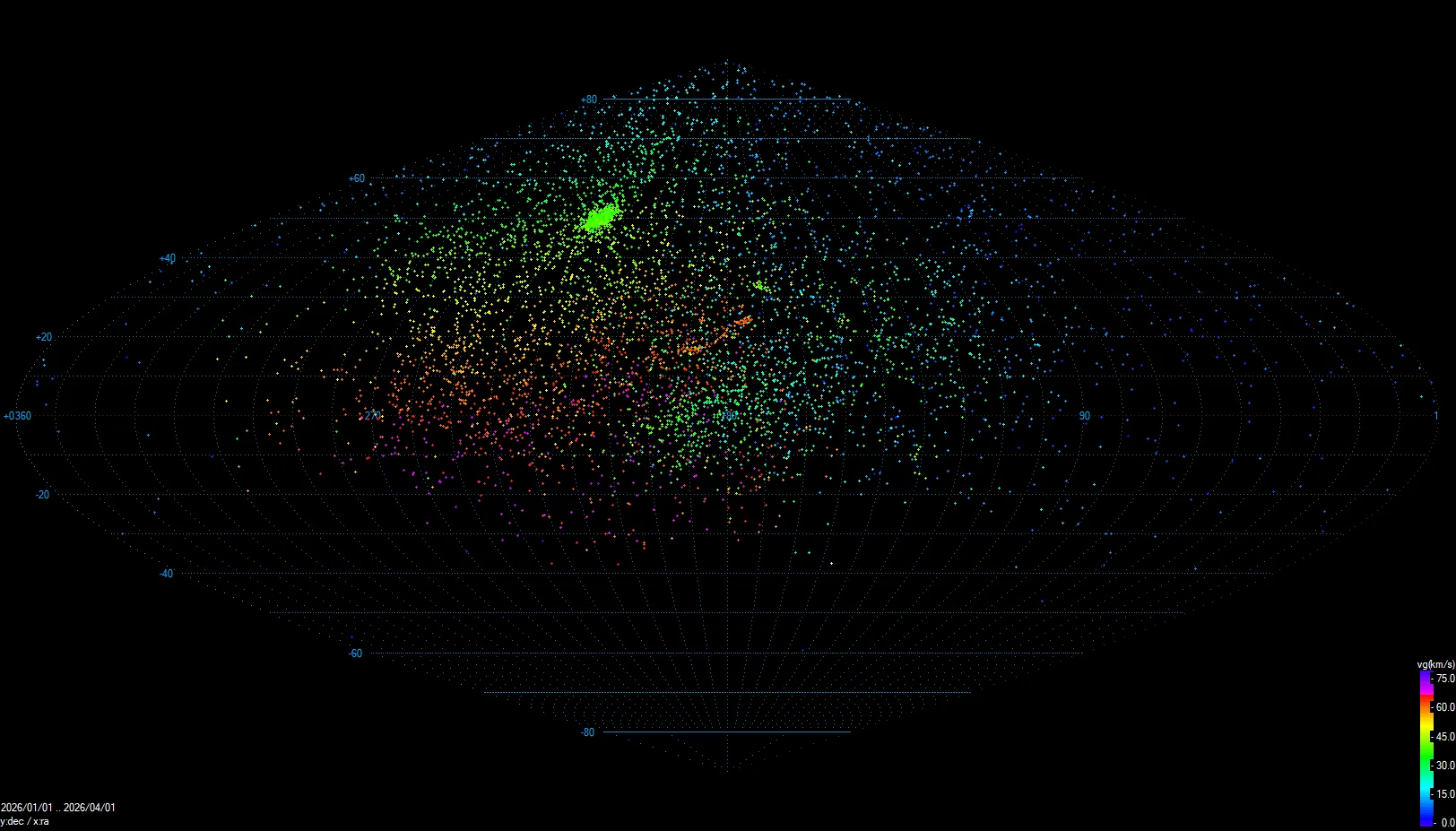
Fig. 5: Radiants of shower and sporadic multi-station meteors in the CEMeNt network in Q1 2026. A sinusoidal projection with an equatorial coordinate system is used for visualization. Credit: Jakub Koukal, Alexandra Mikušková.
In February 2026, the cameras of the CEMeNt ( Central European Meteor Network ) and SSO VMO ( Southern Spectroscopic Observatory of the Valašské Meziříčí Observatory ) networks recorded 24,187 single-station meteors, from which 4,526 multi-station orbits were computed. The CEMeNt network cameras recorded 5,526 single-station meteors, resulting in 1,000 multi-station orbits (Figs. 4 and 5); the SSO VMO cameras recorded 18,661 single-station meteors, resulting in 3,526 multi-station orbits (Figs. 6 and 7). As of today, observations from the outer perimeter stations of the network — Rokycany (CZ), Plzeň (CZ) and Karlovy Vary (CZ) — are not yet included in the processing, as their processing has not yet been completed.
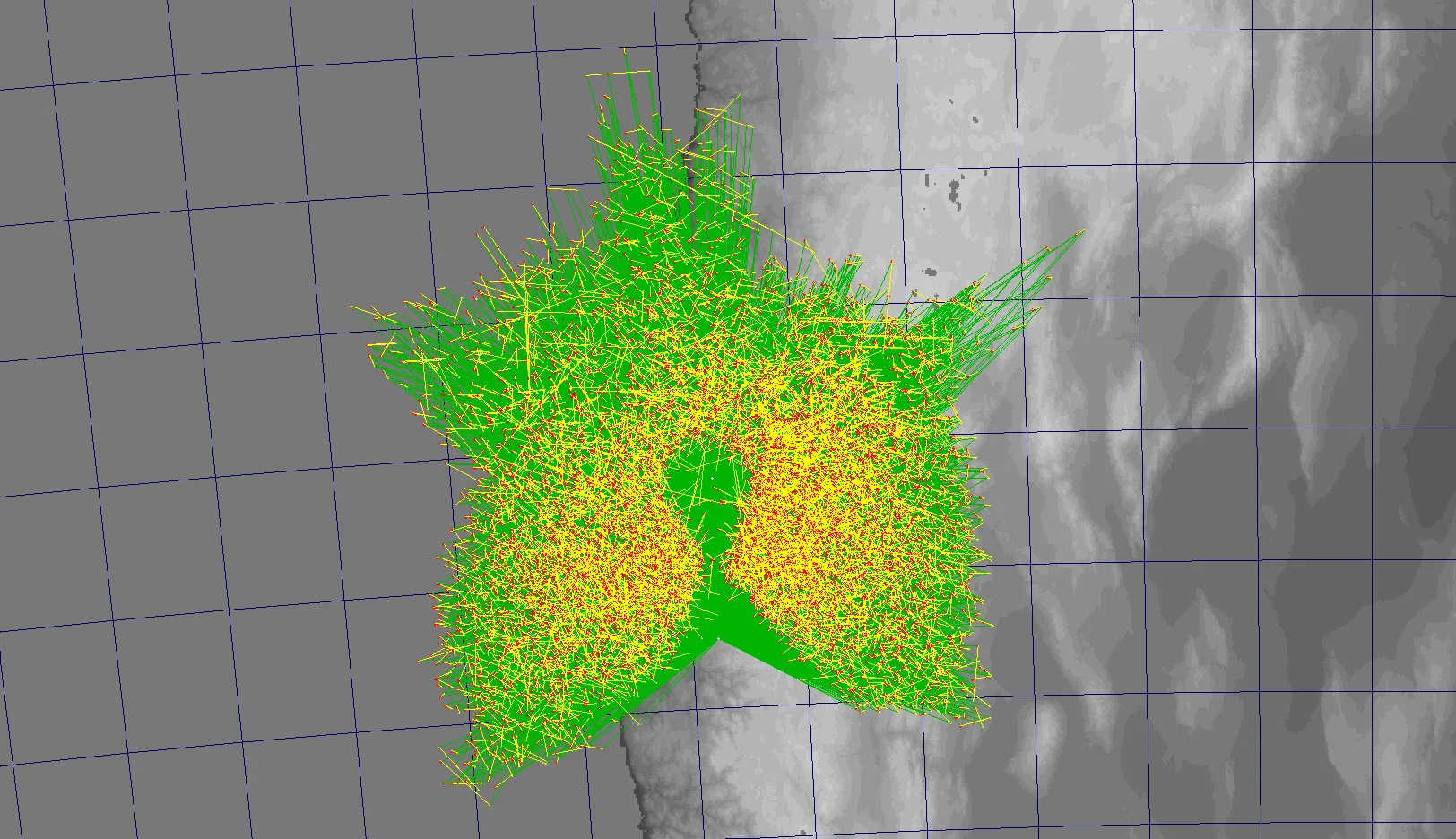
Fig. 6: Overall 2D projection of multi-station atmospheric trajectories recorded in the SSOVMO network in Q1 2026. Credit: Jakub Koukal, Alexandra Mikušková.
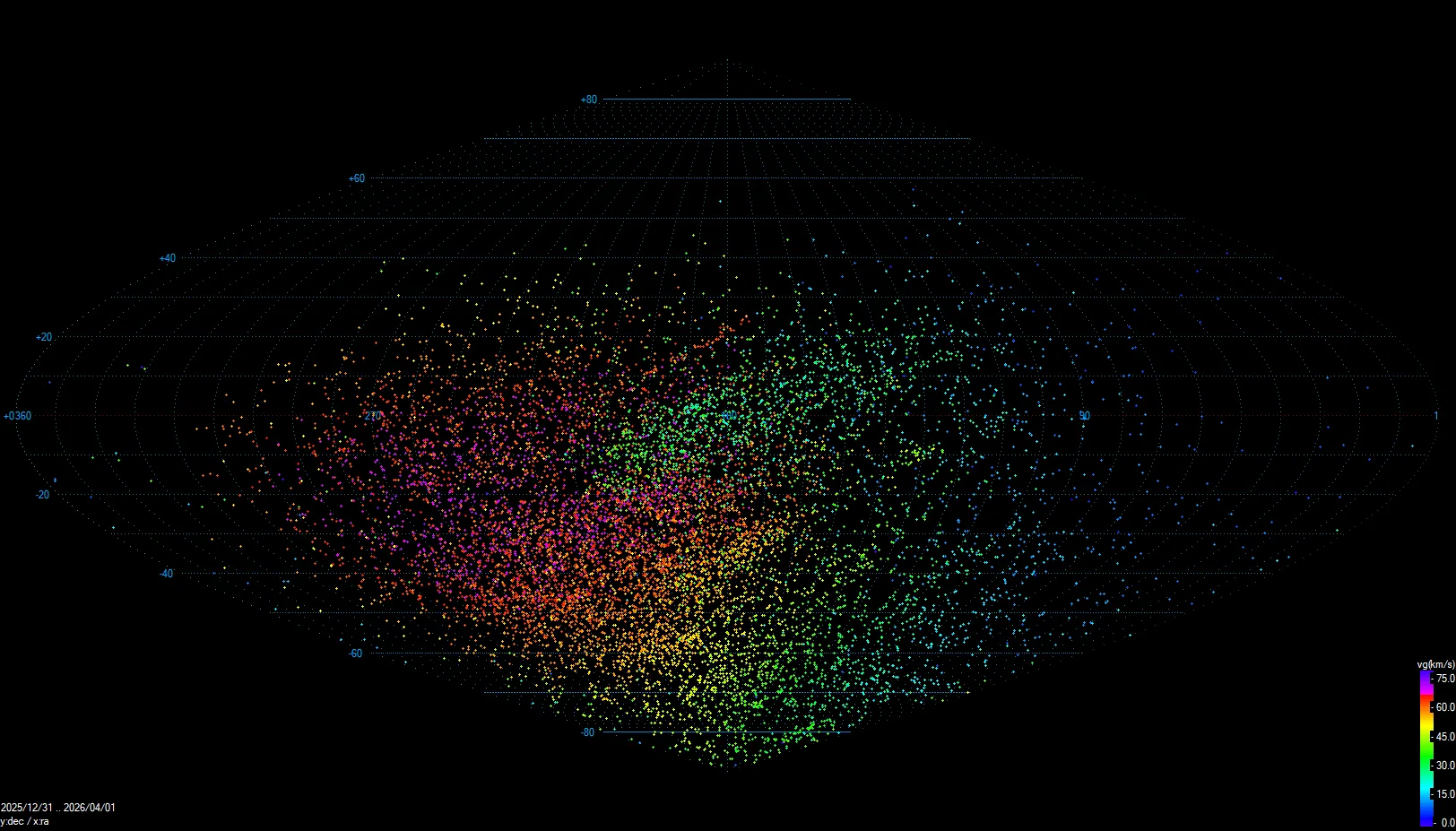
Fig. 7: Radiants of shower and sporadic multi-station meteors in the SSOVMO network in Q1 2026. A sinusoidal projection with an equatorial coordinate system is used for visualization. Credit: Jakub Koukal, Alexandra Mikušková.
In March 2026, the cameras of the CEMeNt ( Central European Meteor Network ) and SSO VMO ( Southern Spectroscopic Observatory of the Valašské Meziříčí Observatory ) networks recorded 29,998 single-station meteors, from which 5,532 multi-station orbits were computed. The CEMeNt network cameras recorded 11,243 single-station meteors, resulting in 2,036 multi-station orbits (Figs. 4 and 5); the SSO VMO cameras recorded 18,755 single-station meteors, resulting in 3,496 multi-station orbits (Figs. 6 and 7). As of today, observations from the outer perimeter stations of the network — Rokycany (CZ), Plzeň (CZ) and Karlovy Vary (CZ) — are not yet included in the processing, as their processing has not yet been completed.
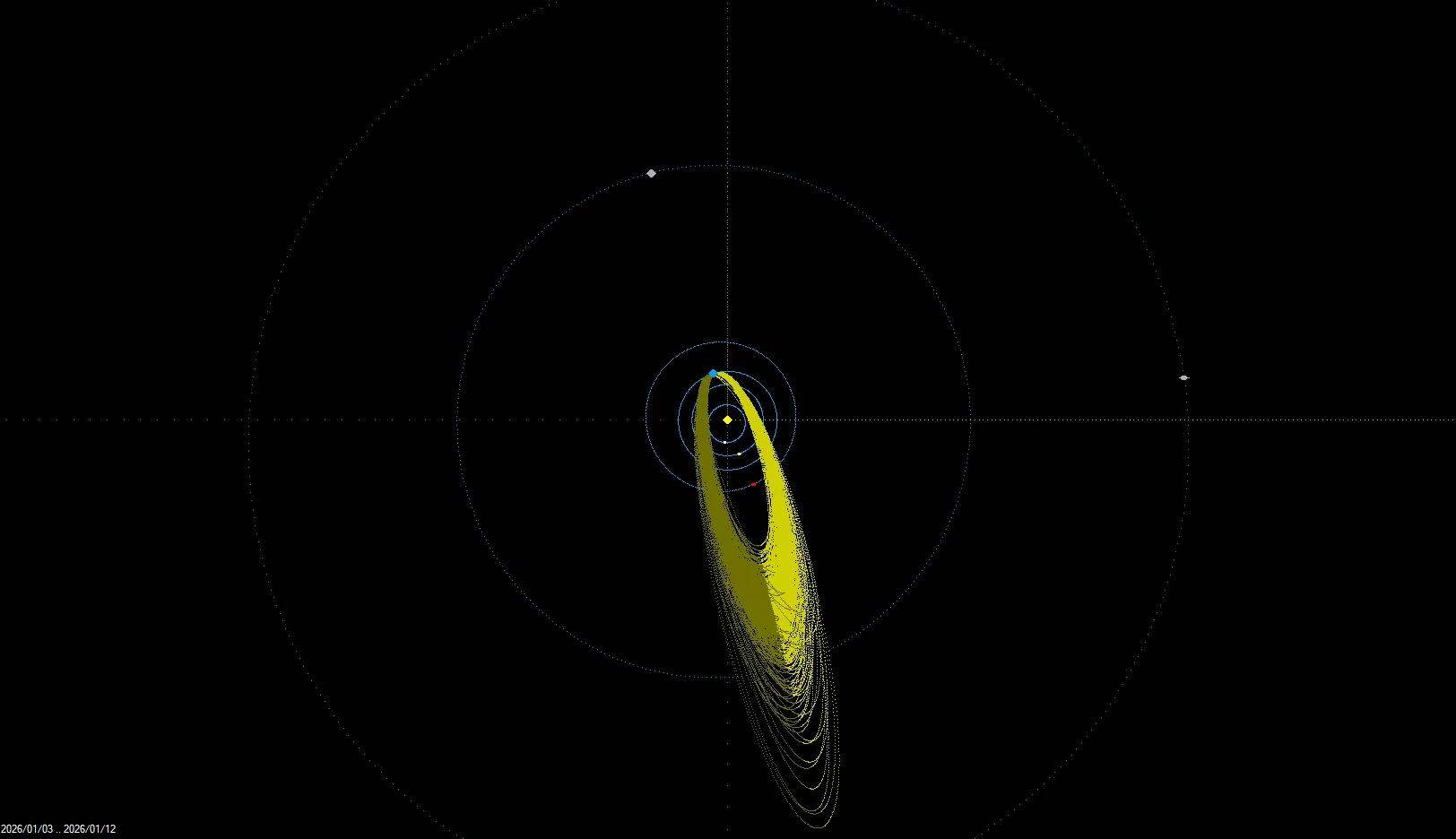
Fig. 8: 3D projection of heliocentric multi-station meteor orbits belonging to the Quadrantid (QUA) meteor shower within the Solar System. A total of 384 multi-station QUA orbits were recorded in Q1 2026 within the CEMeNt network. Credit: Jakub Koukal, Alexandra Mikušková.
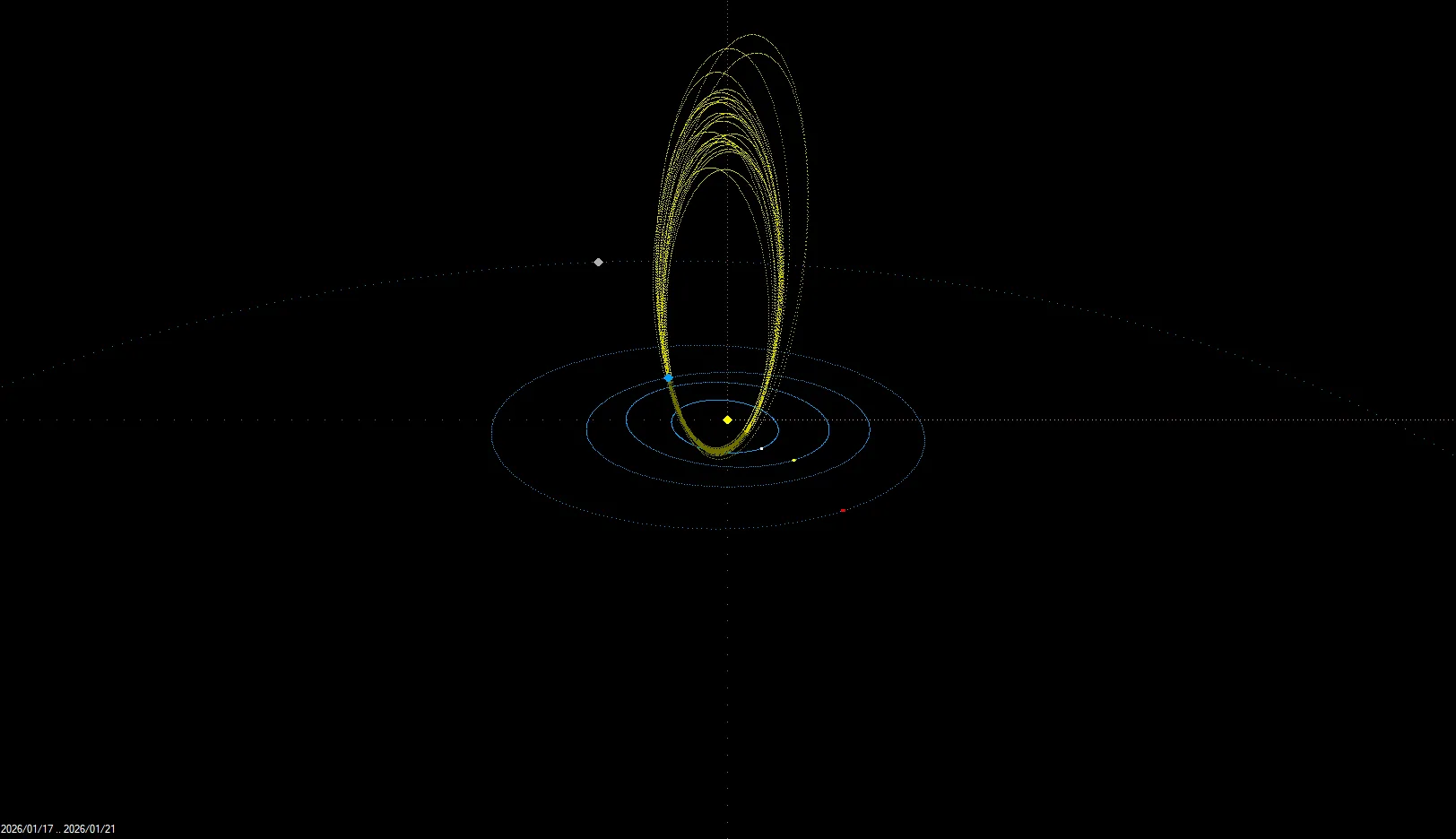
Fig. 9: 3D projection of heliocentric multi-station meteor orbits belonging to the January xi Ursae Majorid (XUM) meteor shower within the Solar System. A total of 26 multi-station XUM orbits were recorded in Q1 2026 within the CEMeNt network. Credit: Jakub Koukal, Alexandra Mikušková.
The largest number of multi-station orbits in the CEMeNt and SSOVMO networks belongs to the sporadic background (14,845 orbits), followed by the Quadrantid meteor shower (QUA, 384 orbits, Fig. 8), Comae Berenicid (COM, 35 orbits), omicron Hydrid (OHY, 33 orbits), kappa Virginid (KVI, 31 orbits), January xi Ursae Majorid (XUM, 26 orbits, Fig. 9), and then other weaker meteor showers with fewer than 20 multi-station orbits each. The number of single-station meteors (as well as multi-station orbits) in all months of Q1 2026 is historically the highest ever in the CEMeNt network since its inception in 2009.
Pairing efficiency within the CEMeNt network ranged from 61.3 % (February) to 66.3 % (March), which is related to the inversion character of the weather at the lower-lying stations of the network. The station-to-orbit ratio fluctuates around the average value for 2025 and was 3.26 stations per orbit in January and 3.39 stations per orbit in February. In March the station-to-orbit ratio rose to 3.66 stations per orbit, which is among the highest values ever recorded in the CEMeNt network.
Pairing efficiency within the SSOVMO network ranged from 42.0 % (January) to 44.4 % (February); the station-to-orbit ratio fluctuates around the average value for 2025 and was 2.43 stations per orbit in January and 2.36 stations per orbit in March.
In total, 86,231 single-station meteors have been recorded so far this year (as of 31 March 2026), from which 15,874 multi-station orbits were computed (Tab. 1).
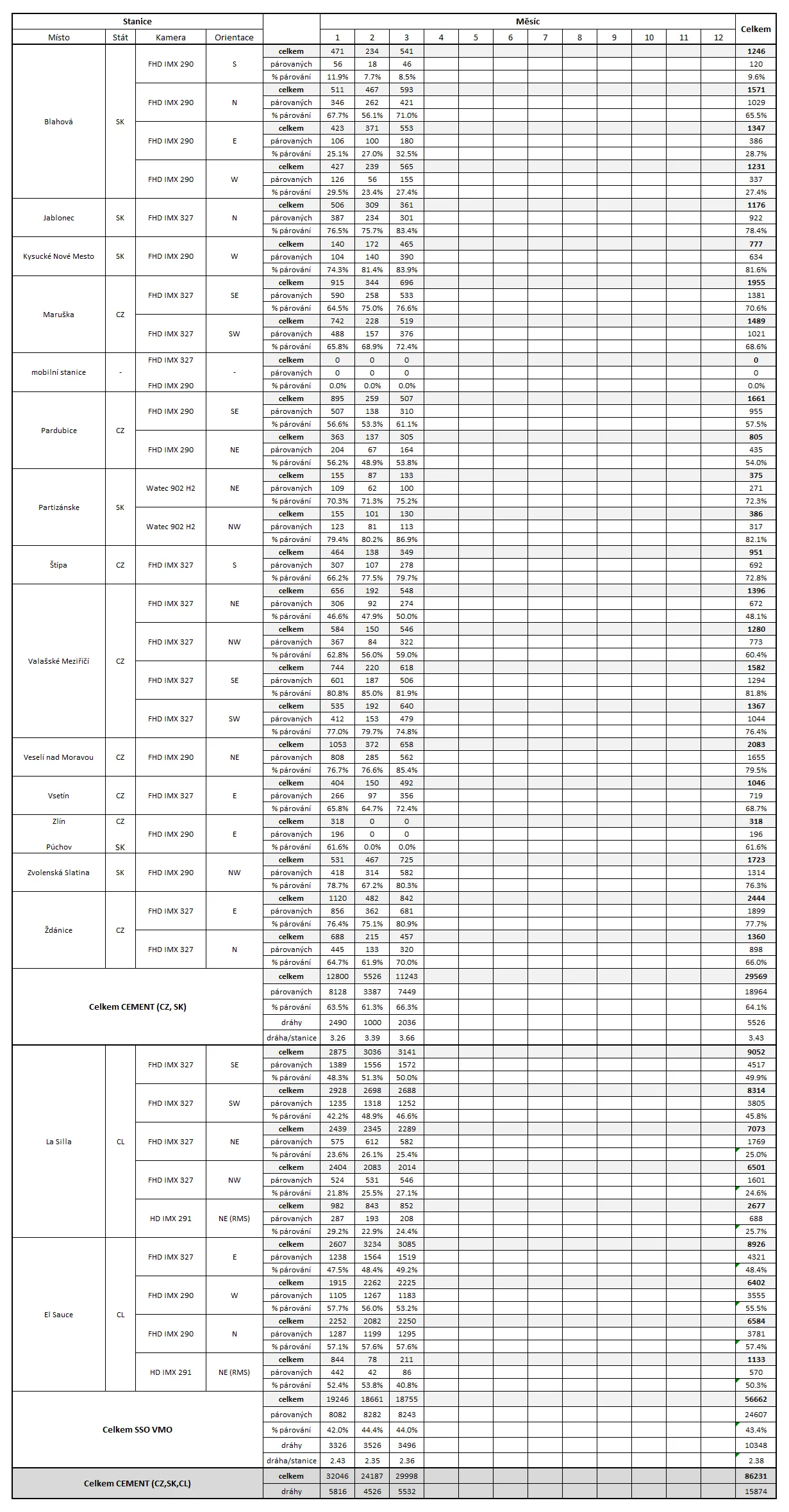
Tab. 1: Overview of the number of recorded and paired meteors in 2026 at stations of the CEMeNt and SSOVMO networks. Credit: Jakub Koukal, Alexandra Mikušková.
Acknowledgements
Our thanks go to the companies DEZA , a. s. and CS CABOT , spol. s r. o., which contributed to the purchase of equipment for the FHD station located at the Valašské Meziříčí Observatory and also within the CEMeNt network. Thanks also go to all partner observatories (Ždánice, Vsetín, Rokycany, Plzeň, Karlovy Vary, Partizánske, Kysucké Nové Mesto) and to the private station owners (Milan Čermák, Richard Kačerek, Jakub Kapuš, Tibor Csorgei, Vladimír Bahýl, Ivo Míček) for supporting the activities and growth of the network. Thanks also go to all involved institutions for supporting the activities and growth of the network. The RPOS (Development of the Cross-Border Observation Network) project was co-financed by the Small Project Fund of the Interreg V-A Slovak Republic – Czech Republic 2014–2020 program, call code 5/FMP/11b, reg. no. CZ/FMP/11b/05/058. The KOSOAP (Cooperating Network in the Field of Astronomical Specialist Observation Programs) and RPKS (Development of the Cross-Border Cooperating Network for Specialist Work and Education) projects were carried out by the Valašské Meziříčí Observatory (CZ) and the Kysucké Nové Mesto Observatory (SK) in cooperation with the SMPH (Society for Interplanetary Matter). The projects were co-financed by the Microprojects Fund of the Operational Program of Cross-Border Cooperation Slovak Republic – Czech Republic 2007–2013. The project for the purchase and operation of high-resolution spectroscopic cameras is partly funded by the Regional Cooperation Program of the Czech Academy of Sciences, reg. no. R200402101. The installation of the Southern Spectroscopic Observatory of the Valašské Meziříčí Observatory in Chile is part of the KKC (Cultural and Creative Center) project, co-financed by the European Union and the National Recovery Plan, under call no. 0231/2022 – Development of Regional Cultural and Creative Centers (project reg. no. 0231000014), administered by the Ministry of Culture of the Czech Republic. The installation costs were covered by co-financing provided by the Zlín Region. We thank the PLATOSpec consortium for supporting us and for providing the opportunity to install the spectral cameras, as well as for cooperation during installation and operation. The PLATOSpec project was built and is operated by a consortium composed of the Astronomical Institute of the Czech Academy of Sciences in Ondřejov (ASU), the Thuringian State Observatory (Thüringer Landessternwarte, Germany), the Pontifical Catholic University of Chile (PUC, Chile); smaller partners include Masaryk University (Czech Republic), Adolfo Ibáñez University (Chile) and the Institute of Plasma Physics of the Czech Academy of Sciences (Czech Republic). Funding for the modernization of the 1.52m telescope was provided by ASU, and personnel costs were partly covered by grant LTT-20015. Funding for the construction of PLATOSpec was provided by the Free State of Thuringia, represented by the "Thuringian Ministry of Education, Science and Culture" under the "Research Support Directive", and by the German Aerospace Center (DLR). Financial support for the observations is provided within the institutional support for the development of the research organization of Masaryk University. The use of the 1.52m telescope was made possible through an agreement between ESO and the PLATOSpec consortium. The installation of the El Sauce station was made possible at the private El Sauce Observatory in cooperation with OBSTECH SpA .