Video Meteor Observation in the CEMeNt and SSOVMO Networks in 2025
The year 2025 marked a significant milestone for the CEMeNt ( Central European Meteor Network ) network. Thanks to the widespread deployment of highly sensitive FHD cameras with Sony Starvis CMOS chips, further optimization of the field-of-view geometry, and above all the expansion of the network to the southern hemisphere in Chile, an unprecedented increase in both the quality and quantity of the acquired data was achieved. For the first time in the network's history, more than 300,000 single-station meteors were recorded and over 55,000 multi-station orbits were computed during a single year, significantly surpassing all previous records. The establishment of the Southern Spectroscopic Observatory of the Valašské Meziříčí Observatory ( SSOVMO ) at the La Silla and El Sauce observatories additionally enabled systematic monitoring of meteor activity in the southern sky, which until recently had been insufficiently covered on a global scale. The combination of precise multi-station meteor orbits, a large number of fireball spectra records, and their subsequent integration into the EDMOND ( European viDeo MeteOr Network Database ) database creates a unique dataset for studying the structure of meteor showers, their origins, and the physical properties of meteoroids.
CEMeNt and SSOVMO in 2025
At the beginning of 2025, the CEMeNt network entered its sixteenth year of operation. Since 2010, the CEMeNt network has recorded 842,514 single-station meteors (as of 31 December 2025), from which 146,601 multi-station meteor orbits have been computed. Currently, the CEMeNt network in the Czech Republic consists of the stations Valašské Meziříčí (4 cameras, 4 spectrographs), Vsetín (1 camera), Maruška (2), Ždánice (2), Karlovy Vary (3, one camera currently out of service), Štípa (1), Pardubice (2), Veselí nad Moravou (1), Plzeň (1), and Rokycany (1). In Slovakia, the stations Partizánske (2), Blahová (4), Jablonec u Trnavy (1), Kysucké Nové Mesto (1), and Zvolenská Slatina (1) are in operation. A partially mobile station is also available, alternately used at the Zlín (CZ) and Púchov (SK) stations.
Since the beginning of August 2024, most stations in the central part of the CEMeNt network have been equipped with systems featuring CMOS cameras with Sony Starvis IMX 327 LQR or IMX 290 LQR chips, operating at FHD resolution of 1920 × 1080 px (2.1 MPx) and a frame rate of 30 fps. The high-speed Starlight lens (f/0.95) with a fixed focal length (4 mm) in this configuration provides a field of view of 89 (± 1) × 50°. These cameras are used at the stations Valašské Meziříčí (4 cameras), Vsetín (1), Maruška (2), Štípa (1), Veselí nad Moravou (1), Pardubice (2), Ždánice (2), Jablonec (1), Kysucké Nové Mesto (1), Blahová (4), and Zvolenská Slatina (1). At the Partizánske station, Watec 902 H2 Ultimate CCD cameras with Sony ICX 429 ALL chips are used, operating at PAL resolution of 720 × 576 px (0.4 MPx), with a frame rate of 25 fps and a field of view of ~ 90 × 72°. Some stations (Plzeň, Rokycany, and Karlovy Vary) use KPF 131 HR CCD cameras, operating at PAL resolution of 720 × 576 px (0.4 MPx) with a frame rate of 25 fps.
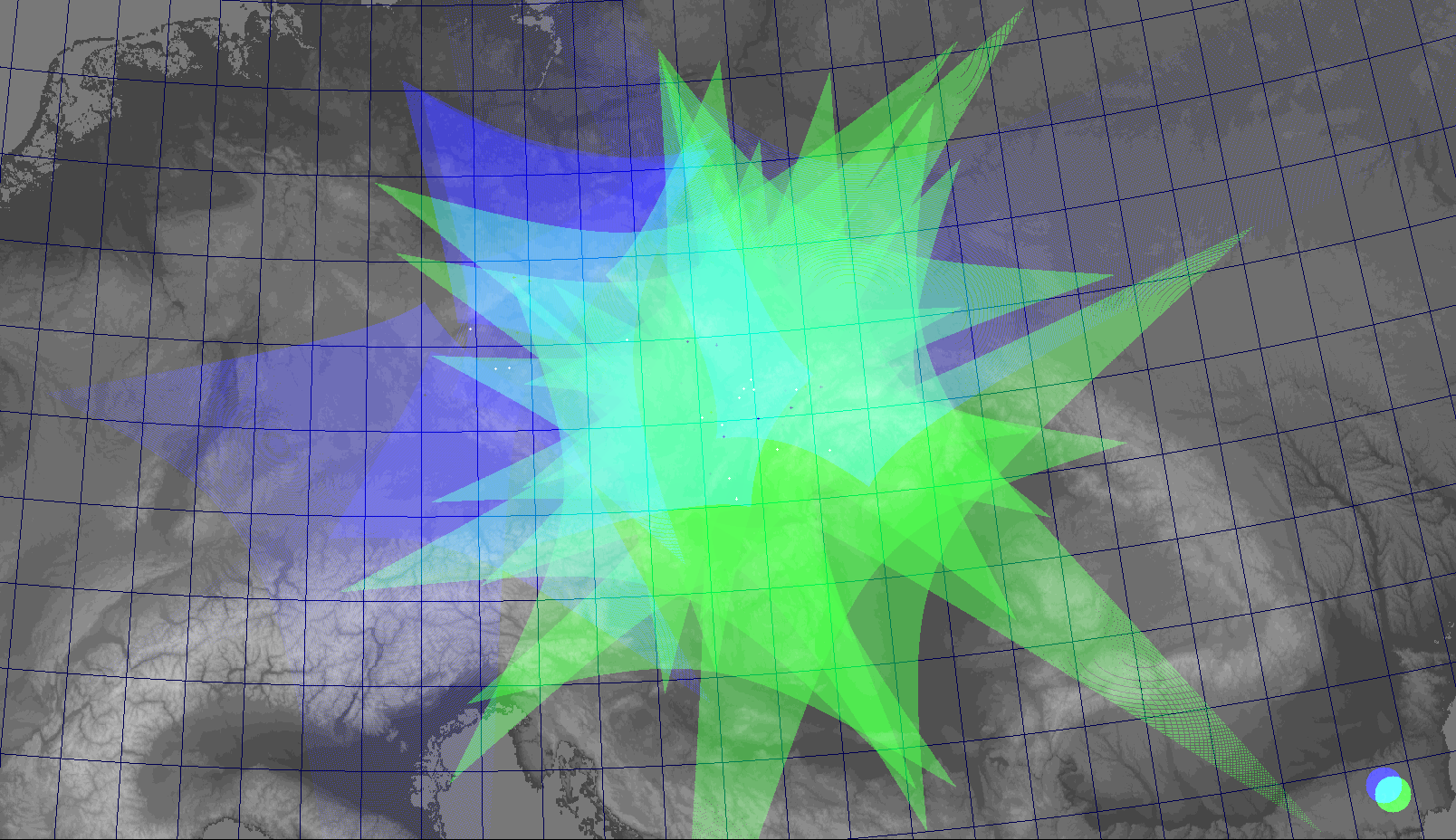
Fig. 1: 2D representation of the fields of view (FOV) of cameras included in the CEMeNt network (as of 31 December 2025) at an altitude of 100 km above the Earth's surface. The central area consists of the stations Valašské Meziříčí, Maruška, Štípa, and Vsetín. The field of view of FHD cameras is shown in green, and the field of view of PAL cameras in purple. Author: Jakub Koukal
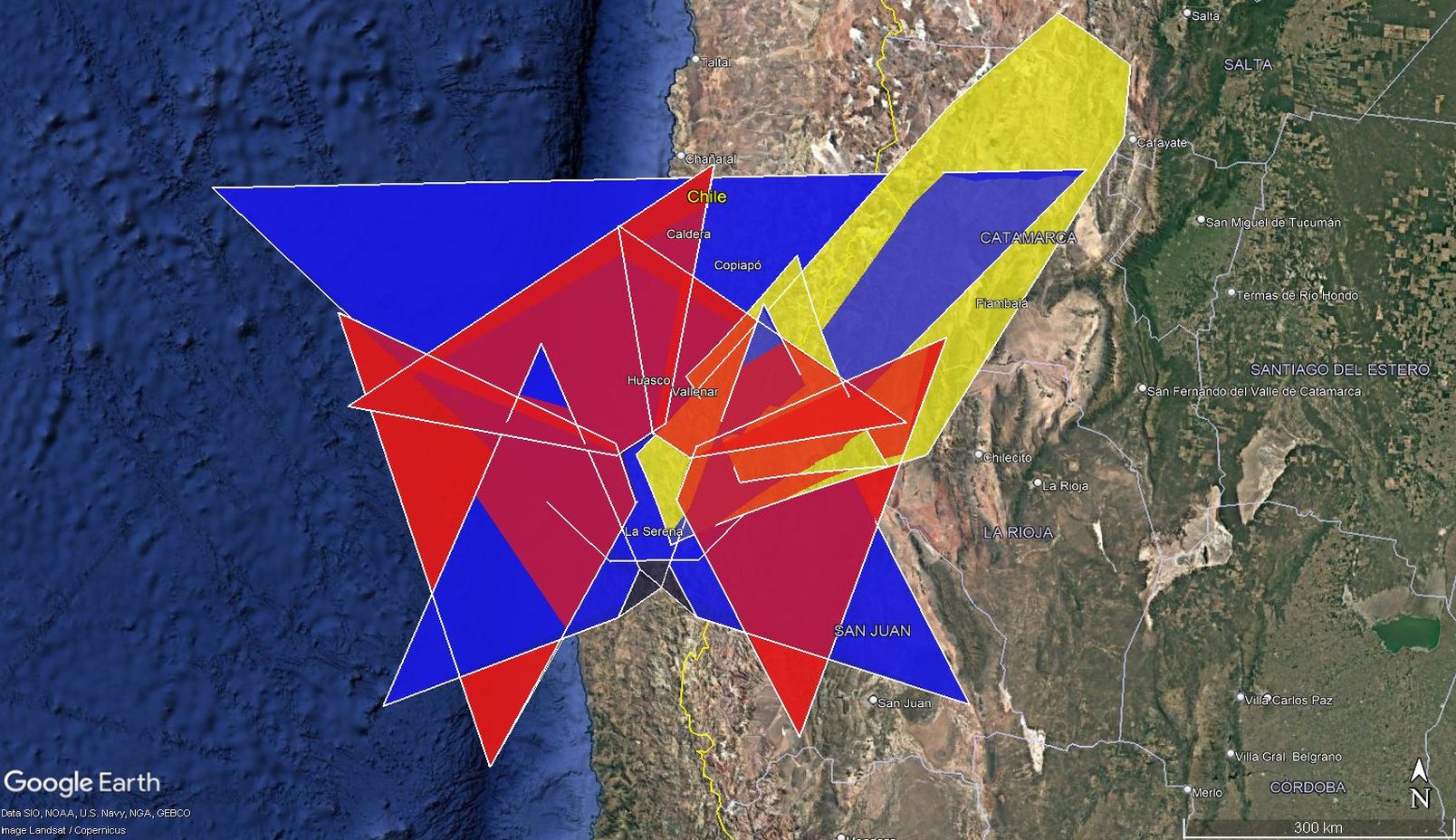
Fig. 2: 2D representation of the fields of view (FOV) of cameras at the La Silla and El Sauce stations at an altitude of 100 km above the Earth's surface. Blue indicates the fields of view of survey cameras at the El Sauce observatory (UFO), red indicates the fields of view at the La Silla observatory (UFO), and yellow indicates the fields of view of GMN network cameras (RMS, both stations). Author: Jakub Koukal
The rapid development of recording technology in recent years, as well as increasingly higher requirements for the accuracy of computed multi-station meteor orbits, led to the expansion of the CEMeNt network in May and June 2025 with the addition of stations at the La Silla and El Sauce observatories in Chile. The expansion of the network to areas with very high quality observing conditions in the southern hemisphere is a further step that will increase the quality of acquired data and also contribute to the study of meteor activity in the southern hemisphere, which until recently had been practically neglected. The system concept was based on monitoring meteor shower activity from two stations, one of which is the primary station equipped also with spectrographs (La Silla observatory) and the other serves as a support station for computing multi-station orbits (El Sauce observatory). The Southern Spectroscopic Observatory of the Valašské Meziříčí Observatory was established through cooperation between the Valašské Meziříčí Observatory, the Astronomical Institute of the Czech Academy of Sciences (Exoplanet Research Group), the PLATOSpec consortium, and OBSTECH (El Sauce Observatory).
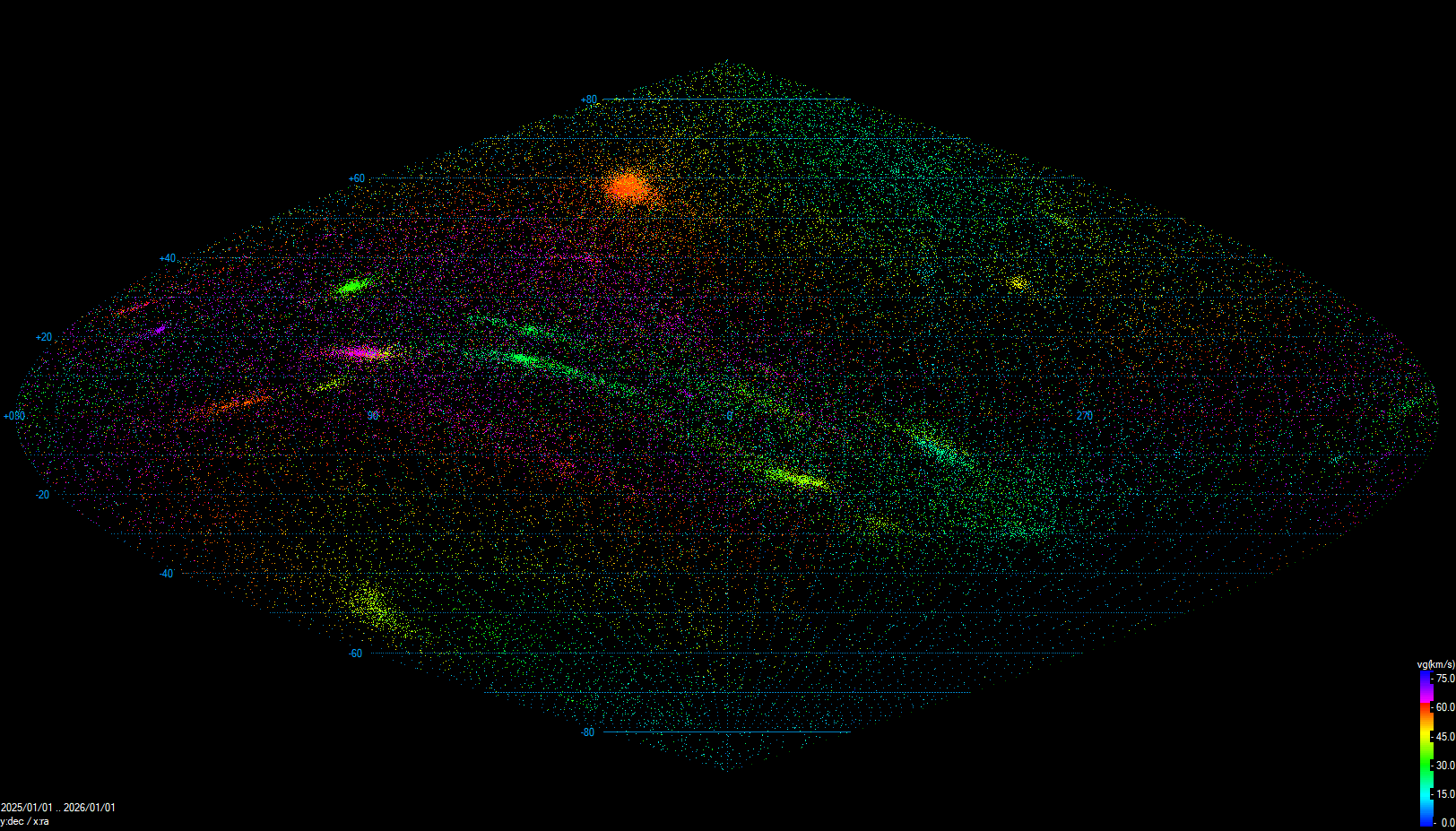
Fig. 3: Radiants of shower and sporadic multi-station meteors recorded in the CEMeNt and SSOVMO networks in 2025. A sinusoidal projection with an equatorial coordinate system is used for display. Author: Jakub Koukal, Alexandra Mikušková, Milan Kalina
The designed system is fully unified, with identical hardware components used at both stations. The imaging element is a board camera with a Sony Starvis IMX 327 LQR CMOS chip (Fig. 5), controlled via an OSD menu. The camera provides an analogue FHD signal with a resolution of 1920 × 1080 px (2.1 MPx), the chip size is 1/2.8", quantum efficiency is 85%, and for the Chilean stations (as well as for the entire CEMeNt network) the NTSC output variant with a frame rate of 30 fps was selected. The high-speed Starlight lens (f/0.95) with M16 aperture and a fixed focal length (4 mm) can resolve chips up to 1/2.7" in size, and in this configuration provides a field of view of 89 (± 1) × 50°. The analogue-to-digital signal conversion is performed in two stages. The cable distribution via coaxial cable with a copper signal carrier (75 Ω) is connected to an AHD/HDMI converter via a BNC connector. The second converter (HDMI/USB 3.2) converts the signal to USB (up to 3.2) interface of the station computer using the MS 2130 conversion chip and ensures sufficient bandwidth for transmitting the FHD signal at the required frame rate. All steps of recording and processing individual meteor records are performed using the UFO Tools software package, which includes UFO Capture HD (for HD and higher resolutions) for meteor recording, UFO Analyzer v4.32 for meteor astrometry and photometry, and UFO Orbit v3.05 for computing multi-station meteor orbits.
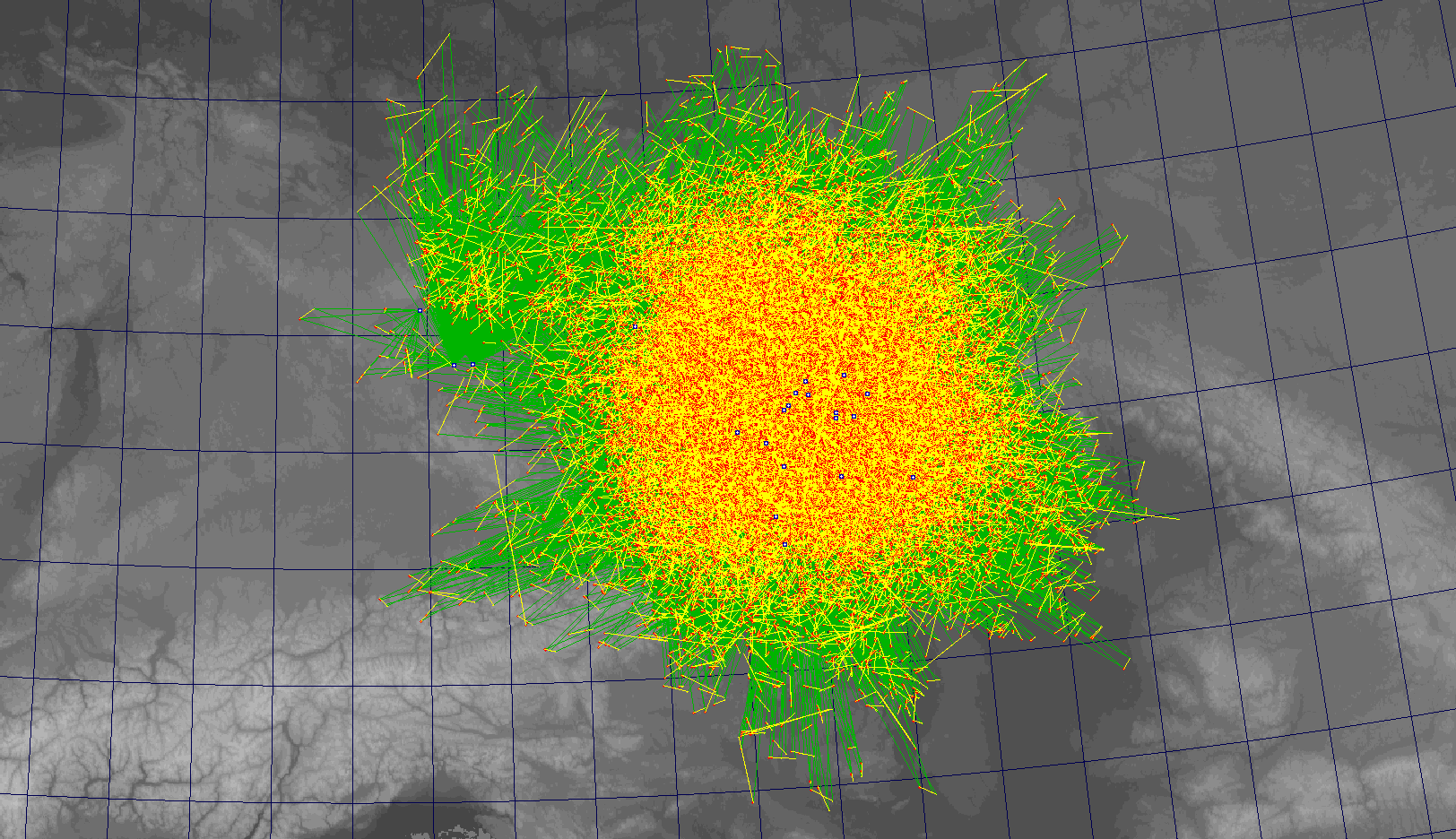
Fig. 4: 2D projection of multi-station orbits recorded in the CEMeNt network in 2025. Author: Jakub Koukal, Alexandra Mikušková
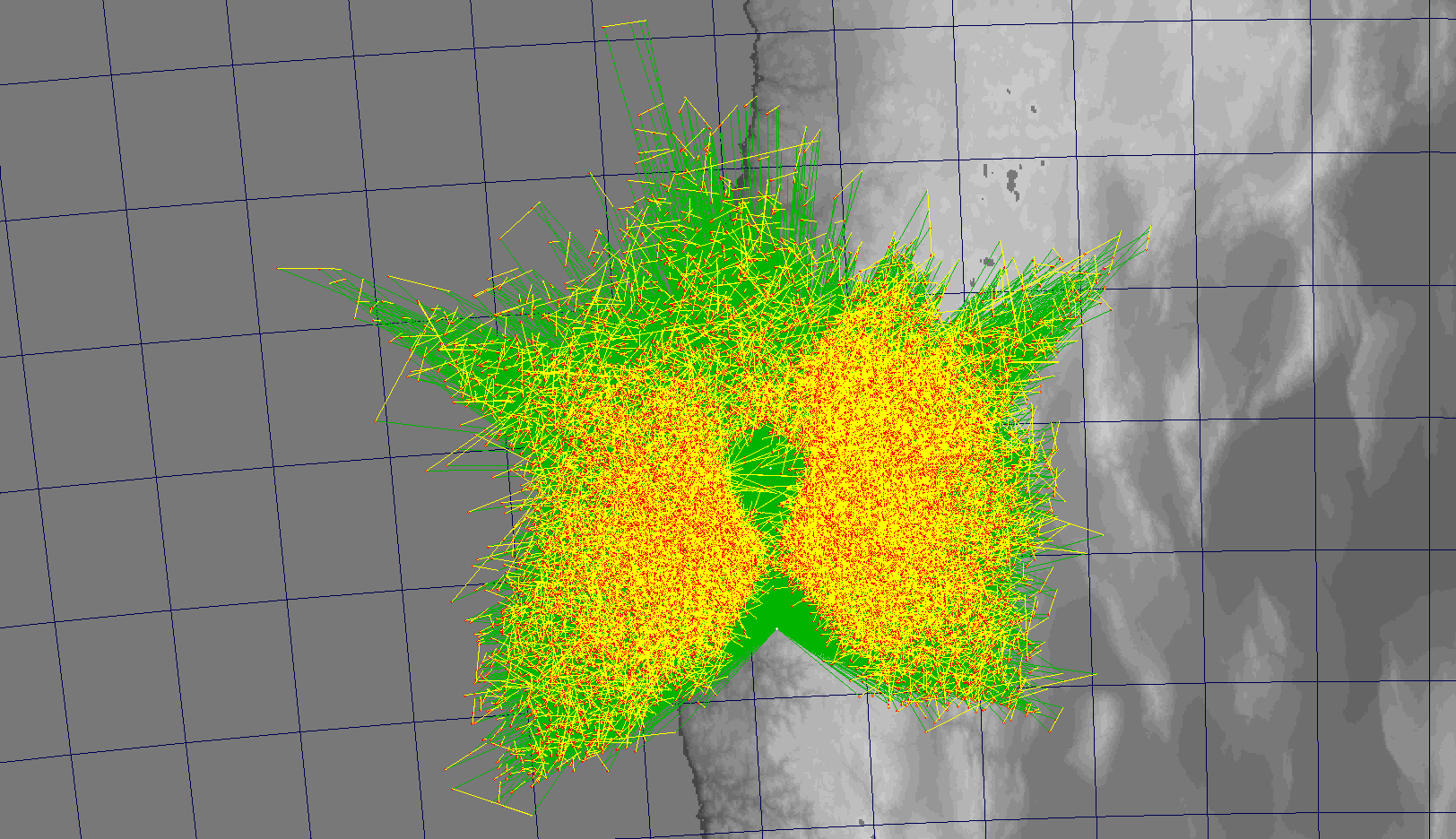
Fig. 5: 2D projection of multi-station orbits recorded in the SSOVMO network in 2025. Author: Jakub Koukal, Milan Kalina
Camera systems of the CSMON ( Czech and Slovak Meteor Observation Network ) network were also installed, which use board cameras with a Sony Starvis IMX 291 LQR CMOS chip in IP configuration as the imaging element. The camera provides a digital FHD signal, which is typically reduced within the CSMON network to HD with a resolution of 1280 × 720 px (0.9 MPx), the chip size is 1/2.8", quantum efficiency is 80%, and for the Chilean stations (as well as for the entire CSMON network) the variant with a frame rate of 25 fps was selected. The high-speed Starlight lens (f/0.95) with M16 aperture and a fixed focal length (6 mm) can resolve chips up to 1/2.7" in size, and in this configuration provides a field of view (FOV) of 59 (± 1) × 33°. All steps of recording and processing individual meteor records are performed using the open-source RMS software, with mini PCs Raspberry Pi 4 and 5 (or Radxa Rock Pi 4 and 5) used for camera control and data recording.
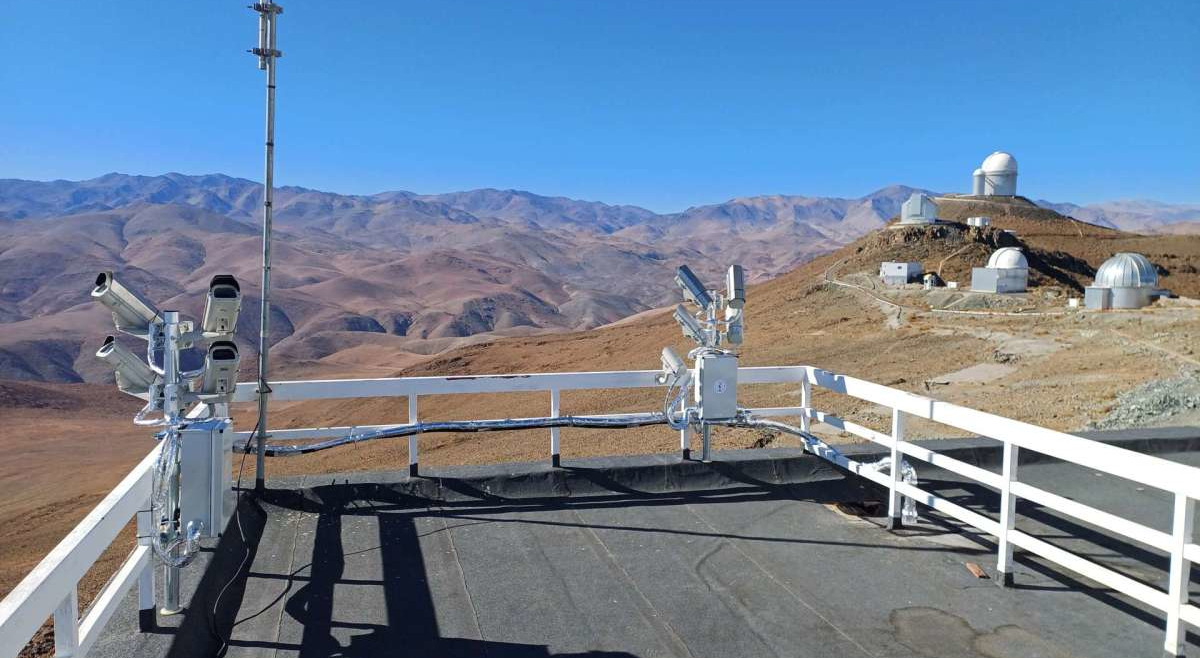
Fig. 6: Overall view of the camera installation at the La Silla observatory, Chile. Author: Valašské Meziříčí Observatory
In 2025, the stations of the CEMeNt network (including SSOVMO ) recorded 309,771 single-station meteors, from which 55,587 multi-station orbits were computed. This represents the highest number of single-station meteors in the network's history, and the number of multi-station orbits exceeds the previous best year (2024) by more than 2.5 times.
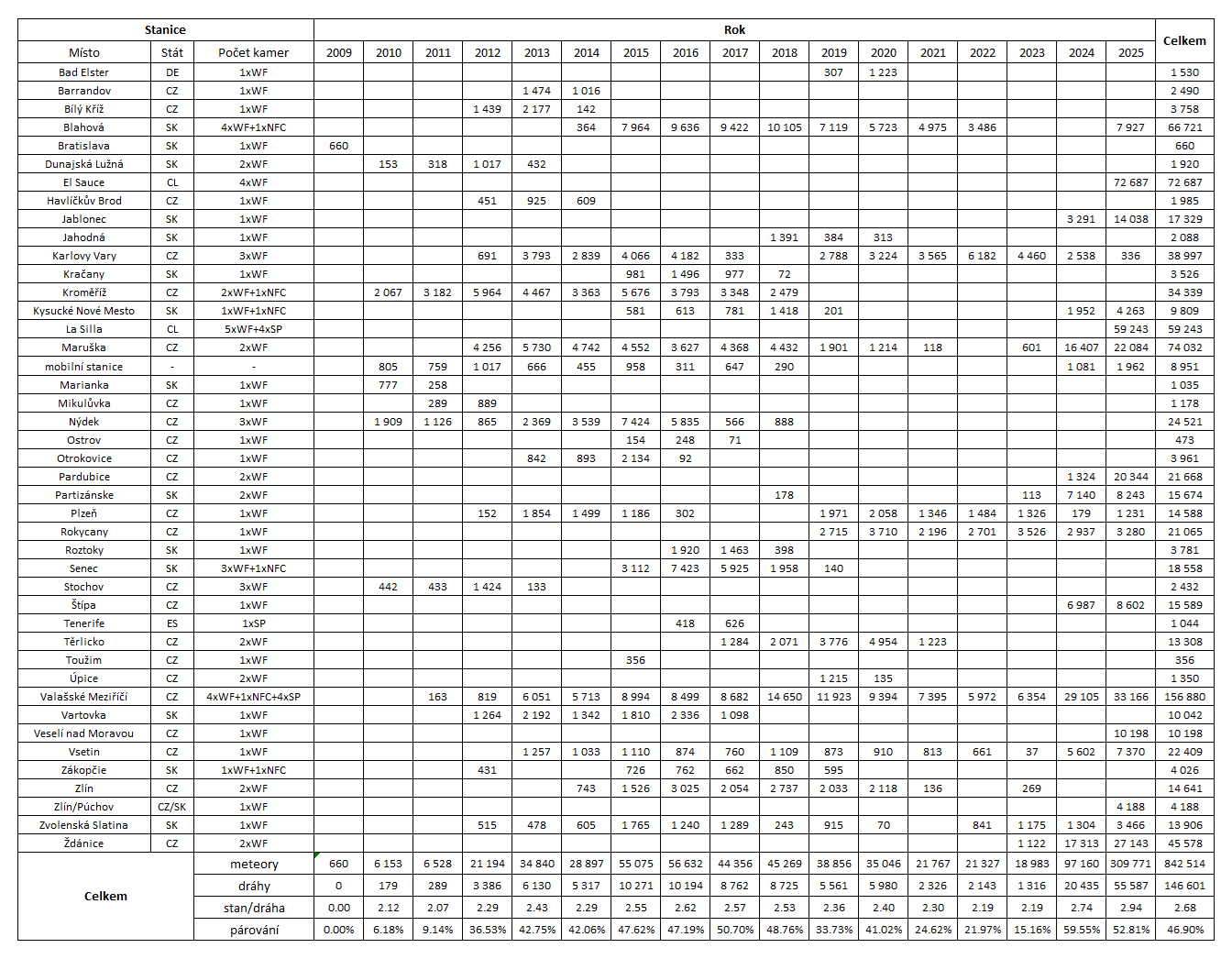
Tab. 1: Annual overview of single-station meteor counts and multi-station orbits for individual stations since the founding of the CEMeNt network in 2010 through 2025. The Bratislava station in 2009 was used for testing the Watec camera. Author: Jakub Koukal
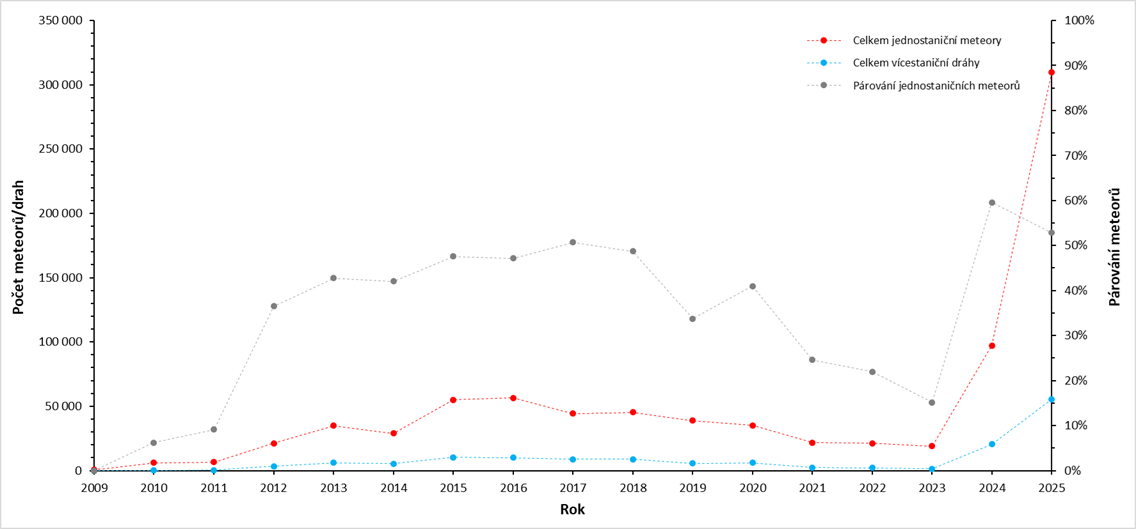
Chart 1: Comparison of single-station meteor counts, multi-station orbits, and pairing efficiency in individual years since the founding of the CEMeNt network in 2010 through 2025. Author: Jakub Koukal
The newly installed FHD cameras, whose sensitivity is significantly higher than that of the previously used KPF 131 HR cameras or even the Watec 902 H2 Ultimate cameras, together with the establishment of the Southern Spectroscopic Observatory in Chile, had a major contribution to this result. The overall pairing efficiency in 2025 was 52.8%, which is also the second highest value in the network's history. The station/orbit ratio reached 2.94, and multi-station orbits recorded from 10 or more cameras of the CEMeNt network were not exceptional.
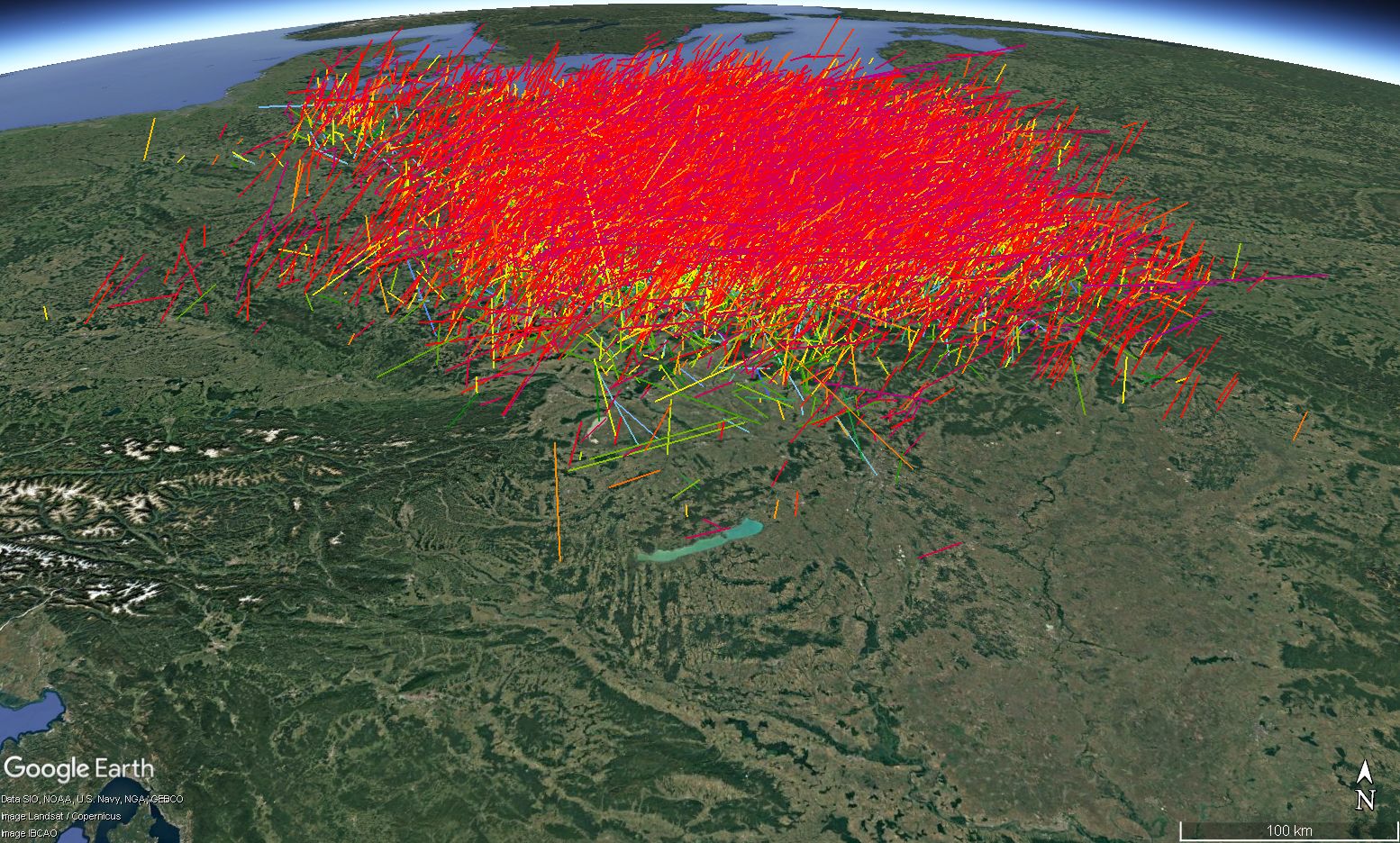
Fig. 7: 3D projection of multi-station orbits recorded in the CEMeNt network in 2025. Author: Jakub Koukal, Alexandra Mikušková
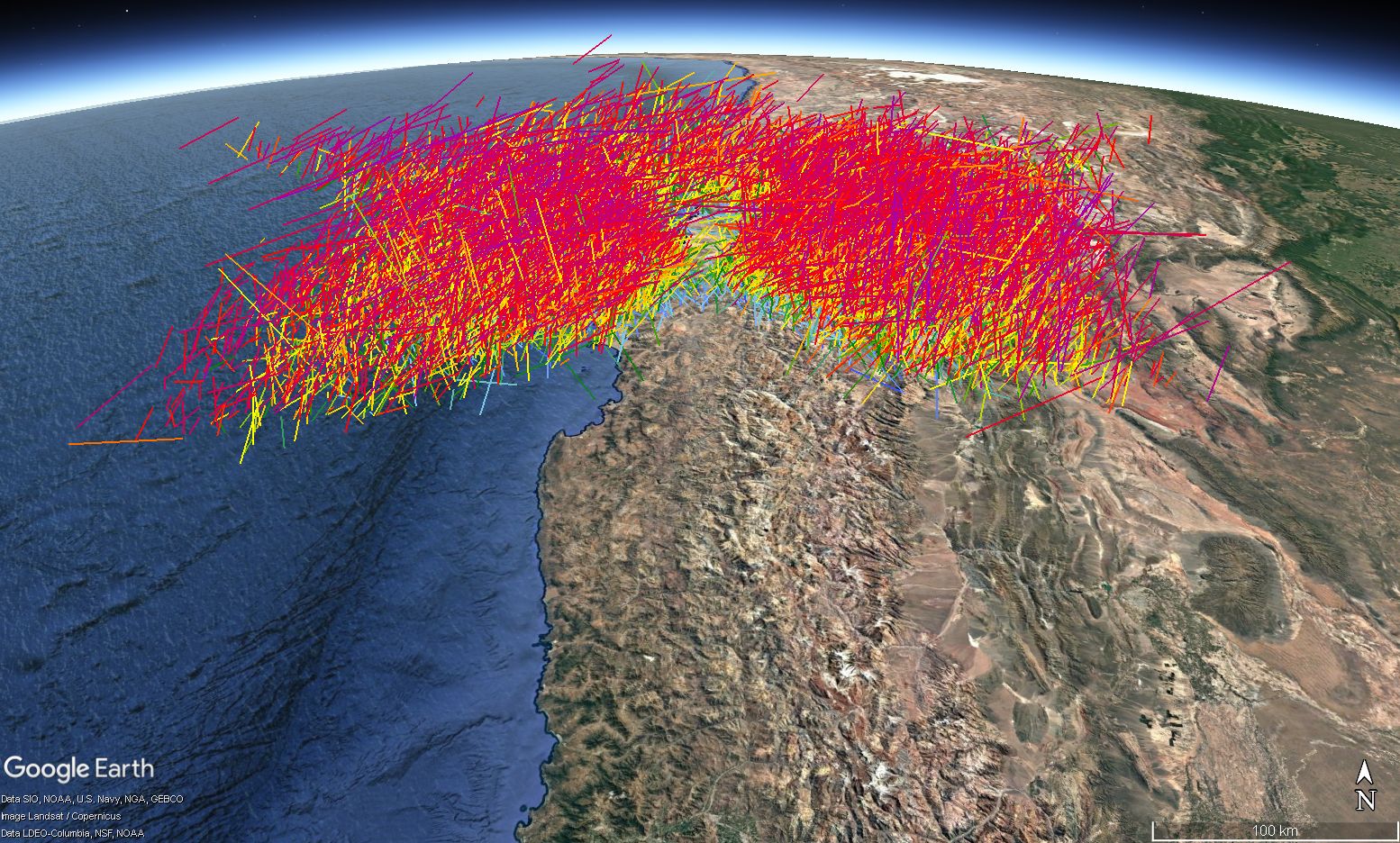
Fig. 8: 3D projection of multi-station orbits recorded in the SSOVMO network in 2025. Author: Jakub Koukal, Milan Kalina
Meteor Shower Activity
The maximum of the Quadrantid (0010 QUA) meteor shower occurred on 3 January 2025 in the morning (9:55 UT). According to the IMO VMDB ( International Meteor Organization Visual Meteor Database ) visual activity graph, the maximum corrected hourly rate of the Quadrantids in 2025 reached 49.6 ± 4.0 meteors. The typical hourly rate is between 60–80 meteors, so the Quadrantid activity in 2025 can be considered below average. Due to relatively unfavourable weather over Central Europe during the shower maximum, the CEMeNt network cameras recorded 85 multi-station Quadrantid orbits.
The maximum of the Lyrid (0006 LYR) meteor shower occurred on 22 April 2025 at night (1:34 UT). According to the IMO VMDB visual activity graph, the maximum corrected hourly rate of the Lyrids in 2025 reached 10.2 ± 1.3 meteors. The typical hourly rate is between 15–25 meteors, so the Lyrid activity in 2025 can be considered below average. However, the observation of the Lyrid maximum is affected by the low number of observations in the database. The CEMeNt network cameras recorded a total of 137 multi-station Lyrid orbits, which is 10 times more than in 2024.
The maximum of the Perseid (0007 PER) meteor shower occurred on 12 August 2025 at night (23:15 UT). According to the IMO VMDB visual activity graph, the maximum corrected hourly rate of the Perseids in 2025 reached only 54.0 ± 1.7 meteors. The typical hourly rate is between 80–120 meteors, so the Perseids this year were below average. Similarly, the number of bright meteors (fireballs) was lower than in previous years. However, the CEMeNt network cameras recorded a total of 3,394 multi-station Perseid orbits, which is the highest count among all meteor showers recorded in 2025.
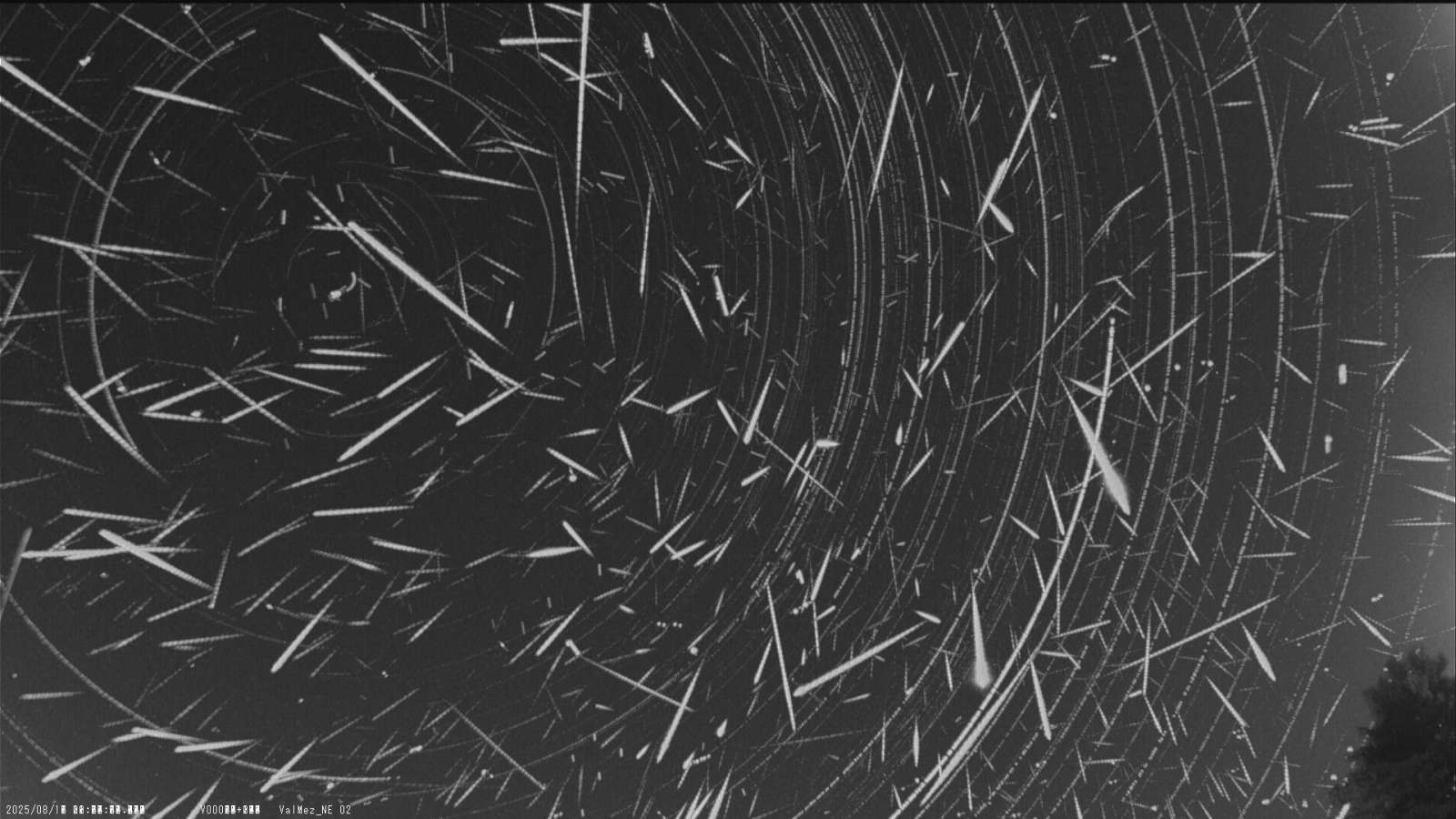
Fig. 9: Composite image of 1,257 meteors recorded by the FHD IMX 327 system at the Valašské Meziříčí NE station during the Perseid maximum nights from 10/11 August to 14/15 August 2025. Author: Valašské Meziříčí Observatory
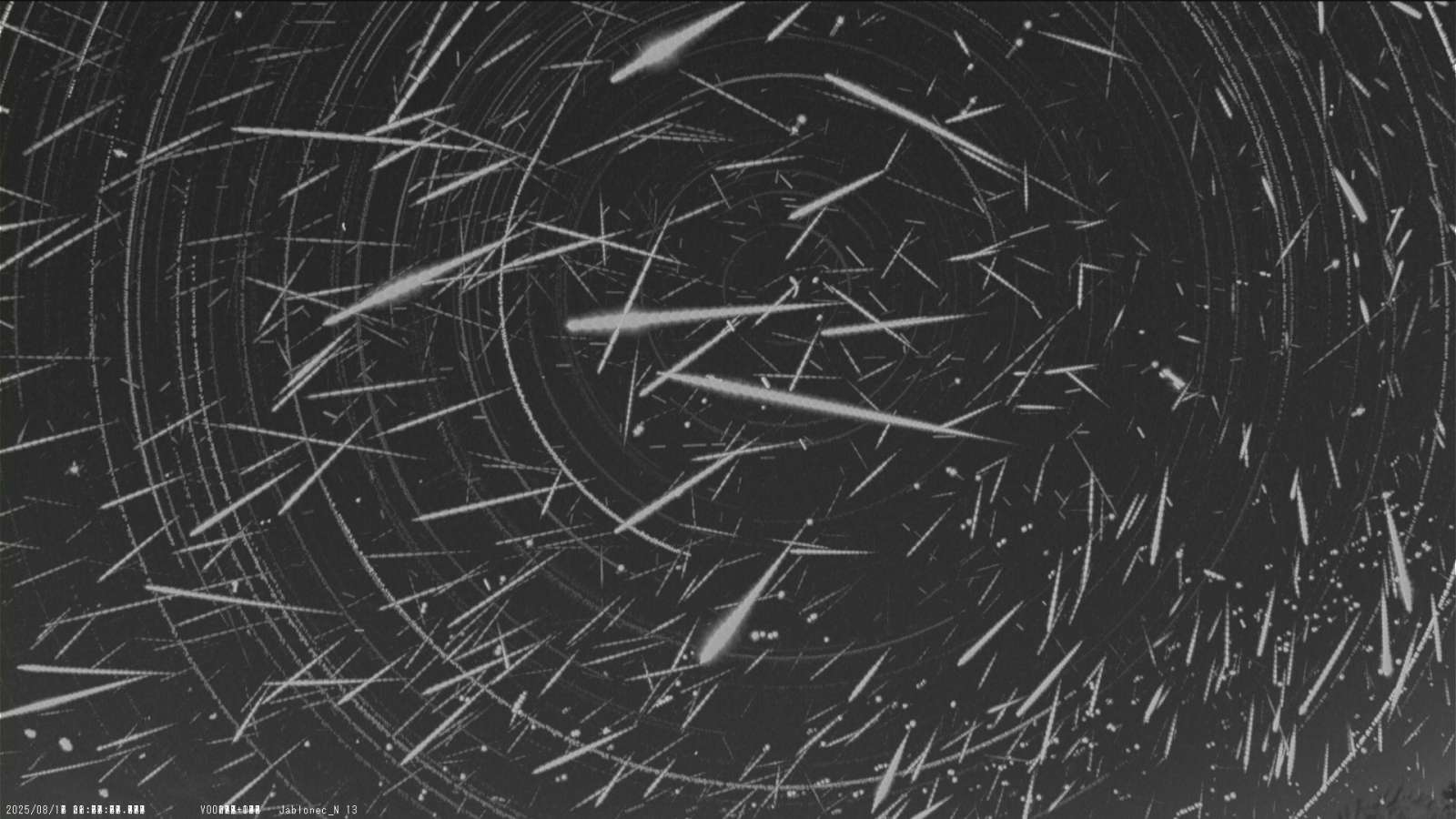
Fig. 10: Composite image of 1,337 meteors recorded by the FHD IMX 327 system at the Jablonec N station during the Perseid maximum nights from 10/11 August to 14/15 August 2025. Author: Jakub Kapuš
The maximum of the Orionid (0008 ORI) meteor shower occurred on 22 October 2025 in the morning (6:05 UT). According to the IMO VMDB visual activity graph, the maximum corrected hourly rate of the Orionids in 2025 reached 16.9 ± 2.2 meteors. The typical corrected hourly rate of the Orionids reaches 20–25 meteors; unfortunately, the period of Orionid activity is rather poorly covered by visual observations in the IMO VMDB activity graph. The CEMeNt network cameras recorded a total of 574 multi-station Orionid orbits, which is the fifth highest count among meteor showers in 2025.
The maximum of the Leonid (0013 LEO) meteor shower in 2025 was predicted to occur on 17 November at 18 UT with a corrected hourly rate between 10 and 15 meteors. Secondary maxima were also predicted, primarily on 17 November between 18 and 23 UT. The Leonid maximum actually occurred on 18 November 2025 in the morning (2:19 UT). According to the IMO VMDB visual activity graph, the maximum corrected hourly rate of the Leonids in 2025 reached 14.4 ± 1.6 meteors. The typical corrected hourly rate of the Leonids reaches 10–20 meteors, so the Leonid activity in 2025 can be considered normal, and no secondary maximum with higher activity was detected. The CEMeNt network cameras recorded a total of 111 multi-station Leonid orbits, which was affected by the inversion weather conditions over the Czech Republic and Slovakia during the shower's activity period.
The maximum of the Geminid (0004 GEM) meteor shower occurred on 14 December 2025 in the morning (7:24 UT). According to the IMO VMDB visual activity graph, the maximum corrected hourly rate of the Geminids in 2025 reached 144.6 ± 4.9 meteors. The typical corrected hourly rate of the Geminids reaches 120–160 meteors, so the Geminid activity this year can be considered normal. The CEMeNt network cameras recorded a total of 912 multi-station Geminid orbits despite unfavourable weather during the shower maximum, which is the second highest count among meteor showers in 2025. A significant portion of the multi-station orbits was recorded by the SSOVMO network in Chile, where the weather during the shower's activity period is very stable and favourable.
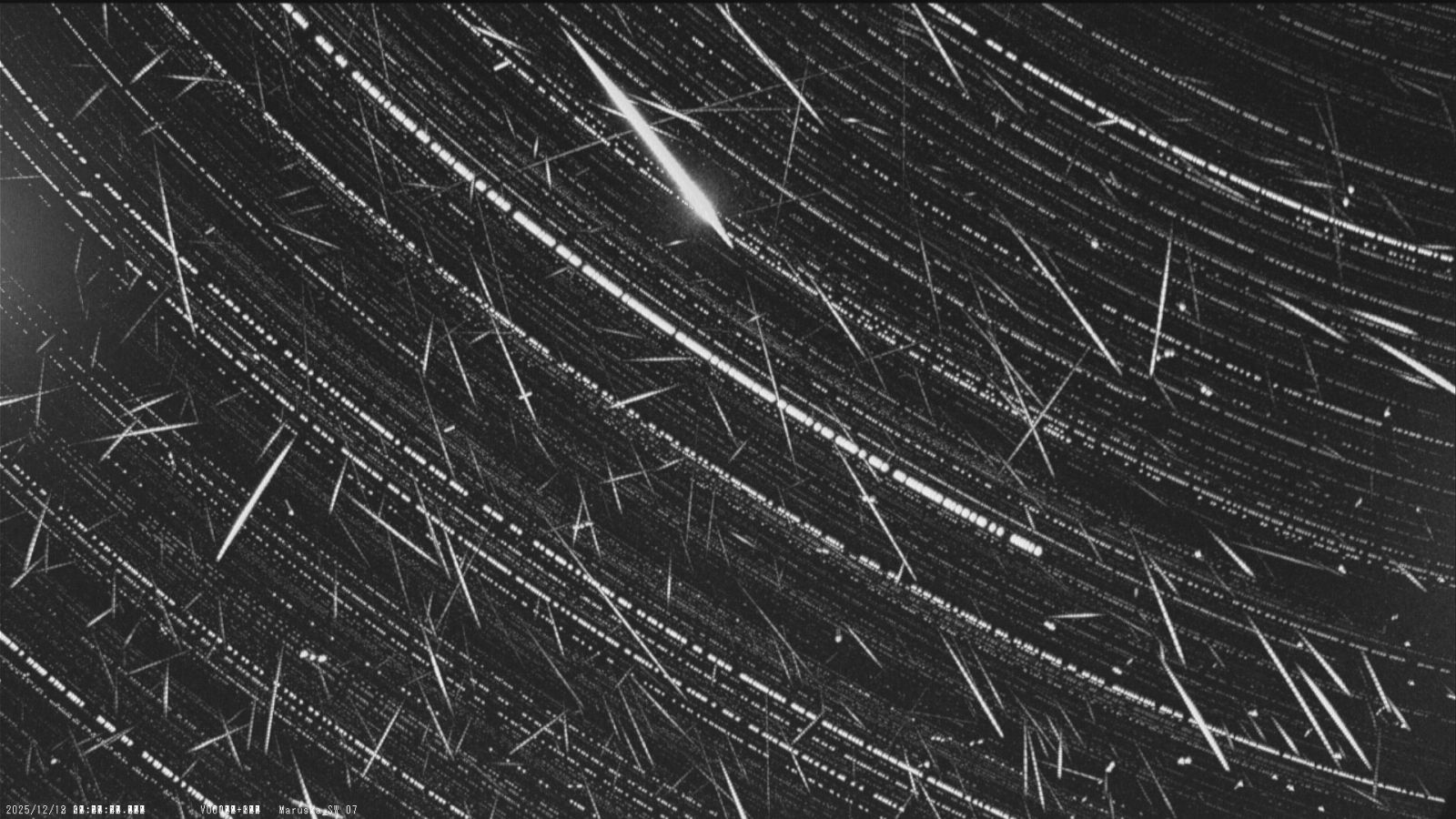
Fig. 11: Composite image of 569 meteors recorded by the FHD IMX 327 system at the Maruška SW station during the Geminid maximum night (12/13 December 2025). Author: Valašské Meziříčí Observatory
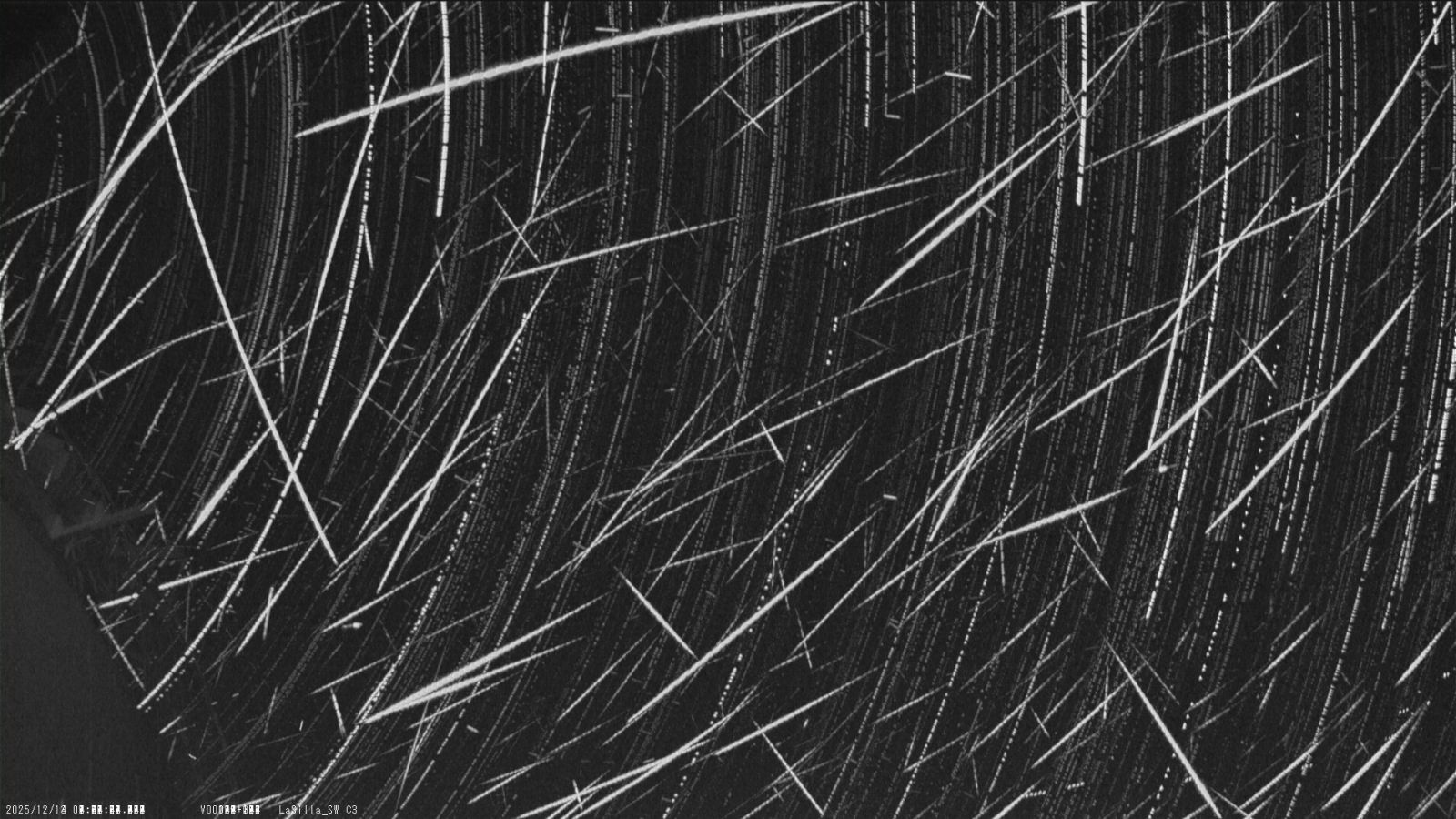
Fig. 12: Composite image of 620 meteors recorded by the FHD IMX 327 system at the La Silla SW station during the Geminid maximum night (12/13 December 2025). Author: Valašské Meziříčí Observatory
The long activity period of the extensive comet 2P/Encke complex was reflected in the high number of multi-station orbits belonging to the Southern Taurid (0002 STA) and Northern Taurid (0017 NTA) showers. According to the IMO VMDB visual activity graph, the maximum corrected hourly rate of the Southern Taurids in 2025 reached 6.5 ± 1.2 meteors, with the maximum occurring on 27 October 2025 at 8:09 UT. The maximum corrected hourly rate of the Northern Taurids reached 5.6 ± 2.5 meteors, with the maximum occurring on 9 November 2024 at 18:30 UT. The CEMeNt network cameras recorded a total of 282 multi-station Northern Taurid orbits and 689 multi-station Southern Taurid orbits.
The location of the SSOVMO stations in Chile enabled the observation of meteor showers that are either unobservable or difficult to observe from European stations. One such meteor shower is the Southern delta Aquariids . The maximum of the Southern delta Aquariid (0005 SDA) meteor shower occurred on 28 July 2025 at night (2:53 UT). According to the IMO VMDB visual activity graph, the maximum corrected hourly rate of the Southern delta Aquariids in 2025 reached 13.3 ± 2.4 meteors. The typical corrected hourly rate of the shower reaches 15–25 meteors, so the shower's activity this year can be considered average. However, the CEMeNt network cameras recorded a total of 742 multi-station Southern delta Aquariid orbits, which is the third highest count among meteor showers in 2025. The majority of multi-station orbits were recorded by the SSOVMO network in Chile, where the radiant is located near the zenith during the night.
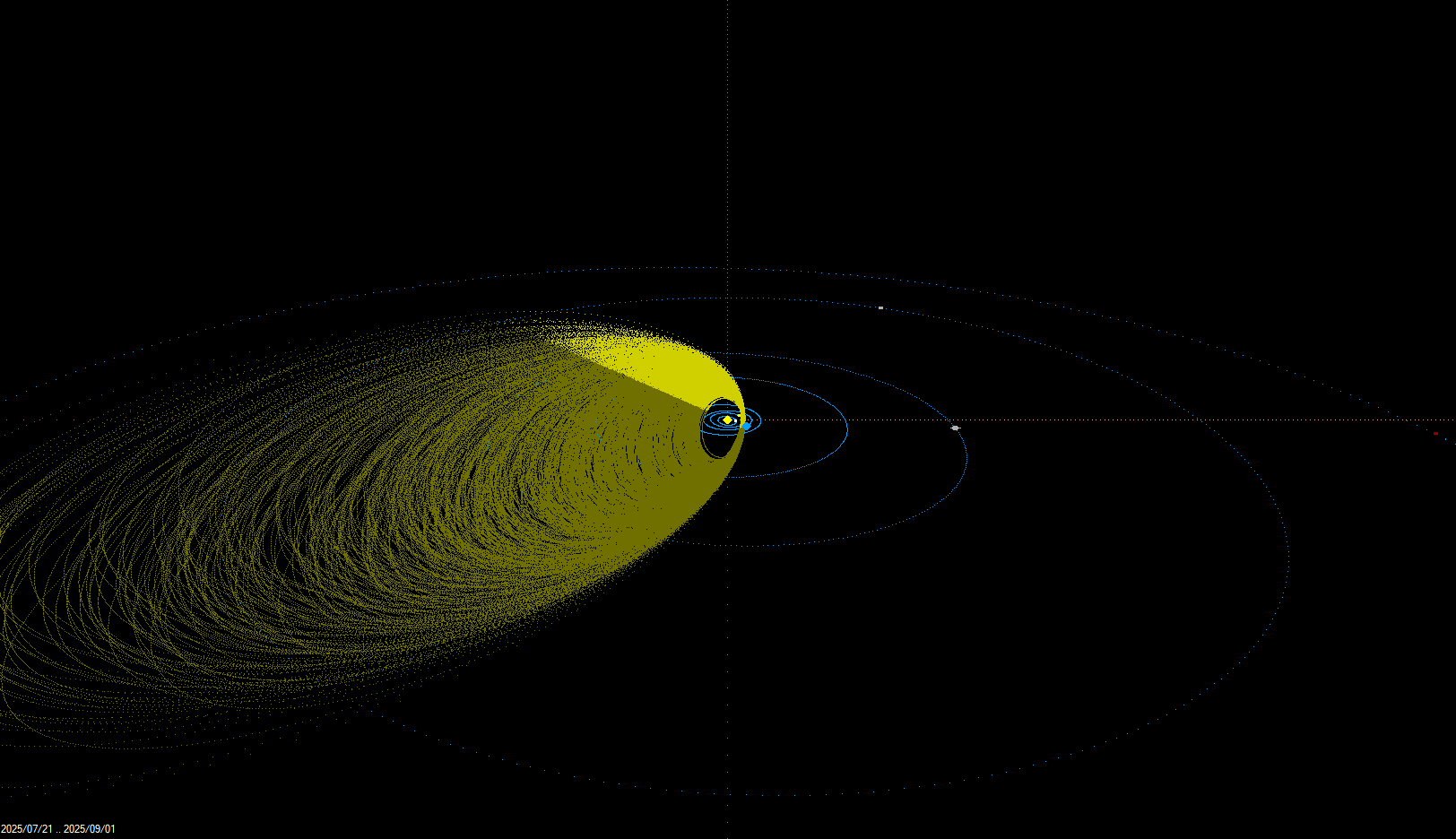
Fig. 13: Heliocentric orbits of Perseid (0007 PER; 3,394 orbits) shower meteors. Author: Jakub Koukal
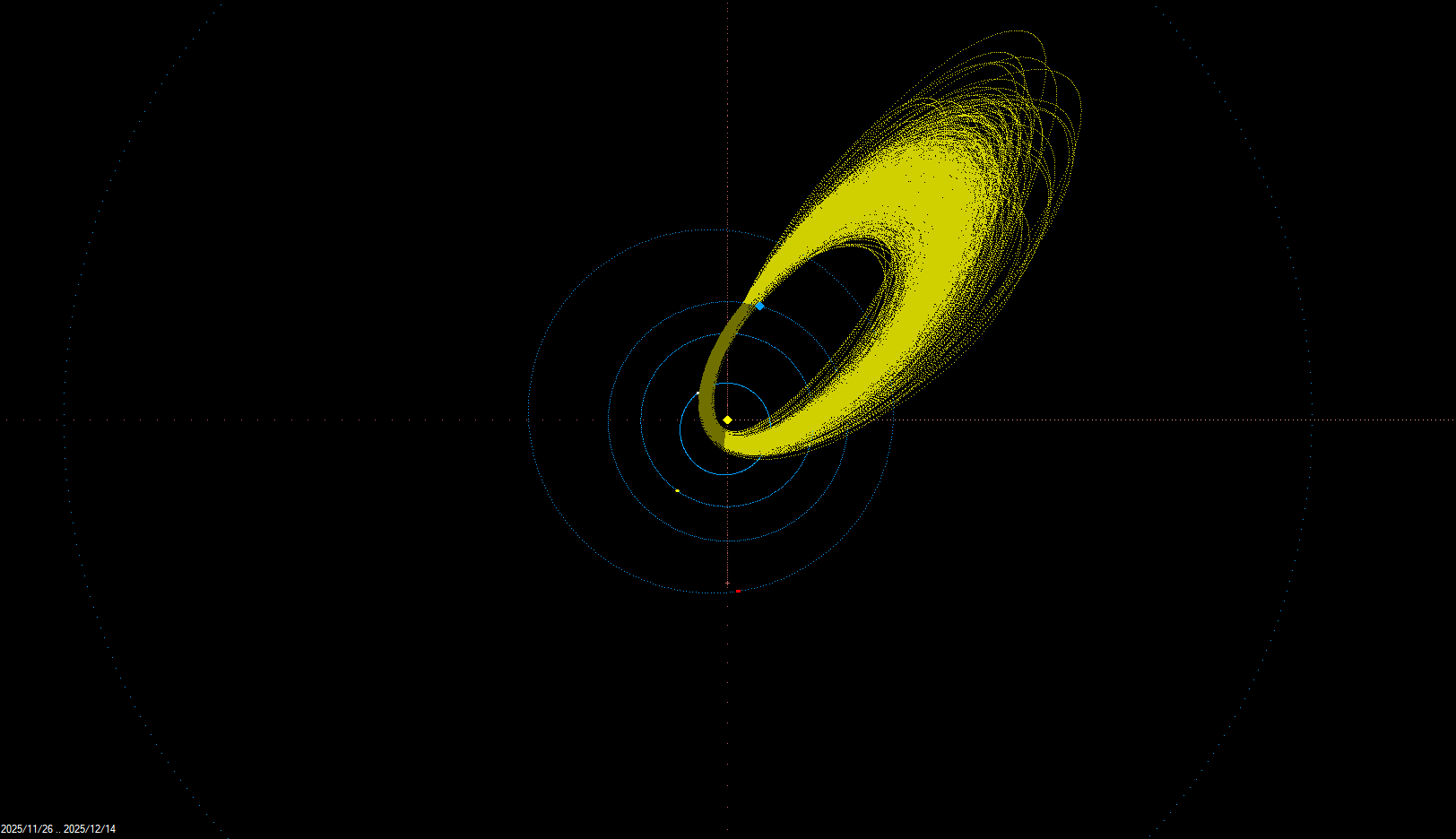
Fig. 14: Heliocentric orbits of Geminid (0004 GEM; 912 orbits) shower meteors. Author: Jakub Koukal
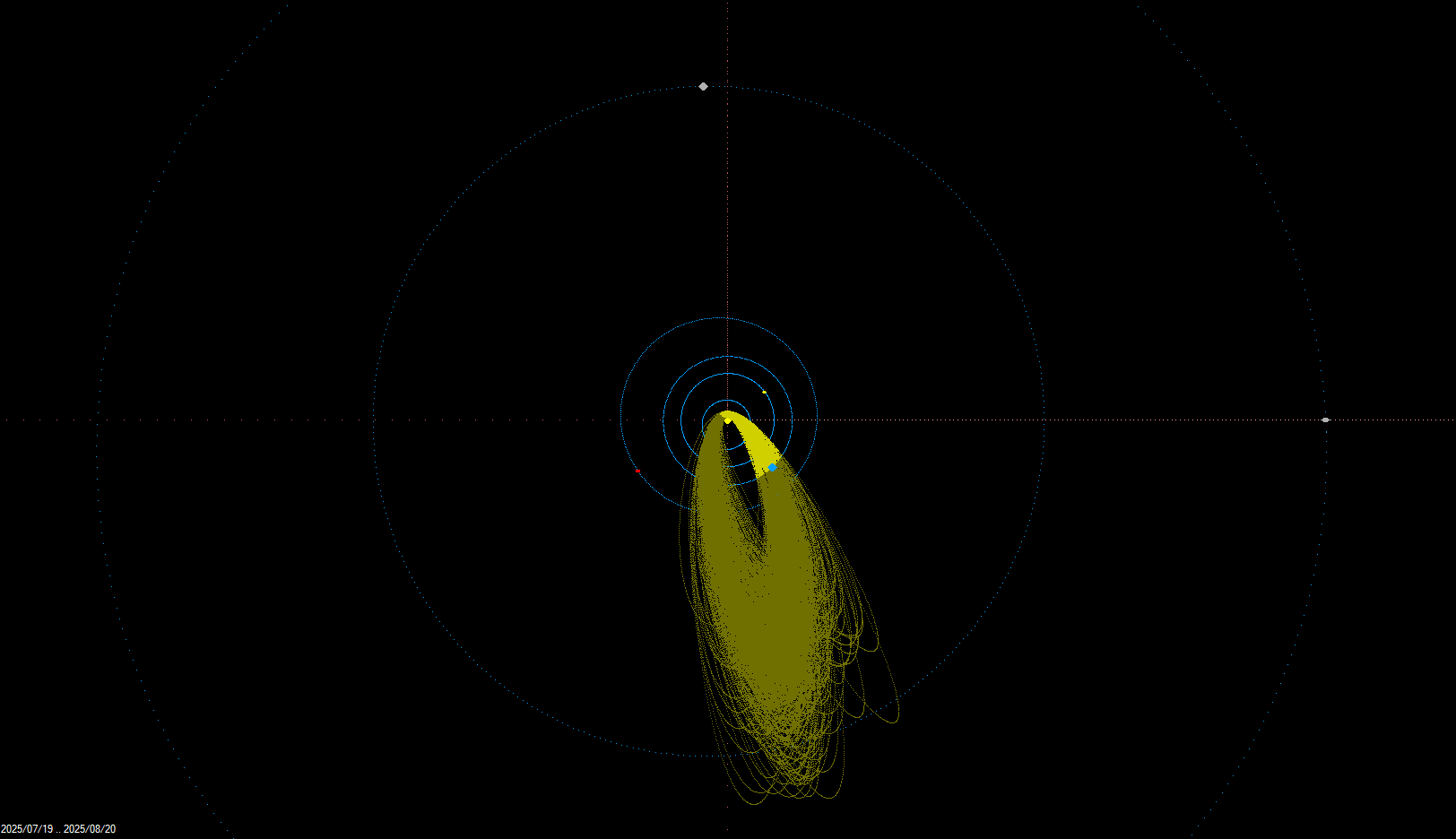
Fig. 15: Heliocentric orbits of Southern delta Aquariid (0005 SDA; 742 orbits) shower meteors. Author: Jakub Koukal
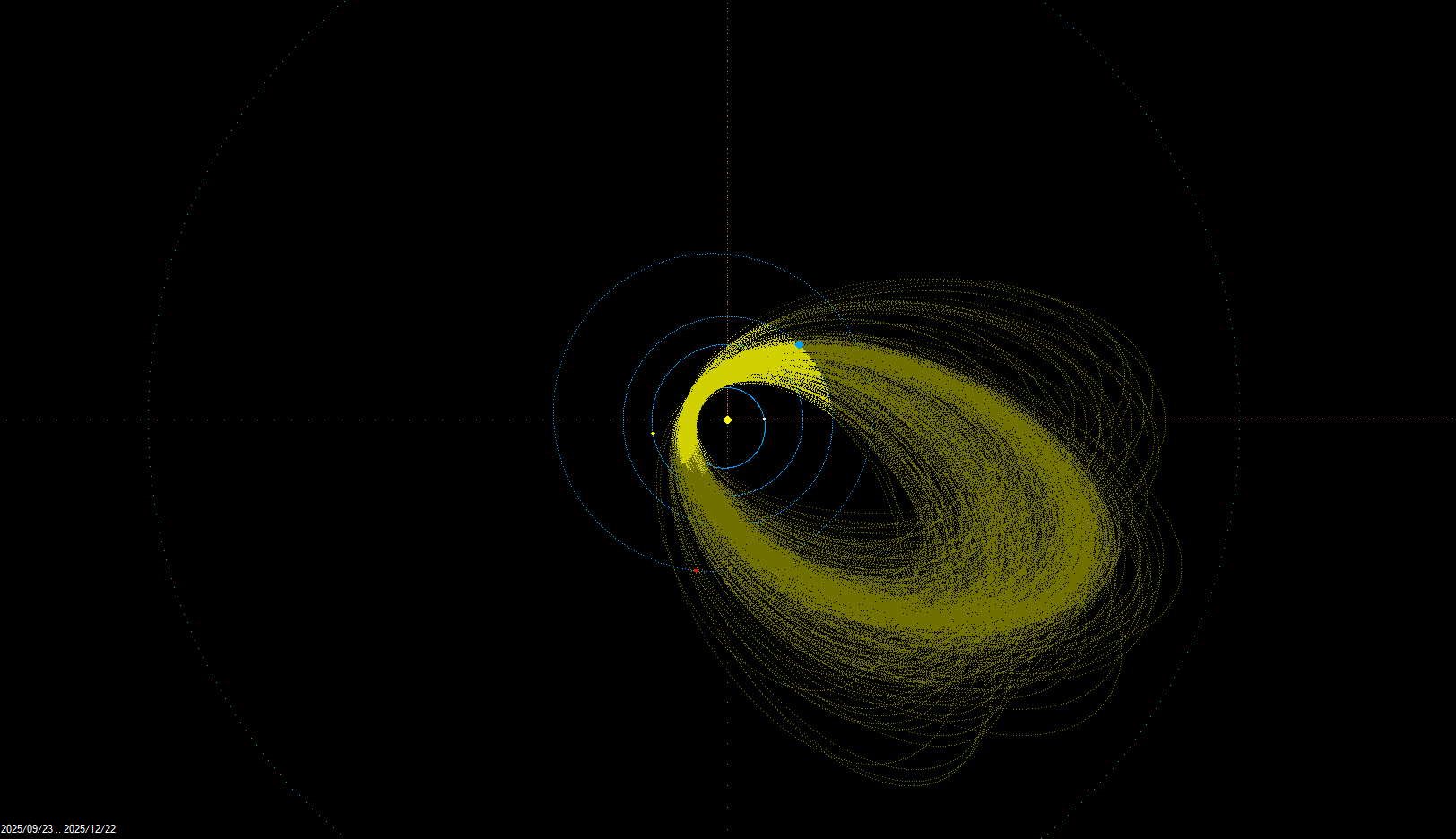
Fig. 16: Heliocentric orbits of Southern Taurid (0002 STA; 689 orbits) shower meteors. Author: Jakub Koukal
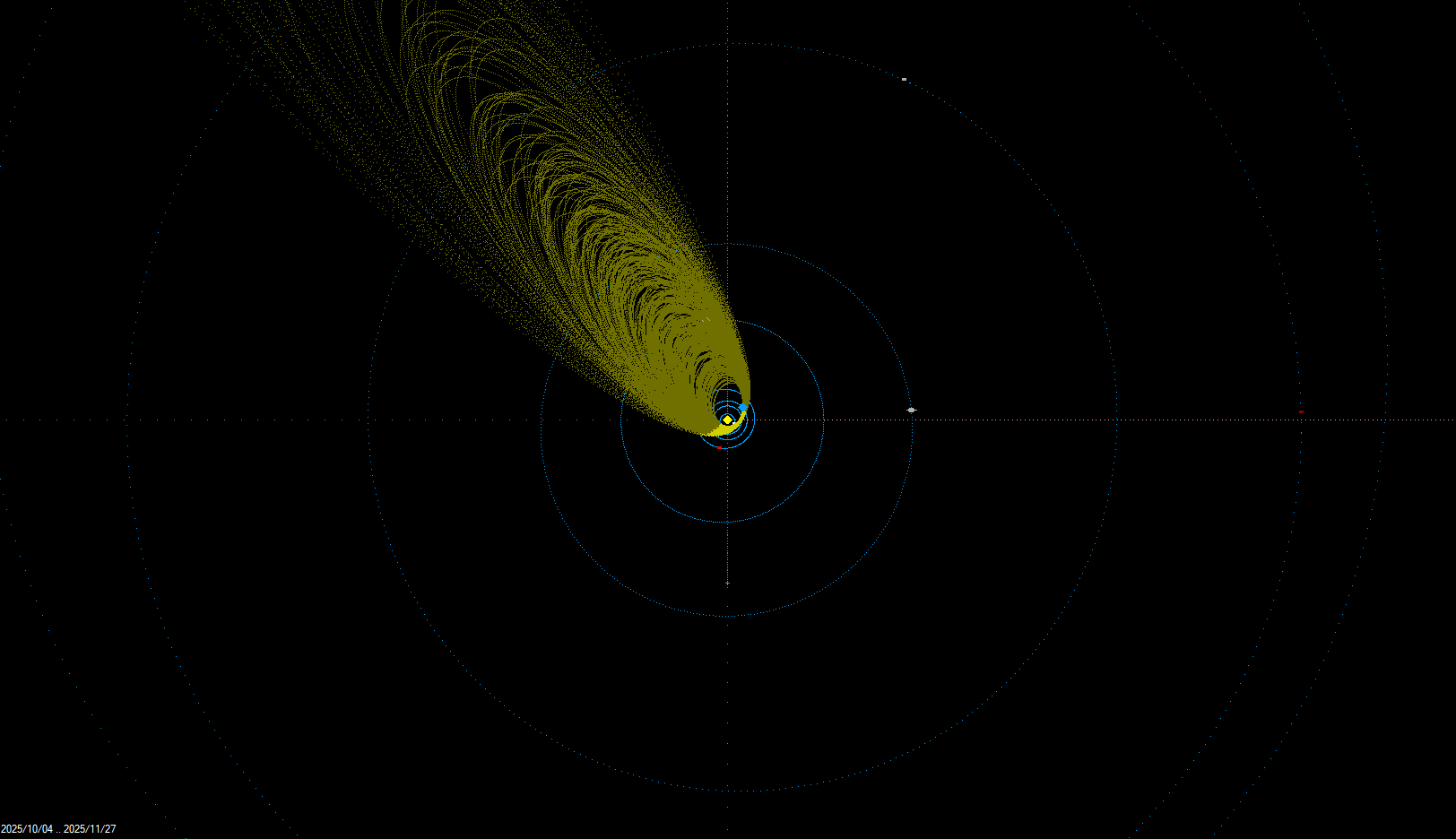
Fig. 17: Heliocentric orbits of Orionid (0008 ORI; 574 orbits) shower meteors. Author: Jakub Koukal
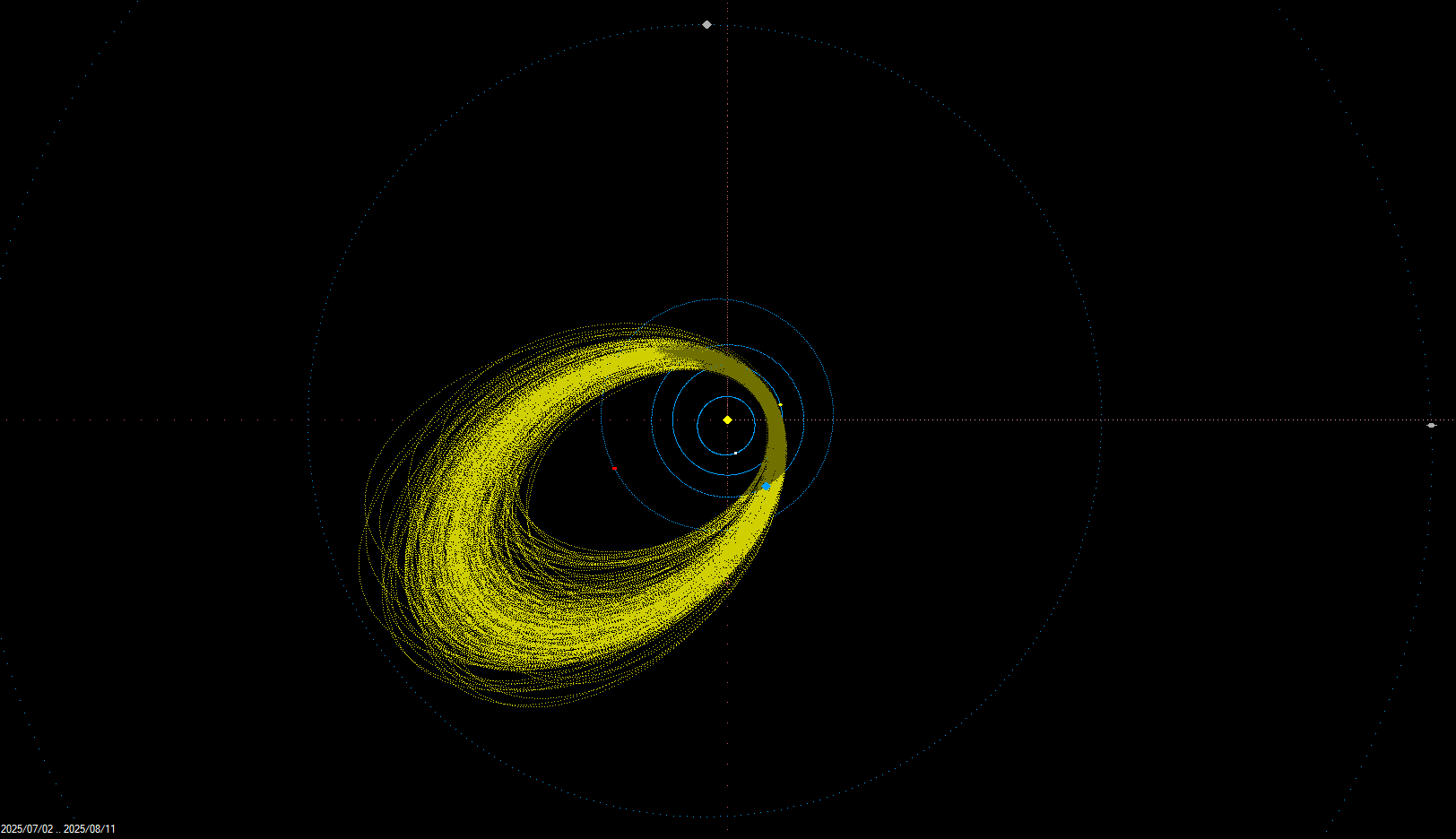
Fig. 18: Heliocentric orbits of alpha Capricornid (0001 CAP; 364 orbits) shower meteors. Author: Jakub Koukal
EDMOND Database
EDMOND ( European viDeo MeteOr Network Database ) is a meteor orbit database that aggregates video data from meteor observations originating from 15 independent national networks and 2 supranational databases, which use different methods and systems for meteor detection and orbit computation. The latest version of the database, EDMOND v6.01, was released in April 2025 and is the sixth version of the database, containing continuous video meteor data from 2000 to 2024.
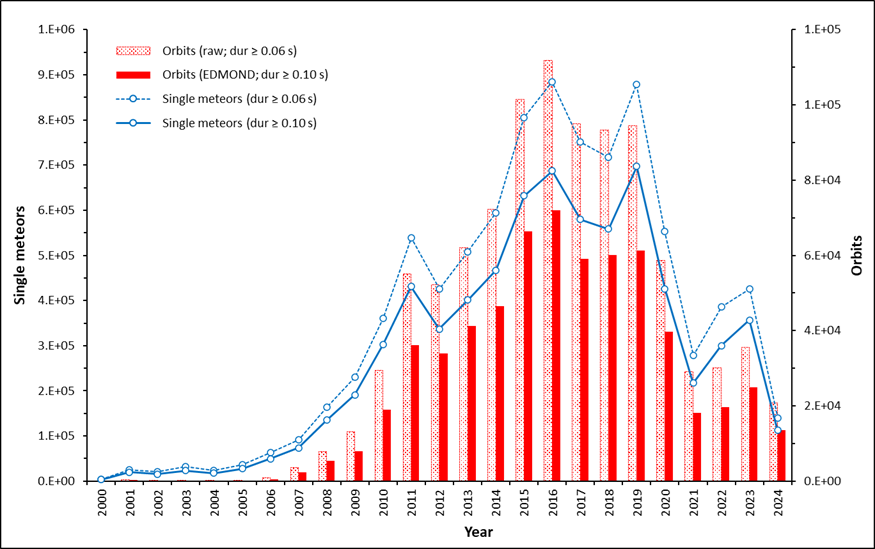
Chart 2: Comparison of single-station meteor counts and multi-station orbits in individual years in the EDMOND database from 2000 to 2024. Author: Jakub Koukal
The aim of the database is the continuous collection of video data and ensuring continuity with respect to incoming new video meteor recording systems. Currently, the database contains 8,938,668 single-station meteors, from which 967,702 orbits have been computed. After reduction using the applied criteria, the database contains a total of 628,271 multi-station meteor orbits. The release of the new version of the database, EDMOND v6.02, is planned for March 2026. The new database should already include observations from the IMO VMN ( International Meteor Observation Video Meteor Network ) from 2020 onwards, which were missing from the previous version due to processing delays. The new version will also be updated to the latest published meteor shower list of the IAU MDC ( International Astronomical Union Meteor Data Center ), and some criteria have been reassessed due to the inhomogeneous nature of the database as a whole.
Meteor Spectroscopy
Spectrographs are located exclusively at the Valašské Meziříčí Observatory and at the La Silla observatory in Chile. At the Valašské Meziříčí Observatory , they are oriented in the SE, SW, NE (PointGrey), NW (QHYIII-178), and NE (BlackFly) directions. At the La Silla observatory, they are oriented in the SE, SW, NE and NW (QHYIII-678), NW (QHYIII) directions.
Meteor spectra are currently recorded at the Valašské Meziříčí Observatory using 3 PointGrey GS3-U3-32S4M-C cameras (SE, SW, NE orientation) with a resolution of 2,048 × 1,536 px (3.1 MPx). The sensor size is 1/1.8", with a quantum efficiency of 64%, and the frame rate is set to 12 fps at full resolution with 16-bit output (AD sample depth 12 bits). The optical system includes a Tamron M118VG413IR varifocal lens (f/1.5) with a variable focal length of 4–13 mm or a VS tech VS-0618H1 lens (f/1.4) with a fixed focal length of 6 mm. In the current configuration, the field of view (FOV) is 60 (±1) × 45° and a diffraction grating with a density of 1,000 lines/mm is used.
Additionally, a QHY-III 178M camera (NW orientation) with a resolution of 3,072 × 2,048 px (6.3 MPx) is used. The sensor size is 1/1.8", with a quantum efficiency of 77%, and the frame rate is set to 12 fps at full resolution with 16-bit output (AD sampling depth 12 bits). The optical system includes a Tamron M118VG413IR varifocal lens (f/1.5) with a variable focal length of 4–13 mm. In the current configuration, the field of view (FOV) is 70 × 47° and a diffraction grating with a density of 1,000 lines/mm is used.
Another installed system is the experimental Flir BlackFly BFS-U3-200S6M-C camera with very high resolution of 5,472 × 3,648 px (NE orientation, 20 MPx). The sensor size is 1", with a quantum efficiency of 84%, and the frame rate is set to 10 fps at full resolution with 16-bit output (AD sampling depth 12 bits). The optical system includes a FOCtek C-M12-1F14 lens (f/1.4) with a fixed focal length of 12 mm. In the current configuration, the field of view (FOV) is 60 × 40° and a diffraction grating with a density of 1,000 lines/mm is used.
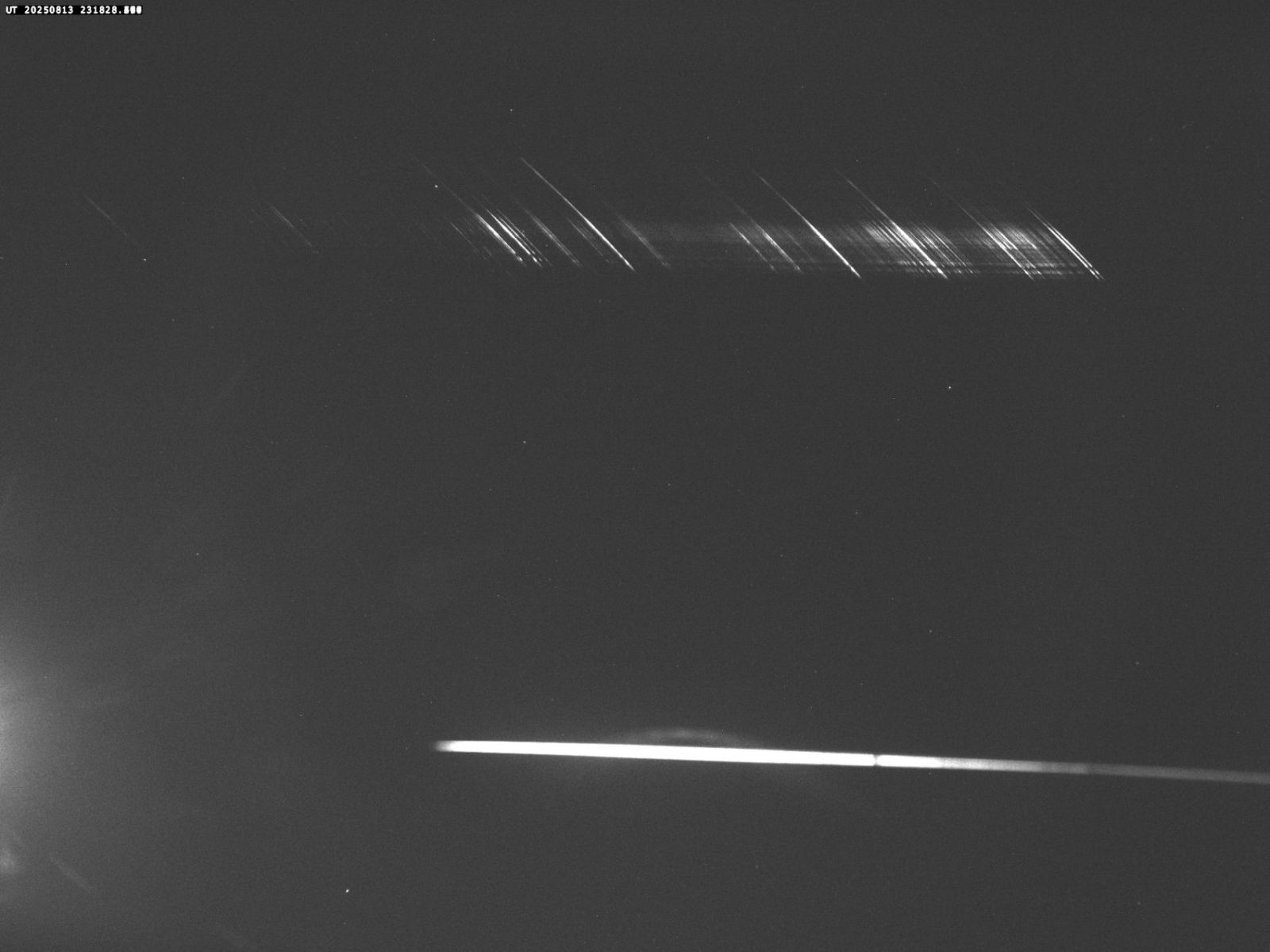
Fig. 19: Composite image of the spectrum of a meteor belonging to the Perseid (PER) meteor shower, recorded on 13 August 2025 (23:18:27 UT) by the VM SPSE spectrograph (PointGrey Grasshopper3 GS3-U3-32S4M-C) at the Valašské Meziříčí Observatory. Author: Valašské Meziříčí Observatory
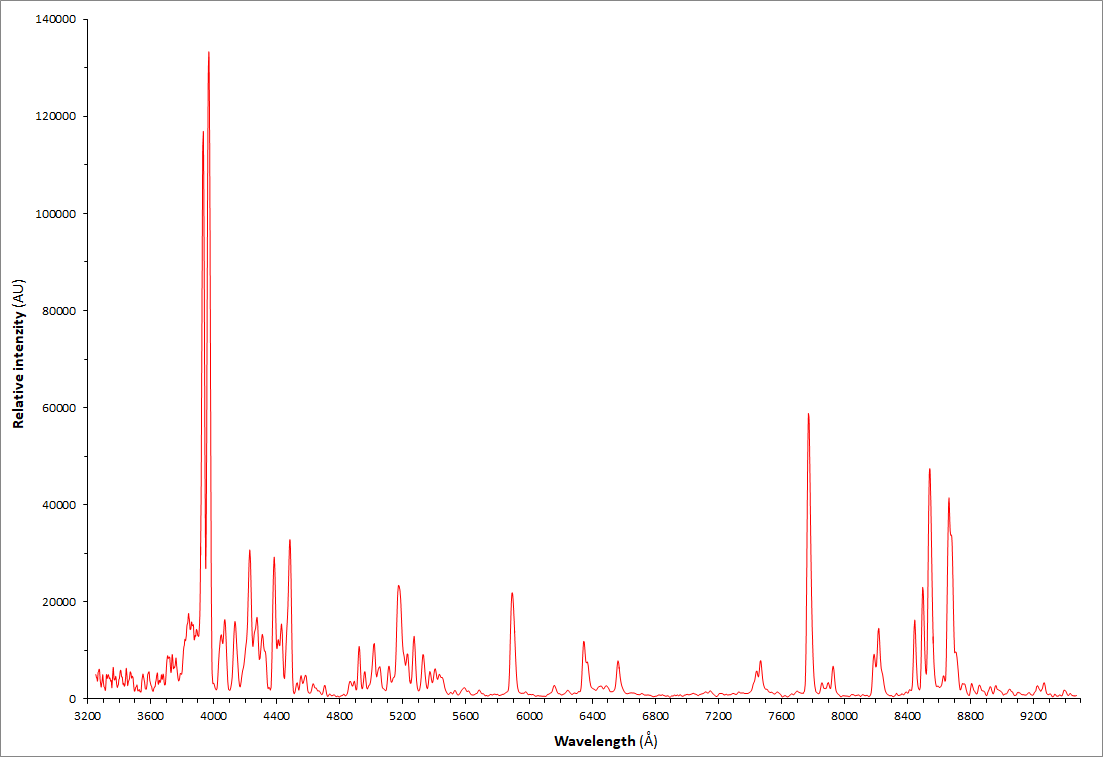
Fig. 20: Composite calibrated spectrum of a meteor belonging to the Perseid (PER) meteor shower, recorded on 13 August 2025 (23:18:27 UT) by the VM SPSE spectrograph (PointGrey Grasshopper3 GS3-U3-32S4M-C). Author: Jakub Koukal
For meteor spectroscopy at the La Silla observatory, QHY5III 678M cameras with a resolution of 3,856 × 2,180 px (8.4 MPx) were selected. The sensor size is 1/1.8", quantum efficiency is 83%, and the frame rate is set to 10 fps at full resolution with 16-bit output (AD sample depth 12 bits). The optical system includes a Tamron M118VG413IR varifocal lens (f/1.5) with a variable focal length of 4–13 mm. In the current configuration, the field of view (FOV) is 80 (±1) × 45° and a diffraction grating with a density of 1,000 lines/mm is used.
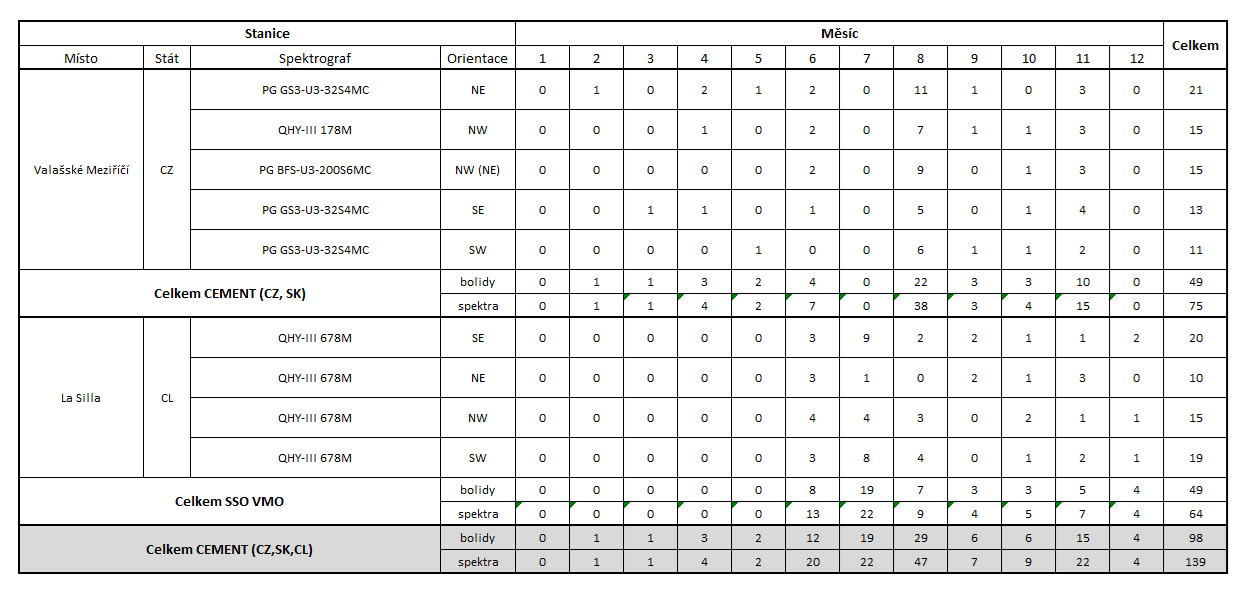
Tab. 2: Overview of recorded spectra in 2025, broken down by individual spectrographs and calendar months for the Valašské Meziříčí Observatory and the La Silla observatory. Author: Jakub Koukal
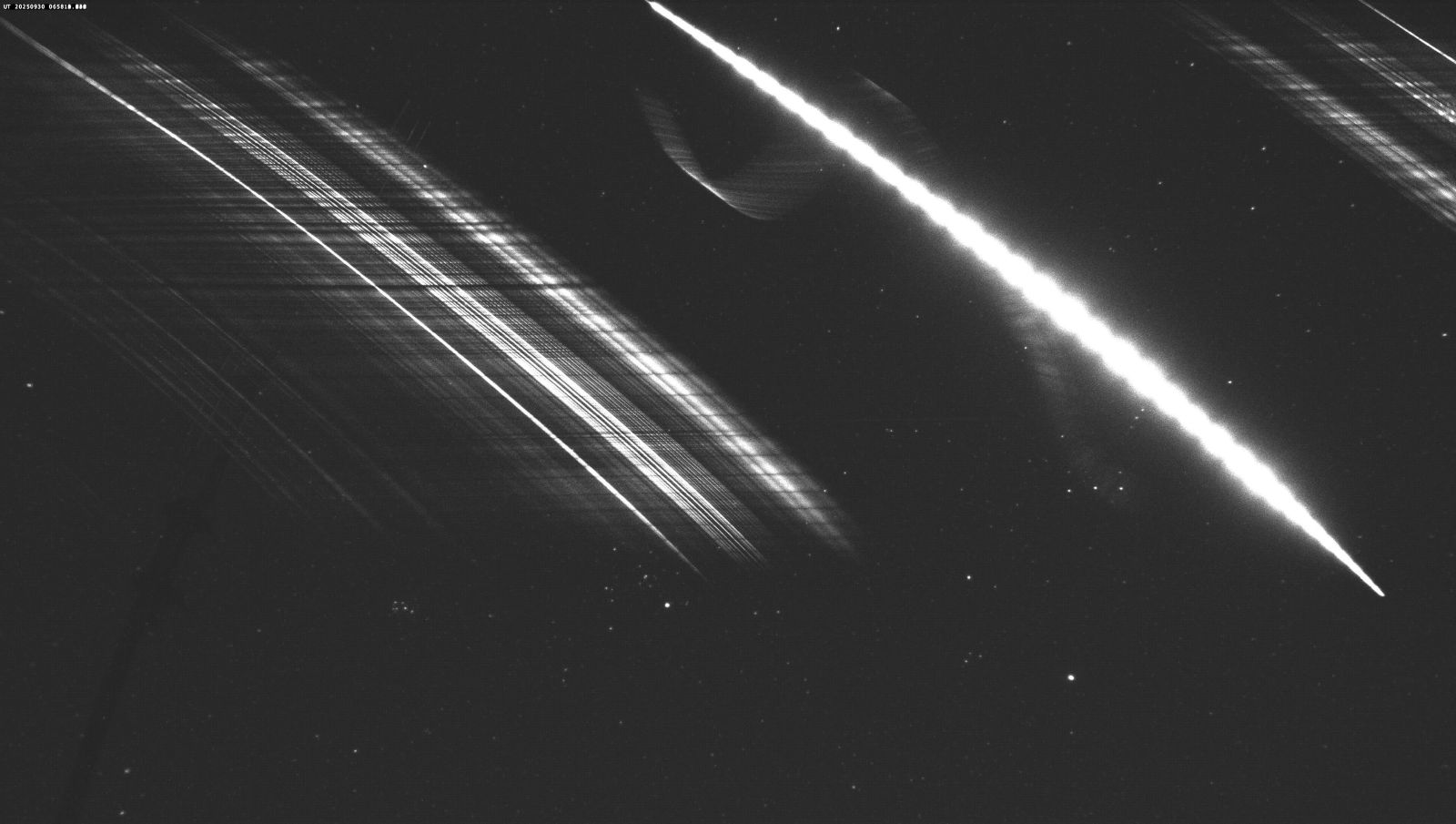
Fig. 21: Composite image of the spectrum of a sporadic meteor, recorded on 30 September 2025 (06:58:08 UT) by the LS SPNE spectrograph (QHYII 678M) at the La Silla observatory. Author: Valašské Meziříčí Observatory
Meteor spectra are recorded using FireCapture software in sequences of one or three minutes. The resulting video sequence is divided into individual frames, each of which is corrected for dark frames and optical field non-uniformity (flat field). For dark frame correction, reference frames taken immediately before the actual spectrum are used. Wavelength calibration on the x-axis is performed using a fourth-order polynomial based on known emission lines commonly found in meteor spectra, taking into account the specific properties of each recorded spectrum, such as the intensity profile along the meteor trail, meteor velocity, relative brightness, etc. Sensitivity calibration of the entire spectrographic system (y-axis) across the full observed wavelength range is performed using a combination of line and continuous emission sources (e.g., Ne or Hg calibration lamps). In 2025, the spectrographs at the Valašské Meziříčí Observatory and at the La Silla observatory recorded a total of 139 spectra (from 98 individual fireballs), the vast majority of which were spectra of cometary bodies, while spectra of bodies of asteroidal origin were in a distinct minority.
Acknowledgements
We would like to thank the companies DEZA , a. s. and CS CABOT , spol. s r. o., which contributed to the acquisition of equipment for the FHD stations located at the Valašské Meziříčí Observatory and also within the CEMeNt network. We thank all partner observatories (Ždánice, Vsetín, Rokycany, Plzeň, Karlovy Vary, Partizánske, Kysucké Nové Mesto, UMa Observatory) and also private station owners (Milan Čermák, Richard Kačerek, Jakub Kapuš, Tibor Csorgei, Vladimír Bahýl, Ivo Míček) for their support of the network's activities and growth. We further thank all involved institutions for their support of the network's activities and growth. The RPOS project (Development of Cross-Border Observation Network) was co-financed from the Small Project Fund of the Interreg V-A Slovak Republic – Czech Republic 2014–2020 programme, call code 5/FMP/11b, reg. no. CZ/FMP/11b/05/058. The KOSOAP (Cooperating Network in the Field of Astronomical Professional Observation Programmes) and RPKS (Development of Cross-Border Cooperating Network for Professional Work and Education) projects were implemented by the Valašské Meziříčí (CZ) and Kysucké Nové Mesto (SK) observatories in cooperation with SMPH (Society for Interplanetary Matter). The projects were co-financed from the Micro-Project Fund of the Cross-Border Cooperation Operational Programme Slovak Republic – Czech Republic 2007–2013. The project for the purchase and operation of high-resolution spectroscopic cameras is partially funded by the Programme for Regional Cooperation of the Czech Academy of Sciences, reg. no. R200402101. The installation of the Southern Spectroscopic Observatory of the Valašské Meziříčí Observatory in Chile is part of the KKC (Cultural and Creative Centre) project, co-financed by the European Union and the National Recovery Plan, within call no. 0231/2022 – Development of Regional Cultural and Creative Centres (project reg. no. 0231000014), administered by the Ministry of Culture of the Czech Republic. Installation costs were covered by co-financing provided by the Zlín Region. We thank the PLATOSpec consortium, which provided the opportunity to install spectral cameras and cooperation during installation and operation. The PLATOSpec project was built and is operated by a consortium composed of the Astronomical Institute of the Czech Academy of Sciences in Ondřejov, Czech Republic (ASU), the Thuringian State Observatory (Thüringer Landessternwarte – Germany), the Pontificia Universidad Católica de Chile (PUC – Chile), with minor partners including Masaryk University (Czech Republic), Universidad Adolfo Ibáñez (Chile), and the Institute of Plasma Physics of the Czech Academy of Sciences (Czech Republic). Funding for the modernisation of the 1.52 m telescope was provided by ASU and personnel costs were partially covered by grant LTT-20015. Funding for the construction of PLATOSpec was provided by the Free State of Thuringia, represented by the "Thuringian Ministry of Education, Science and Culture" under the "Research Support Directive" and the German Aerospace Center (DLR). Financial support for observations is provided within the institutional support for the development of the research organisation of Masaryk University. The use of the 1.52 m telescope was made possible through an agreement between ESO and the PLATOSpec consortium. The installation of the El Sauce station was made possible at the private El Sauce observatory in cooperation with OBSTECH SpA .
author: Jakub Koukal, Alexandra Mikušková