Installation of the camera system: Meteor research connecting Central Europe and the southern sky in Chile
When the months of planning and testing of all camera network components ended, as described in the previous article expanding the camera network, the moment came when theory turned into reality. In May 2025, the complete equipment for two observing stations arrived at the Chilean observatories La Silla and El Sauce, and the Czech team faced the task they had long been preparing for. How did the assembly itself go in the demanding conditions of the Atacama Desert, what challenges did our staff encounter, what did it take to get the cameras and spectrographs fully running, and how do they cook at La Silla? Take a look with us behind the scenes of a scientific mission that aims for the stars - literally.
A four-member team set off for distant Chile: Libor Lenža, director of the Valašské Meziříčí Observatory; Jakub Koukal, designer of the observing system's technical solution and a specialist at the Valašské Meziříčí Observatory; Jan Zítka, the observatory's electrical technician; and Jiří Srba, an external collaborator of our observatory and staff member of the Astronomical Institute of the Czech Academy of Sciences. The four men left on 29 May 2025 at 6 a.m. for Prague airport, flew to Paris, from Paris to Santiago de Chile, and on to La Serena. A total of a three-hour drive followed to the final stop, the nest of world astronomy, the La Silla Observatory. The whole journey took a frightening 36 hours, and included both good things - the professional approach of Chilean airport staff - and worse ones: the space between the seats was truly not designed for a comfortable 14-hour flight for an average Central European.
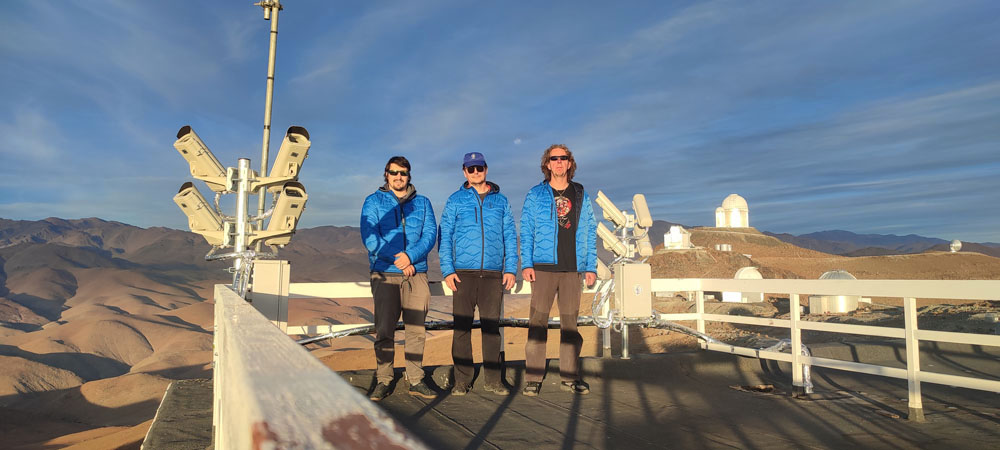
Fig. 1: The observatory team. From left to right: Jan Zítka, Libor Lenža, Jakub Koukal. Author: Valašské Meziříčí Observatory, p. o.
The beautiful Andes welcomed them at the observatory. But the observatory's high altitude (2,400 m) also brought acclimatisation problems. " After arriving at the observatory, nothing suggested we would have any problem. We were cured of this by the first 'climb' to the control room of the E152 telescope, which is on the third floor. The telescope, on whose building we installed our equipment, is located in the highest building in the complex, and since all the equipment was stacked on the ground floor of the building, we climbed the stairs dozens of times. The elevation gain between the dining hall (and accommodation) and the telescope is also not negligible (about 50 m), so it was not uncommon for us to have to set up an altitude camp on some floor and stabilise our heart and breathing rate during the 'climb' to the E152 telescope. It was not uncommon for one of us to burst into the control room like after a marathon and collapse into an armchair, still catching our breath for several dozen seconds after this 'athletic' performance, " explains Jakub Koukal.
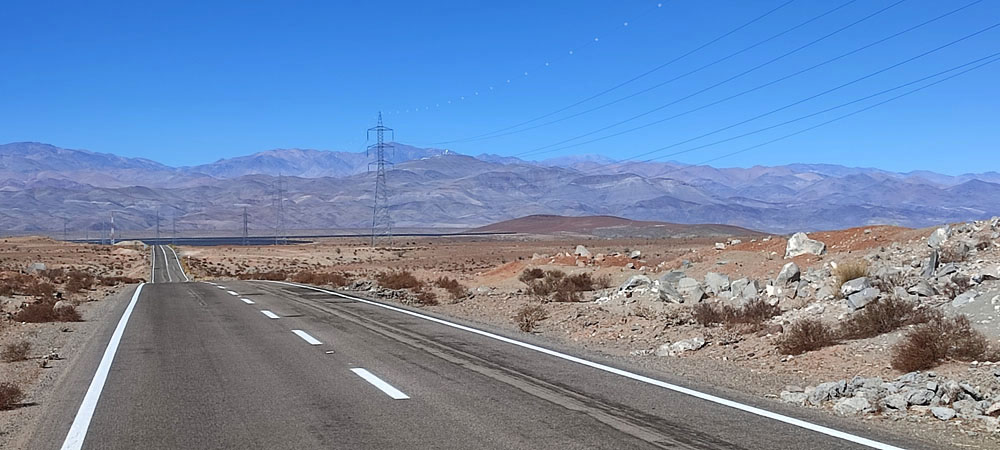
Fig. 2: The road into the Andes, straight to the observatory. Author: Valašské Meziříčí Observatory, p. o.
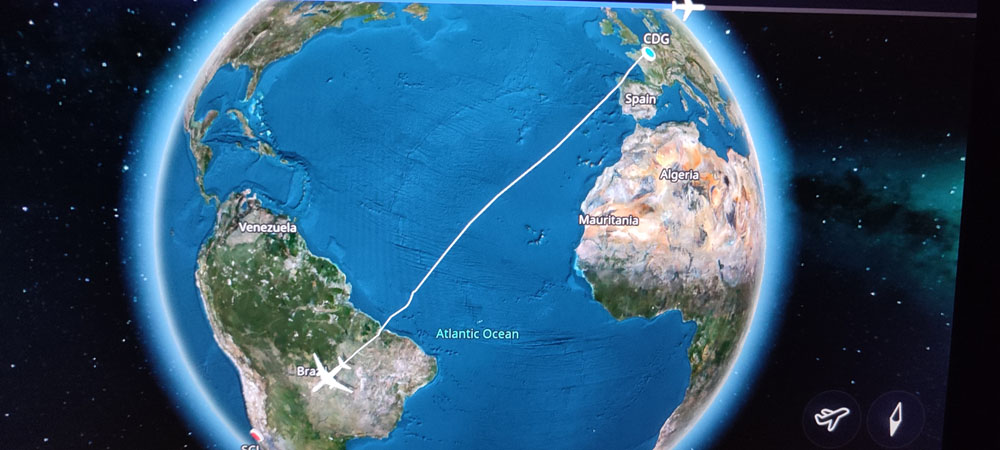
Fig. 3: Flight to the Southern Hemisphere. Author: Valašské Meziříčí Observatory, p. o.
After inspecting the installation site, unpacking tools, and preparation, the difficult task of assembling and commissioning the whole system began on 31 May 2025. " After minor construction modifications, we began installing the load-bearing mechanical parts, then the cameras themselves, the computers in the control room, power supply, internet connection, signal cables, etc. " said team member Libor Lenža about the installation progress. The assembly of the observing stations on the E152 telescope building, construction modifications, cable routing, calibration and alignment, setup, testing, checks, internet connection, and finally live tests took a total of five days at La Silla.
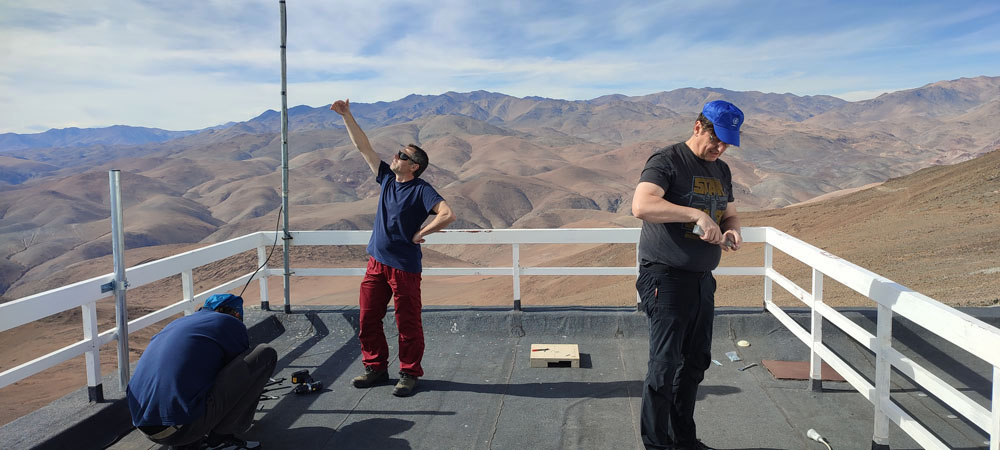
Fig. 4: Rooftop installations. Author: Valašské Meziříčí Observatory, p. o.
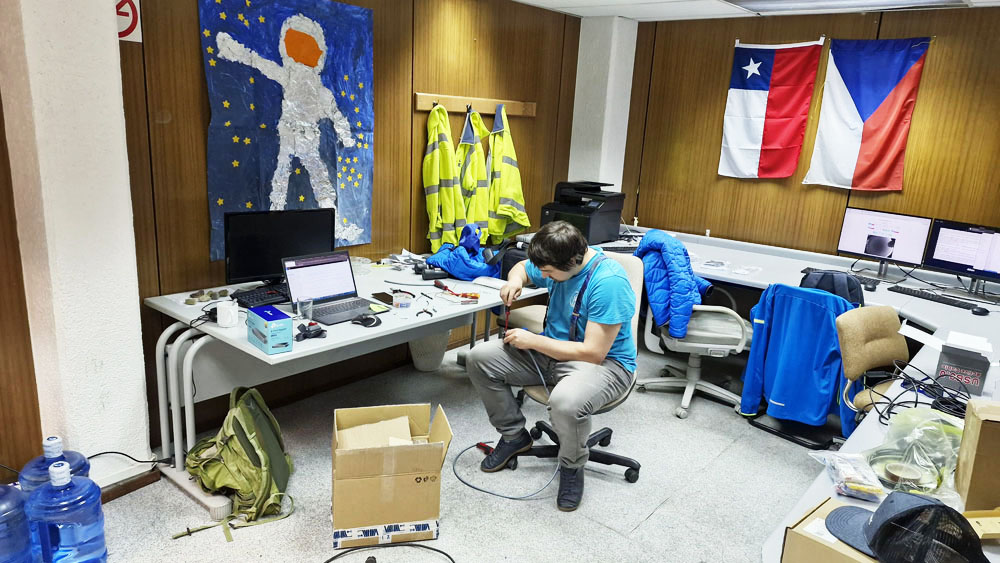
Fig. 5: Installations in the control room. Author: Valašské Meziříčí Observatory, p. o.
The ESO 1.52 m telescope, which provided shelter for the main part of our observing system, stands in the very centre of the La Silla Observatory. It is used by the group of Dr. Petr Kabáth from the Astronomical Institute of the Czech Academy of Sciences. " This telescope has been converted for a new spectroscopic instrument. It uses the PLATOSpec spectrograph, which has very high resolution and enables very precise radial-velocity measurements, especially for studying smaller extrasolar planets. The spectrograph has very good temperature stability, which allows long-term repeated measurements and thus the observation of planets on longer orbits, even comparable to Earth's orbit, " Jiří Srba told us about the telescope.
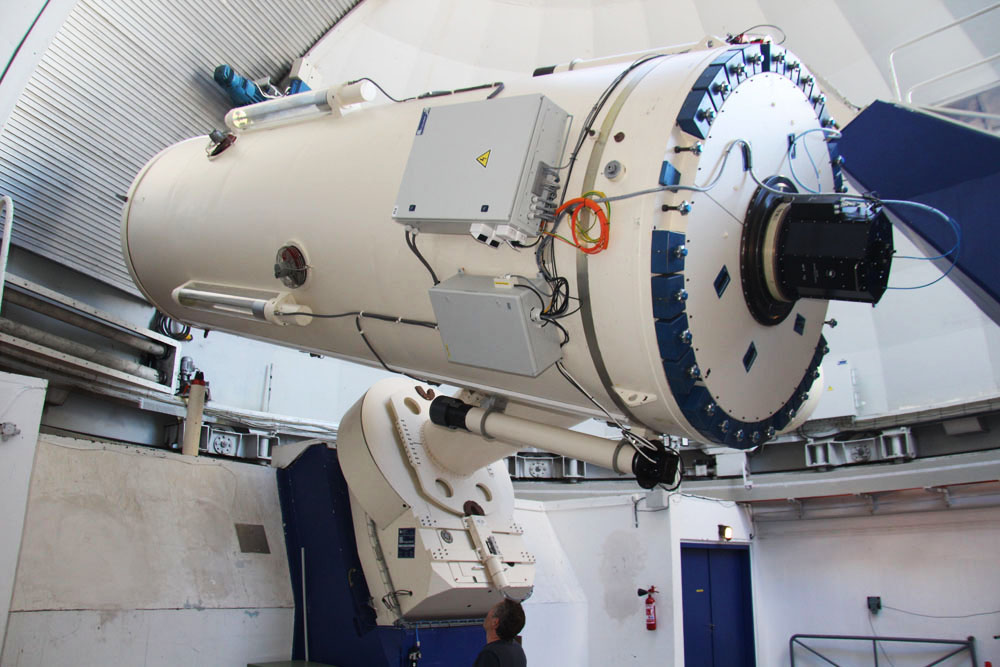
Fig. 6: The E152 telescope. Author: Valašské Meziříčí Observatory, p. o.
On 5 June, the team embarked on a demanding seven-hour journey through Chilean wilderness to the El Sauce ObsTech Observatory, where they installed another part of the system over two days. The trip there was somewhat more difficult: ...A chapter of its own is the I-595 state road, which we turned onto on the way to El Sauce after the village of El Puerto. This road without a paved surface, with lots of bends and unpleasant climbs and descents, tested both the crew's skills and the capabilities of our Subaru CrossTrek. And that included crossing paths with a truck or a herd of cows, " Jakub explained to us. But the very presence at Obstech was a pleasant change for the team compared to La Silla. " At La Silla, it is practically always windy, whereas the El Sauce Observatory, thanks to its location inside a mountain ridge, is usually very calm and throughout our stay the wind at night did not exceed 3 m/s. At La Silla, on the other hand, gusts over 15 m/s are common and the normal wind speed is between 5 and 10 m/s. "
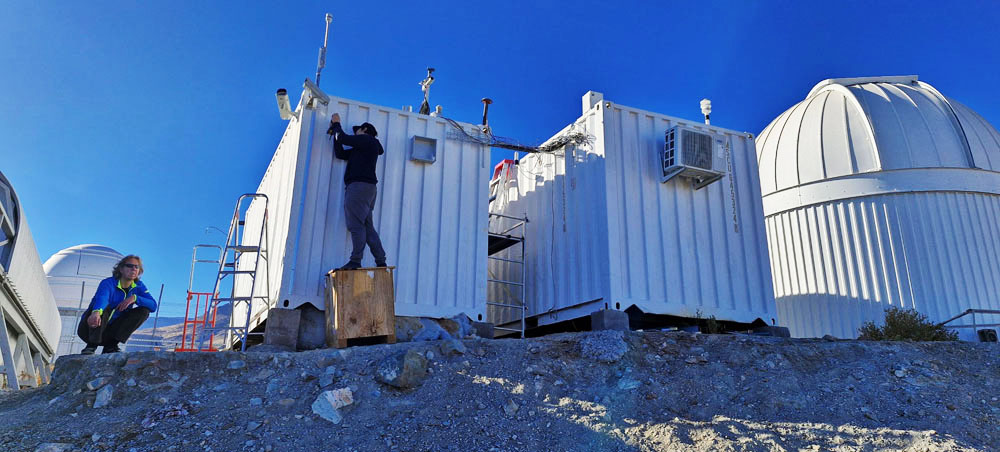
Fig. 9: Installations at El Sauce. Author: Valašské Meziříčí Observatory, p. o.
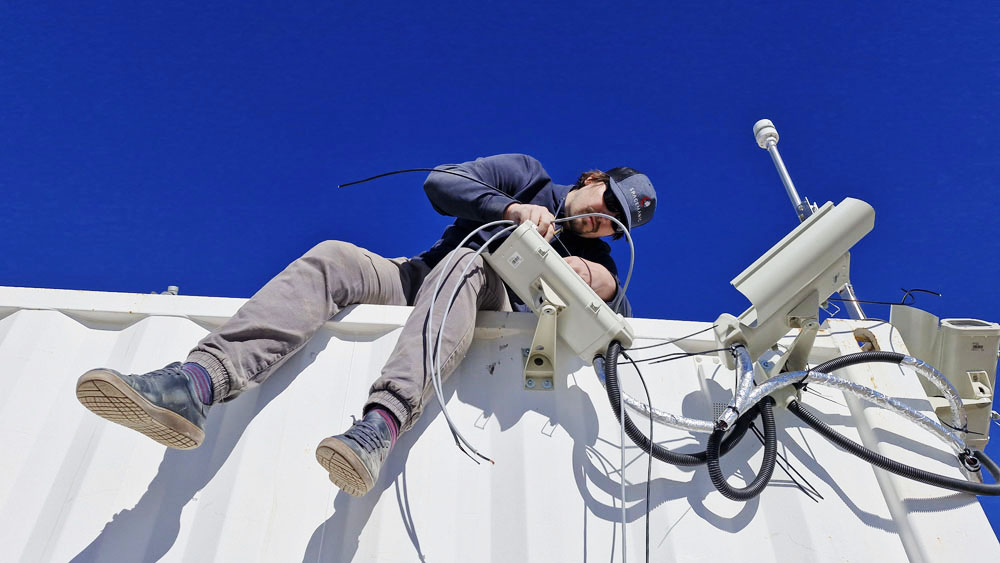
Fig. 10: Installations at El Sauce. Author: Valašské Meziříčí Observatory, p. o.
On the very first observing night, when our team successfully connected both stations, the system recorded many meteors, giving us clear proof that observations under the Chilean sky are worth it! The El Sauce Observatory of OBSTech was also associated with an unexpected problem and a subsequent trip, which Jakub described to us: " After successfully installing the camera system at the El Sauce Observatory, we found the very next night that two cameras had gone out of focus. Since we had no idea what could have caused the situation, we decided to make the journey to the observatory once again. This included beautiful scenery at the reservoir we passed, but also a dramatic 16 km along the unpaved I-595 state road. Jan Zítka volunteered and set off alone in the morning. In La Serena, it was also necessary to purchase a new 8 TB hard drive, which had stopped working the night before at La Silla. After arriving at the site and analysing the condition of both cameras, no mechanical damage was found, so he refocused them and headed back the next morning, including searching for a computer store in historic and overcrowded La Serena. Only later did we discover that the defocusing was caused by temperature changes combined with the cone-head screws used, which had to be replaced with flat-head screws. "
After this adventurous trip by one team member, everyone stayed at La Silla. Their stay there was made pleasant by excellent cuisine, which has the best reputation for a reason. It is known to be much better than the kitchen at the neighbouring Las Campanas Observatory. " Breakfast was served as a buffet. The kitchen prepared scrambled eggs (huevos revueltos) or fried eggs (huevo frito) to order, in the desired quantity. Interestingly, most of the pastries were sweet, except for toast bread. For lunch, there was usually a choice of 5 to 6 dishes, including vegetarian options. Fresh fish (e.g. salmon) was a matter of course. The kitchen was adapted enough for Europeans, so we experienced a classic South American steak only twice. Dinner offered a similar menu, with fewer dishes (usually 2-3). Dinner remained available for night observers, so it was possible to stop for a second dinner even around midnight. A bonus for lunches and dinners was a wide selection of desserts, mostly prepared on site, " Jakub describes.
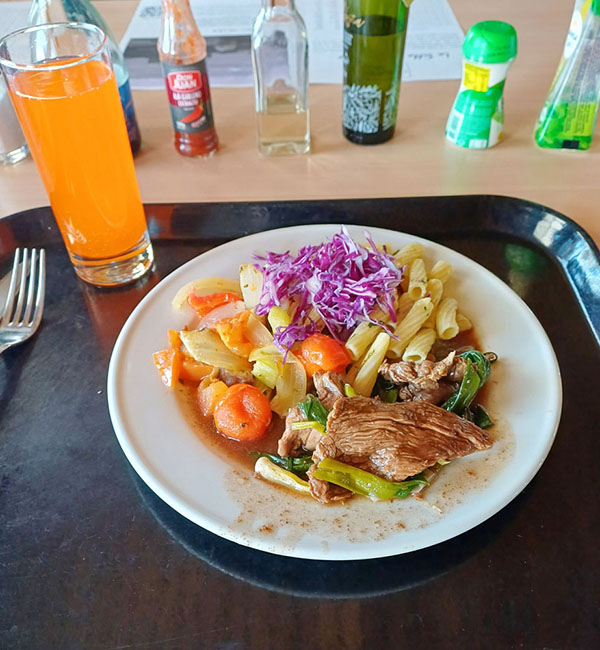
Fig. 11: The kitchen at La Silla. Author: Valašské Meziříčí Observatory, p. o.
Multiple teams operate at the observatory at the same time, but according to Jakub they did not have much contact, partly due to the different focus of the groups on day or night operations. In the dining hall, each group had its own table, and a few were occupied by OHB staff, the observatory's technical support, i.e. Chileans. " But we managed to attend the birthday celebration of the La Silla Observatory director (Dr. Ivo Saviane), which took place in the dining hall and included many online congratulations from people all over the world. " As for operations at La Silla, several observations reached us. To prevent light from entering observational equipment, night driving within the observatory is allowed only with parking lights and hazard flashers. In terms of light, La Silla is again worse off than El Sauce. Due to the absence of a barrier between 'civilisation' and the observatory, like the mountain range at El Sauce, La Silla is noticeably affected by light pollution from the La Serena - Coquimbo agglomeration and also from the city of Vallenar. The nearest villages and highway lighting do not help much either.
According to Jakub, noise is also handled: " Everyone present at the observatory is very considerate and respects the need of night observers for quiet sleep. For this purpose, there is a card that is placed in front of the accommodation door to inform the service that the observer does not want to be disturbed during their rest. It is true that we were at the La Silla Observatory during the winter period, when the presence of observers at individual telescopes is significantly lower than during the local summer. "
The nature here is also very interesting. Right at La Silla, because of the great dryness, it is quite monotonous; all vegetation has a very unhealthy grey colour, and the team's company throughout the stay consisted of condors and small herds of donkeys wandering the plains. They also encountered llamas directly at the observatory. El Sauce is better off again - thanks to lower altitude and the presence of small watercourses in valleys and ravines (so-called quebradas), there are many trees and shrubs, of course in connection with farms or homesteads of local residents. Cacti are also abundant here.
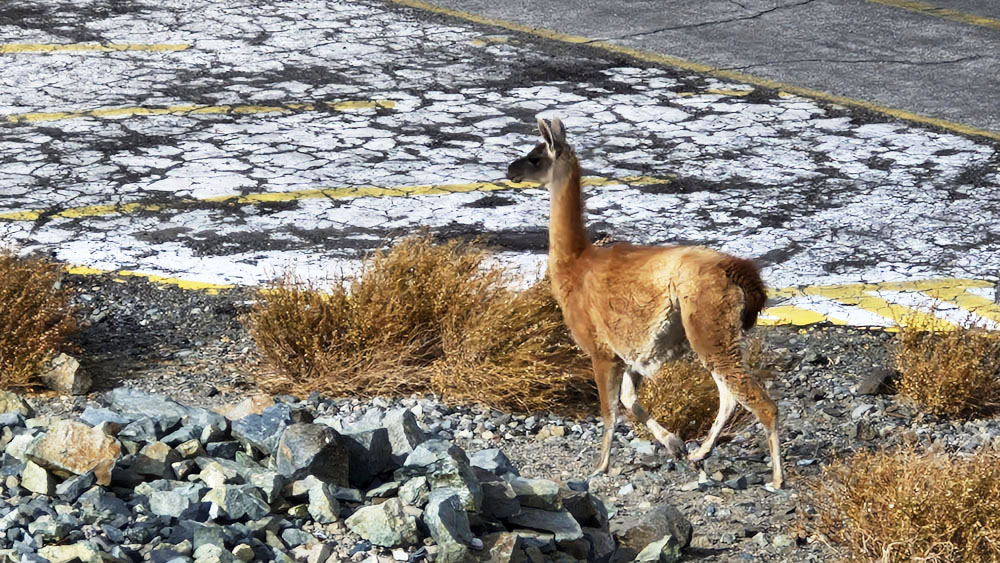
Fig. 14: A llama walking the streets of La Silla. Author: Valašské Meziříčí Observatory, p. o.
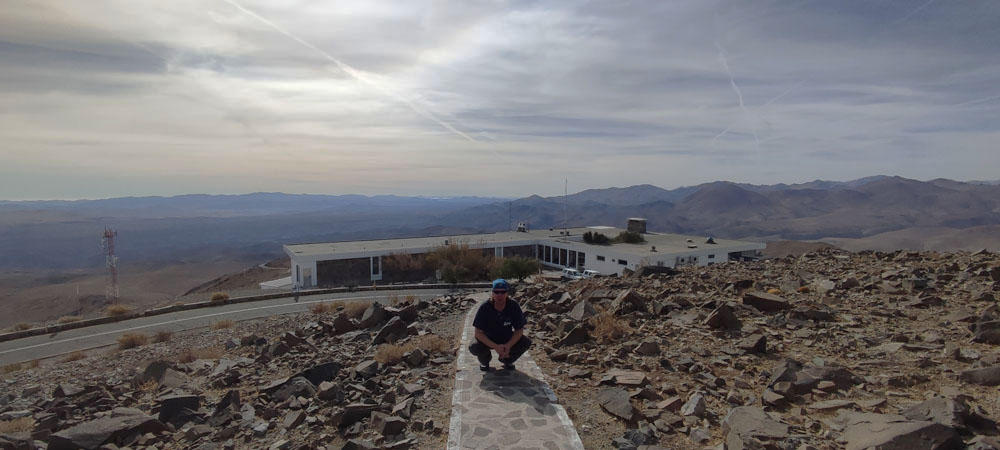
Fig. 15: Jakub Koukal in front of the La Silla building on the way to the E152 telescope. Accommodation building in the background. Author: Valašské Meziříčí Observatory, p. o.
In this astronomically picturesque setting at La Silla, the team was responsible for finishing work, various adjustments, setup, and further testing. Twelve days after arrival, on 10 June, the observatory team thoroughly cleaned the control room, stored spare parts and equipment, and moved the transport crates to the storage area. All that remained was the final check of the system, which runs on a total of four computers. How our systems performed, their technical details, and their results can be found in this article . After saying goodbye, the team flew back to Santiago, where they spent the night at the ESO Guesthouse. From the airport they were driven in a prepared vehicle through the night-time Santiago, but they fully enjoyed it only in the last few kilometres, which led instead of highways through older residential neighbourhoods where older architecture mixed with new high-rise buildings. The ESO Guesthouse itself is located in a quiet area among other residential buildings and belongs to older development with a central atrium and an adjacent garden. Jakub described the experience as follows: " After arrival, we received a warm welcome and a hearty dinner. We met Jiří Srba there, who had flown to Santiago a day earlier. Under the weight of the past days' experiences and with the prospect of early rising, we all went to bed right after dinner so we could get up at 5 a.m. " And after waking up on 12 June 2025, the team had no choice but to wave goodbye to the dazzling sky and distinctive landscape, the lashing wind and llamas, and return back to the hills of Valašské Meziříčí.