
H-NGC6781 — Snowglobe Nebula
Planetary Nebula in Aquila
About
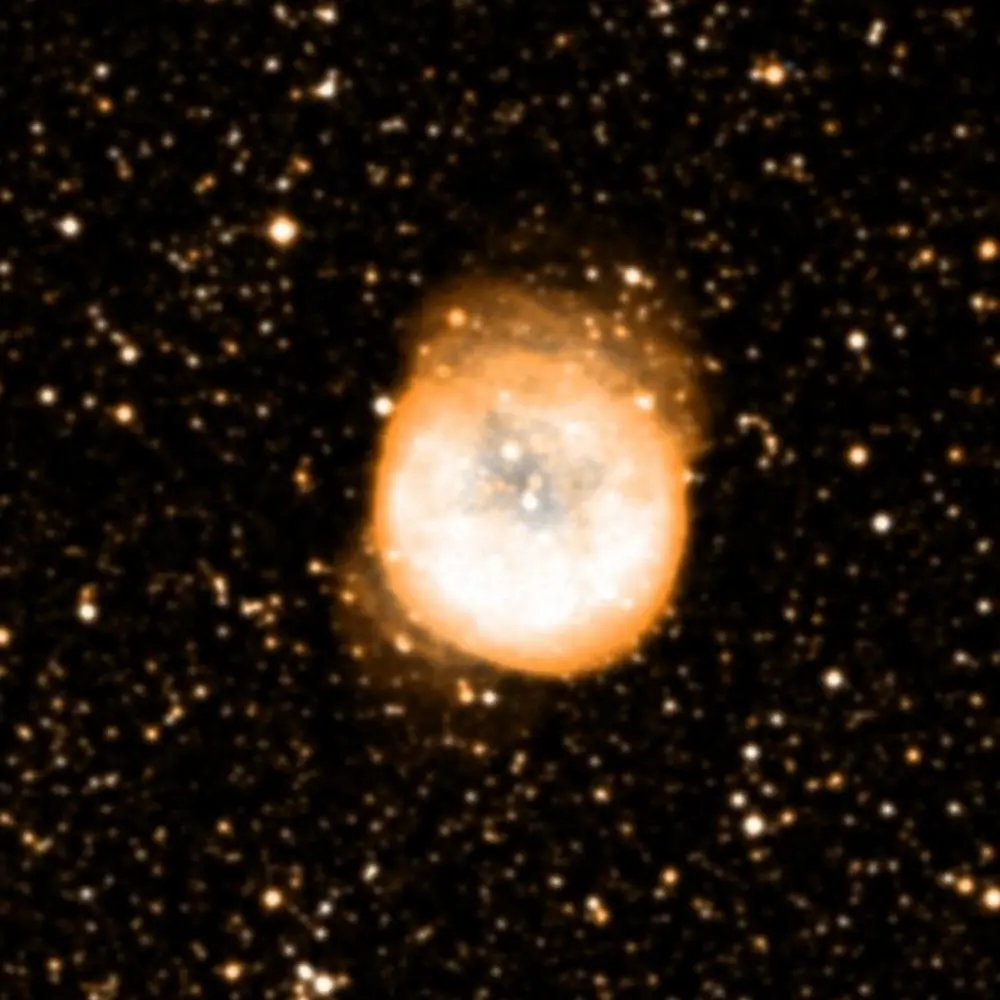
The Snowglobe Nebula is a shell of gas cast off by a dying Sun-like star in Aquila, roughly 1,500 light-years from us. It looks like a ring in photos, but astronomers think it is a barrel-shaped structure seen nearly end-on. It is in the Herschel 400.
Imaging tips
- Only about 2′ across, so it is too small to frame: use a long focal length and a fine pixel scale.
- At 21.9 mag/arcsec² it has low surface brightness for its size, and it is photographed less often than M57 or M27.
- Planetary nebulae glow in emission, so Hα and OIII filters suit it. A professional image of it combined B, V and R with Hα and OIII.
- One imager stacked 3,800 one-second exposures through an IR-block filter rather than long subs.
- Best in June and July; it peaks near 46° altitude from 50°N.
Facts
- Size
- 2′
- Magnitude
- 11.8
- Coordinates
- RA 19h 18.5m, Dec +6° 32′
- Framing, APS-C
- longer than 4000 mm
- Framing, full frame
- longer than 4000 mm
- Best months
- Jun, Jul
- Peak altitude
- 47° from 50°N, 62° from 35°N