
H-NGC6210 — Turtle Nebula
Planetary Nebula in Hercules
About
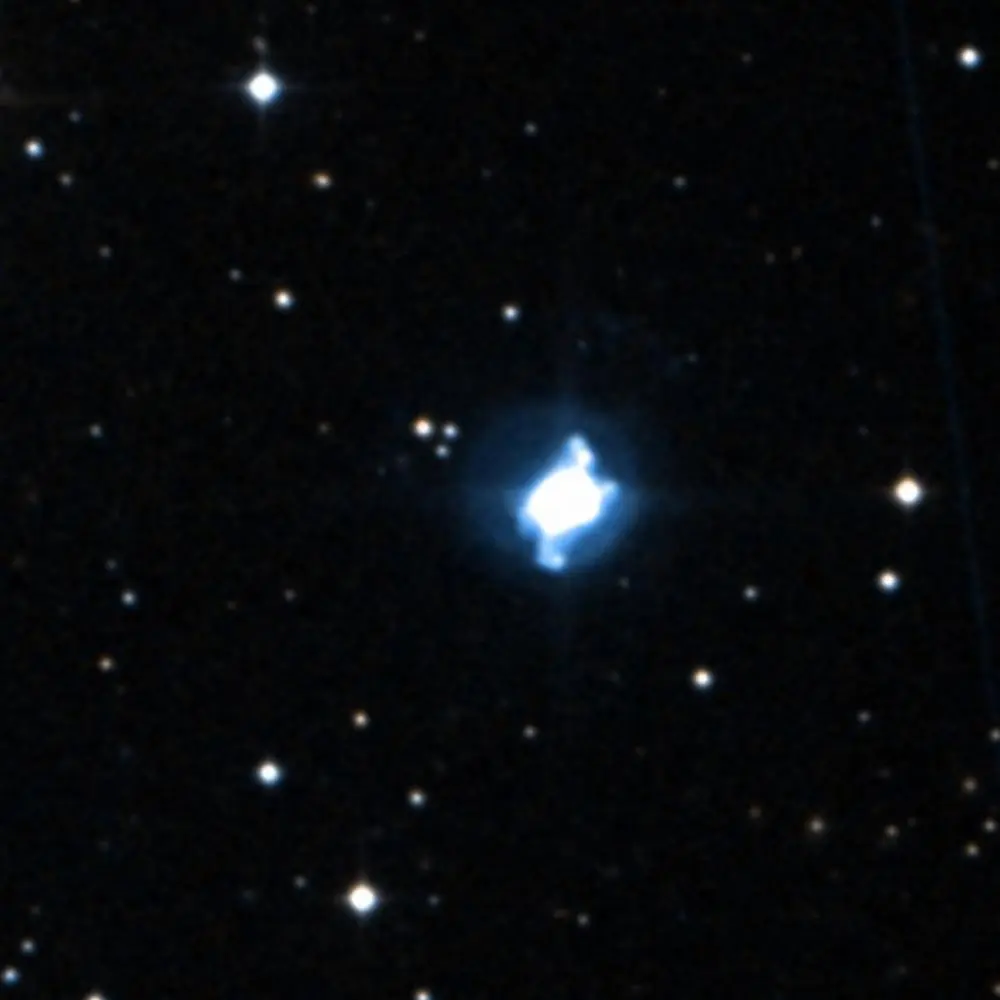
Hercules holds this planetary nebula, nicknamed the Turtle Nebula, roughly 6,000 light-years from us. A dying star lighter than the Sun shed its gas, and Hubble images reveal jets of material escaping through gaps in its inner layers. It lies some 38° out of the Milky Way's plane, so little dust dims it.
Imaging tips
- Only about 1′ across, so it is too small to frame: use a long focal length and a fine pixel scale.
- At 17.4 mag/arcsec² it is bright, so size and dynamic range make it hard rather than faintness. One imager called it a real challenge for exactly those two reasons.
- A BAA article notes that wide-field telescopes suit small planetaries poorly, and few images of this one reached the society's archive.
- One image in that article combined RGB (47 × 60 s), Hα (45 × 120 s) and 3 nm OIII (43 × 120 s), showing internal structure.
- Best around May and June; it peaks near 64° altitude from 50°N.
Facts
- Size
- 1′
- Magnitude
- 8.8
- Coordinates
- RA 16h 44.5m, Dec +23° 48′
- Framing, APS-C
- longer than 4000 mm
- Framing, full frame
- longer than 4000 mm
- Best months
- May, Jun
- Peak altitude
- 64° from 50°N, 79° from 35°N