
H-NGC2655
Galaxy in Camelopardalis
About
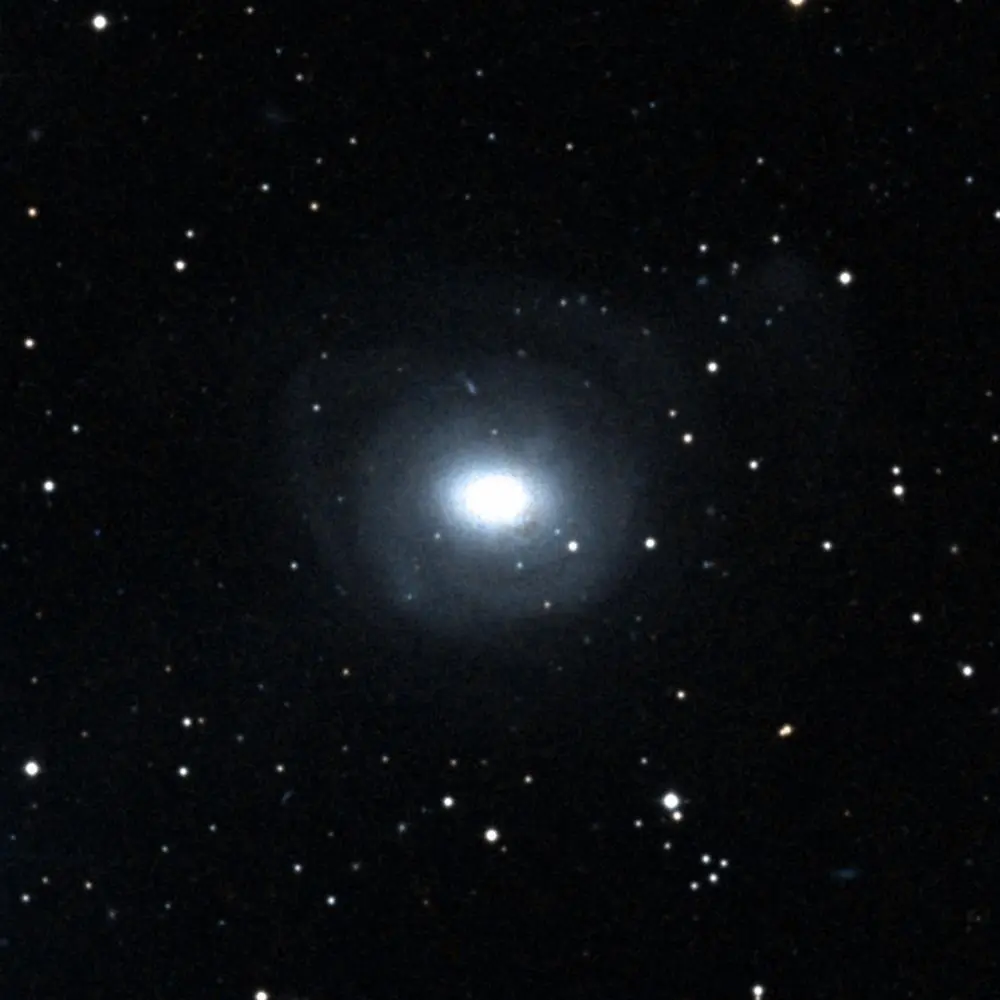
A lenticular galaxy in Camelopardalis with a Seyfert nucleus, the brightest member of a small group that includes NGC 2715, NGC 2591 and NGC 2748. Sources place it anywhere from 60 to 80 million light-years away. Asymmetric dust lanes cross its centre, and tidal arms point to a merger in its past. William Herschel found it in 1802; it is in the Herschel 400.
Imaging tips
- Sources give about 5′ across, which is too small to frame: use a long focal length and a fine pixel scale.
- Faint for its size at 22.4 mag/arcsec², so plan hours of broadband data.
- One imager shot 13 × 5-minute luminance frames (about an hour) at 1085 mm from a Bortle 9 site.
- Best around January and February; it peaks near 62° altitude from 50°N.
Facts
- Size
- 6′ × 5′
- Magnitude
- 10.1
- Coordinates
- RA 8h 55.6m, Dec +78° 13′
- Framing, APS-C
- longer than 4000 mm
- Framing, full frame
- longer than 4000 mm
- Best months
- Jan, Feb
- Peak altitude
- 62° from 50°N, 47° from 35°N