
H-NGC2440 — Insect Nebula
Planetary Nebula in Puppis
About
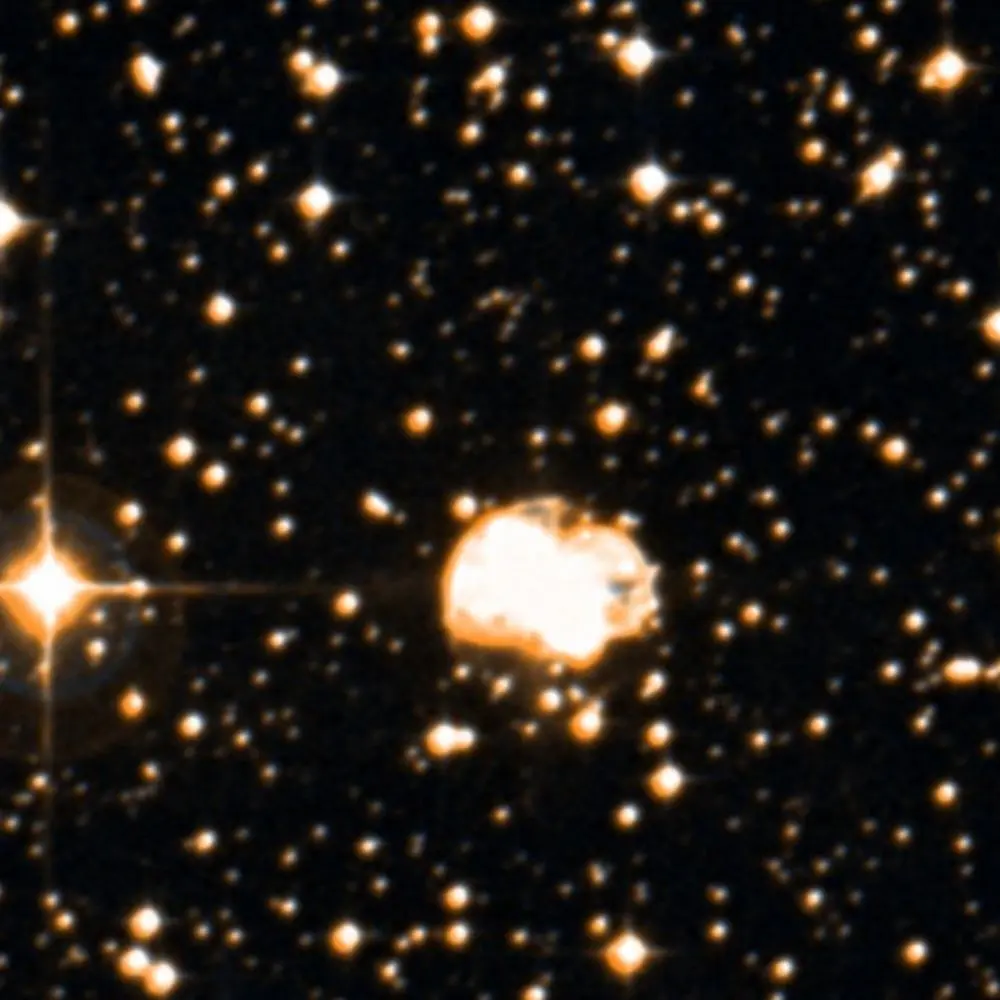
Puppis holds this planetary nebula, roughly 74″ × 42″ across and lying some 4,000 light-years off. Its central star, near 200,000 K, may be one of the hottest white dwarfs known. William Herschel found it in 1790.
Imaging tips
- Too small to frame: use a long focal length and a fine pixel scale.
- Planetary nebulae suit narrowband. One imager's 32-hour total from Spain included 200 five-minute and 33 two-minute OIII subs, plus 87 five-minute and 39 two-minute Hα subs.
- Another image from a Chilean 80 cm telescope shows bipolar shells with a complex inner structure, using 20-minute Hα, OIII and SII frames.
- Surface brightness is 18 mag/arcsec². Best in January, but it peaks near 22° from 50°N.
Facts
- Size
- 1′
- Magnitude
- 9.4
- Coordinates
- RA 7h 41.9m, Dec −18° 12′
- Framing, APS-C
- longer than 4000 mm
- Framing, full frame
- longer than 4000 mm
- Best months
- Jan
- Peak altitude
- 22° from 50°N, 37° from 35°N