
H-NGC1501
Planetary Nebula in Camelopardalis
About
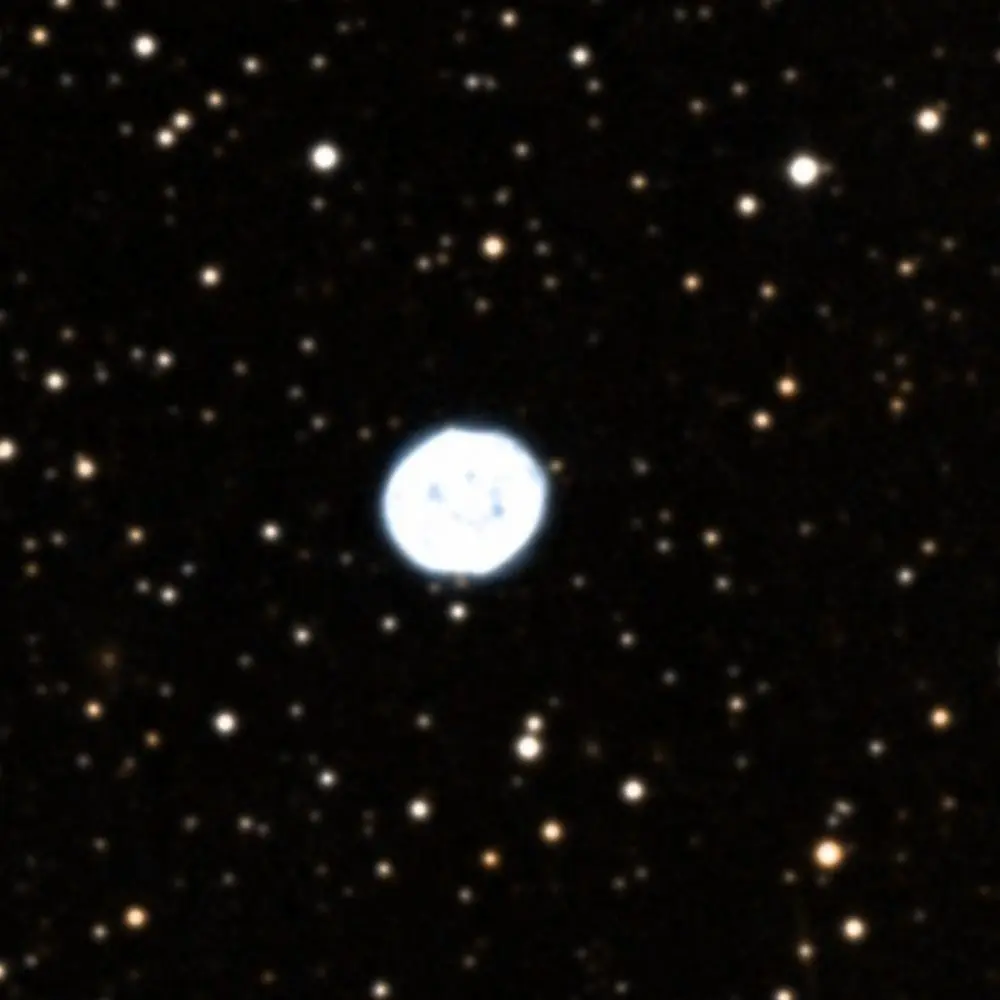
Camelopardalis holds NGC 1501, the Oyster or Camel's Eye Nebula, a planetary nebula some 3,800–4,200 light-years away whose shell spans a little under 1′. At its heart sits a pulsating star, and its output swings by a clear margin within roughly thirty minutes.
Imaging tips
- Under 1′ across, so it is too small to frame: use a long focal length and a fine pixel scale.
- One imager with twin 152 mm refractors worked at 0.265″ per pixel and gave OIII 52 × 300 s, plus 7–9 broadband subs of 300 s per channel, for 6.9 hours.
- Another imager used a Moon and skyglow filter on a DSLR at f=1600 mm: ten 6-minute exposures, auto-guided.
- At 20.1 mag/arcsec² the shell is fairly bright; OIII suits this emission nebula. Best in November and December, peaking near 79° from 50°N.
Facts
- Size
- 1′
- Magnitude
- 11.5
- Coordinates
- RA 4h 7.0m, Dec +60° 55′
- Framing, APS-C
- longer than 4000 mm
- Framing, full frame
- longer than 4000 mm
- Best months
- Nov, Dec
- Peak altitude
- 79° from 50°N, 64° from 35°N