
C90
Planetary Nebula in Carina
About
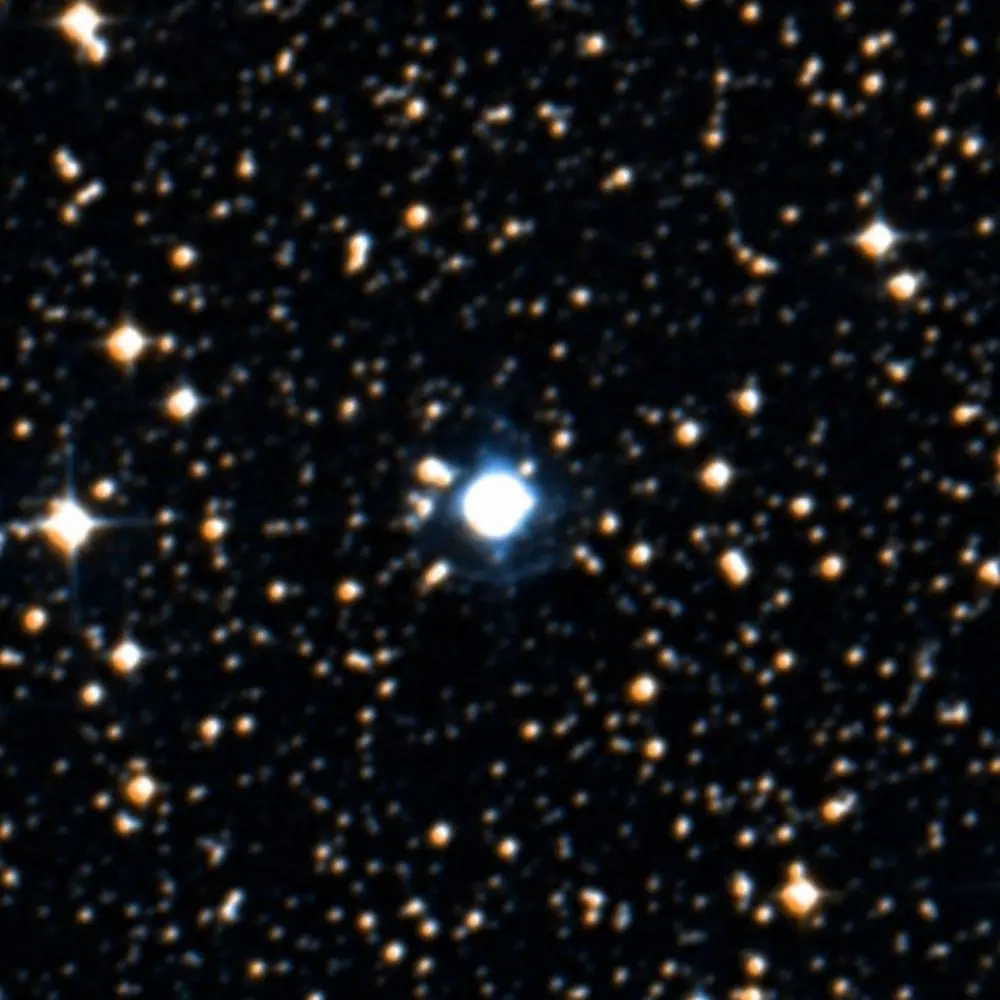
NGC 2867, a planetary nebula in Carina, roughly 7,300 light-years away. John Herschel found it in 1834 and briefly thought it might be a new planet until it failed to move. Its central star is a hot, hydrogen-poor Wolf-Rayet type.
Imaging tips
- Only about 0.2′ across, so it needs a long focal length and a fine pixel scale.
- Its surface brightness is high at 14.8 mag/arcsec², but the shell is small, so the faint outer envelopes need long exposures.
- An image built from Hα and OIII data showed faint envelopes around the bright shell that shorter exposures tend to lose.
- Planetary nebulae are emission objects, so a narrowband filter suits it.
- Best in January and February, but it never rises from 50°N and peaks near −3° from 35°N, so it never rises there either.
Facts
- Size
- 0.2′
- Magnitude
- 9.7
- Coordinates
- RA 9h 21.4m, Dec −58° 19′
- Framing, APS-C
- longer than 4000 mm
- Framing, full frame
- longer than 4000 mm
- Best months
- Jan, Feb
- Peak altitude
- never rises from 50°N, never rises from 35°N