
C88
Open Cluster in Circinus
About
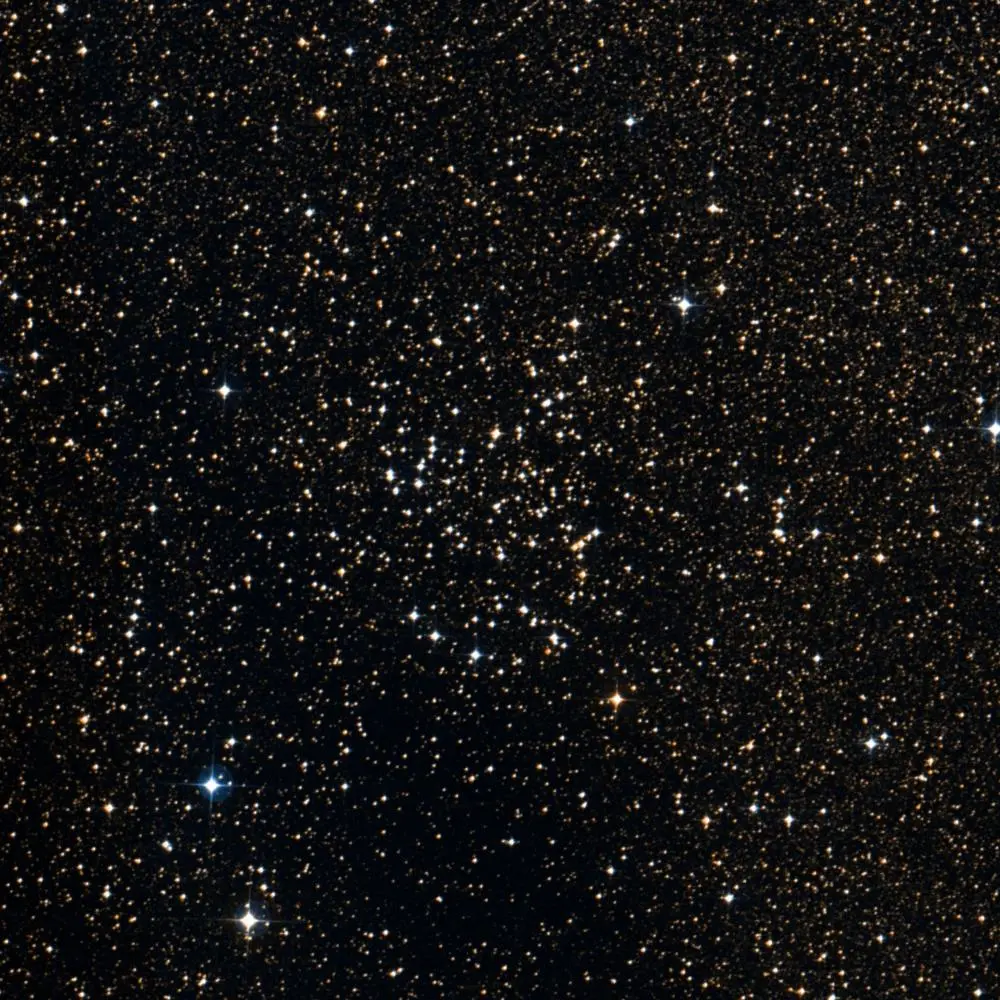
NGC 5823, a loose open cluster straddling the Circinus and Lupus border, logged by Dunlop in 1826. Estimates put it at 3,500 to 4,700 light-years and around 800 million years old. It has no bright central star and blends into the dense Milky Way behind it.
Imaging tips
- At 1,730–2,890 mm on APS-C the cluster fills a third to half of the frame.
- A backyard LRGB set on an 8-inch f/5 Newtonian lists 30, 40, 40 and 40 for L, R, G and B; the page gives no unit or frame length.
- Surface brightness is a low 22.3 mag/arcsec², and the cluster merges with a rich star field, so the stars need to stay clean and well separated.
- Whether it is a true cluster has been argued, since Dawson in 1978 found its star density no higher than its surroundings.
- Best in April and May, but it never rises from 50°N and peaks near 0° from 35°N.
Facts
- Size
- 14′
- Magnitude
- 7.9
- Coordinates
- RA 15h 5.5m, Dec −55° 36′
- Framing, APS-C
- 1730–2890 mm
- Framing, full frame
- 2650–4420 mm
- Best months
- Apr, May
- Peak altitude
- never rises from 50°N, never rises from 35°N