
C109
Planetary Nebula in Chamaeleon
About
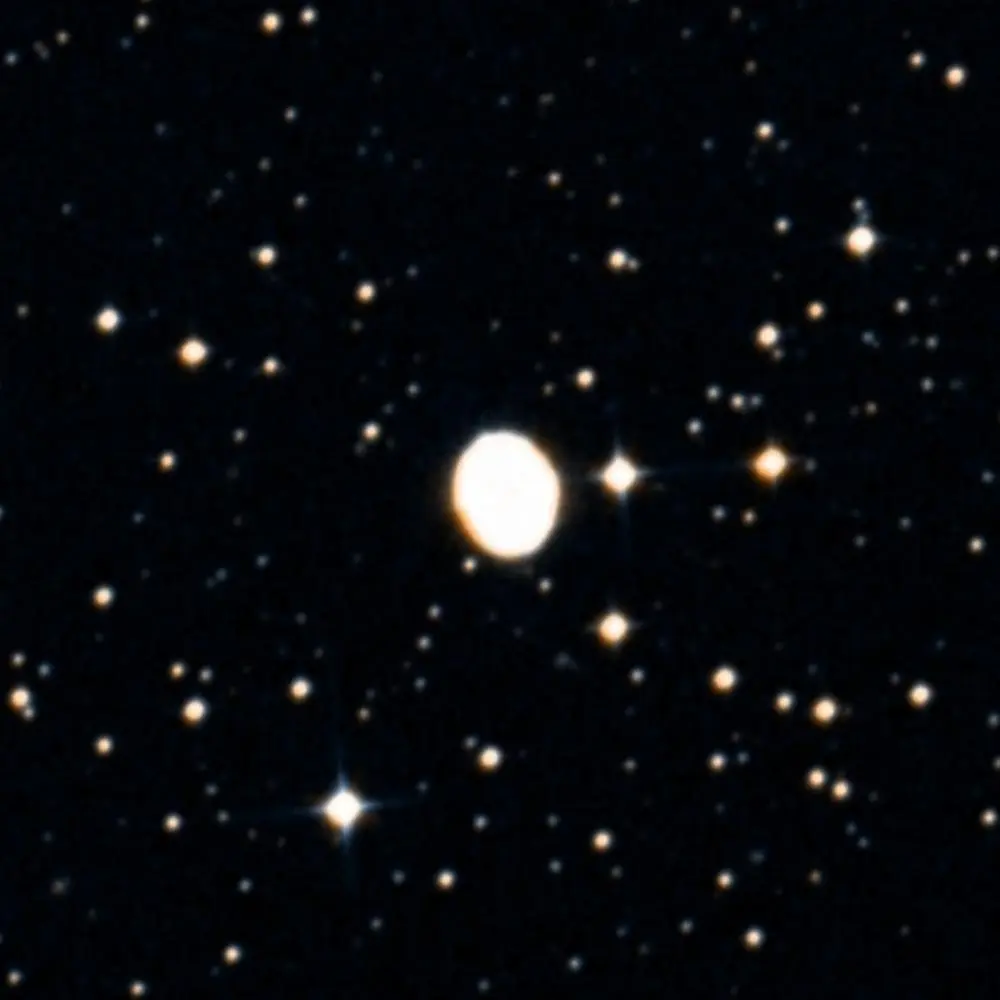
NGC 3195, a planetary nebula in Chamaeleon, a shell of gas shed by a dying star, roughly 5,500 to 6,400 light-years away depending on the estimate. John Herschel found it in 1835. Analysis of Gaia data points to a double star at its centre.
Imaging tips
- Only about 40″ across, so it is too small to frame: use a long focal length and a fine pixel scale.
- One deep amateur image used Hα (240 min), OIII (400 min) and 50 min each of R, G and B, about 13 hours in all.
- That image also hints at faint outer structure around the nebula, first reported in 2014 by a halo survey, so long narrowband totals may reveal more than the bright shell.
- Best in February and March, but it never rises from mid-northern latitudes such as 35°N or 50°N: a far-southern target.
Facts
- Size
- 0.7′
- Magnitude
- 11.6
- Coordinates
- RA 10h 9.4m, Dec −80° 52′
- Framing, APS-C
- longer than 4000 mm
- Framing, full frame
- longer than 4000 mm
- Best months
- Feb, Mar
- Peak altitude
- never rises from 50°N, never rises from 35°N